
1. Ifihan
This manual provides instructions for the installation, operation, maintenance, and troubleshooting of the Juniper EX3200-24T Layer 3 Switch. The EX3200-24T is a fixed-configuration switch designed for access-layer deployments in various network environments, offering comprehensive Layer 2 and Layer 3 switching capabilities.
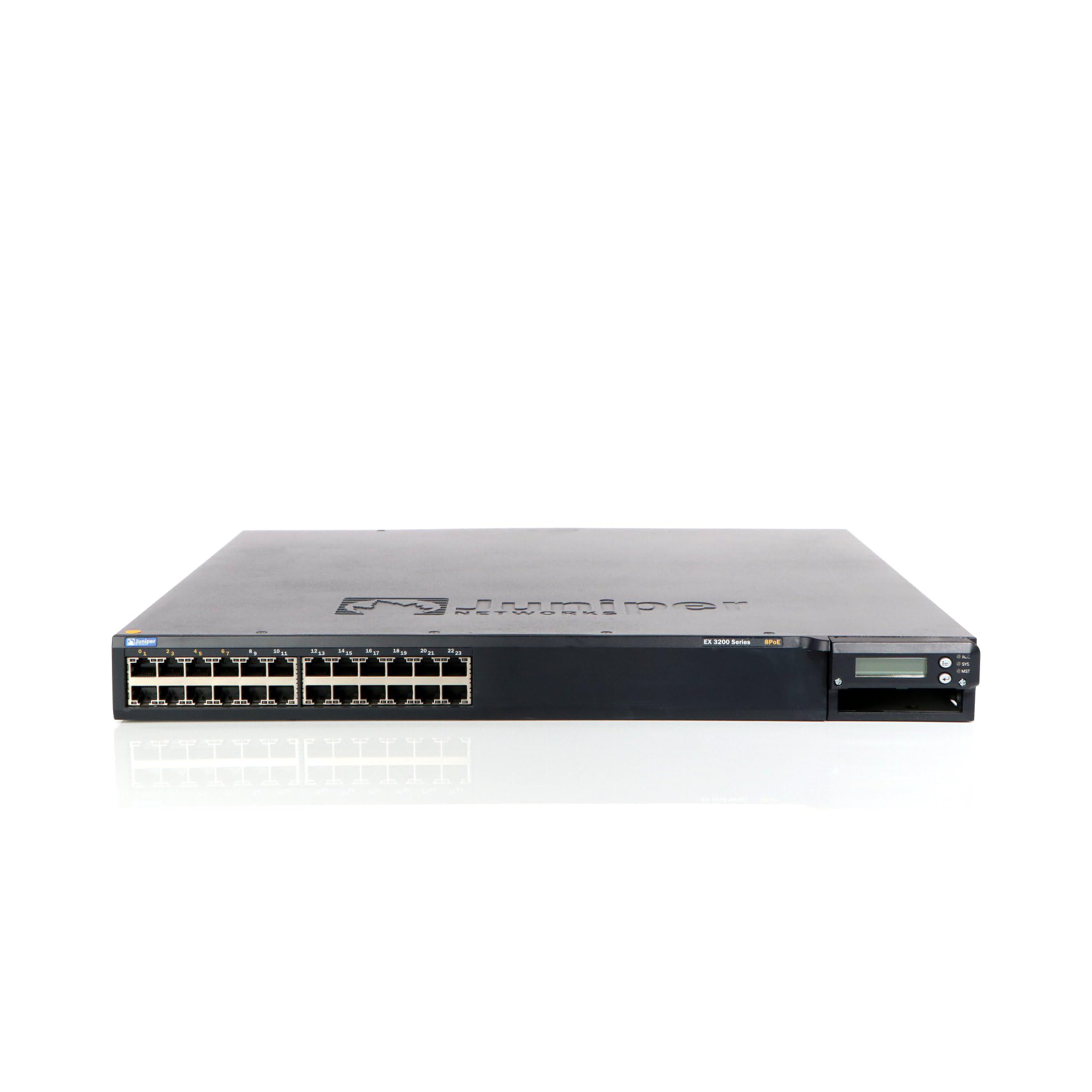
olusin 1: Iwaju view of the Juniper EX3200-24T Layer 3 Switch. This image displays the 24 Ethernet ports, along with various status indicator lights and the Juniper Networks branding.
2. Eto
Follow these steps to properly set up your Juniper EX3200-24T switch.
2.1 Unpacking ati ayewo
- Farabalẹ yọ iyipada kuro ninu apoti rẹ.
- Inspect the switch for any signs of physical damage. If damage is found, contact your vendor immediately.
- Daju pe gbogbo awọn paati ti a ṣe akojọ si ninu atokọ iṣakojọpọ wa.
2.2 Ìsopọ̀ Àgbékalẹ̀ (Àṣàyàn)
The EX3200-24T can be mounted in a standard 19-inch equipment rack. Use the provided rack-mount kit and follow the instructions included with the kit for secure installation.
2.3 Nsopọ Agbara
- Ensure the power switch on the rear panel of the switch is in the OFF position.
- Connect the provided AC power cord to the power inlet on the rear of the switch.
- Pulọọgi opin miiran ti okun agbara sinu iṣan itanna ti o wa lori ilẹ.
2.4 Nsopọ Awọn okun Nẹtiwọọki
Connect Ethernet cables from your network devices (computers, servers, other switches) to the 10/100/1000Base-T ports on the front panel of the EX3200-24T switch. Ensure cables are securely seated.
3. Awọn ilana Iṣiṣẹ
This section outlines the basic operation of the Juniper EX3200-24T switch.
3.1 Agbara Lori Yipada
After connecting the power cord, flip the power switch on the rear panel to the ON position. The system status LEDs on the front panel will illuminate during the boot process.
3.2 Understanding Status LEDs
The front panel features various LEDs to indicate the operational status of the switch and its ports:
- SYS LED: Indicates system status (e.g., green for normal operation, amber for warning, red for critical error).
- LED ALM: Tọkasi ipo itaniji.
- PPM LED: Indicates power supply module status.
- Awọn LED ibudo: Each port has LEDs indicating link status and activity (e.g., green for link, blinking green for activity).
3.3 Initial Configuration (Console Access)
For initial configuration, connect a console cable (RJ-45 to DB-9) from your management workstation to the console port on the switch. Use a terminal emulation program (e.g., PuTTY, Tera Term) with the following settings:
- Oṣuwọn Baud: 9600
- Data die-die: 8
- Parity: Ko si
- Awọn akoko idaduro: 1
- Iṣakoso sisan: Ko si
Refer to the Juniper Networks documentation for detailed configuration procedures.
4. Itọju
Regular maintenance ensures optimal performance and longevity of your EX3200-24T switch.
4.1 Ninu
- Lokọọkan nu ode ti yipada pẹlu asọ, gbẹ, asọ ti ko ni lint.
- Ensure ventilation openings are free from dust and obstructions to prevent overheating. Do not use liquid or aerosol cleaners directly on the switch.
4.2 famuwia imudojuiwọn
Juniper Networks periodically releases firmware updates to improve performance, add features, and address security vulnerabilities. It is recommended to keep the switch firmware updated. Refer to the official Juniper Networks support webAaye fun famuwia tuntun ati awọn ilana imudojuiwọn.
4.3 Ayika riro
Operate the switch within its specified environmental limits (temperature, humidity) to prevent damage and ensure reliable operation. Avoid exposing the switch to direct sunlight, excessive heat, or moisture.
5. Laasigbotitusita
This section provides solutions to common issues you might encounter with your EX3200-24T switch.
5.1 Ko si Agbara
- Aisan: No LEDs are illuminated, and the switch does not power on.
- Ise:
- Rii daju pe okun agbara ti sopọ ni aabo si mejeeji yipada ati iṣan itanna.
- Ensure the power switch on the rear panel is in the ON position.
- Check the electrical outlet with another device to confirm it is functional.
- If using a power strip or UPS, ensure it is powered on and functioning correctly.
5.2 Ko si Network Asopọmọra
- Aisan: Devices connected to the switch cannot access the network.
- Ise:
- Check the port LEDs on the switch for the connected device. A solid green LED indicates a link. If no link, try a different port or cable.
- Verify the network cable is securely connected at both ends (switch and device).
- Rí i dájú pé ohun tí a fi ń so mọ́ ẹ̀rọ náà ti ṣiṣẹ́ àti pé a ti ṣètò rẹ̀ dáadáa.
- If multiple devices are affected, check the uplink connection from the EX3200-24T to your core network.
- Consult the switch's configuration for VLANs, IP addressing, and other network settings.
5.3 System Alarm LED (ALM) is Amber/Red
- Aisan: The ALM LED is illuminated amber or red.
- Ise:
- Log in to the switch via the console or network management interface.
- Check system logs and alarm messages for details on the specific issue.
- Common causes include power supply issues, fan failures, or high temperature.
- Address the root cause as indicated by the logs.
6. Awọn pato
Key technical specifications for the Juniper EX3200-24T Layer 3 Switch:
| Ẹya ara ẹrọ | Sipesifikesonu |
|---|---|
| Brand | Àwọn Nẹ́tíwọ́ọ̀kì Juniper |
| Nọmba awoṣe | EX3200-24T |
| Nọmba ti Ports | 24 (16 x 10/100/1000Base-T, 8 x 10/100/1000Base-T) |
| Imugboroosi Iho | 1 x Expansion Slot |
| Data Gbigbe Oṣuwọn | 1 Gigabits fun keji |
| Atilẹyin Layer | Layer 3 |
| Iwọn Nkan | 14.9 iwon |
| Àwọ̀ | Dudu |
| Awọn ẹrọ ibaramu | Ojú-iṣẹ |
| UPC | 832938037793 |
7. Atilẹyin ọja ati Support
7.1 Atilẹyin ọja
The Juniper EX3200-24T Layer 3 Switch is covered by a standard manufacturer's warranty. For detailed information regarding warranty terms, duration, and coverage, please refer to the warranty card included with your product or visit the official Juniper Networks webojula.
7.2 Imọ Support
For technical assistance, troubleshooting beyond this manual, or to report issues, please contact Juniper Networks technical support. Support resources, including documentation, FAQs, and contact information, are available on the official Juniper Networks support portal: