
TP-Link TL-MR3420 Wireless N300 3G/4G Router User Manual
Model: TL-MR3420
1. Ifihan
The TP-Link TL-MR3420 Wireless N300 3G/4G Router is designed to share a 3G/4G mobile broadband connection wirelessly. By connecting a compatible UMTS/HSPA/EVDO USB modem to the router, a Wi-Fi hotspot is instantly established, allowing multiple devices to access the internet. This router also features a 3G/WAN connection backup strategy, ensuring a continuous internet connection by switching between 3G/4G and WAN (Ethernet) connections as needed. It supports wireless N speeds of up to 300Mbps, suitable for various online activities.
2. Package Awọn akoonu
- TP-Link TL-MR3420 Wireless N300 3G/4G Router
- Adapter agbara
- àjọlò Cable
- Awọn ọna fifi sori Itọsọna
3. Hardware Loriview
3.1 Front Panel and LEDs
The front panel of the router features LED indicators that provide information about the device's status, including power, system, WLAN, WAN, LAN, and 3G/4G connection status.

Aworan: Iwaju view of the TL-MR3420 router, showing the TP-Link logo and status LEDs.
3.2 Side Panel (USB Port)
The side panel includes a USB 2.0 port, primarily used for connecting a compatible 3G/4G USB modem.
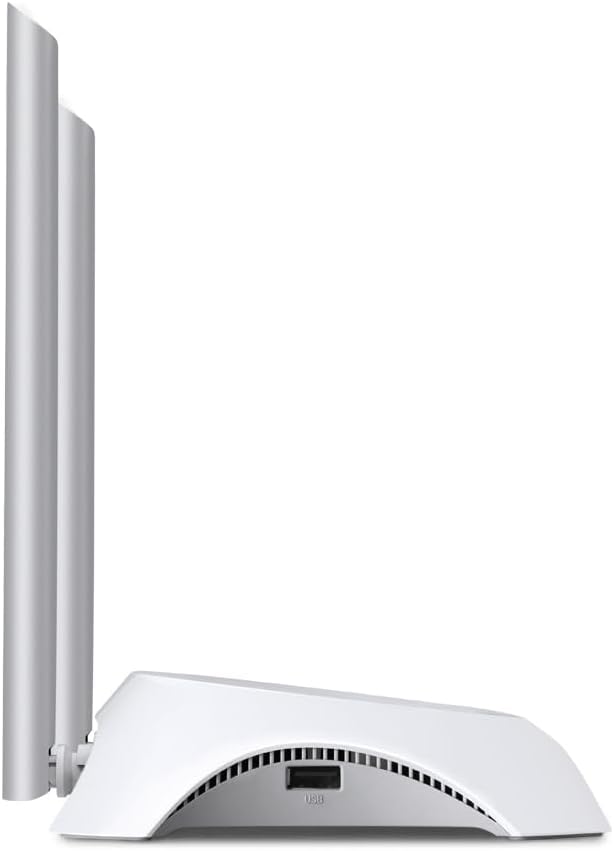
Aworan: Apa view of the TL-MR3420 router, highlighting the USB port for modem connection.
3.3 Pánẹ́lì Ẹ̀yìn (Àwọn Ìbùdó àti Bọ́tìnì)
The rear panel provides various ports and buttons for connectivity and control.
- Ibudo Agbara: Sopọ si ohun ti nmu badọgba agbara.
- Bọtini Agbara Tan/Paa: Yipada olulana si tan tabi pa.
- Ibudo WAN (Awọ bulu): Connects to a DSL/Cable modem for traditional internet access.
- Àwọn Ibudo LAN (Yellow): Four ports for connecting wired devices like computers or switches.
- WPS/Bọtini atunto: Press for WPS function; press and hold for factory reset.
- Awọn asopọ Antenna: For attaching the two external antennas.

Aworan: Ẹyin view of the TL-MR3420 router, displaying the power port, WAN port, LAN ports, WPS/Reset button, and antenna connectors.
4. Eto Itọsọna
4.1 ti ara Asopọ
- So Antennas: Screw the two detachable antennas firmly into their connectors on the rear panel.
- Connect 3G/4G USB Modem: Insert your compatible 3G/4G USB modem into the USB port on the side of the router.
- Agbara Tan: Connect the power adapter to the router's power port and plug it into a wall outlet. Press the Power On/Off button if necessary.
- (Optional) Connect to WAN: If using a wired internet connection as a backup or primary, connect an Ethernet cable from your DSL/Cable modem to the blue WAN port on the router.
- (Optional) Connect Wired Devices: Connect your computer or other wired devices to the yellow LAN ports using Ethernet cables.

Image: The TL-MR3420 router with a 3G USB modem connected to its side USB port.
4.2 Iṣeto akọkọ (Web Ọlọpọọmídíà)
- Sopọ si olulana: Connect your computer to the router either via an Ethernet cable to a LAN port or wirelessly using the default Wi-Fi SSID printed on the router's label (e.g., TP-Link_XXXX).
- Wiwọle Web Aṣàwákiri: Ṣii a web aṣàwákiri (fún àpẹẹrẹ, Chrome, Firefox) àti irú
http://tplinkwifi.netorhttp://192.168.0.1(tabihttp://192.168.1.1) into the address bar. Press Enter. - Wo ile: Enter the default username and password, which are typically
adminfor both. If these do not work, check the label on the bottom of your router. - Ṣiṣe Eto Kiakia: Follow the on-screen Quick Setup Wizard to configure your internet connection and wireless settings.
4.3 3G/4G Connection Setup
During the Quick Setup, select 3G/4G olulana mode. The router will automatically detect your USB modem. You may need to select your region and ISP, and enter APN (Access Point Name) details if prompted. Ensure your 3G/4G USB modem is compatible with the TL-MR3420.
4.4 WAN Connection Setup (Optional)
If you are using a wired internet connection, configure the WAN settings. This can be done via Dynamic IP, Static IP, or PPPoE, depending on your Internet Service Provider (ISP) requirements. The TL-MR3420 supports a 3G/WAN failover strategy, allowing you to set a preferred connection (3G/4G or WAN) and use the other as a backup.
4.5 Eto Nẹtiwọọki Alailowaya
Set your desired Wireless Network Name (SSID) and a strong password (WPA/WPA2 Personal recommended) for your Wi-Fi network. This will secure your wireless connection.
5. Ṣiṣẹ olulana
5.1 Oye LED Ifi
| LED | Ipo | Itọkasi |
|---|---|---|
| Agbara | On | Router is powered on. |
| Eto | Imọlẹ | Olulana n ṣiṣẹ ni deede. |
| WLAN | Tan/Imọlẹ | Wireless function is enabled/data is being transmitted. |
| WAN | Tan/Imọlẹ | WAN port is connected/data is being transmitted. |
| LAN (1-4) | Tan/Imọlẹ | Corresponding LAN port is connected/data is being transmitted. |
| 3G/4G | Tan/Imọlẹ | 3G/4G modem is connected and working/data is being transmitted. |
5.2 Awọn ẹrọ Nsopọ
- Awọn ẹrọ Alailowaya: Wa fun your Wi-Fi network (SSID) on your device and enter the password you configured.
- Awọn ẹrọ ti a firanṣẹ: Connect an Ethernet cable from your device to any of the yellow LAN ports on the router.
5.3 3G/WAN Failover
The router can be configured to use either 3G/4G or WAN as the primary internet connection, with the other serving as a backup. If the primary connection fails, the router will automatically switch to the backup, ensuring continuous internet access. This setting can be managed in the router's web interface under Network > WAN Backup.
6. Itọju
6.1 Igbesoke Famuwia
Ṣe àyẹ̀wò déédéé fún àwọn àtúnṣe firmware láti ọ̀dọ̀ òṣìṣẹ́ TP-Link kí o sì fi sori ẹrọ wọn website. Firmware updates can improve performance, add new features, and fix bugs. Download the correct firmware for your model and follow the instructions provided on the TP-Link support page for upgrading via the web interface (System Tools > Firmware Upgrade).
6.2 Afẹyinti ati mimu-pada sipo iṣeto ni
You can back up your router's configuration settings to a file on your computer. This allows you to restore your settings quickly after a factory reset or if you need to revert to a previous configuration (System Tools > Backup & Restore).
6.3 System Atunbere
If the router is experiencing issues, a simple reboot can often resolve them. You can reboot the router from the web interface (System Tools > Reboot) or by unplugging and replugging the power adapter.
6.4 Atunto ile-iṣẹ
A factory reset will revert all settings to their default values. This can be done by pressing and holding the WPS/Reset button on the rear panel for approximately 5-10 seconds until the System LED flashes rapidly, or via the web interface (System Tools > Factory Defaults).
7. Laasigbotitusita
- Cannot access the internet:
- Check LED indicators: Ensure Power, System, WLAN, and 3G/4G (or WAN) LEDs are on or flashing correctly.
- Verify physical connections: Ensure all cables are securely connected.
- Check 3G/4G modem: Ensure it is properly inserted and recognized by the router.
- Confirm ISP settings: Verify that your 3G/4G or WAN settings (APN, connection type) are correct in the router's web ni wiwo.
- Tun olulana ati modẹmu naa tun bẹrẹ.
- Awọn iṣoro asopọ alailowaya:
- Ensure WLAN LED is on/flashing.
- Verify correct Wi-Fi SSID and password.
- Move closer to the router to check signal strength.
- Change wireless channel in router settings to avoid interference.
- Iyara intanẹẹti o lọra:
- Check your 3G/4G signal strength or WAN connection speed.
- Ensure no other devices are heavily using bandwidth.
- Ṣe imudojuiwọn famuwia olulana.
8. Awọn pato
| Ẹya ara ẹrọ | Ẹ̀kúnrẹ́rẹ́ |
|---|---|
| Orukọ awoṣe | TL-MR3420 |
| Boṣewa alailowaya | IEEE 802.11n, 802.11g, 802.11b |
| Iyara Alailowaya | Titi di 300Mbps |
| Igbohunsafẹfẹ Band | 2.4 GHz |
| Eriali Iru | 2x 5dBi Detachable Omni Directional Antennas |
| Awọn atọkun | 1x 10/100Mbps WAN Port, 4x 10/100Mbps LAN Ports, 1x USB 2.0 Port |
| Awọn bọtini | WPS/Reset Button, Power On/Off Button |
| Awọn iwọn (W x D x H) | 11.34 x 8.9 x 2.8 inches (Awọn iwọn Ọja) |
| Iwọn Nkan | 9.5 iwon |
| Ibi ti ina elekitiriki ti nwa | 12VDC / 1A (External Power Adapter) |
| Alailowaya Aabo | 64/128-bit WEP, WPA/WPA2, WPA-PSK/WPA2-PSK encryption |
| Awọn ẹrọ ibaramu | Personal Computer, UMTS/HSPA/EVDO USB Modems |
9. Atilẹyin ọja ati Support
9.1 Atilẹyin ọja
The TP-Link TL-MR3420 Wireless N300 3G/4G Router typically comes with a 2-year limited warranty. Please refer to the warranty card included in your package or visit the official TP-Link webAaye fun awọn ofin atilẹyin ọja alaye ni pato si agbegbe rẹ.
9.2 Imọ Support
For technical assistance, troubleshooting, or further inquiries, please visit the official TP-Link support website. You can find FAQs, firmware updates, and contact information for customer support.
- TP-Link Support Webojula: www.tp-link.com/support/