1. Ifihan
Thank you for choosing the AMS Pendule 211/1 wall clock. This manual provides comprehensive instructions for the safe and efficient setup, operation, and maintenance of your new clock. Please read this manual thoroughly before use and retain it for future reference.
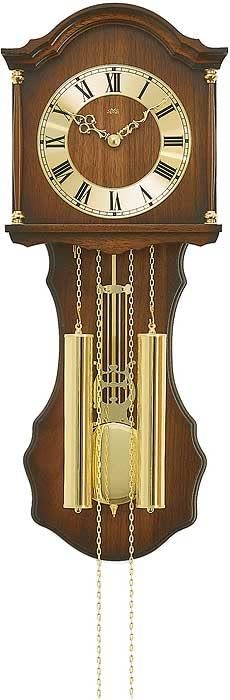
Figure 1: AMS Pendule 211/1 Wall Clock
2. Eto
2.1 Ṣiṣii silẹ
- Fi ìṣọ́ra yọ aago náà kúrò nínú àpótí rẹ̀.
- Inspect the clock for any signs of damage. If damaged, do not proceed with setup and contact customer support.
- Remove all protective films or packaging materials from the clock face, hands, and pendulum.
- Ṣe idaduro apoti fun gbigbe tabi ibi ipamọ iwaju.
2.2 Fifi sori batiri
The AMS Pendule 211/1 requires batteries (not included) for operation. Please use the specified battery type.
- Wa ideri iyẹwu batiri ni ẹhin aago naa.
- Remove the cover by sliding or unlatching it.
- Insert the required batteries (e.g., 1x AA or 1x C, refer to the compartment label for exact type) according to the polarity indicators (+ and -).
- Rọpo ideri iyẹwu batiri ni aabo.
2.3 Ṣíṣe àkójọpọ̀ aago náà
Ensure the clock is mounted securely on a stable wall surface.
- Choose a suitable location on a wall, away from direct sunlight, extreme temperatures, or vibrations.
- Use an appropriate wall anchor and screw for your wall type (e.g., drywall, concrete). The mounting point should be strong enough to support the clock's weight.
- Hang the clock securely using the keyhole slot on the back. Ensure it is level.
2.4 Ṣiṣeto Aago naa
Your AMS Pendule 211/1 clock features an analog display. Some models may include a radio-controlled mechanism for automatic time synchronization.
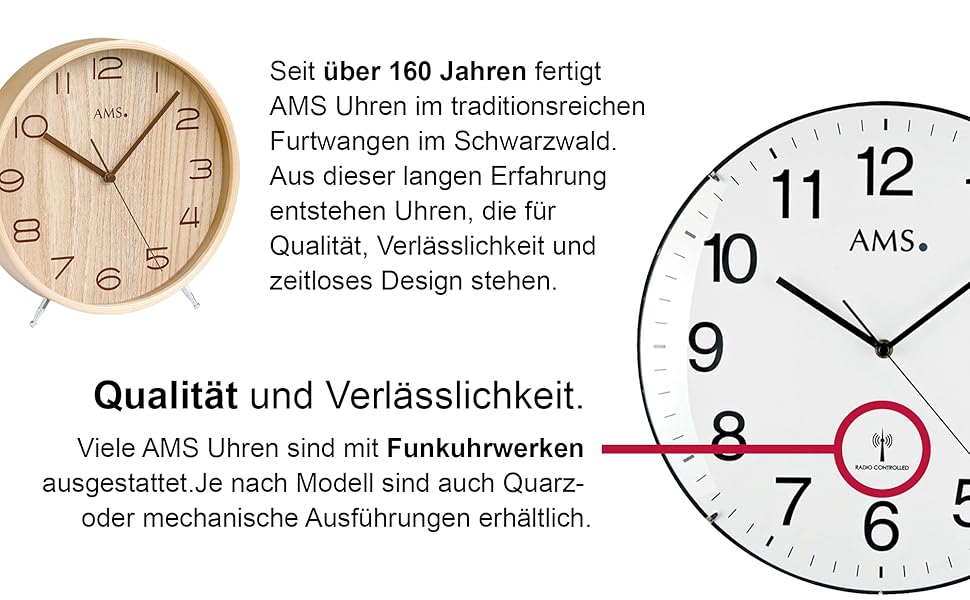
Olusin 2: Example Clock Face with Radio Controlled Symbol
- Eto Afowoyi: Locate the time-setting knob or wheel on the back of the clock. Gently turn this knob to move the minute and hour hands clockwise until the correct time is displayed. Avoid turning the hands counter-clockwise.
- Radio-Controlled (if applicable): If your clock is radio-controlled, it will attempt to synchronize with a time signal after battery installation. Place the clock near a window for better signal reception. This process may take several minutes or hours. Once synchronized, the clock will automatically display the correct time.
2.5 Pendulum Setup
The pendulum is a decorative and functional element of your clock.
- Carefully unpack the pendulum if it was separate from the main clock body.
- Attach the pendulum to its hook or hanging mechanism inside the clock case. Ensure it hangs freely and does not touch the sides of the case.
- Gently push the pendulum to one side to start its swing. It should swing evenly.
3. Awọn ilana Iṣiṣẹ
3.1 Kika Akoko naa
The AMS Pendule 211/1 features a clear analog display with hour, minute, and second hands for precise timekeeping.
- Awọn short hand indicates the hour.
- Awọn long hand indicates the minute.
- Awọn thin sweeping hand indicates the second.
3.2 Iṣẹ itaniji
Your clock is equipped with an alarm function. Refer to the specific controls on the back or side of your clock for alarm setting.
- Ṣeto Aago Itaniji: Locate the alarm setting knob/dial (often separate from the main time setting). Turn it to set the desired alarm time.
- Mu Itaniji ṣiṣẹ: Find the alarm ON/OFF switch or button. Move it to the "ON" position to activate the alarm.
- Mu itaniji ṣiṣẹ: To turn off the alarm sound, move the alarm switch to the "OFF" position.
3.3 Pendulum Operation
Once the pendulum is installed and started, it should swing continuously. If it stops, gently restart it.
- Ensure the clock is level on the wall to allow for an even pendulum swing.
- Avoid obstructing the pendulum's movement.
4. Itọju
4.1 Ninu
Regular cleaning will help maintain the appearance of your clock. The frame is made of Acrylonitrile Butadiene Styrene (ABS).
- Wipe the clock's exterior with a soft, dry, lint-free cloth.
- Fun awọn ami alagidi, die-die dampen awọn asọ pẹlu omi. Yẹra fun lilo awọn kẹmika ti o lewu, awọn afọmọ abrasive, tabi awọn nkanmimu, nitori iwọnyi le ba ipari jẹ.
- Do not spray cleaning solutions directly onto the clock.
- Keep the clock away from excessive dust and moisture.
4.2 Batiri Rirọpo
Replace batteries when the clock starts losing time or stops functioning.
- Follow the steps in Section 2.2 "Battery Installation" to replace old batteries with new ones of the correct type.
- Sọ awọn batiri ti a lo ni ifojusọna ni ibamu si awọn ilana agbegbe.
7. Atilẹyin ọja ati Support
For warranty information or technical support, please refer to the documentation provided with your purchase or contact the retailer. Keep your proof of purchase for any warranty claims.
For further assistance, you may visit the official AMS webojula tabi kan si wọn onibara iṣẹ Eka.
