
1. Ifihan
The D-Link Wireless N300 Dual Band PCI Express Desktop Adapter (DWA-566) provides high-speed wireless connectivity for your desktop computer. Utilizing Wireless N technology, it maximizes the speed and range of your wireless signal, offering superior performance compared to Wireless G devices. The dual-band capability supports both 2.4GHz and 5GHz wireless signals, allowing for flexible network usage, such as browsing on 2.4GHz and HD streaming or gaming on the clearer 5GHz band.
This adapter is designed to fit into any standard PCI Express slot, offering a higher performance interface than legacy PCI. It supports secure wireless networks with WPA or WPA2 encryption.

Figure 1.1: D-Link DWA-566 Wireless N300 Dual Band PCI Express Desktop Adapter with antennas.
2. Awọn ẹya ara ẹrọ
The DWA-566 adapter includes the following key features:
- IEEE 802.11n, 802.11g, and 802.11a Compliant
- Dual Band Technology for Superior Wireless Performance (2.4GHz or 5GHz)
- Access secure wireless networks using advanced WPA or WPA2 encryption
- Fits into any standard PCI Express slot
- PCI Express Interface provides higher performance than a legacy PCI interface
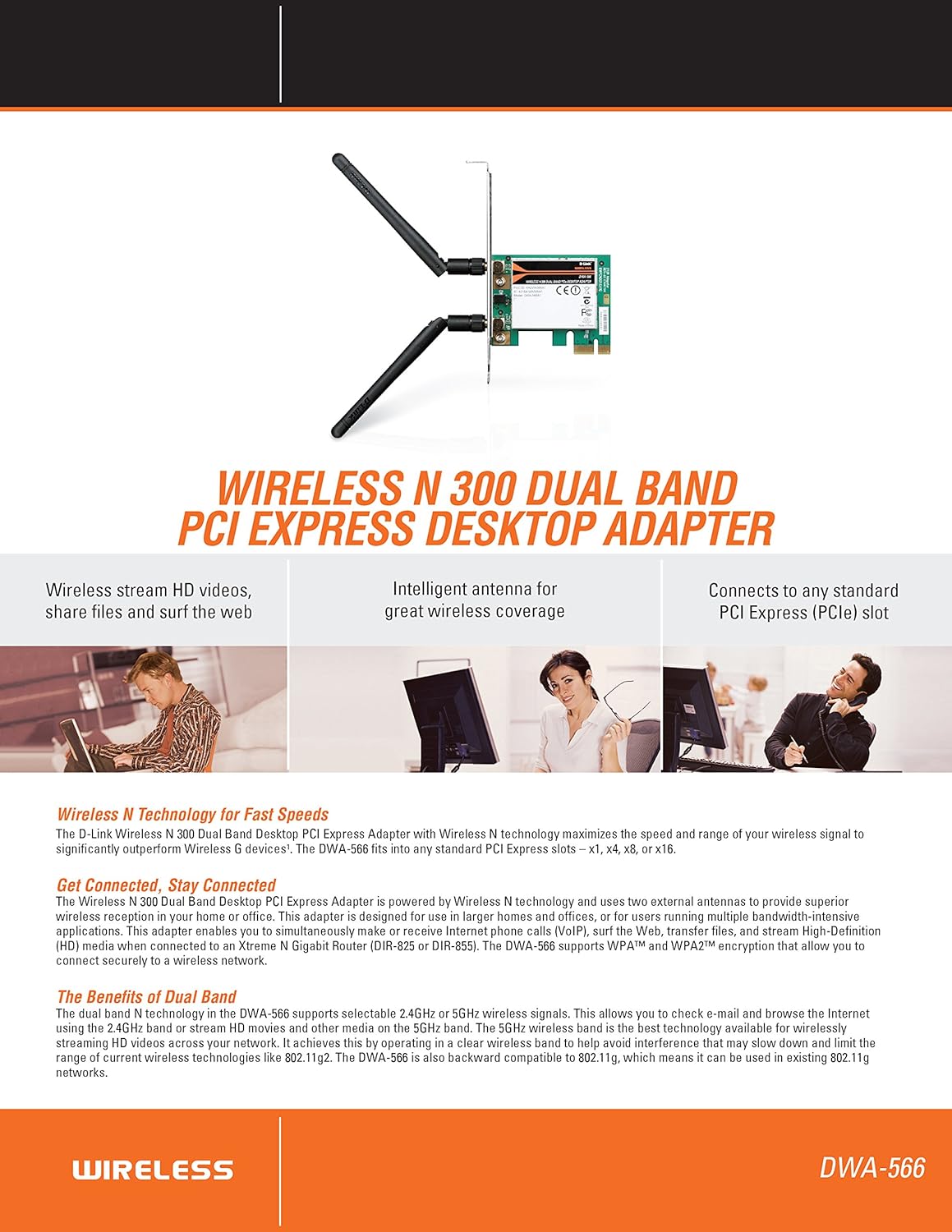
Olusin 2.1: Pariview of DWA-566 features and benefits.
3. Package Awọn akoonu
Jẹrisi pe package rẹ ni awọn nkan wọnyi ninu:
- Wireless N 300 Dual Band PCI Express Adapter (DWA-566)
- Two detachable antennas
- Low-profile iṣagbesori akọmọ
- Awọn ọna Fi Itọsọna
- CD-ROM with:
- Oluṣakoso Asopọ Alailowaya D-Link
- Awọn awakọ
- Akosile ọja
4. System Awọn ibeere
Before installing the DWA-566, ensure your system meets the following minimum requirements:
- Computer with an available PCI Express slot
- Windows operating system (Windows XP, Vista, 7, 8, 10)
- CD-ROM drive (for driver installation from included CD)
- Internet Explorer 7 or Firefox 3.0 and above (for viewing documentation)
- Ṣiṣe alabapin pẹlu Olupese Iṣẹ Ayelujara (ISP)
For optimal performance, a D-Link Wireless N router (DIR-655 or DIR-825) is recommended.

Figure 4.1: Detailed technical specifications, minimum requirements, and network diagram.
5. Eto ati fifi sori
5.1 Fifi sori ẹrọ Hardware
- Power Off Computer: Pa kọmputa rẹ kuro ki o yọọ okun agbara.
- Àpò Kọ̀ǹpútà Ṣíṣí: Remove the computer case cover.
- Wa Iho PCI Express: Find an available PCI Express slot on your motherboard.
- Fi Adapter sii: Carefully insert the DWA-566 adapter into the PCI Express slot, ensuring it is seated firmly.
- Adapter to ni aabo: Secure the adapter with a screw to the computer chassis.
- So Antennas: Screw the two included antennas onto the connectors on the adapter.
- Pa Apo ati Agbara Tan: Replace the computer case cover, plug in the power cord, and power on your computer.

Figure 5.1: DWA-566 adapter with antennas attached, ready for installation.
5.2 Software fifi sori
After hardware installation, proceed with driver and utility installation:
- Insert Installation CD: Insert the DWA-566 installation CD into your computer's CD-ROM drive. The setup wizard should launch automatically. If not, navigate to the CD drive and run the 'Setup.exe' file.
- Tẹle Awọn itọnisọna loju-iboju: Follow the prompts of the D-Link setup wizard to install the drivers and the D-Link Wireless Connection Manager utility.
- Tun Kọmputa bẹrẹ: After the installation is complete, restart your computer when prompted.
Akiyesi: For Windows 7/8 64-bit systems, ensure you are using the latest drivers available from the official D-Link support website to avoid potential compatibility issues.
6. Awọn ilana Iṣiṣẹ
Once the drivers are installed, you can connect to a wireless network:
- Launch Connection Manager: Open the D-Link Wireless Connection Manager utility or use the built-in Windows wireless network utility.
- Ṣayẹwo fun Awọn nẹtiwọki: The utility will scan for available wireless networks in your area.
- Yan Nẹtiwọọki: Choose your desired wireless network (SSID) from the list.
- Enter Security Key: If the network is secured, enter the correct WPA/WPA2 security key or passphrase.
- Sopọ: Tẹ 'Sopọ' lati fi idi asopọ alailowaya mulẹ.
A successful connection will be indicated by a strong signal strength and internet access.
7. Itọju
To ensure optimal performance and longevity of your DWA-566 adapter:
- Jeki imudojuiwọn Awakọ: Lokọọkan ṣayẹwo atilẹyin D-Link website for the latest drivers and firmware updates.
- Rii daju pe afẹfẹ ti o yẹ: Make sure your computer case has adequate airflow to prevent overheating of internal components, including the wireless adapter.
- Ipo Antenna: Adjust the antennas for the best possible signal reception.
- Awọn Okunfa Ayika: Avoid placing your computer near large metal objects or other devices that may cause wireless interference.
8. Laasigbotitusita
If you encounter issues with your DWA-566 adapter, consider the following:
8.1 No Wireless Connection
- Verify Hardware Installation: Ensure the adapter is correctly seated in the PCI Express slot and antennas are securely attached.
- Check Drivers: Confirm that the drivers are installed correctly. Check Device Manager for any error symbols next to the network adapter. Reinstall drivers if necessary.
- Ipo olulana: Ensure your wireless router is powered on and broadcasting a signal.
- Bọtini Aabo: Double-check that the correct wireless security key (WPA/WPA2 passphrase) is entered.
- Eto ogiriina: Temporarily disable your computer's firewall to see if it is blocking the connection. If it resolves the issue, configure your firewall to allow the D-Link utility.
8.2 Slow Connection Speed or Frequent Disconnections
- Atunṣe Antenna: Try repositioning the antennas for better signal reception.
- Ìjánu: Move the computer away from potential sources of interference (e.g., cordless phones, microwaves, Bluetooth devices).
- Isunmọ olulana: Ensure the computer is within the effective range of your wireless router.
- Lilo Meji Band: If your router supports it, try connecting to the 5GHz band for less interference and potentially higher speeds, especially for streaming or gaming.
- Imudojuiwọn Awakọ: Update the adapter drivers to the latest version from the D-Link webojula.
9. Awọn pato
| Ẹya ara ẹrọ | Sipesifikesonu |
|---|---|
| Brand | D-Ọna asopọ |
| Nọmba awoṣe | DWA-566 |
| Ni wiwo Hardware | PCI Express |
| Data Link Ilana | IEEE 802.11n, 802.11g, 802.11a |
| Data Gbigbe Oṣuwọn | Titi di 300 Megabits fun iṣẹju keji |
| Igbohunsafẹfẹ Band | 2.4 GHz / 5 GHz (Dual Band) |
| Aabo | WPA, WPA2 |
| Awọn ẹrọ ibaramu | Awọn kọmputa tabili |
| Iwọn Nkan | 0.4 Poun (isunmọ. 181 giramu) |
| Ijẹrisi Idanwo Ita | FCC B, IC B, CE, C-Tick |
10. Atilẹyin ọja ati Support
The D-Link Wireless N300 Dual Band PCI Express Desktop Adapter (DWA-566) comes with a 1-odun lopin atilẹyin ọja. For specific terms and conditions, please refer to the warranty documentation included with your product or visit the official D-Link webojula.
D-Link provides 24/7 Basic Installation Support to assist with initial setup and configuration. For technical assistance, driver downloads, and further product information, please visit the D-Link support webojula tabi kan si wọn onibara iṣẹ.
D-Link Support Webojula: https://support.dlink.com/