
1. Ọja Ipariview
The BFT P121011 Intro Key Selector is a robust, surface-mounted key switch designed for controlling access systems, such as automatic gates or doors. It features a durable plastic construction and operates with a normally closed contact type, providing a secure and reliable control mechanism.
This device utilizes a key for activation, offering a simple on-off operational mode. It is designed for a single-circuit application and connects via screw terminals for straightforward wiring.
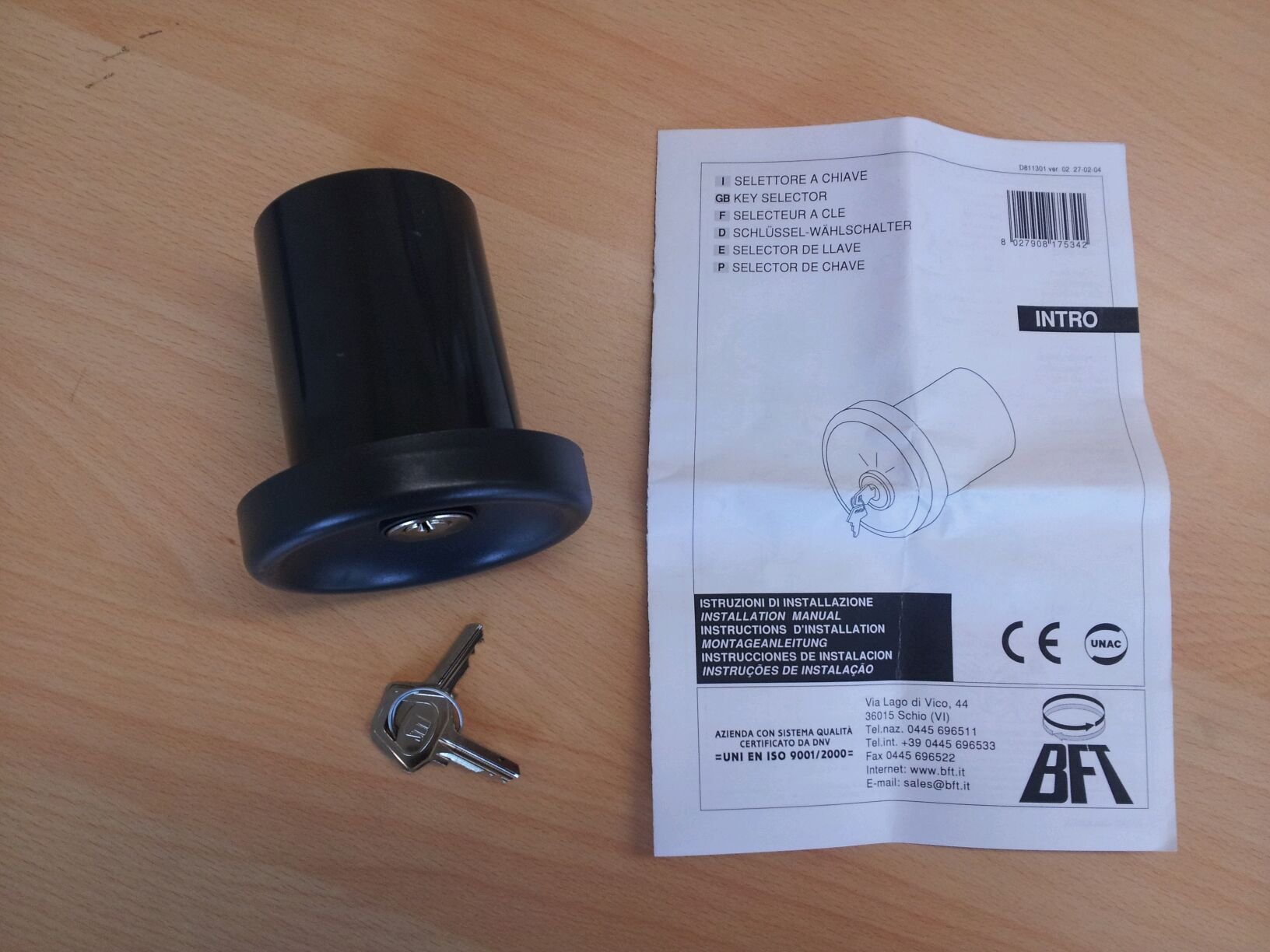
Figure 1: BFT P121011 Intro Key Selector. This image shows the circular key selector unit, dark gray in color, with the BFT logo at the top. Below the logo, the positions 'A', '0', and 'B' are marked around the central keyhole. Two silver keys are visible in the foreground, resting on a wooden surface.
2. Alaye Aabo
- Ka gbogbo awọn itọnisọna ni pẹkipẹki ṣaaju fifi sori ẹrọ ati lo.
- Àwọn òṣìṣẹ́ tó péye gbọ́dọ̀ fi sori ẹrọ ní ìbámu pẹ̀lú àwọn òfin àti ìlànà iná mànàmáná agbègbè.
- Disconnect power to the system before performing any installation, maintenance, or troubleshooting.
- Rii daju pe gbogbo awọn asopọ onirin wa ni aabo ati idayatọ daradara lati ṣe idiwọ awọn iyika kukuru.
- Do not expose the device to extreme temperatures, moisture, or corrosive substances.
- Keep keys out of reach of children and unauthorized personnel.
3. Awọn pato
| Ẹya ara ẹrọ | Sipesifikesonu |
|---|---|
| Brand | BFT |
| Awoṣe | P121011 |
| Ipo Iṣiṣẹ | Tan, paa |
| Olubasọrọ Iru | Pade deede |
| Yipada Iru | Bọtini |
| Ebute Iru | Dabaru |
| Ohun elo | Ṣiṣu |
| Awọn iwọn (LxWxH) | 30 x 195 x 260 cm (Note: These dimensions seem unusually large for a key selector. Please verify with product packaging.) |
| Circuit Iru | 1 ọna |
| Iṣagbesori Iru | Dada |
| Actuator Iru | Button, Knob (Note: This refers to the key as the actuator) |
4. Fifi sori ẹrọ ati Oṣo
4.1. Pre-Fifi sọwedowo
- Daju pe gbogbo awọn paati wa ati ti ko bajẹ.
- Ensure the mounting surface is flat, stable, and suitable for surface mounting.
- Confirm that the power supply to the gate or access system is disconnected.
4.2. Mounting the Key Selector
- Choose an appropriate location for the key selector, ensuring it is easily accessible but protected from potential damage.
- Mark the drilling points on the mounting surface using the key selector's base as a template.
- Lilu awọn ihò awaoko ni awọn aaye ti o samisi.
- Secure the key selector base to the surface using appropriate screws and fasteners (not included).
4.3. Wiring Awọn isopọ
- Route the necessary control cables through the designated entry points on the key selector's housing.
- Connect the control wires to the screw terminals inside the key selector. Refer to the wiring diagram provided with your gate or access system control unit for specific connections. The key selector typically acts as a momentary contact switch.
- Rii daju pe gbogbo awọn asopọ wa ni wiwọ ati aabo.
- Close the key selector housing, ensuring it is properly sealed.
4.4. Fi sori ẹrọ lẹhin
- Mu agbara pada si eto.
- Test the key selector's functionality as described in the Operating Instructions section.
5. Awọn ilana Iṣiṣẹ
The BFT P121011 Intro Key Selector provides a simple, key-operated control for your access system.
- Fi Bọtini sii: Insert the provided key into the keyhole on the front of the selector.
- Mu ṣiṣẹ: Turn the key to the desired position (e.g., 'A' or 'B' if multiple functions are supported, or simply to activate the single function). The key selector is designed to provide a momentary contact closure, which signals the connected control unit to perform an action (e.g., open/close gate).
- Bọtini pada: After activation, return the key to the '0' (neutral) position and remove it. The key selector will return to its normally closed state.
The specific action triggered by turning the key (e.g., opening, closing, or stopping a gate) depends on how the key selector is wired to the main control unit of your access system.
6. Itọju
Regular maintenance ensures the longevity and reliable operation of your BFT P121011 Intro Key Selector.
- Ninu: Periodically clean the exterior of the key selector with a soft, damp asọ. Ma ṣe lo abrasive ose tabi epo.
- Keyhole Inspection: Ensure the keyhole remains free of debris. If necessary, use a small, soft brush to clear any obstructions. Avoid using lubricants that may attract dust.
- Ṣiṣayẹwo onirin: Annually, or if issues arise, disconnect power and inspect the wiring connections inside the unit for any signs of corrosion or loosening. Re-tighten connections as needed.
- Ipò Pataki: Inspect the keys for wear or damage. Worn keys may not operate the selector smoothly or reliably.
7. Laasigbotitusita
| Isoro | Owun to le Fa | Ojutu |
|---|---|---|
| Key selector does not activate the system. | Ko si agbara si ẹrọ iṣakoso. Ti firanṣẹ ti ko tọ. Faulty key selector contacts. |
Check power supply to the main control unit. Verify wiring connections against the system's diagram. Test the key selector's contacts with a multimeter. Replace if faulty. |
| Ó ṣòro láti yí tàbí láti yọ bọtini náà kúrò. | Àwọn ìdọ̀tí nínú ihò kọ́kọ́rọ́. Worn key or lock mechanism. |
Clean keyhole with a soft brush. Try a different key. If issue persists, the lock mechanism may need replacement. |
| Išišẹ ti o lemọlemọ. | Loose onirin awọn isopọ. kikọlu ayika. |
Ṣayẹwo ati Mu gbogbo awọn asopọ onirin pọ. Ensure the unit is properly sealed and protected from elements. |
8. Atilẹyin ọja ati Support
Specific warranty information for the BFT P121011 Intro Key Selector is typically provided at the point of purchase or within the product packaging. Please refer to your purchase documentation for details regarding warranty coverage and duration.
For technical support, spare parts, or service inquiries, please contact your authorized BFT dealer or the BFT customer service department. Contact information can usually be found on the BFT official webojula tabi ni awọn ọja ká atilẹba iwe.