
Ọrọ Iṣaaju
This manual provides essential information for the safe and efficient use of your HQST 100 Watt 12 Volt Monocrystalline Solar Panel. Designed for various off-grid applications, this high-efficiency solar panel offers reliable power generation for battery charging in boats, RVs, caravans, and other remote setups. Please read these instructions carefully before installation and operation to ensure optimal performance and longevity of your solar panel.
Eto ati fifi sori
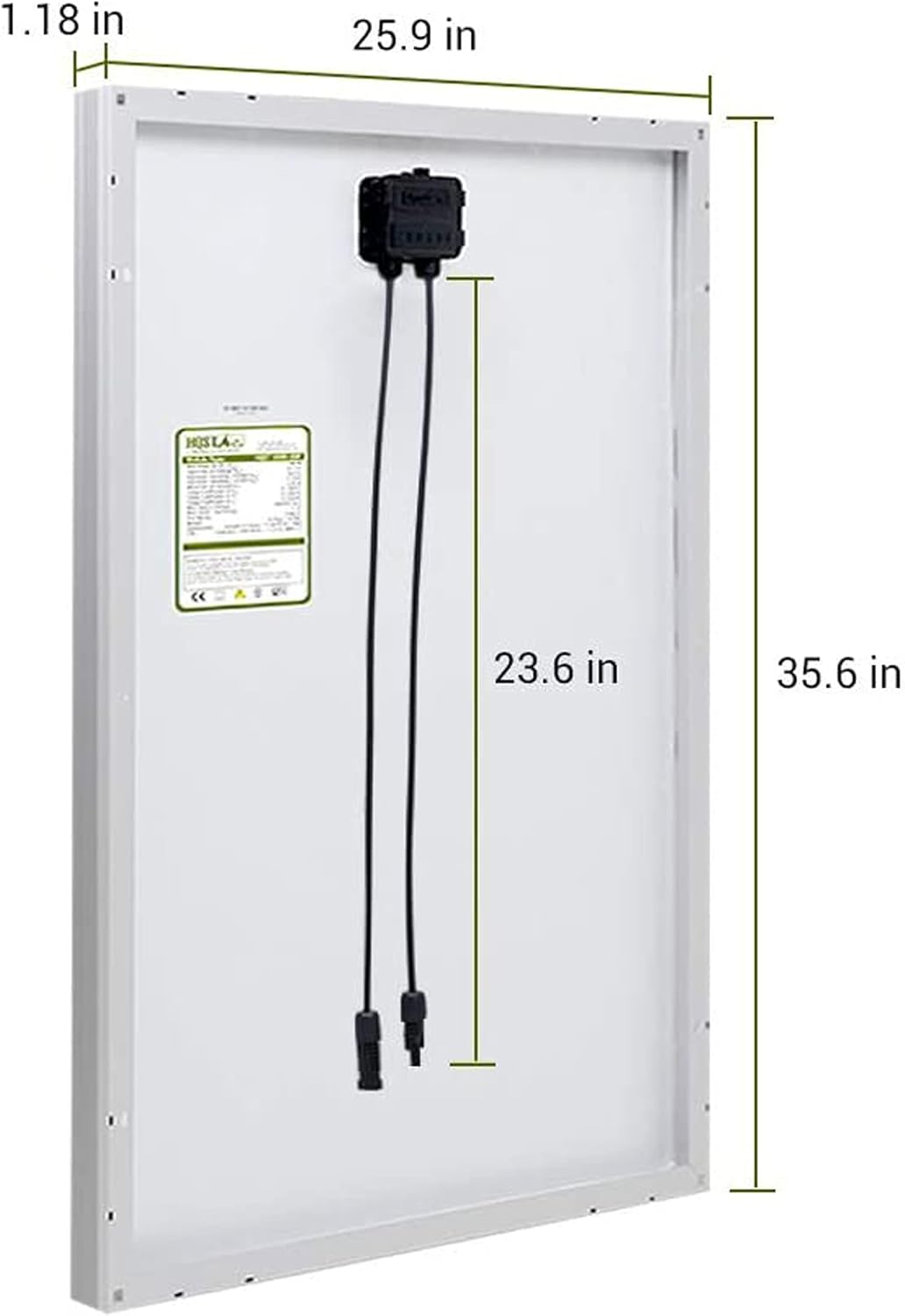
The HQST 100 Watt Monocrystalline Solar Panel is designed for straightforward installation. It features pre-drilled holes for various mounting systems and comes equipped with a waterproof junction box and MC4 connectors for secure wiring.
Irinše Loriview

Iṣagbesori
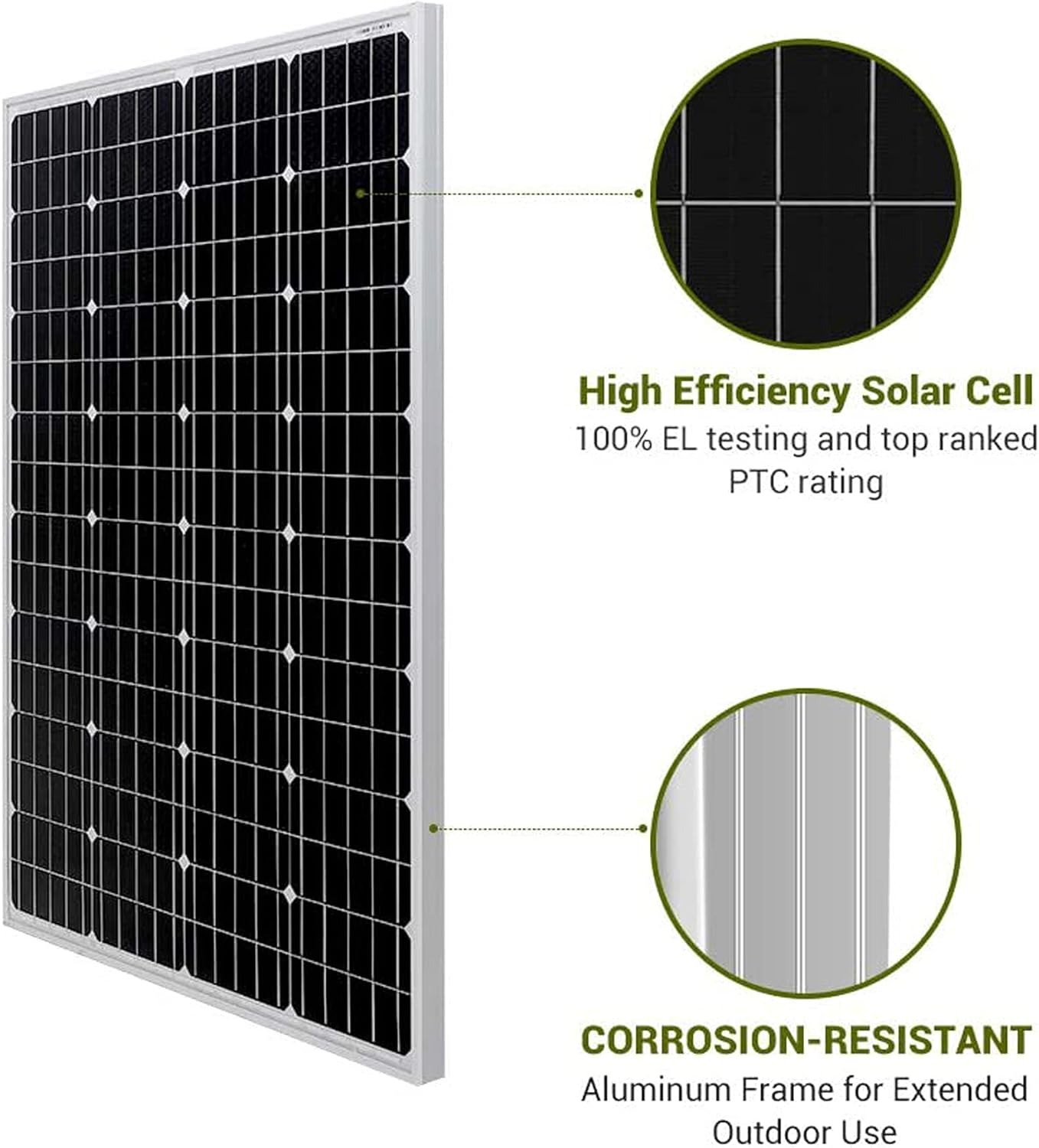
The panel's pre-drilled holes facilitate quick mounting and securing. It is compatible with various mounting systems such as Z-brackets, pole mounts, and tilt mounts. Ensure the mounting location provides maximum exposure to direct sunlight throughout the day and is structurally sound to support the panel's weight and withstand environmental factors.
Aworan onirin
Proper wiring is crucial for the safe and effective operation of your solar power system. The following diagram illustrates a typical setup for connecting your solar panel to a charge controller, battery, and inverter.
- Connect the solar panel's MC4 connectors to your charge controller.
- Connect the charge controller to your 12V deep cycle battery.
- Connect the battery to your 12V power inverter (if used).
- Always ensure correct polarity (positive to positive, negative to negative) to prevent damage to components.
- Use appropriate wire gauges for all connections, especially for the inverter, which typically requires larger gauge wires (e.g., 4 AWG or larger).
Ohun elo Examples

Awọn ilana Iṣiṣẹ
Once installed, your HQST solar panel will begin generating electricity when exposed to sunlight. For optimal performance, consider the following:
- Ifojusi Imọlẹ Oorun: Position the panel to receive maximum direct sunlight throughout the day. Shading, even partial, can significantly reduce power output.
- Adarí gbigba agbara: Always connect the solar panel through a compatible charge controller to prevent overcharging your battery and to optimize charging efficiency.
- Awọn Diodes Fori: The panel is equipped with bypass diodes that minimize power drop caused by shade and ensure excellent performance in low-light environments. However, consistent shading should still be avoided.
- Ideal Output: Under ideal sunlight conditions, the panel can achieve an output of approximately 500Wh per day. Actual output may vary based on weather, season, and panel orientation.
Itoju
Regular maintenance ensures the long-term efficiency and lifespan of your solar panel.
- Ninu: Keep the surface of the solar panel clean from dust, dirt, leaves, and other debris. A clean panel ensures maximum light absorption. Use a soft cloth and water for cleaning. Avoid abrasive materials or harsh chemicals.
- Awọn ayewo: Periodically inspect the panel for any physical damage, such as cracks in the glass, loose connections, or corrosion on the frame.
- Ṣiṣayẹwo onirin: Ensure all wiring connections, especially the MC4 connectors and those to the charge controller and battery, are secure and free from corrosion.
- Atako Ayika: The panel features an anti-reflective, high-transparency, low-iron tempered glass for enhanced stiffness and impact resistance. Its corrosion-resistant aluminum frame is designed for extended outdoor use, allowing the panel to withstand high winds (up to 2400 Pa) and snow loads (up to 5400 Pa).

Laasigbotitusita
If your solar panel system is not performing as expected, consider the following common issues and solutions:
- Ìjáde agbára kékeré tàbí kò sí:
- Check for shading on the panel surface. Even partial shade can drastically reduce output.
- Ensure the panel surface is clean. Dirt, dust, or debris can block sunlight.
- Verify all electrical connections (MC4 connectors, wiring to charge controller and battery) are secure and free from corrosion.
- Check the charge controller's display for error codes or charging status.
- Lo multimeter kan lati ṣe idanwo voltage and current output directly from the solar panel (disconnected from the charge controller) under direct sunlight. Compare readings to the specifications.
- Batiri Ko Ngba agbara:
- Confirm the charge controller is functioning correctly and is compatible with your battery type.
- Check the battery's health. A faulty battery may not accept a charge.
- Ensure the charge controller's settings are appropriate for your battery's voltage and chemistry.
- Igbóná púpọ̀:
- Ensure adequate airflow around the back of the panel. Mounting directly flush against a surface can lead to heat buildup and reduced efficiency.
Awọn pato
Detailed technical specifications for the HQST 100 Watt Monocrystalline Solar Panel (Model HQST-100D-SSPx2).

| Ẹya ara ẹrọ | Iye |
|---|---|
| Nọmba awoṣe | HQST-100D-SSPx2 |
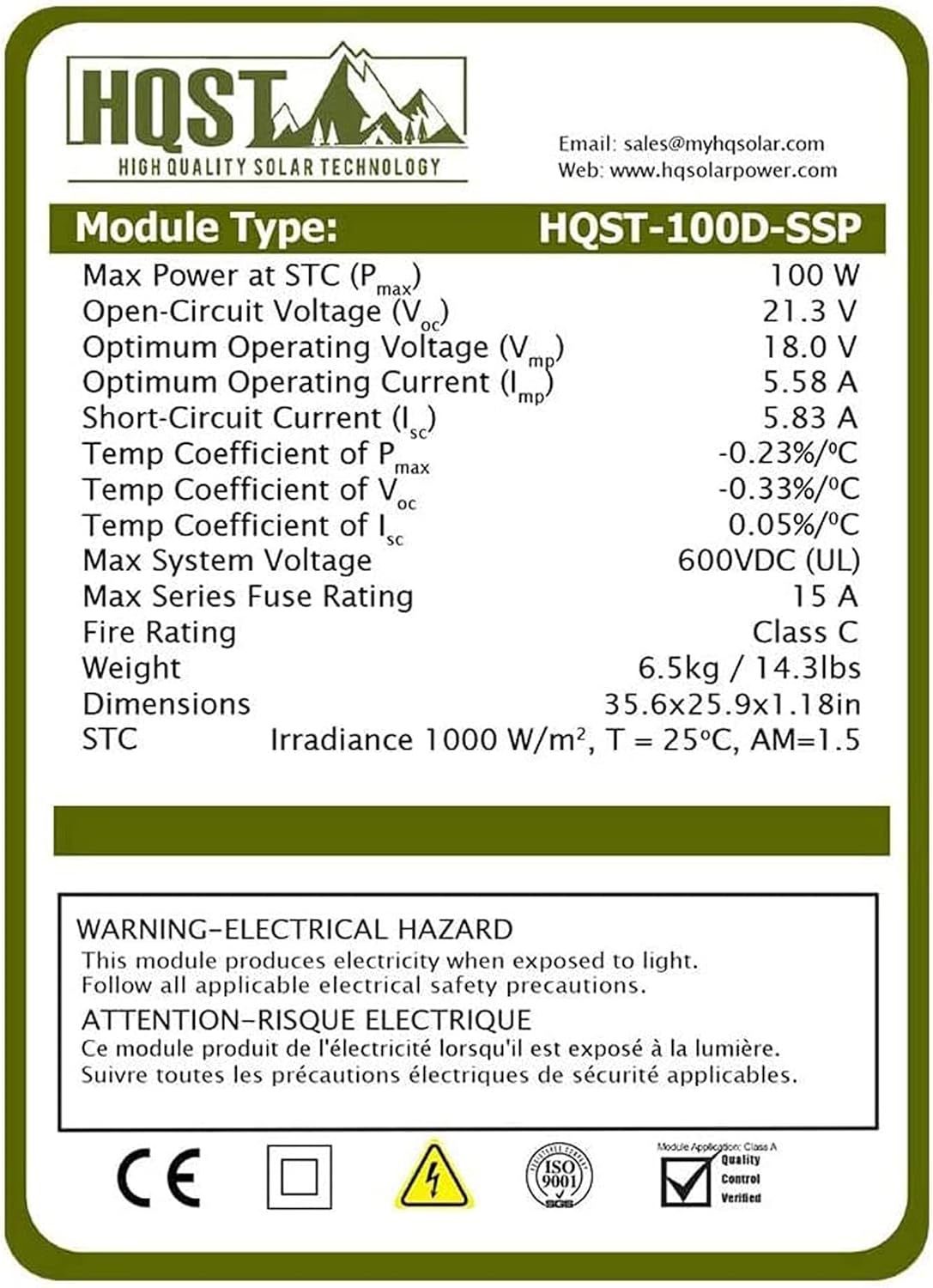
| Agbara to pọju (Pmax) | 100 Wattis |
| O pọju Voltage | 12 Volts |
| Ṣii-Circuit Voltage (Ohun) | 21.3 V |
| Ti o dara ju Ṣiṣẹ Voltage (Vmp) | 18.0 V |
| Iṣiṣẹ lọwọlọwọ (Imp) | 5.58 A |
| Yiyi Kukuru Lọwọlọwọ (Isc) | 5.83 A |
| Iṣẹ ṣiṣe | Titi di 21% |
| Ohun elo | Aluminium, Gilasi |
| Asopọmọra Iru | MC4 |
| Max System Voltage | 600VDC (UL) |
| Max Series fiusi Rating | 15 A |
| Fire Rating | Kilasi C |
| Iwọn | 6.5 kg / 14.3 lbs |
| Awọn iwọn (L x W x H) | 35.6 x 25.9 x 1.18 inches |
Alaye atilẹyin ọja
HQST stands behind the quality of its products. This solar panel comes with a 60-ọjọ owo-pada lopolopo ati a s'aiye atilẹyin ọja. Each solar panel undergoes rigorous testing and inspection before leaving the factory to ensure flawlessness and reliability.
For warranty claims or further details, please refer to the support section.
Onibara Support
Should you have any questions, require technical assistance, or need to address a warranty claim, please do not hesitate to contact HQST customer support.
- Imeeli: sales@myhqsolar.com
- Webojula: www.hqsolarpower.com
Our team is dedicated to providing prompt and helpful assistance.