
Ọrọ Iṣaaju
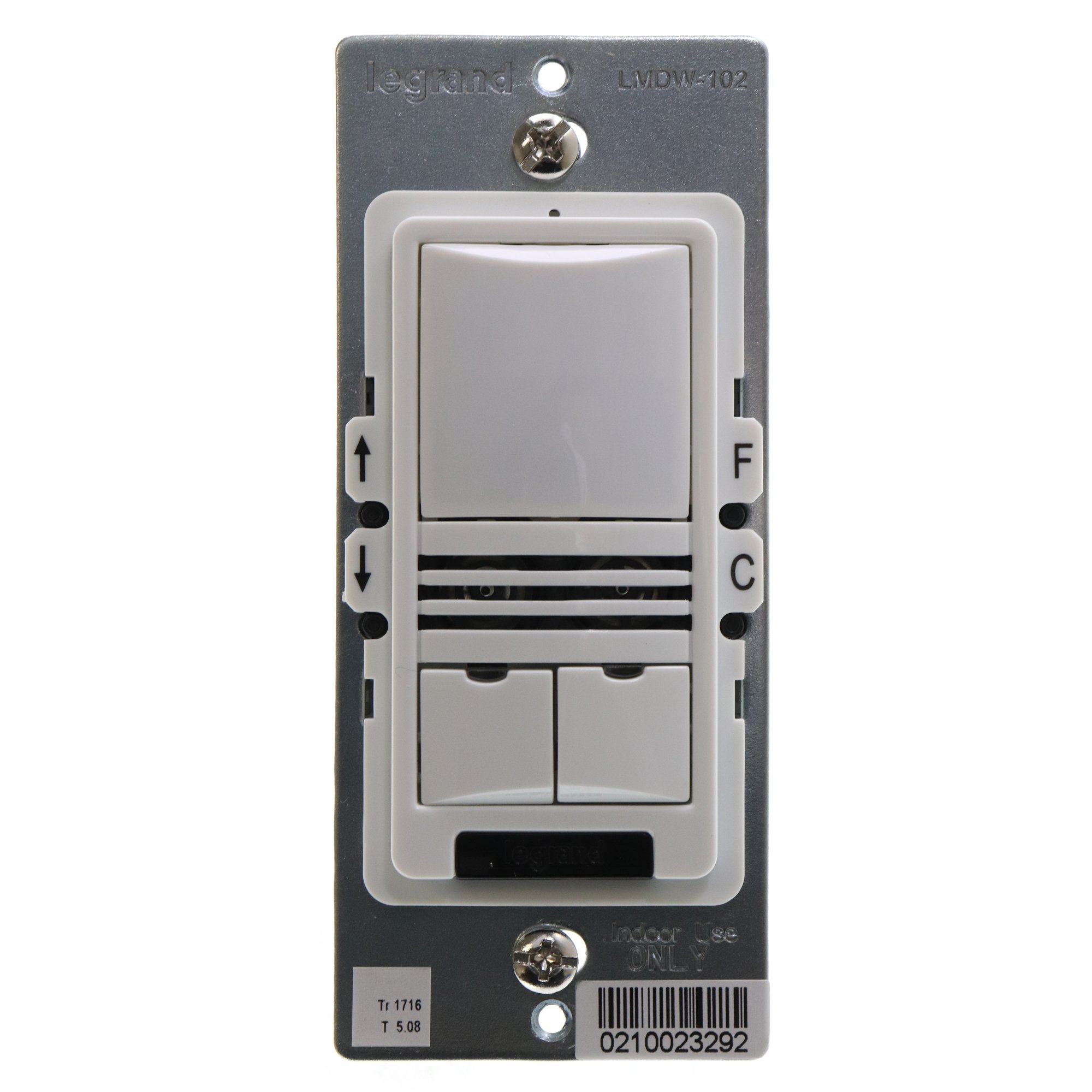
This manual provides detailed instructions for the installation, operation, and maintenance of the Legrand Watt Stopper LMDW-102-W DLM Dual-Tech Digital 2-Button Occupancy Sensor. This device is designed to automatically control lighting based on occupancy detection, utilizing both Passive Infrared (PIR) and Ultrasonic technologies for enhanced accuracy. It features a 2-button interface and is programmable via an infrared remote.
Idanimọ ọja: 0210023292
Ọja Awọn ẹya ara ẹrọ
- DLM System 2-Button Switch
- 24VDC RJ45 Connection
- Dual-Tech (PIR & Ultrasonic) Occupancy Detection
- Infrared Remote Programmable
- Ipari funfun
Alaye Aabo
Please read and understand all instructions before installing or operating this device. Failure to follow these instructions may result in electrical shock, fire, or property damage. Installation should be performed by a qualified electrician in accordance with all national and local electrical codes.
- IKILO: Pa agbara ni ibi fifọ Circuit tabi apoti fiusi ṣaaju fifi sori ẹrọ tabi iṣẹ.
- Ẹrọ yii jẹ apẹrẹ fun Lilo inu ile NIKAN.
- Do not install in wet locations or where exposed to extreme temperatures.
- Rii daju pe gbogbo awọn asopọ wa ni aabo ati idabobo daradara.
Eto ati fifi sori
The LMDW-102-W sensor is designed for wall-mount installation and connects via a 24VDC RJ45 connection as part of a Digital Lighting Management (DLM) system.
- Ge asopọ agbara: Before beginning installation, ensure that power to the circuit is turned off at the main service panel.
- Iṣagbesori: Mount the sensor in a standard wall box. Ensure the mounting plate is securely fastened to the wall box.
- Asopọmọra: Connect the RJ45 cable from the DLM system to the RJ45 port on the back of the sensor. Ensure the connection is firm. This device operates on 24VDC.
- Iṣalaye sensọ: Position the sensor to ensure optimal coverage of the desired area. Avoid obstructions that might block the sensor's view.
- Ẹrọ to ni aabo: Once wired, carefully push the device into the wall box and secure it with the provided screws. Attach the wall plate (not included) if applicable.
- Imupadabọ agbara: Restore power at the circuit breaker. The sensor will perform a self-test.
Awọn ilana Iṣiṣẹ
The LMDW-102-W sensor provides both automatic occupancy detection and manual control via its two push buttons.
Automatic Operation (Occupancy Detection)
The sensor uses both Passive Infrared (PIR) and Ultrasonic technologies to detect occupancy. When motion is detected, connected lights will turn on automatically. After a period of no detected occupancy (determined by system settings), the lights will turn off automatically.
Iṣakoso Afowoyi
The two buttons on the sensor allow for manual override of the automatic control:
- Bọtini oke: Typically used to manually turn lights ON or to increase light levels.
- Bọtini Isalẹ: Typically used to manually turn lights OFF or to decrease light levels.
The exact function of these buttons can be programmed using an infrared remote control (sold separately) to suit specific application requirements within the DLM system.
Infrared Remote Programming
The sensor's settings, such as sensitivity, time delay, and button functions, can be adjusted using a compatible Legrand Watt Stopper infrared remote control. Refer to the remote control's manual for specific programming instructions.
Itoju
The LMDW-102-W sensor requires minimal maintenance to ensure optimal performance.
- Ninu: Periodically wipe the sensor lens and housing with a soft, dry cloth. Do not use abrasive cleaners or solvents, as these can damage the device.
- Ayewo: Regularly inspect the sensor for any physical damage or loose connections.
- Awọn idilọwọ: Ensure that the sensor's detection area remains clear of obstructions (e.g., furniture, tall plants) that could block its view ati ki o ni ipa lori iṣẹ.
Laasigbotitusita
| Isoro | Owun to le Fa | Ojutu |
|---|---|---|
| Àwọn iná kìí tan láìdáwọ́dúró. | No motion detected; power off; incorrect wiring; sensor obstructed; sensitivity too low. | Verify motion in detection area; check circuit breaker; inspect wiring; clear obstructions; adjust sensor sensitivity via remote. |
| Lights remain on. | Constant motion detected; time delay set too long; sensor faulty. | Ensure no constant motion; adjust time delay via remote; contact support if issue persists. |
| Ina a ma pa ni kiakia ju. | Time delay set too short; sensor sensitivity too low; sensor obstructed. | Adjust time delay via remote; increase sensor sensitivity; clear obstructions. |
| Manual buttons do not respond. | No power; incorrect programming; button malfunction. | Check power; verify programming with remote; contact support. |
Awọn pato
| Ẹya ara ẹrọ | Ẹ̀kúnrẹ́rẹ́ |
|---|---|
| Awoṣe | LMDW-102-W |
| Brand | Legrand (Wattstopper) |
| Ipo Isẹ | Manual / Automatic (Occupancy) |
| Awọn ọna Voltage | 24 VDC |
| Iwari Technology | Dual-Tech (PIR & Ultrasonic) |
| Asopọmọra Iru | RJ45 (for DLM System) |
| Yipada Iru | Push Button (2-way circuit) |
| Ọna Iṣakoso | Remote (Infrared) |
| Iṣagbesori Iru | Ògiri Ògiri |
| Àwọ̀ | Funfun |
| Ohun elo | Stainless Steel (Contact Material) |
| Awọn Iwọn Nkan (L x W x H) | 5 x 2 x 2 inches |
| Iwọn Nkan | 0.3 iwon |
| International Idaabobo Rating | IP54 |
| Pato sipesifikesonu | RoHS |
Atilẹyin ọja ati Support
For warranty information and technical support, please refer to the official Legrand Watt Stopper webojula tabi kan si wọn onibara iṣẹ Eka. Tọju iwe-ẹri rira rẹ fun awọn ẹtọ atilẹyin ọja.
Awọn orisun Ayelujara: Legrand Watt Stopper Official Webojula