
Ọrọ Iṣaaju
This instruction manual provides essential information for the safe and efficient operation, maintenance, and troubleshooting of your Craftsman 351.226712 Belt & Disc Sander. Please read this manual thoroughly before operating the tool to ensure proper usage and to prevent injury or damage.
Jeki iwe afọwọkọ yii ni aaye ailewu fun itọkasi ọjọ iwaju.
Awọn Itọsọna Aabo pataki
Always follow basic safety precautions to reduce the risk of fire, electric shock, and personal injury. This includes, but is not limited to:
- Ka gbogbo awọn ilana: Familiarize yourself with the controls and proper use of the sander.
- Wọ aabo oju: Always wear safety goggles or a face shield.
- Use in a well-ventilated area: Dust generated during sanding can be harmful.
- Iṣẹ iṣẹ to ni aabo: Nigbagbogbo clamp or otherwise secure the workpiece to prevent movement.
- Ge asopọ agbara: Always unplug the sander before making adjustments, changing belts/discs, or performing maintenance.
- Tọju awọn ẹṣọ ni aaye: Never operate the sander without all guards properly installed.
Ọja irinše
The Craftsman 351.226712 Belt & Disc Sander consists of several key components. Refer to the image below for a visual representation.
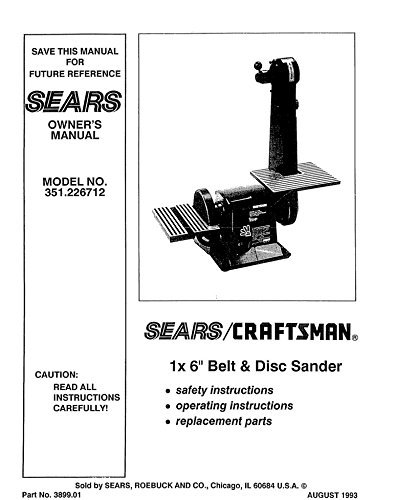
Nọmba 1: Pariview of the Craftsman 351.226712 Belt & Disc Sander. This image displays the main body of the sander, including the belt sanding mechanism on the left and the disc sanding table on the right. Key features such as the motor housing, power switch, and dust collection port are visible.
- Belt Sander: Used for sanding larger, flat surfaces.
- Disc Sander: Ideal for shaping and finishing edges or smaller pieces.
- Tabili iṣẹ: Tabili ti a le ṣatunṣe fun awọn iṣẹ ṣiṣe atilẹyin lakoko fifọ disiki.
- Ibudo Gbigba Eruku: Connects to a vacuum system for dust extraction.
- Agbara Yi pada: Iṣakoso titan/pipa fun mọto naa.
Awọn ilana iṣeto
- Ṣii silẹ: Carefully remove all components from the packaging. Inspect for any shipping damage. Retain packaging for future transport.
- Iṣagbesori: Securely mount the sander to a sturdy workbench using appropriate bolts and washers (not included). Ensure the mounting surface is level and stable.
- Ikojọpọ eruku: Connect a suitable dust collection system to the dust collection port. This is crucial for maintaining a clean work environment and prolonging the life of the sander.
- Asopọ agbara: Ensure the power switch is in the "OFF" position. Plug the power cord into a grounded electrical outlet. Verify that the voltage matches the sander's requirements.
Awọn ilana Iṣiṣẹ
Lilo igbanu Sander
- Belt Installation/Adjustment:
- Ge asopọ agbara.
- Tu igbanu ẹdọfu lefa.
- Slide the old belt off and slide the new belt on, ensuring the arrow on the belt matches the direction of rotation on the sander.
- Re-engage the tension lever.
- Adjust the belt tracking knob until the belt runs centrally on the rollers when the sander is briefly turned on.
- Isẹ:
- Turn on the sander.
- Apply light, even pressure to the workpiece against the moving belt.
- Move the workpiece smoothly across the belt to ensure even sanding and prevent gouging.
- Avoid applying excessive pressure, which can slow the motor and damage the belt.
Using the Disc Sander
- Disc Installation/Adjustment:
- Ge asopọ agbara.
- Remove the old sanding disc.
- Clean the disc plate thoroughly.
- Peel the backing from the new adhesive-backed sanding disc and carefully align it with the disc plate, pressing firmly from the center outwards.
- Work Table Adjustment:
- Tu bọtini titiipa tabili silẹ.
- Adjust the work table to the desired angle (0-45 degrees).
- Ensure the table is positioned close to the disc without touching it.
- Tighten the table locking knob securely.
- Isẹ:
- Turn on the sander.
- Always sand on the downward-rotating side of the disc (left side for most models) to prevent the workpiece from being thrown.
- Apply light, even pressure and move the workpiece slowly across the disc.
- Avoid sanding small pieces that cannot be securely held.
Itoju
Itọju deede ṣe idaniloju gigun ati iṣẹ ti o dara julọ ti Sander rẹ.
- Ninu: Regularly clean dust and debris from the sander, especially around the motor vents and sanding areas. Use compressed air or a soft brush.
- Belt/Disc Replacement: Replace sanding belts and discs when they become worn or lose their abrasive quality.
- Motor Brushes: Inspect motor brushes periodically (refer to specific model service manual for frequency). Replace if worn down to the wear limit mark.
- Lubrication: The sander is equipped with sealed bearings that do not require lubrication. Do not attempt to lubricate internal components unless specified in a service manual.
- Ayẹwo okun agbara: Regularly inspect the power cord for damage. Replace if frayed or cut.
Laasigbotitusita
| Isoro | Owun to le Fa | Ojutu |
|---|---|---|
| Sander ko bẹrẹ | No power supply; Faulty power switch; Tripped circuit breaker | Check power cord connection; Test outlet; Reset circuit breaker; Contact qualified service personnel if switch is faulty. |
| Gbigbọn ti o pọju | Loose mounting bolts; Unbalanced sanding disc/belt; Worn bearings | Tighten mounting bolts; Replace sanding disc/belt; Contact qualified service personnel for bearing inspection. |
| Ko dara sanding išẹ | Worn sanding belt/disc; Incorrect grit; Excessive pressure | Replace with new belt/disc; Use appropriate grit for the task; Apply lighter pressure. |
| Àwọn ìṣòro ìtọ́pinpin bẹ́líìtì | Improper belt tension; Misaligned tracking adjustment | Adjust belt tension; Fine-tune belt tracking knob. |
Awọn pato
- Awoṣe: Oniṣọnà 351.226712
- Iru: igbanu & Disiki Sander
- Orisun Agbara: (Typically 120V AC, 60Hz - Specifics not provided in input, assuming standard for such tools)
- Iwọn igbanu: (e.g., 4 x 36 inches - Specifics not provided in input)
- Iwọn Disiki: (e.g., 6 inches - Specifics not provided in input)
- Mọto: (e.g., 1/2 HP - Specifics not provided in input)
Note: Specific technical specifications such as motor horsepower, belt size, and disc diameter are not available in the provided product data. Please refer to the original product packaging or manufacturer's website for precise details.
Atilẹyin ọja ati Support
This manual is a reprint and does not include specific warranty information. For details regarding warranty coverage, technical support, or replacement parts for your Craftsman 351.226712 Belt & Disc Sander, please contact Craftsman customer service or visit their official webojula.
Always provide your model number (351.226712) when contacting support.