
Ọrọ Iṣaaju
The Wilfa Precision Automatic Coffee Brewer WSP-1B is designed to deliver an optimal coffee brewing experience. This manual provides detailed instructions for setting up, operating, and maintaining your coffee brewer to ensure consistent, high-quality results. Key features include precise temperature and water control, a detachable water tank, and adjustable flow control to customize your brew.
Ọja Pariview
Familiarize yourself with the components of your Wilfa Precision Automatic Coffee Brewer.

Nọmba 1: Component Diagram of the Wilfa Precision Automatic Coffee Brewer.
- Titan/pa a yipada
- Omi omi yiyọ kuro
- Coffee jug (carafe)
- Àlẹmọ dimu
- Iṣakoso sisan ati idaduro drip
- Bọtini ibẹrẹ / jẹ ki o gbona
- Okun agbara pẹlu plug
- Measuring spoon (5, 10, and 15g)
The brewer features a sleek design with a transparent, detachable water tank and a double-walled filter basket for optimal temperature during brewing.
Ṣeto
- Ṣii silẹ: Carefully remove all components from the packaging. Ensure all parts listed in the Product Overview ni o wa.
- Ibi: Place the coffee brewer on a stable, flat, heat-resistant surface, away from water sources and direct heat.
- Ìfọ̀mọ́ àkọ́kọ́: Before first use, wash the glass carafe, filter holder, and water tank with warm, soapy water. Rinse thoroughly and dry.
- Fifi sori Omi Omi: Ensure the detachable water tank is securely placed on its base.
- Ayika Pipọnti akọkọ (Isọmọ): Fill the water tank to its maximum level with fresh, cold water. Do not add coffee. Place the empty filter holder and carafe in position. Run a full brew cycle to flush the system. Discard the water.

Nọmba 2: The Wilfa Precision Automatic Coffee Brewer set up on a kitchen counter.
Awọn ilana Iṣiṣẹ
- Kun Omi Omi: Remove the detachable water tank and fill it with fresh, cold water to the desired level. The tank has marked measurements for water to coffee ground ratio. Re-attach the water tank securely.
- Mura Ajọ: Place a paper filter (or reusable filter if applicable) into the filter holder.
- Ṣafikun Awọn aaye Kofi: Add your desired amount of medium-ground coffee to the filter. For optimal results, use approximately 55 grams of coffee for 1 liter of water.
- Set Flow Control: Adjust the flow control dial on the filter holder to your preference. This allows you to control the brewing speed, mimicking a pour-over method. For a stronger brew, a slower flow rate can be selected. Ensure the drip stop is open for brewing.
- Bẹrẹ Pipọnti: Press the start button. The brewer will heat water to the optimal temperature of 197º-205ºF and begin the brewing process.
- Jeki Iṣiṣẹ Gbona: The hot warming plate will keep your coffee warm in the carafe after brewing is complete. The brewer automatically shuts off after one hour.

Nọmba 3: Filling the detachable water tank with precise measurements.

Nọmba 4: Adding coffee grounds to the double-walled filter basket.
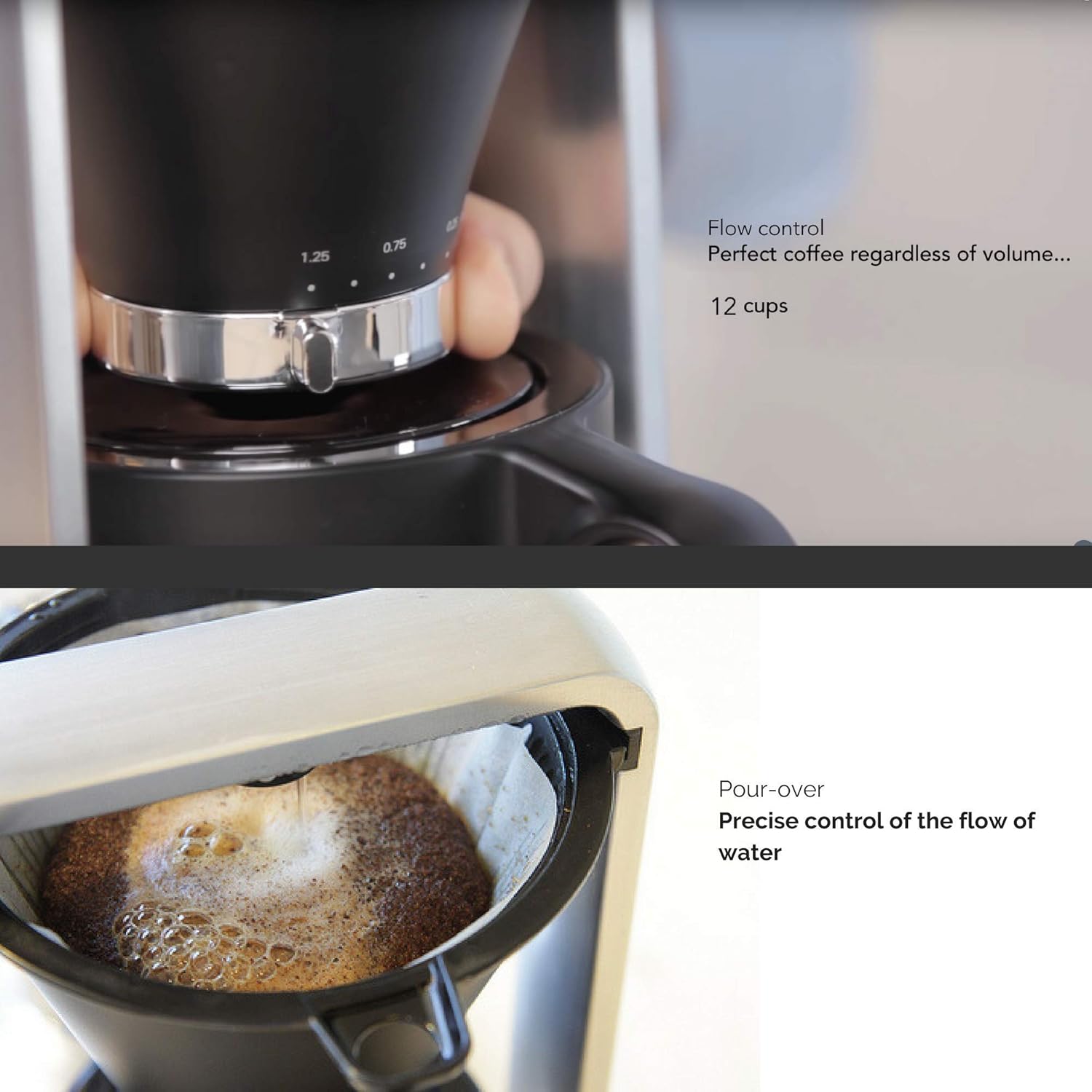
Nọmba 5: Adjusting the flow control for customized brewing.
Itoju
- Ninu ojoojumọ: After each use, discard used coffee grounds and filter. Wash the filter holder, glass carafe, and lid with warm, soapy water. The detachable water tank can also be easily cleaned. Rinse thoroughly and dry.
- Ode Ninu: Mu ese ita ti kofi alagidi pẹlu asọ, damp asọ. Ma ṣe lo awọn afọmọ abrasive tabi fi ibọmi apakan akọkọ sinu omi.
- Fifọ: Depending on water hardness, descale the coffee maker regularly (e.g., every 1-3 months) to prevent mineral buildup. Use a commercial descaling solution suitable for coffee makers or a mixture of white vinegar and water (1:1 ratio). Follow the descaling product's instructions or run a brew cycle with the solution, then rinse by running several cycles with fresh water.
Laasigbotitusita
- Kọfí Tí Kò Ń Ṣe Pípèsè:
- Rii daju pe okun agbara ti wa ni edidi ni aabo.
- Check if the water tank is properly seated and filled with water.
- Verify the start button has been pressed.
- Slow Brewing or Clogged Filter:
- Check the flow control setting; a slower setting will result in a longer brew time.
- Ensure the coffee grounds are not too fine, which can clog the filter.
- Descale the machine if mineral buildup is suspected.
- Omi Sisun:
- Ensure the water tank is correctly positioned and not overfilled.
- Check that the filter holder and carafe are properly aligned.
- Coffee Tastes Weak or Too Strong:
- Adjust the coffee-to-water ratio.
- Experiment with the grind size of your coffee beans.
- Adjust the flow control setting to achieve desired strength.
Awọn pato
| Ẹya ara ẹrọ | Ẹ̀kúnrẹ́rẹ́ |
|---|---|
| Brand | Wilfa |
| Nọmba awoṣe | WSP-1B |
| Agbara | 1.25 Lita (tó tó 42 fl oz) |
| Àwọ̀ | Dudu |
| Kofi Ẹlẹda Iru | Tú Lori |
| Ipo Isẹ | Ni kikun Aifọwọyi |
| Wattage | 1050 watt |
| Human Interface Input | Afi ika te |
| Àlẹmọ Iru | Atunlo |
| Iwọn Nkan | 5 Poun (iwọn 2.27 kg) |
| Ohun elo | Glass (Carafe) |
| Awọn irinše to wa | Carafe, Ajọ |
| Optimal Brewing Temperature | 197º-205ºF (91.6º-96.1ºC) |
Atilẹyin ọja ati Support
For warranty information and customer support, please refer to the documentation included with your purchase or visit the official Wilfa webojula. Jeki ẹri rira rẹ fun eyikeyi awọn ibeere atilẹyin ọja.