
1. Ifihan
This manual provides essential information for the proper installation, operation, and maintenance of your First Alert BRK SC-9120B Hardwired Combination Smoke and Carbon Monoxide Alarm. This device is designed to detect both smoke and carbon monoxide, providing early warning of potential dangers. Please read these instructions thoroughly before installation and retain this manual for future reference.
2. Alaye Aabo
- Pataki: This alarm requires a continuous 120V AC power supply and a 9V battery for backup.
- Do not paint the alarm. Paint can clog the sensing chambers and prevent the unit from operating correctly.
- Ṣe ìdánwò itaniji naa ni osẹ-sẹsẹ lati rii daju pe o ṣiṣẹ daradara.
- Never ignore an alarm. Investigate the cause immediately.
- Proper placement is crucial for effective detection. Refer to local codes and NFPA 72 (National Fire Alarm and Signaling Code) for guidance.
3. Awọn ẹya ara ẹrọ
- Imọ-ẹrọ Sensọ Meji: Ionization sensor for smoke detection and electrochemical sensor for carbon monoxide (CO) detection.
- Hardwired with Battery Backup: Connects to your home's electrical system with a 9-volt battery for continuous operation during power outages.
- Asopọmọra: Can be linked with other compatible BRK or First Alert hardwired alarms for synchronized alarming throughout your residence.
- Latching Alarm Indicator: Identifies the initiating alarm unit even after the alarm condition has subsided.
- Igbeyewo Nikan/Bọtini ipalọlọ: Allows for easy testing of the alarm's functions and silencing of nuisance alarms.
- Awọn imọlẹ Atọka: Provide visual cues for power, smoke, and carbon monoxide alarm status.
- Fifi sori Rọrun: Features universal mounting brackets and tamper-resistant locking brackets.
4. Package Awọn akoonu
- First Alert BRK SC-9120B Combination Smoke and Carbon Monoxide Alarm Unit(s)
- Oke Atẹgun
- Ikun iṣan
- Itọsọna olumulo
5. Eto ati fifi sori
5.1 Pre-Fifi sori
- Awọn ibeere Agbara: Ensure a 120V AC, 60 Hz power source is available.
- Ibi: Install alarms on every level of your home, inside each bedroom, and outside each sleeping area. Avoid placing near vents, windows, or in dead air spaces.
- Asopọmọra: If installing multiple units, ensure all are compatible for interconnectivity.
5.2 Iṣagbesori ati Waya
- Pa agbara: Before beginning installation, turn off the power to the circuit at the main service panel.
- So akọmọ iṣagbesori: Secure the universal mounting bracket to the electrical box using the provided screws.
- Sopọ Ijanu Waya: Connect the alarm's wiring harness to your home's electrical wiring (black to black, white to white, red to red for interconnectivity). Ensure all connections are secure.
- Fi Batiri sii: Insert a fresh 9-volt battery into the battery compartment. Ensure correct polarity.
- Attach Alarm Unit: Align the alarm unit with the mounting bracket and twist clockwise until it locks into place. The tamper-resistant locking brackets can be engaged if desired.
- Pada Agbara pada: Tan agbara pada ni nronu iṣẹ akọkọ.
5.3 Idanwo Ibẹrẹ
After installation and restoring power, press and hold the Test/Silence button for a few seconds until the alarm sounds. This confirms the unit is receiving power and the alarm mechanism is functional. If the alarm chirps for approximately 5 minutes after installation, press the test button to reset and synchronize the unit.
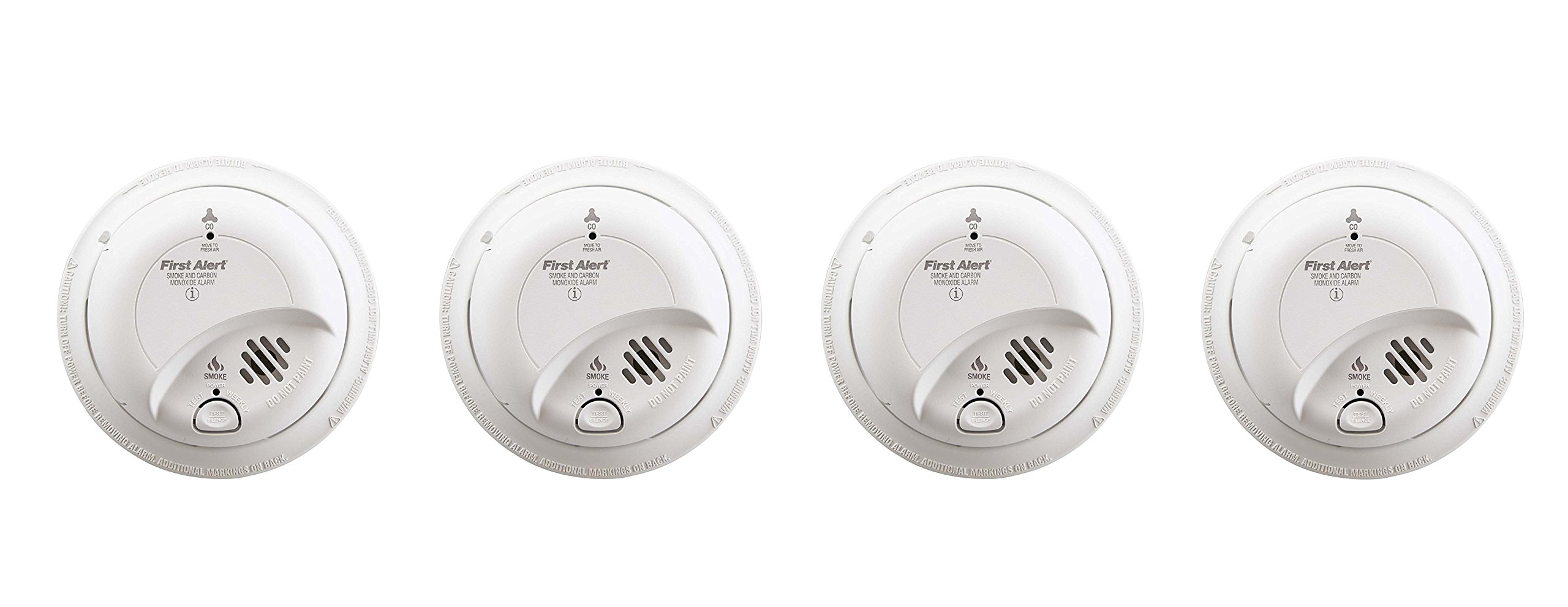
Image: First Alert BRK SC-9120B Hardwired Smoke and Carbon Monoxide Alarm. This image shows the front view of the alarm unit, typically white or off-white, with a central test/silence button and indicator lights.
6. Awọn ilana Iṣiṣẹ
6.1 Isẹ deede
Under normal conditions, the power indicator light (usually green) will glow continuously, indicating that the unit is receiving AC power. The alarm will remain silent unless smoke or carbon monoxide is detected, or the test button is pressed.
6.2 Itaniji Awọn ipo
- Itaniji ẹfin: The alarm will sound a loud, continuous horn pattern (three beeps, pause, three beeps). The smoke indicator light (usually red) will flash rapidly.
- Ìkìlọ̀ nípa Erogba Monoxide (CO) The alarm will sound a distinct four-beep pattern, pause, then repeat. The CO indicator light (usually red) will flash rapidly.
- Awọn itaniji Asopọmọra: If interconnected, all compatible alarms will sound when one detects a hazard. The initiating unit's indicator light will flash, while others will remain steady.
6.3 Silence Feature
To silence a nuisance alarm (e.g., from cooking smoke), press the Test/Silence button. The alarm will temporarily silence for several minutes. If the smoke or CO concentration is still present after the silence period, the alarm will reactivate.
6.4 Idanwo Itaniji naa
Test your alarm weekly by pressing and holding the Test/Silence button until the alarm sounds. This verifies the electronic circuitry, horn, and battery are working. The alarm should emit both smoke and CO alarm patterns during the test.
7. Itọju
7.1 Deede Cleaning
Clean your alarm at least once a month. Use a soft brush or vacuum cleaner attachment to remove dust and debris from the alarm's vents and openings. Do not use cleaning solvents or spray directly onto the unit.
7.2 Batiri Rirọpo
The 9-volt backup battery should be replaced at least once a year, or immediately when the alarm emits a regular 'chirp' sound (approximately once per minute), indicating a low battery. To replace the battery, twist the alarm counter-clockwise to remove it from the mounting bracket, open the battery compartment, replace the old battery with a new 9-volt battery, and reattach the unit.
7.3 Ipari aye
Smoke and carbon monoxide alarms have a limited lifespan. This unit should be replaced approximately 7-10 years after its manufacture date. Refer to the date printed on the back of the alarm for replacement information.
8. Laasigbotitusita
| Isoro | Owun to le Fa | Ojutu |
|---|---|---|
| Alarm chirps once every minute | Afẹyinti batiri kekere | Replace the 9-volt battery. |
| Alarm sounds intermittently or falsely | Dust/debris, high humidity, cooking fumes, improper placement | Clean the alarm. Relocate if consistently triggered by non-hazardous sources. Use silence feature for nuisance alarms. |
| Itaniji ko dun lakoko idanwo | No AC power, dead battery, faulty unit | Check circuit breaker. Replace battery. If still no sound, replace the unit. |
| Alarm chirps after installation | Unit needs to synchronize/reset | Press the Test/Silence button to reset the unit. |
Ti awọn igbesẹ laasigbotitusita ko ba yanju ọrọ naa, kan si atilẹyin alabara.
9. Awọn pato
- Awoṣe: SC-9120B
- Orisun Agbara: 120V AC, 60 Hz with 9V Battery Backup
- Orisi sensọ: Ionization (Smoke), Electrochemical (Carbon Monoxide)
- Ìwọ̀n Nkan: Approximately 2.97 pounds (for 4 units)
- Awọn iwọn idii: Approximately 10.24 x 6.85 x 6.14 inches (for 4 units)
- UPC: 716123256193
10. Atilẹyin ọja ati Support
First Alert products are designed for reliability and performance. For specific warranty details, please refer to the documentation included with your purchase or visit the official First Alert website. If you require technical assistance or have questions regarding your SC-9120B alarm, please contact First Alert customer support.
Ibi iwifunni: Refer to the First Alert official webAaye tabi apoti ọja fun awọn alaye olubasọrọ atilẹyin alabara tuntun julọ.