
1. Ọja Ipariview
The ARES 71002 Harmonic Balancer Puller Kit is engineered for the efficient removal of damper pulleys, particularly in tight engine compartments where radiator removal is impractical. Its robust design ensures optimal position retention and durability.
Constructed from high-strength steel with a black oxide finish, this tool offers superior strength, longevity, and corrosion resistance. The adjustable 3-jaw puller is versatile, accommodating a wide range of harmonic balancers found in various vehicle makes and models.

This image displays the complete ARES 71002 Harmonic Balancer Puller Kit, including the 3-jaw puller, four different lengths of forcing rods, and the forcing screw, all neatly organized within its durable gray storage case.
2. Alaye Aabo
- Always wear appropriate personal protective equipment, including safety glasses, when using this tool.
- Rí i dájú pé ọkọ̀ náà ti ní àtìlẹ́yìn tó yẹ kí ó sì wà ní ààbò kí ó tó bẹ̀rẹ̀ iṣẹ́.
- Ka ati oye gbogbo awọn itọnisọna ṣaaju lilo ẹrọ naa.
- Use the correct size and length of forcing rod for your specific application to prevent damage to the tool or vehicle components.
- Pa ọwọ ati aṣọ mọ kuro ninu awọn ẹya gbigbe.
- Má ṣe lo àwọn irinṣẹ́ tó ti bàjẹ́ tàbí tó ti yípadà.
3. Package Awọn akoonu
The ARES 71002 Harmonic Balancer Puller Kit includes the following components:
- 1 x 3-Jaw Puller
- 4 x Forcing Rods (various lengths)
- 1 x Forcing Screw with 3/8-inch square drive and 3/4-inch hex head
- 1 x Ọran Ibi ipamọ ti o tọ
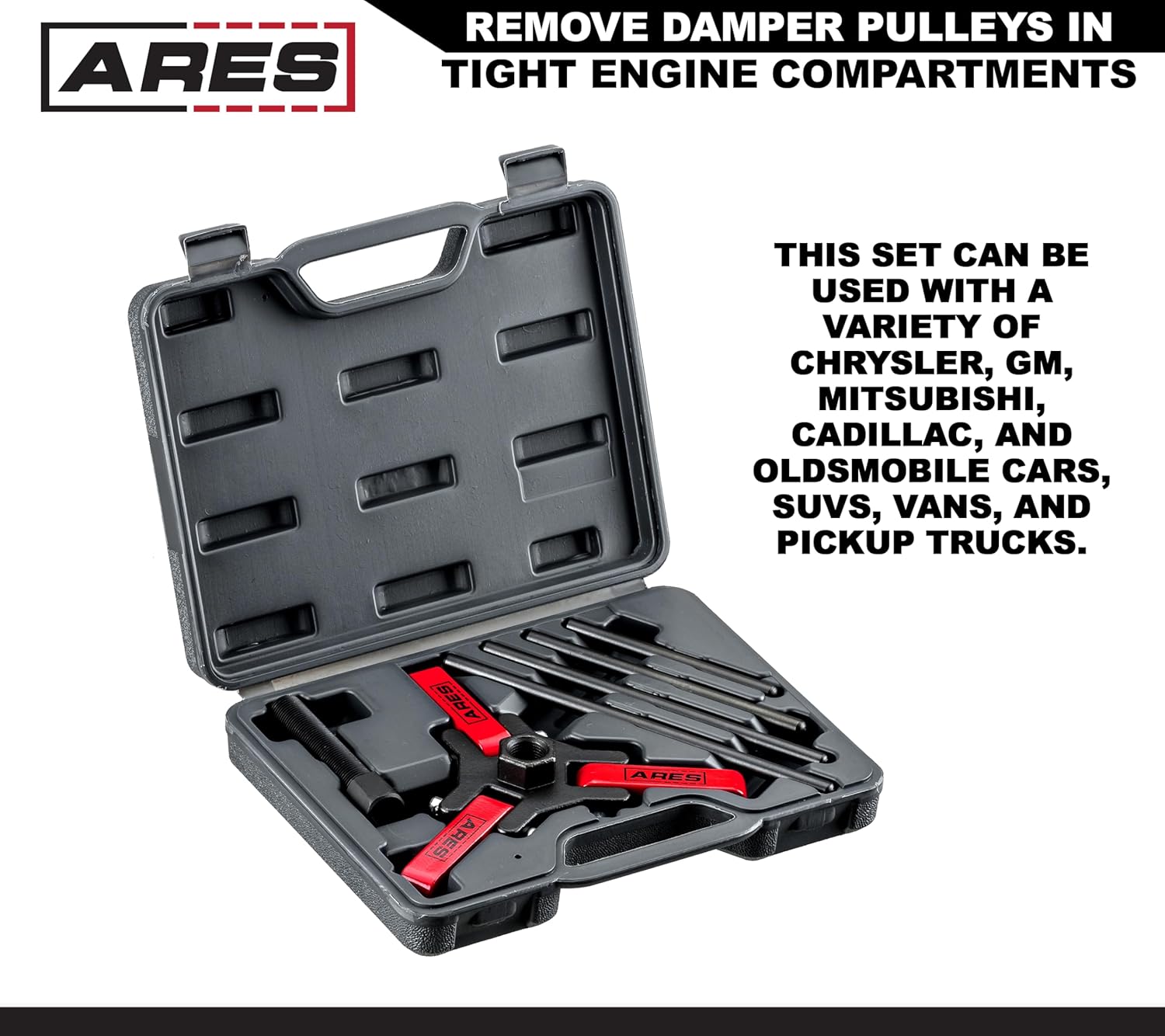
The ARES Harmonic Balancer Puller Kit is shown open in its storage case. Text on the image specifies compatibility with Chrysler, GM, Mitsubishi, Cadillac, and Oldsmobile cars, SUVs, vans, and pickup trucks.
4. Eto
Proper setup of the puller is crucial for effective and safe operation. The puller jaws can be configured for both external and internal gripping, depending on the design of the harmonic balancer.
4.1. Configuring the Puller Jaws
- Identify whether your harmonic balancer requires an external or internal grip. Most applications will use an external gripping configuration.
- The jaws are assembled with pins that allow them to be reversed. To change the configuration, remove the pins, flip the jaws, and reinsert the pins.
4.2. Selecting the Correct Forcing Rod
- After removing the crankshaft bolt, determine the depth of the crankshaft bolt hole.
- Select a forcing rod from the four provided lengths that will allow the forcing screw to be threaded through the puller yoke with sufficient engagement, without bottoming out too early or being too short to apply force. The rod should extend into the crankshaft bolt hole to provide a stable pushing surface.
- Avoid using a rod that is too long, as this can prevent the puller from seating correctly or cause the rod to bend under extreme pressure.
This video demonstrates the setup and configuration of the ARES 71002 Harmonic Balancer Puller Kit, including how to adjust the jaws and select the appropriate forcing rod for various applications.
5. Awọn ilana Iṣiṣẹ
Follow these steps to safely and effectively remove a harmonic balancer using the ARES 71002 kit:
- Ṣeto Ọkọ naa: Ensure the vehicle is stable and the engine compartment is accessible. Remove any components (e.g., fan shroud) that obstruct access to the harmonic balancer.
- Remove Crankshaft Bolt: Use an appropriate tool (e.g., impact wrench with a 24mm socket) to remove the crankshaft bolt from the harmonic balancer.
- Kó àwọn ohun èlò ìfàmọ́ra náà jọ: Insert the selected forcing rod into the crankshaft bolt hole. Position the 3-jaw puller so its jaws securely grip the outer edge of the harmonic balancer.
- Insert Forcing Screw: Thread the forcing screw through the center of the puller yoke and ensure it makes contact with the forcing rod. Turn the forcing screw by hand until the puller jaws are firmly seated against the balancer.
- Waye Agbara: Use a 3/8-inch drive ratchet, breaker bar, or a 19mm socket/wrench on the forcing screw's hex head to apply steady, increasing titẹ.
- Bojuto Ilọsiwaju: Continue turning the forcing screw. You may hear pops or creaks as the balancer begins to loosen and slide off the crankshaft. This is normal.
- Remove Balancer: Once the harmonic balancer is free, carefully remove the puller assembly and the balancer from the engine.

This image shows the ARES 3-jaw puller actively engaged with a harmonic balancer inside a vehicle's engine bay, demonstrating its low-profile design for use in tight spaces.

A alaye view of the ARES 3-jaw puller's red jaws securely gripping the outer edge of a harmonic balancer, illustrating the tool's firm hold during the removal process.

A harmonic balancer is shown with the ARES 3-jaw puller and forcing screw assembled and ready for operation, demonstrating the complete setup for removal.
6. Itọju
- Clean the puller components after each use to remove grease, dirt, and debris.
- Lightly lubricate the threads of the forcing screw and pins with appropriate grease to ensure smooth operation and prevent corrosion.
- Store the kit in its durable storage case to protect components and keep them organized.
- Inspect the puller for any signs of wear or damage before each use. Replace any worn or damaged parts immediately.
7. Laasigbotitusita
- Difficulty Removing Balancer: Ensure the puller jaws are securely gripping the balancer and the forcing screw is properly aligned with the forcing rod. Verify that the correct length of forcing rod is being used. Applying penetrating oil to the crankshaft/balancer interface may help.
- Forcing Rod Bending: This typically indicates that the forcing rod is either too long for the application, causing excessive leverage, or the balancer is extremely stubborn. Ensure the rod is seated correctly and consider using a shorter, more appropriate rod if possible.
- Puller Slipping: Re-check the jaw configuration and ensure they are firmly seated on the balancer. The pins should be fully engaged to prevent movement.
8. Awọn pato
| Ẹya ara ẹrọ | Ẹ̀kúnrẹ́rẹ́ |
|---|---|
| Olupese | ARES |
| Brand | ARES |
| Awoṣe | Harmonic Balancer Puller Set |
| Iwọn Nkan | 3.43 iwon |
| Package Mefa | 9.17 x 7.09 x 2.05 inches |
| Nọmba Awoṣe Nkan | 8542036071 |
| Olupese Apá Number | 71002 |
| ASIN | B079J6T6JB |
| Max Grip Diameter | 4.5 inches |
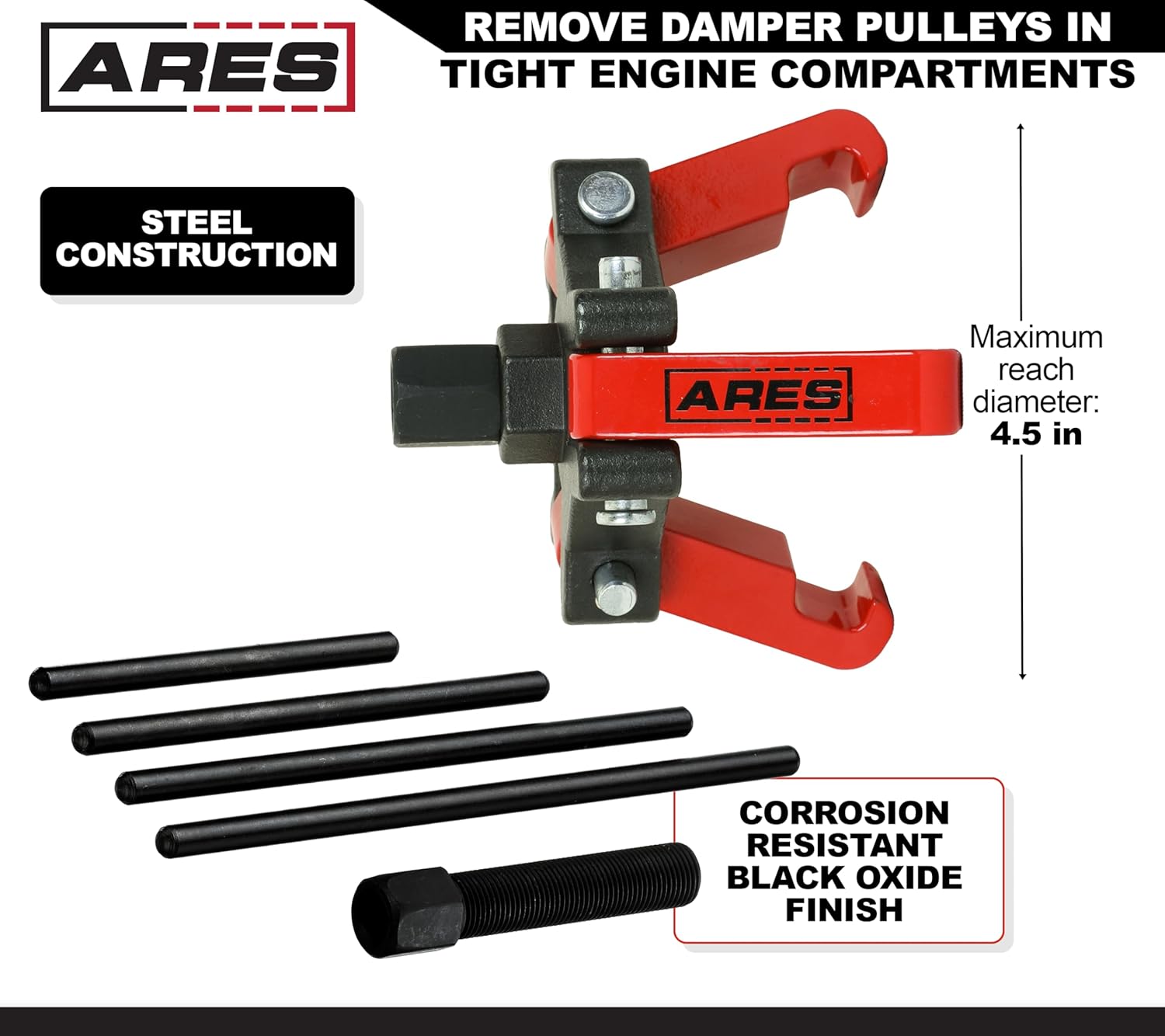
A sunmọ-soke view of the ARES 3-jaw puller, highlighting its steel construction and corrosion-resistant black oxide finish. An annotation indicates a maximum reach diameter of 4.5 inches, suitable for various harmonic balancers.
9. Atilẹyin ọja ati Support
ARES stands by the quality of its tools with a Performance Assurance. The ARES 71002 Harmonic Balancer Puller Kit is backed by a Limited Lifetime Warranty.
If you encounter any issues with your ARES harmonic balancer puller set, please contact customer service for troubleshooting assistance, parts, replacement, or refund.

The ARES Limited Lifetime Warranty badge, indicating the product's performance assurance and commitment to quality.