1. Ifihan
This manual provides essential information for the safe and effective operation, maintenance, and troubleshooting of your Geko G02032 Low Profile 2.5 Ton Garage Jack. Please read and understand all instructions and safety warnings before using this product. Proper use and maintenance will ensure long-lasting performance and user safety.
2. Alaye Aabo
Always prioritize safety when operating hydraulic lifting equipment. Failure to follow these instructions may result in property damage, personal injury, or death.
- Ka iwe afọwọkọ naa: Understand all operating procedures and warnings before use.
- Ti won won Agbara: Never exceed the jack's rated capacity of 2.5 tons.
- Use on Hard, Level Surface: Always operate the jack on a hard, level surface capable of supporting the load. Avoid soft or uneven ground.
- Lo Jack Iduro: After lifting a vehicle, immediately support it with appropriate jack stands. The hydraulic jack is a lifting device only, not a vehicle support device.
- Ṣe aarin ẹrù naa: Ensure the load is centered on the jack saddle. Off-center loads can cause instability.
- Ko Agbegbe Iṣẹ kuro: Keep the work area clean and well-lit. Keep bystanders away from the vehicle and jack during operation.
- Ṣayẹwo Ṣaaju Lilo: Before each use, inspect the jack for any damage, leaks, or loose parts. Do not use if damaged.
- Isalẹ to tọ: Lower the load slowly and in a controlled manner.
- Ohun elo Idaabobo Ti ara ẹni: Wear appropriate safety gear, such as safety glasses and gloves.
- Yago fun Awọn iyipada: Má ṣe yí àpò náà padà tàbí kí o lò ó fún àwọn ète mìíràn yàtọ̀ sí àwọn ète tí a fẹ́ ṣe é.
3. Ọja irinše
Familiarize yourself with the main components of your Geko G02032 garage jack.
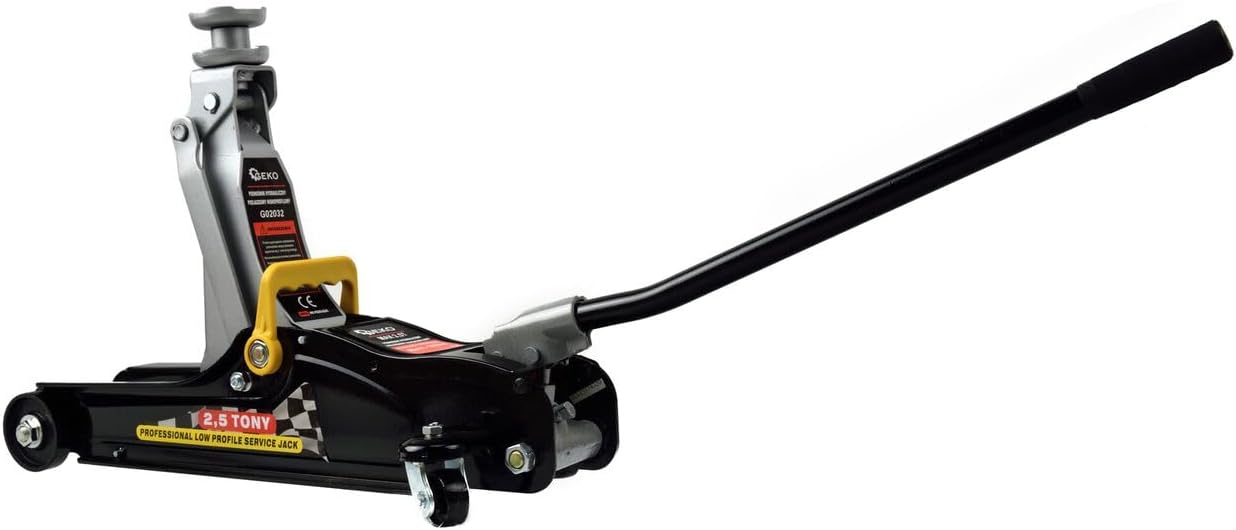
Aworan 3.1: The Geko G02032 Low Profile 2.5 Ton Garage Jack, showcasing its full assembly with the handle attached. This image provides an overall view of the product's design and key features, including the low-profile chassis, lifting arm, saddle, and wheels.

Aworan 3.2: The Geko G02032 garage jack with its operating handle detached, illustrating the two main components. This view helps in understanding the assembly process and the compact nature of the jack when stored.

Aworan 3.3: A sunmọ-soke view of the jack's saddle and the product label. The label displays important information such as the brand 'Geko', model 'G02032', and safety warnings, while the saddle is the contact point for lifting the vehicle.

Aworan 3.4: A detailed shot of the product label on the Geko G02032 jack, highlighting the maximum lift capacity of 2.5 tons and the lifting height range of 80mm to 360mm. This information is crucial for safe operation.

Aworan 3.5: A close-up of the handle attachment point on the Geko G02032 jack. This shows the mechanism where the two-piece handle connects to the hydraulic pump, enabling lifting and lowering operations.

Aworan 3.6: A alaye view of one of the swivel caster wheels on the Geko G02032 jack. These wheels allow for easy maneuverability and positioning of the jack under a vehicle.

Aworan 3.7: A close-up of one of the fixed wheels located at the front of the Geko G02032 jack. These wheels provide stability and support during lifting operations.

Aworan 3.8: A alaye view of the hydraulic release valve mechanism on the Geko G02032 jack. This component is crucial for controlling the lowering speed of the jack.
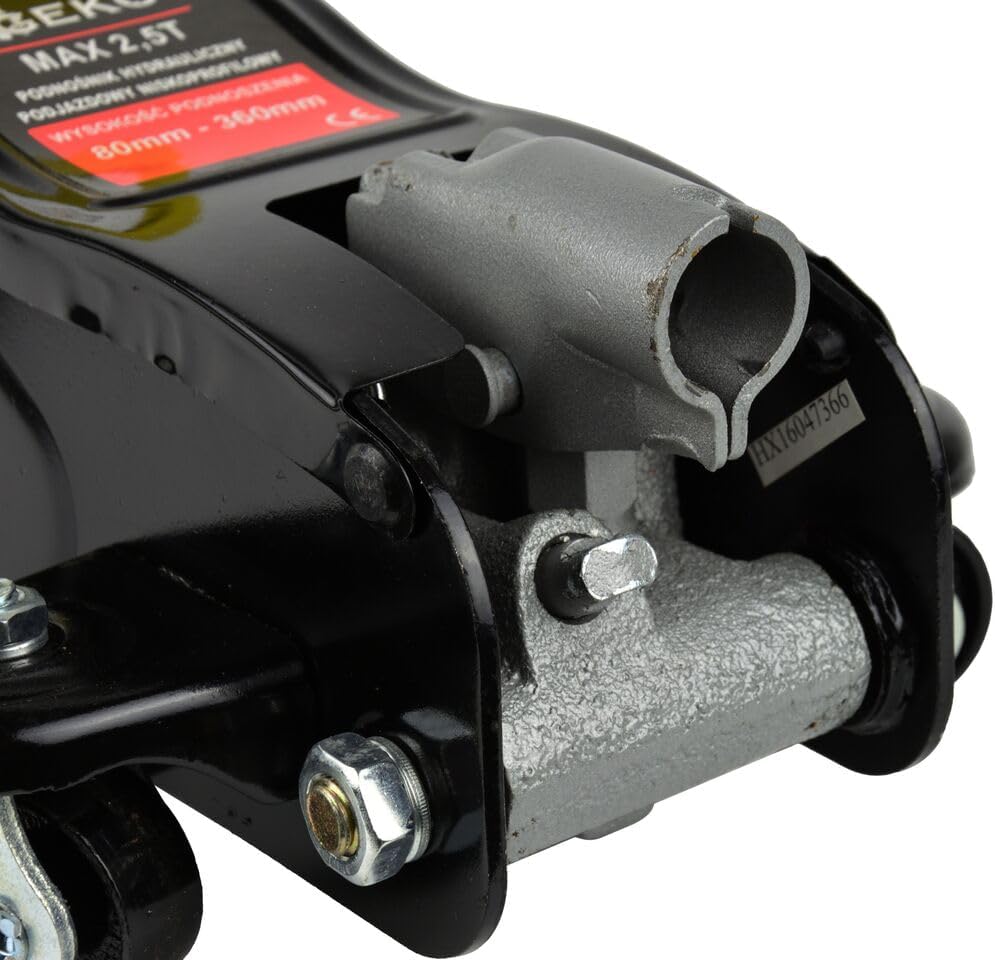
Aworan 3.9: An alternative close-up perspective of the hydraulic mechanism and pivot points of the Geko G02032 jack, showing the robust construction and connection points for the lifting arm.
4. Eto
4.1 Apejọ akọkọ
- So Imudani naa: Insert the lower handle section into the handle socket on the jack. Align the holes and secure it with the provided pin or bolt. Then, attach the upper handle section to the lower section, ensuring it is firmly connected.
4.2 Bleeding the Hydraulic System
Air can become trapped in the hydraulic system during shipping or storage, affecting performance. Bleed the system before first use:
- Turn the handle counter-clockwise to fully open the release valve.
- Pump the handle vigorously 10-15 times to force any trapped air out of the system.
- Yipada mimu si ọna aago lati pa àtọwọdá itusilẹ.
- Test the jack by lifting it to its full height and then lowering it. Repeat if necessary until the jack operates smoothly.
5. Awọn ilana Iṣiṣẹ
5.1 Lifting a Vehicle
- Ṣeto Ọkọ naa: Dá ọkọ̀ náà sí orí ilẹ̀ líle tí ó tẹ́jú. Fi bírékì ìdúró ọkọ̀ náà sí i kí o sì dí àwọn kẹ̀kẹ́ tí yóò wà nílẹ̀.
- Gbe Jack naa si: Locate the manufacturer-recommended lifting points on the vehicle chassis. Position the jack so the saddle is directly under the lifting point.
- Pade Tu silẹ Àtọwọdá: Turn the handle clockwise until the release valve is fully closed.
- Gbé ọkọ ayọkẹlẹ soke: Pump the handle up and down to raise the vehicle to the desired height.
- Install Jack Stands: Immediately place appropriately rated jack stands under the vehicle's designated support points.
- Lower onto Stands: Slowly turn the handle counter-clockwise to open the release valve and lower the vehicle onto the jack stands. Once the vehicle is securely resting on the stands, remove the hydraulic jack.
5.2 Lowering a Vehicle
- Gbé Díẹ̀ sókè: If the vehicle is on jack stands, position the jack under the lifting point and pump the handle a few times to slightly raise the vehicle off the jack stands.
- Yọ Awọn iduro Jack kuro: Fara balẹ̀ yọ àwọn ibi ìdúró ọkọ̀ kúrò lábẹ́ ọkọ̀ náà.
- Ọkọ kekere: Slowly turn the handle counter-clockwise to open the release valve. The vehicle will begin to lower. Control the lowering speed by adjusting how much you open the valve.
- Yọ Jack kuro: Once the vehicle is fully lowered and resting on its wheels, remove the jack.
6. Itọju
Regular maintenance ensures the longevity and safe operation of your jack.
- Lubrication: Periodically lubricate all moving parts, pivot points, and wheels with light machine oil.
- Omi Hydraulic: Check the hydraulic fluid level every three months. To check, lower the jack completely, remove the oil filler plug, and ensure the fluid is level with the bottom of the filler hole. Use only high-quality hydraulic jack oil. Do not use brake fluid or motor oil.
- Ninu: Keep the jack clean and free of dirt, grease, and corrosive materials.
- Ibi ipamọ: Store the jack in a dry, clean area with the ram fully retracted to prevent corrosion and extend seal life.
- Ayewo: Regularly inspect for damage, wear, or leaks. Any damaged parts should be replaced by qualified personnel.
7. Laasigbotitusita
| Isoro | Owun to le Fa | Ojutu |
|---|---|---|
| Jack will not lift to full height or lifts slowly. | Low hydraulic fluid level. Air in the system. Overload. | Check and refill hydraulic fluid. Bleed the hydraulic system (refer to Section 4.2). Ensure load does not exceed 2.5 tons. |
| Jack sọ̀kalẹ̀ lábẹ́ ẹrù. | Release valve not fully closed. Leaking seals. Overload. | Ensure release valve is fully closed. Inspect for fluid leaks; if found, seek professional repair. Ensure load does not exceed 2.5 tons. |
| Jack kii yoo dinku. | Release valve stuck or obstructed. | Ensure release valve is fully opened. Check for obstructions around the valve mechanism. |
| Jack feels spongy or inconsistent. | Afẹfẹ ni eefun ti eto. | Bleed the hydraulic system (refer to Section 4.2). |
8. Awọn pato
| Ẹya ara ẹrọ | Sipesifikesonu |
|---|---|
| Brand | Geko |
| Awoṣe | G02032 |
| O pọju fifuye Agbara | 2.5 tonnu |
| Kere Gbe Giga | 80 mm |
| O pọju Gbe Giga | 360 mm |
| Ohun elo | Irin Alloy, Irin Alagbara |
| Àwọ̀ | Dudu |
| Iwọn Nkan | 11.6 kilo |
| Ọkọ Iṣẹ Iru | Truck, Van, SUV, Car |
| Olupese | Firma Handlowa GEKO |
| International Ìwé Code | 05901477123511 |
9. atilẹyin ọja Information
This Geko G02032 Low Profile 2.5 Ton Garage Jack is covered by a manufacturer's warranty against defects in materials and workmanship. For specific warranty terms, duration, and claim procedures, please refer to the warranty card included with your product or contact Geko customer support. Keep your proof of purchase for warranty claims.
10. Onibara Support
For technical assistance, parts replacement, or any questions regarding your Geko G02032 garage jack, please contact Geko customer support. Refer to the product packaging or the official Geko webojula fun awọn julọ lọwọlọwọ alaye olubasọrọ.