
Tafàtafà D-050-52DL
Ìwé Ìtọ́ni fún Abẹ́ Ẹ̀wọ̀n Ẹ̀wọ̀n Archer 14"
Model: D-050-52DL
Ọrọ Iṣaaju
This manual provides essential information for the safe and effective use of your Archer 14" Chainsaw Saw Chain Blade. Please read thoroughly before installation, operation, and maintenance. Adhering to these guidelines will ensure optimal performance and prolong the life of your chainsaw chain.
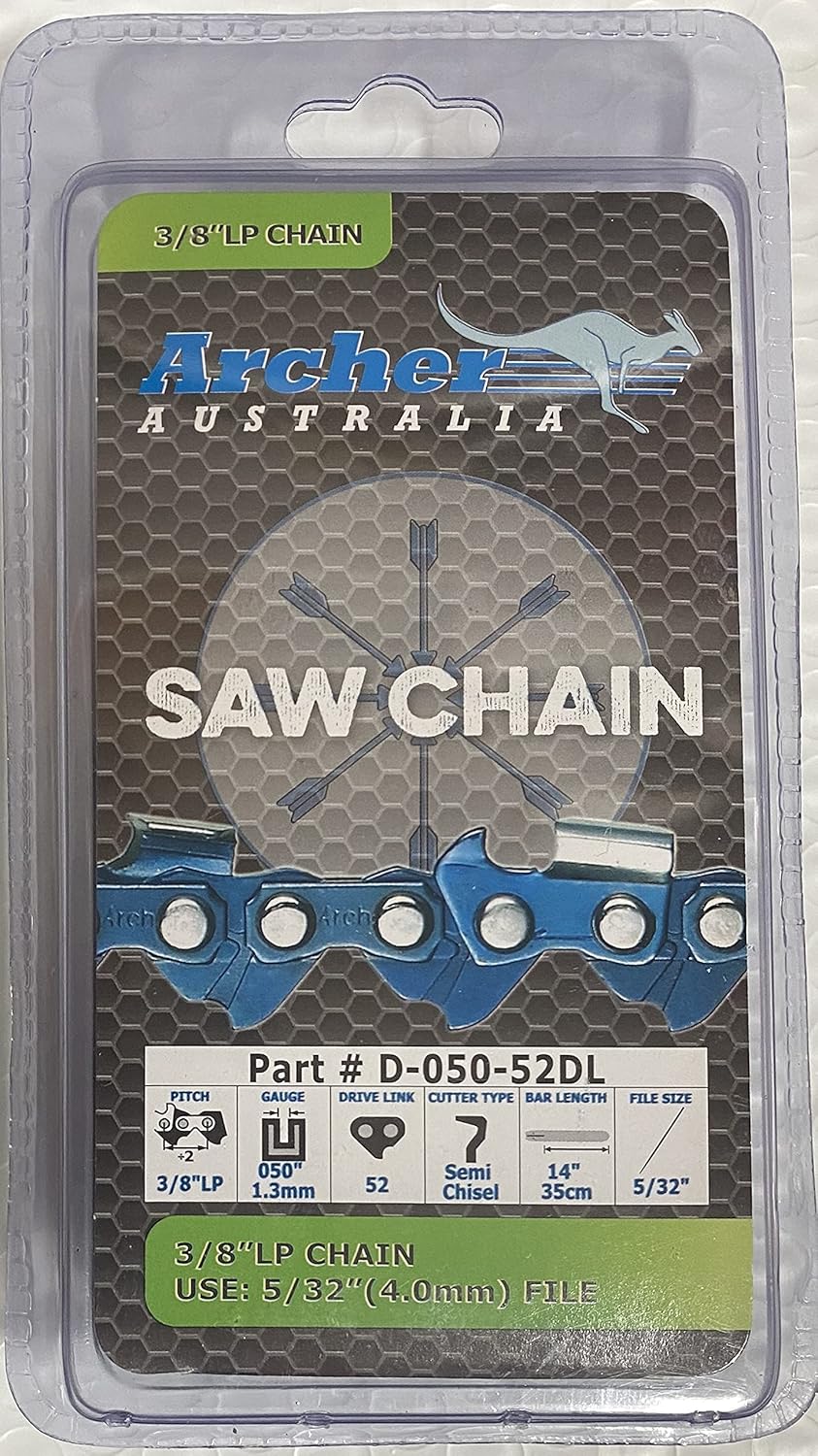
Image: Archer 14" Chainsaw Saw Chain Blade in its retail packaging, showing key specifications like pitch, gauge, drive links, and cutter type.
Ọja Awọn ẹya ara ẹrọ
- Iwọn: 14" loop chainsaw chain.
- Ipo: 3/8"LP (low-profile).
- Iwọn: .050" (1.3mm).
- Awọn ọna asopọ Awakọ: 52.
- Iru gige: Semi-Chisel.
- Ohun elo: Manufactured from high-quality Japanese steel for durability and performance.
- Iru Ẹwọn: Non-safety professional chainsaw chain, designed for experienced users.
Ibamu
This Archer chainsaw chain is designed to fit any chainsaw that requires a chain with a 3/8" (low profile) pitch, .050 gauge, and 52 drive links. It is a suitable replacement for a wide range of chainsaw models from various manufacturers, provided these specifications match your existing chain or guide bar requirements.
Compatible models include, but are not limited to, those from:
- Husqvarna: 23, 36, 37, 34, 35, 136, 137, 141, 142, 235, 235E, 240, 240E, 243, 249.
- John Deere: 25EV, 28, 28V, 30, 30V, 35, 35EV, 40V, 200CS, 230CS, CS 36, CS 36LE, CS 40, CS 40LE, CS 40V.
- Jonsered: 2036, 2036 Turbo, 2035, 2014, 2016, 240, 240 Turbo, 2137, 2138, CS 2135, CS 2137, CS 2138, 36, 361, 365.
- Makita: 5012B, 5014NB, 5016NB, DCS330S, DCS330TH, DCS34, DCS340, DCS341, DCS390, DCS390S, DCS400, DCS401, UC3030A, UC3500, UC3530A, UC4000, UC4030A.
- Poulan: A wide range of Poulan models including 25A, 180, 190, 200, 205, 210, 220, 221, 222, 225, 230, 235, 236, 240, 250, 260, and many others.
- Echo: CS 280, CS 290, CS 300, CS 300EVL, CS 301, CS 302, CS 302S, CS 305, CS310, CS315, CS330EVL, CS330T, CS340, CS 341, CS 345, CS 346, CS 351, CS 330MX4, CS 360, CS 360T, CS 370, CS 400, CS 3000, CS 3400, CS 3450, ECS2000, ECS3000, CS370T, CS306.
Always verify your chainsaw's specific requirements (pitch, gauge, and drive link count) before purchasing a replacement chain.
Awọn ilana fifi sori ẹrọ
Proper installation is crucial for safe and effective operation. Always refer to your chainsaw's specific owner's manual for detailed instructions.
- Aabo Lakọkọ: Ensure the chainsaw is turned off. For gasoline models, remove the spark plug cap. For electric models, remove the battery or unplug from the power source. Wear heavy-duty gloves.
- Access the Bar and Chain: Loosen the bar nuts and remove the clutch cover (or side cover).
- Yọ Awọn ohun elo atijọ kuro: Carefully remove the old chain and guide bar. Clean any sawdust or debris from the sprocket area and the guide bar groove.
- Fi Pẹpẹ Tuntun sori ẹrọ: Place the new Archer chain onto the drive sprocket. Ensure the cutting edges (cutters) are facing the correct direction for cutting (typically, the top of the chain should have the cutters facing away from the chainsaw body).
- Position Guide Bar: Fit the guide bar over the chain and onto the bar studs.
- Rọpo Ideri: Reinstall the clutch cover and hand-tighten the bar nuts.
- Ṣatunṣe Ẹdọfu Ẹwọn: While holding the tip of the guide bar up, adjust the chain tension. The chain should be snug against the bottom of the bar, but still able to be pulled around by hand without binding. There should be no significant sag on the underside of the bar.
- Secure Bar Nuts: Once the tension is correct, tighten the bar nuts securely.
- Ṣayẹwo Ipari: Verify chain tension again after tightening the bar nuts. The chain should move freely around the bar.

Aworan: A sunmọ-soke view of the Archer chainsaw chain, illustrating the semi-chisel cutters and drive links, which are critical for proper installation and function.
Awọn Itọsọna Iṣiṣẹ
This chain is a non-safety professional chainsaw chain. It is designed for users who are experienced in handling chainsaws and understand the increased risk of kickback. Always prioritize safety.
- Ohun elo Idaabobo Ti ara ẹni (PPE): Always wear appropriate PPE, including a hard hat, safety glasses, hearing protection, gloves, chainsaw chaps, and safety boots.
- Lubrication: Ensure the chainsaw's automatic oiler is functioning correctly and the bar and chain are adequately lubricated with bar and chain oil before and continuously during operation. Insufficient lubrication can cause rapid wear and overheating.
- Chain Condition: Never operate the chainsaw with a dull, damaged, or improperly tensioned chain. A dull chain increases the risk of kickback and puts unnecessary strain on the chainsaw.
- Dimu ti o tọ: Maintain a firm grip on the chainsaw with both hands, keeping your thumbs wrapped around the handles.
- Imọye: Be constantly aware of your surroundings, potential hazards, and the location of other people or animals.
- Ọna Ige: Use proper cutting techniques to minimize kickback. Avoid cutting with the tip of the guide bar.
Itoju
Regular maintenance will ensure the longevity and performance of your Archer chainsaw chain.
- Pipin Ẹwọn: Sharpen the chain regularly to maintain cutting efficiency. Use a Yika 5/32" (4.0mm) file for sharpening the cutters. Follow the correct sharpening angles and depth gauge settings for semi-chisel chain as specified by your chainsaw manufacturer or general chainsaw sharpening guides.
- Lubrication Ẹwọn: Continuously monitor the bar and chain oil level in your chainsaw and refill as needed. Ensure the oiler is delivering oil to the chain.
- Ninu: After each use, clean sawdust, sap, and debris from the chain, guide bar groove, and sprocket. This prevents buildup that can impede chain movement and cause wear.
- Ayewo: Before each use, inspect the chain for any signs of damage, such as cracks, bent links, or excessive wear. Check the drive links for wear. Replace the chain if any significant damage is found.
- Ibi ipamọ: When not in use, store the chain in a clean, dry place to prevent rust and damage. Applying a light coat of oil can help protect it during extended storage.
Laasigbotitusita Awọn ọrọ to wọpọ
| Oro | Owun to le Fa | Ojutu |
|---|---|---|
| Chain not cutting efficiently / Chain dulls quickly | Dull chain, incorrect sharpening angle, insufficient lubrication, incorrect chain tension. | Sharpen chain using a 5/32" file, check sharpening angles, ensure proper lubrication, adjust chain tension. |
| Sígá mímu tàbí ìgbóná jù | Insufficient lubrication, incorrect chain tension (too tight), dull chain. | Check bar and chain oil level and oiler function, adjust chain tension, sharpen chain. |
| Chain coming off the bar | Loose chain tension, worn guide bar groove, worn drive sprocket. | Adjust chain tension, inspect guide bar and sprocket for wear and replace if necessary. |
| Chain binds in cut | Dull chain, improper cutting technique, incorrect chain tension. | Sharpen chain, review cutting technique, adjust chain tension. |
Awọn pato
| Iwa | Iye |
|---|---|
| Pq Gigun | 14 inches |
| ipolowo | 3/8"LP (Low Profile) |
| Iwọn | .050 inches (1.3mm) |
| Wakọ Links | 52 |
| Iru gige | Ààbọ̀-Sísẹ́lì |
| Ti ṣe iṣeduro File Iwọn | Awọn inṣita 5/32 (4.0mm) |
| Ohun elo | High Quality Japanese Steel |
| Pq Iru | Non-safety professional chainsaw chain |
| Iwọn Nkan | Isunmọ 6.4 iwon |
Atilẹyin ọja ati Support
For specific warranty information or technical support regarding your Archer chainsaw chain, please refer to the product packaging or visit the official Archer website. You may also find additional resources and contact details on the Archer Store on Amazon.
Ask a question about this manual
Ask about setup, troubleshooting, compatibility, parts, safety, or missing instructions. Manuals+ will review the question and use this page’s manual context to help answer it.