
Ọrọ Iṣaaju
This manual provides essential information for the safe and effective use of your Akozon 150PSI Pressure Sensor Transducer. This device is designed to accurately measure pressure in various media, converting it into a linear voltage output. Please read this manual thoroughly before installation and operation.

Image: Two Akozon pressure sensors. The image highlights that various specifications are available, including 30 psi, 100 psi, 150 psi, 200 psi, 300 psi, and 500 psi, allowing selection based on specific needs.
Key Awọn ẹya ara ẹrọ
- Yiye giga: Features a small output error of ±0.5% FS (Full Scale) for the 150PSI model, ensuring precise pressure measurements.
- Iwapọ ati Apẹrẹ iwuwo fẹẹrẹ: Engineered for easy setup, operation, and integration into diverse systems.
- Robust Surge Voltage Idaabobo: Comprehensive protection against electrical surges enhances durability and reliability.
- Ohun elo to pọ: Suitable for measuring pressure in oil, fuel, diesel, gas, water, and air in various tanks and systems.
- Ibi iwọn otutu Iṣiṣẹ jakejado: Operates effectively from -40℃ to +125℃.

Image: Diagram showing powerful features of the sensor, including high accuracy, compact design, complete EMC protection, excellent pressure resistance, small long-term drift, and wide operating temperature range. Additional features like fine chip processing, factory inspection, non-standard customization, patent certification, wide applicability, and easy installation are also highlighted.
Alaye Aabo
Nigbagbogbo ṣe akiyesi awọn iṣọra ailewu atẹle lati yago fun ipalara tabi ibajẹ ọja naa:
- Ensure the power supply (DC 5V) matches the sensor's requirements. Incorrect voltage le ba ẹrọ naa jẹ.
- Disconnect power before making any electrical connections or disconnections.
- Install the sensor in a system where the pressure does not exceed the rated 150PSI.
- Use appropriate sealing materials (e.g., thread sealant tape) to prevent leaks when installing the 1/8" NPT thread.
- Avoid exposing the sensor to corrosive substances that may degrade stainless steel.
- Do not attempt to disassemble or modify the sensor, as this will void the warranty and may cause malfunction.
Package Awọn akoonu
Rii daju pe gbogbo awọn nkan wa lori ṣiṣi silẹ:
- 1 x Akozon Pressure Transducer (150PSI variant, with integrated cable)
Awọn pato
| Ohun elo | Irin ti ko njepata |
| Voltage Input | DC 5V |
| Ibiti titẹ | 0-150 PSI |
| Ifihan agbara jade | 0.5V - 4.5V Linear Voltage Ijade |
| Yiye | ±0.5% FS (Full Scale) |
| Opo Iru | 1/8" NPT |
| Awọn iwọn otutu ti nṣiṣẹ | -40 ℃ si + 125 ℃ |
| Iwọn Ọja | Isunmọ. 50g |
Ṣeto
Follow these steps for proper installation of your pressure sensor:
- Prepare the Installation Point: Ensure the system where the sensor will be installed is depressurized and free of any media. The connection point should have a compatible 1/8" NPT female thread.
- Lo ohun ìdènà okùn: Apply an appropriate thread sealant (e.g., PTFE tape or liquid sealant) to the 1/8" NPT male thread of the sensor to ensure a leak-proof seal.
- Fi sensọ sori ẹrọ: Carefully screw the sensor into the prepared connection point. Tighten it securely, but do not overtighten, as this can damage the sensor or the system's threads.
- Asopọmọra itanna: Connect the sensor's cable to your control system. The sensor requires a DC 5V power input. The output is a linear voltage signal from 0.5V to 4.5V, corresponding to the 0-150 PSI pressure range. Refer to your system's wiring diagram for correct pin assignments.
- Jẹrisi Awọn isopọ: Double-check all mechanical and electrical connections to ensure they are secure and correct.
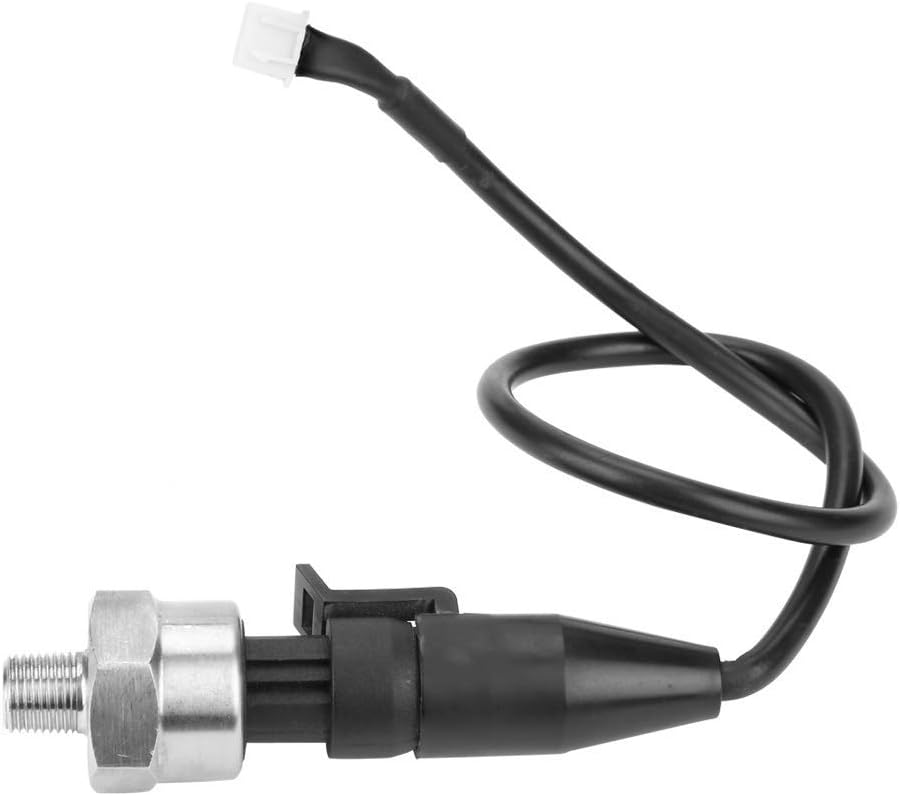
Image: The Akozon pressure sensor with its integrated cable and connector, ready for installation.

Aworan: A alaye view of the sensor's electrical connector and the 1/8 NPT threaded end, showing the internal pin configuration.
Awọn ilana Iṣiṣẹ
Once installed and connected, the pressure sensor operates by converting the applied pressure into a proportional electrical voltage. Voltage can then be read by a compatible monitoring or control system.
- Agbara Tan: Apply DC 5V power to the sensor.
- Atẹle Ijade: The sensor will immediately begin outputting a voltage signal corresponding to the detected pressure.
- Itumọ: Awọn ti o wu voltage ranges from 0.5V (representing 0 PSI) to 4.5V (representing 150 PSI). Your control system should be calibrated to interpret this voltage range accurately.
- Wiwọn Tesiwaju: The sensor provides continuous, real-time pressure data, allowing for dynamic monitoring and control of your system.

Image: This diagram illustrates the high applicability of the sensor, suitable for multiple environments including the machinery industry, water treatment industry, food industry, and petrochemical industry.
Itoju
The Akozon Pressure Sensor is designed for durability and requires minimal maintenance. However, regular checks can ensure optimal performance and longevity:
- Ayewo wiwo: Máa ṣe àyẹ̀wò sensọ̀ náà àti okùn rẹ̀ lẹ́ẹ̀kọ̀ọ̀kan fún àwọn àmì ìbàjẹ́ ara, ìbàjẹ́, tàbí ìbàjẹ́.
- Iduroṣinṣin asopọ: Ensure all electrical and threaded connections remain tight and free from leaks.
- Ninu: If necessary, gently clean the exterior of the sensor with a soft, damp cloth. Do not use harsh chemicals or abrasive materials. Ensure no moisture enters the electrical connector.
- Ibi ipamọ: If storing the sensor, keep it in a dry, clean environment within its specified operating temperature range.
Laasigbotitusita
If you encounter issues with your pressure sensor, refer to the following common problems and solutions:
- No Output or Incorrect Reading:
- Check if the sensor is receiving the correct DC 5V power supply.
- Verify all electrical connections are secure and correctly wired.
- Ensure the pressure being measured is within the 0-150 PSI range of the sensor.
- Inspect the sensor for any visible damage.
- Confirm your monitoring system is correctly calibrated to interpret the 0.5V-4.5V output.
- Pressure Leakage at Connection Point:
- Ensure sufficient thread sealant was applied during installation.
- Check if the sensor is tightened adequately (without overtightening).
- Inspect the threads of both the sensor and the system for damage.
- Awọn kika igba diẹ:
- Check for loose electrical connections or damaged wiring.
- Ensure the operating environment is stable and within the specified temperature range.
Atilẹyin ọja ati Support
For warranty information, technical support, or any inquiries not covered in this manual, please contact Akozon customer service or visit the official Akozon store: