1. Ifihan
This manual provides comprehensive instructions for the safe and effective operation of your Nestling HK-688 Walkie Talkies. These mini 2-way radios are designed for clear communication over long distances, making them ideal for children's outdoor adventures, camping, hiking, and general play.
The Nestling HK-688 Walkie Talkies feature 22 UHF channels, a generous range, and user-friendly controls. Please read this manual thoroughly before using the device to ensure proper functionality and to maximize your experience.

Image: Three Nestling HK-688 walkie talkies in camo blue, camo pink, and camo green, displayed with their product packaging.
2. Ọja Ipariview
2.1 Package Awọn akoonu
Idiwọn boṣewa pẹlu awọn nkan wọnyi:
- 3x Nestling HK-688 Camo Kids Walkie Talkies (Camo Blue, Camo Pink, Camo Green)
- 1x Itọsọna olumulo (iwe yii)
- Àkíyèsí: Àwọn bátírì AAA kò sí nínú wọn, wọ́n sì gbọ́dọ̀ ra wọ́n lọ́tọ̀ọ̀tọ̀.
2.2 Key Awọn ẹya ara ẹrọ
- 22 FRS/GMRS Channels: O pese awọn aṣayan ibaraẹnisọrọ pupọ.
- Ibi Gigun: Up to 3km (1.9 miles) in typical conditions, and up to 5km (3.1 miles) in open fields.
- Ko Didara Ohun kuro: Ensures effective communication.
- Ifihan Afẹyinti LCD: Fun irọrun viewing of channel, battery status, and other indicators.
- Built-in Mini LED Torch: Useful for low-light conditions.
- Ṣíṣàyẹ̀wò ikanni aládàáṣe: Quickly finds active channels.
- Isokuso Aifọwọyi: Reduces background noise for clearer reception.
- CTCSS 99 Sub-codes: Enhances privacy by filtering unwanted signals.
- Itaniji ipe: O sọ fun ọ ti awọn ipe ti nwọle.
- Titiipa ikanni: Prevents accidental channel changes.
- PTT/VOX Function: Push-to-Talk for manual transmission or Voice Operated Exchange for hands-free communication.
- Iṣẹ́ Ìfipamọ́ Bátírì: Ó máa mú kí batiri pẹ́ sí i.
- Itaniji Agbara Kekere: Indicates when batteries are running low.
- Iwọn ti o le ṣatunṣe: Control the listening level.
- Fúyẹ́ àti Agbégbé: Designed for easy carrying with a built-in belt clip.
- Drop Resistant Design: Enhanced durability for active use.

Image: Visual representation of the walkie talkie's dimensions and key features like drop resistance, low battery alert, flashlight, and communication range.

Image: Features of the walkie talkie, including 22 channels with privacy codes, extended range, noise reduction, drop resistance, and a built-in flashlight.
2.3 Device irinše

Image: Detailed diagram illustrating the various parts of the walkie talkie, including buttons, display, and audio components.
- Eriali: Fun gbigbe ati gbigba awọn ifihan agbara.
- Lamp (Imọlẹ ina): Built-in LED light.
- Gbohungbohun: For speaking into the device.
- Bọtini PTT (Titari-si-Ọrọ): Tẹ mọlẹ lati tan kaakiri ohun rẹ.
- Ifihan LCD: Shows channel, battery level, and other indicators.
- Call Lock Button: Locks the current channel.
- Bọtini Atẹle: Allows listening to weak signals on the current channel.
- Lamp Bọtini Ṣiṣayẹwo: Activates the flashlight and initiates channel scan.
- Bọtini isalẹ: Navigates menus or decreases values.
- Bọ́tìnì Agbára/Àkójọ Àtòjọ: Turns the device on/off and accesses the menu.
- Agbọrọsọ: For listening to incoming transmissions.
3. Eto
3.1 Fifi sori batiri
Each Nestling HK-688 Walkie Talkie requires 4x AAA batteries (not included).
- Release the Belt Clip: Press the lock on the top of the belt clip and lift the clip up to detach it from the radio.
- Ṣii Iyẹwu Batiri: Locate the battery cover on the back of the walkie talkie. Gently push down on the tab and slide the cover off.
- Fi awọn batiri sii: Insert 4x AAA batteries into the compartment, ensuring correct polarity (+/-) as indicated inside the compartment.
- Pade Iyẹwu Batiri: Replace the battery cover and slide it until it clicks securely into place. Reattach the belt clip if desired.
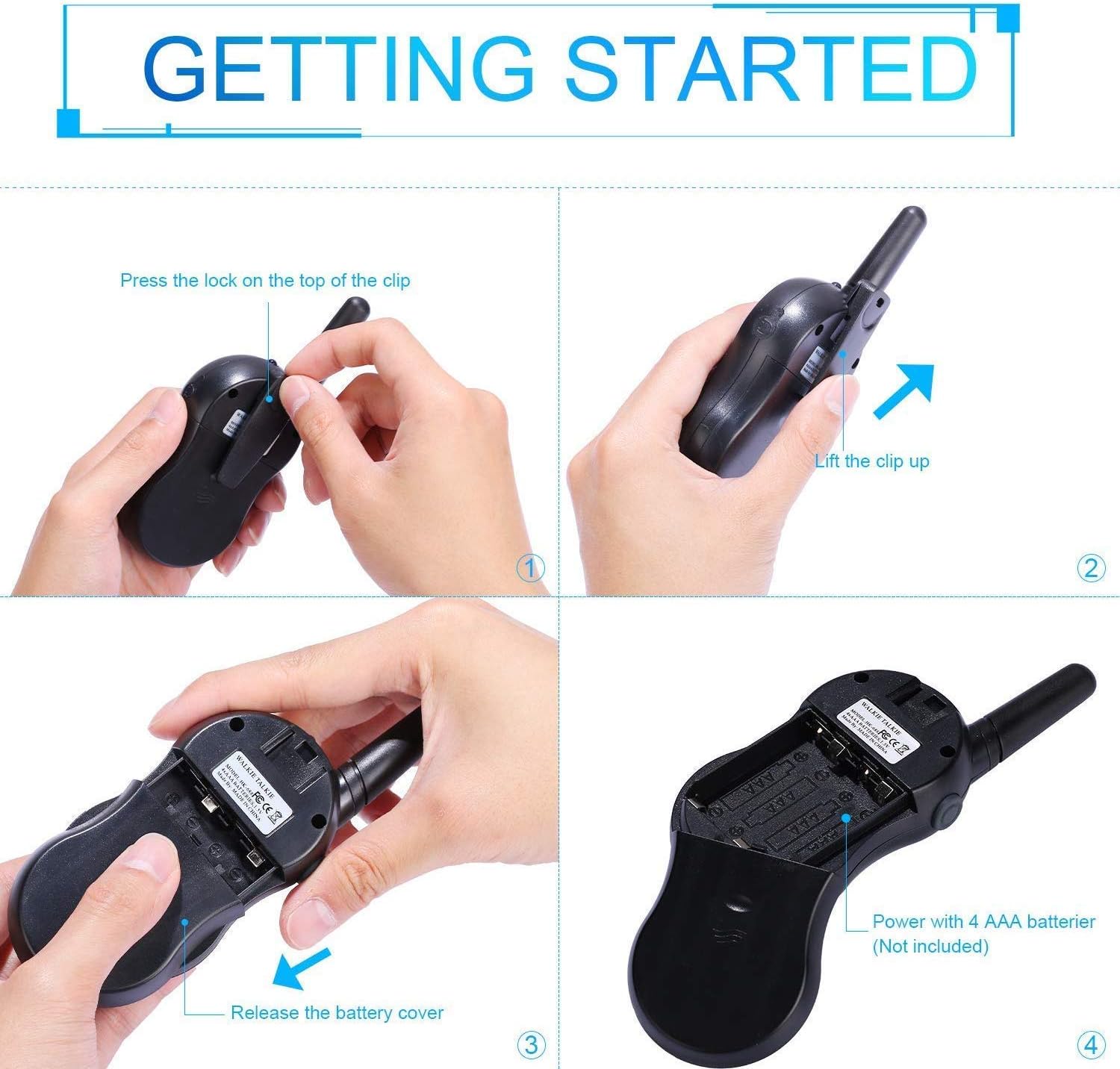
Image: Step-by-step instructions for opening the battery compartment and inserting AAA batteries into the walkie talkie.

Image: An open battery compartment of the walkie talkie, ready for battery insertion.
3.2 Titan / Pa a
To turn the walkie talkie on or off, press and hold the Agbara/Akojọ aṣyn button until the LCD screen illuminates or turns off.
4. Awọn ilana Iṣiṣẹ
4.1 Basic Communication (Push-to-Talk)
- Yan ikanni kan: Ensure all walkie talkies you wish to communicate with are set to the same channel and sub-code. Use the Up ati Isalẹ awọn bọtini lati yi awọn ikanni.
- Gbigbe: Tẹ mọlẹ PTT button (located on the side of the radio). Speak clearly into the microphone, holding the radio approximately 2-3 inches from your mouth.
- Gba: Tu silẹ PTT bọtini lati gbọ awọn gbigbe ti nwọle.
Tip: For optimal range and clarity, avoid obstructions like buildings, dense foliage, or large metal objects. Adverse weather conditions can also affect range.
4.2 Channel Selection and Sub-codes (CTCSS/DCS)
Your walkie talkie supports 22 FRS/GMRS channels and 99 CTCSS/DCS sub-codes. Sub-codes help filter out unwanted conversations on the same channel, enhancing privacy.
- Tẹ awọn Akojọ aṣyn button once to enter channel selection mode. The channel number will flash.
- Lo awọn Up or Isalẹ awọn bọtini lati yan ikanni ti o fẹ (1-22).
- Tẹ awọn Akojọ aṣyn button again to enter sub-code selection mode. The sub-code number will flash.
- Lo awọn Up or Isalẹ buttons to select your desired sub-code (0-99). Setting to 0 disables the sub-code.
- Tẹ awọn PTT button or wait a few seconds for the setting to be saved and exit the menu.
Iṣẹ́ VOX 4.3 (Ìyípadà Ohùn)
The VOX function allows for hands-free communication. When activated, the radio will automatically transmit when it detects your voice.
- Tẹ awọn Akojọ aṣyn button multiple times until the VOX icon (VOX) appears on the LCD and flashes.
- Lo awọn Up or Isalẹ buttons to select the VOX sensitivity level (e.g., 1-3, with 1 being most sensitive). Select "OFF" to disable VOX.
- Tẹ awọn PTT button or wait a few seconds to save the setting and exit.
4.4 Flashlight isẹ
To turn the built-in LED flashlight on or off, briefly press the Lamp button (often combined with the Scan button).
4.5 Call Alert Tone
To send a call alert tone to other radios on the same channel, briefly press the Pe button (often represented by a musical note icon).
4.6 Titiipa ikanni
To prevent accidental channel changes, you can lock the current channel.
- Tẹ mọlẹ Call Lock button (often represented by a key icon) until a key icon appears on the LCD.
- Lati ṣii, tẹ mọlẹ Call Lock bọtini lẹẹkansi titi aami bọtini yoo fi parẹ.

Aworan: Examples of suitable scenarios for using the walkie talkies, such as outdoor play, family activities, and leisure.

Image: Illustrations of walkie talkies being used for communication in both play and household settings.
5. Itọju
5.1 batiri Itọju
- Always use fresh, high-quality AAA batteries.
- Remove batteries from the walkie talkie if it will not be used for an extended period to prevent leakage and damage.
- Sọ awọn batiri ti a lo ni ifojusọna ni ibamu si awọn ilana agbegbe.
5.2 Ninu ati Ibi ipamọ
- Clean the walkie talkie with a soft, damp asọ. Maṣe lo awọn kẹmika ti o lewu tabi awọn afọmọ abrasive.
- Do not immerse the walkie talkie in water, as it is not water-resistant.
- Store the walkie talkie in a cool, dry place away from direct sunlight and extreme temperatures.
6. Laasigbotitusita
| Isoro | Owun to le Fa | Ojutu |
|---|---|---|
| Ko si agbara | Awọn batiri ti ku tabi ti fi sori ẹrọ ti ko tọ. | Rọpo awọn batiri pẹlu awọn tuntun, ni idaniloju polarity ti o pe. |
| Ko le tan kaakiri tabi gba | Not on the same channel/sub-code; out of range; PTT button not pressed/released. | Ensure all radios are on the same channel and sub-code. Move closer to the other radio. Press and hold PTT to transmit, release to receive. |
| Didara ohun ti ko dara / Aimi | Out of range; obstructions; low battery; squelch setting. | Move closer. Avoid obstructions. Replace batteries. Check squelch settings. |
| Channel changes accidentally | Channel lock is not activated. | Activate the channel lock function. |
| VOX ko ṣiṣẹ | VOX sensitivity too low or VOX is off. | Adjust VOX sensitivity to a higher level or ensure VOX is enabled. |
7. Awọn pato
| Ẹya ara ẹrọ | Ẹ̀kúnrẹ́rẹ́ |
|---|---|
| Brand | Nestling |
| Awoṣe | HK-688 |
| Iwọn Igbohunsafẹfẹ | 400-470MHz |
| Awọn ikanni | 22 FRS/GMRS Channels |
| Awọn koodu-ipin | CTCSS 99 |
| Agbara gbigbe | <= 0.5W |
| Awose Iru | FM-F3E |
| Ibiti o | Up to 3km (1.9 miles) typical, MAX 5km (3.1 miles) in open field |
| Elegede | Aifọwọyi squelch |
| Ifihan Iru | LCD Backlit |
| Agbọrọsọ Jack | 2.5mm / 0.1inch |
| Ibi ti ina elekitiriki ti nwa | 4x AAA batteries per radio (Not Included) |
| Awọn iwọn Ọja (H x L x D) | 14cm x 5.5cm x 3.5cm (5.5 x 2.2 x 1.4 inches) |
| Package iwuwo | 370g |
| Àwọ̀ | Camo Blue, Camo Pink, Camo Green |
| Omi Resistance Ipele | Ko Omi Resistant |
8. Atilẹyin ọja ati Support
Nestling HK-688 Walkie Talkies come with a 12 osu atilẹyin ọja lati ọjọ ti o ra.
For any support inquiries, troubleshooting assistance beyond this manual, or warranty claims, please refer to the contact information provided on the product packaging or the retailer's webaaye ti o ti ra ọja naa.