
1. Ọja Ipariview
The VITO 130 Bar WR2 High-Pressure Washer is a powerful cleaning tool designed for various outdoor cleaning tasks. It features an 1800W induction motor, a durable brass lance, and a 5-meter hose, making it suitable for tackling stubborn dirt on large surfaces.

olusin 1: Iwaju view of the VITO 130 Bar WR2 High-Pressure Washer, showing its compact design and included lance.

olusin 2: Ẹyìn view of the high-pressure washer, illustrating the integrated hose storage and overall compact structure.
Awọn ẹya pataki:
- 1800W Induction Motor: Provides consistent and powerful performance.
- 130 Bar Maximum Pressure: Effective for removing tough dirt.
- 390 Litres per hour Max Flow Rate: Ensures efficient cleaning.
- Aluminum Pump Body: Enhances durability and longevity.
- 5m High-Pressure Hose: Offers extended reach for various cleaning tasks.
- Integrated Detergent Tank: Allows for easy application of cleaning solutions.
- Air-Cooled Induction Motor: Designed for sustained operation.
Atọka Atunṣe:
This product has a repairability index of 8.3/10, indicating a high degree of ease for repair and maintenance, contributing to its longevity.

Figure 3: Repairability Index score of 8.3/10 for the VITO High-Pressure Washer.

Figure 4: Detailed breakdown of the repairability index criteria, including documentation availability, ease of disassembly, tool requirements, and spare parts availability.
2. Awọn ilana aabo
Always observe basic safety precautions when using electrical appliances to reduce the risk of fire, electric shock, and personal injury. Read all instructions carefully before operating the pressure washer.
Aabo gbogbogbo:
- Aabo Itanna: Ensure the power outlet is grounded. Do not operate the unit with damaged cords or plugs. Keep all connections dry and off the ground.
- Isopọ omi: Connect the pressure washer to a cold water supply only. Do not use recycled water unless it has been filtered.
- Ohun elo Idaabobo Ti ara ẹni (PPE): Always wear appropriate eye protection (safety goggles) and hearing protection. Wear non-slip footwear.
- Ayika Isẹ: Má ṣe lo ẹ̀rọ ìfọṣọ titẹ ní àwọn afẹ́fẹ́ tó ń gbóná, bí àpẹẹrẹ nígbà tí àwọn ohun tó ń jóná bá wà ní ojú ọjọ́, gáàsì tàbí eruku.
- Awọn ọmọde ati Awọn Oluduro: Keep children and pets away from the operating area. Never direct the water jet at people, animals, or electrical equipment.
- Itọju: Ge asopọ kuro lati ipese agbara ṣaaju ṣiṣe itọju tabi mimọ eyikeyi.
3. Package Awọn akoonu
Please check the package contents upon unboxing to ensure all items are present and undamaged.
- VITO 130 Bar WR2 High-Pressure Washer Unit
- High-Pressure Lance
- Ajọ omi
- Okun titẹ giga mita 5
- Afowoyi Olumulo (iwe-ipamọ yii)
4. Eto
Ṣaaju lilo akọkọ, rii daju pe gbogbo awọn paati wa ati ti ko bajẹ. Tẹle awọn igbesẹ wọnyi fun iṣeto to dara:
- Ṣii silẹ: Carefully remove the pressure washer and all accessories from the packaging.
- Mu Apejọ: Extend or attach the handle if it is not already in the upright position.
- Isopọ Ipese Omi: Connect a garden hose (not supplied) to the water inlet on the pressure washer. Ensure the connection is secure to prevent leaks. The unit requires a minimum water flow to operate correctly.
- Asopọ Okùn Titẹ Giga: Connect the high-pressure hose to the outlet on the pressure washer and to the spray gun. Tighten all connections firmly.
- Lance Attachment: Attach the desired lance or nozzle to the spray gun.
- Ọgbà ìfọṣọ (Àṣàyàn): If using detergent, fill the integrated detergent tank with an appropriate pressure washer detergent.
5. Awọn ilana Iṣiṣẹ
Follow these steps for safe and effective operation of your VITO High-Pressure Washer.
- Ṣiṣẹ́ Ipese Omi: Turn on the water supply to the pressure washer. Allow water to flow through the pump and hose to purge any air before starting the motor.
- Asopọ agbara: Pulọọgi okun agbara sinu iṣan itanna ti ilẹ.
- Bibẹrẹ Ẹka naa: Turn the power switch to the "ON" position. The motor will start.
- Operating the Spray Gun: Squeeze the trigger on the spray gun to begin spraying. The motor will run continuously while the trigger is depressed.
- Lilo Detergent: If using the integrated detergent tank, the pressure washer will automatically draw detergent when operating at low pressure or with a specific detergent nozzle (if applicable). Refer to the detergent instructions for proper dilution.
- Idaduro Ẹka naa: Release the spray gun trigger. The motor will stop. For extended breaks, turn the power switch to "OFF" and disconnect the power cord.
- Irẹwẹsi: After turning off the unit, squeeze the spray gun trigger to release any remaining pressure in the system before disconnecting hoses.

olusin 5: Isunmọ view of the power switch, indicating ON/OFF positions.

Olusin 6: Example of the pressure washer in use, cleaning a stone patio surface.
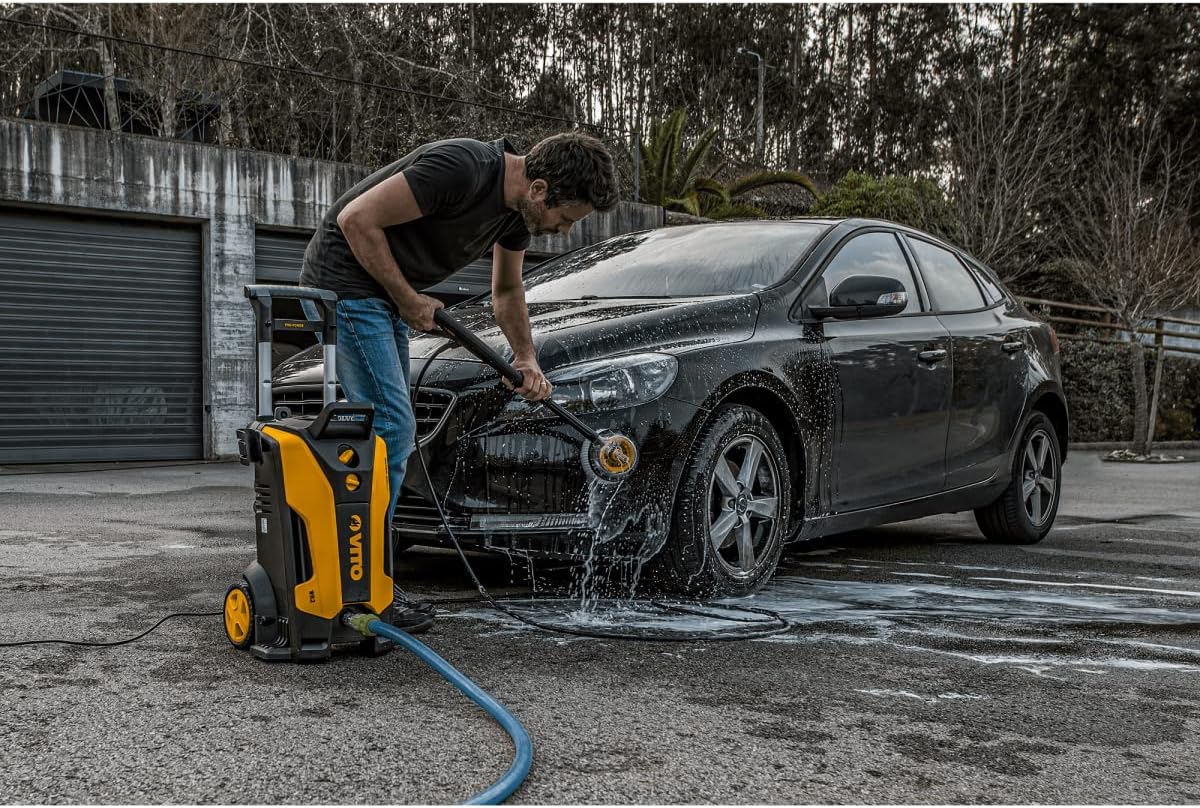
Figure 7: The pressure washer being used for car washing, demonstrating its versatility.
6. Itọju
Regular maintenance ensures optimal performance and extends the life of your pressure washer. Always disconnect the power supply before performing any maintenance.
Lẹhin lilo kọọkan:
- Imudanu omi: Disconnect the water supply and high-pressure hose. Squeeze the trigger to drain any remaining water from the pump and hose.
- Ninu: Mu ese ita kuro pẹlu ipolowoamp asọ.
- Ojò ìdọ̀tí: Empty and rinse the integrated detergent tank if detergent was used.
- Ibi ipamọ: Store the pressure washer in a dry, frost-free environment. Coil the high-pressure hose and power cord neatly.

Nọmba 8: View of the integrated detergent tank, designed for easy filling and cleaning.
Itọju igbakọọkan:
- Àlẹ̀ àbáwọlé: Máa ṣàyẹ̀wò kí o sì máa nu àlẹ̀mọ́ omi tó ń wọlé láti dènà kí àwọn ìdọ̀tí má wọ inú pọ́ọ̀ǹpù náà déédéé.
- Fifọ Nozzle: If the spray pattern becomes irregular or pressure drops, clean the nozzle orifice using the provided nozzle cleaning tool (if applicable) or a thin wire.
7. Laasigbotitusita
This section provides solutions to common problems you might encounter with your pressure washer.
| Isoro | Owun to le Fa | Ojutu |
|---|---|---|
| Ẹka ko bẹrẹ | No power supply; Power switch OFF; Thermal overload activated. | Check power cord and outlet; Turn power switch ON; Allow unit to cool down for 30 minutes. |
| Iwọn kekere | Insufficient water supply; Clogged nozzle; Air in pump; Leaks in hose connections. | Ensure adequate water flow; Clean nozzle; Purge air from system; Tighten connections. |
| Motor gbalaye intermittently | Air in pump; Water supply issues; Trigger not fully released. | Purge air; Check water supply; Ensure trigger is fully released when not spraying. |
| Detergent ko pinpin | Detergent tank empty; Wrong nozzle/pressure setting; Clogged detergent line. | Refill tank; Use appropriate nozzle/setting; Clean detergent line. |
8. Imọ ni pato
Detailed specifications for the VITO 130 Bar WR2 High-Pressure Washer.
| Sipesifikesonu | Iye |
|---|---|
| Nọmba awoṣe | PR2927 |
| Agbara | 1800 W |
| Iwọn titẹ to pọju | 130 Pẹpẹ |
| Oṣuwọn Sisan ti o pọju | 390 liters fun wakati kan |
| Motor Iru | Induction, Air-cooled |
| Fifa ara elo | Aluminiomu |
| Hose Gigun | 5 mita |
| Ojò Detergent | Ti ṣepọ |
| Awọn iwọn Ọja (L x W) | 71 x 36.5 cm |
| Iwọn Nkan | 17.8 kg |
9. Atilẹyin ọja ati Support
Specific warranty information and detailed support contacts are typically provided with the product packaging or on the manufacturer's official website. Please refer to these resources for the most accurate and up-to-date information regarding your product's warranty coverage and customer support options.
For technical assistance or spare parts inquiries, please contact VITO customer service through their official channels.