
1. Ifihan
Thank you for choosing the Scheppach MTE380 Electric Tiller. This manual provides essential information for the safe assembly, operation, and maintenance of your new electric tiller. Please read these instructions thoroughly before using the machine to ensure proper function and to prevent injury or damage.
The Scheppach MTE380 is designed for loosening soil, preparing seedbeds, incorporating compost or fertilizer, and removing weeds in small to medium-sized gardens. Its powerful 1050W motor and robust blades make it an efficient tool for various gardening tasks.
2. Awọn ilana aabo
Máa tẹ̀lé àwọn ìlànà ààbò wọ̀nyí láti dín ewu ìkọlù iná mànàmáná, iná, àti ìpalára tó le kù:
- Ka iwe afọwọkọ naa: Familiarize yourself with all controls and proper use before operating the tiller.
- Ohun elo Idaabobo Ti ara ẹni (PPE): Nigbagbogbo wọ bata to lagbara, sokoto gigun, ati aabo oju. Awọn ibọwọ ni a ṣe iṣeduro.
- Aabo Itanna: Ensure the power supply matches the specifications on the rating plate. Use only outdoor-rated extension cords that are undamaged. Keep the power cord clear of the tines and away from water. Disconnect from power before cleaning, maintenance, or if the machine is left unattended.
- Agbegbe Iṣẹ: Keep children, pets, and bystanders away from the operating area. Clear the work area of stones, sticks, wires, and other debris that could be thrown by the tines.
- Isẹ: Do not operate the tiller in wet conditions or rain. Maintain a firm grip on both handles. Do not overreach. Operate the tiller by pulling it backward towards you, rather than pushing it forward, to maintain better control and prevent it from running away.
- Itọju: Regularly inspect the machine for damage. Replace worn or damaged parts immediately.
3. Ọja Ipariview
The Scheppach MTE380 Electric Tiller consists of several key components designed for efficient soil cultivation.

Nọmba 3.1: Lapapọ view of the Scheppach MTE380 Electric Tiller, showing its compact design and handles.
Awọn eroja pataki:
- Ibugbe mọto: Ó ní mọ́tò iná mànàmáná 1050W.
- Awọn imudani: Ergonomically designed for comfortable operation, featuring a soft-start safety switch and cable strain relief.
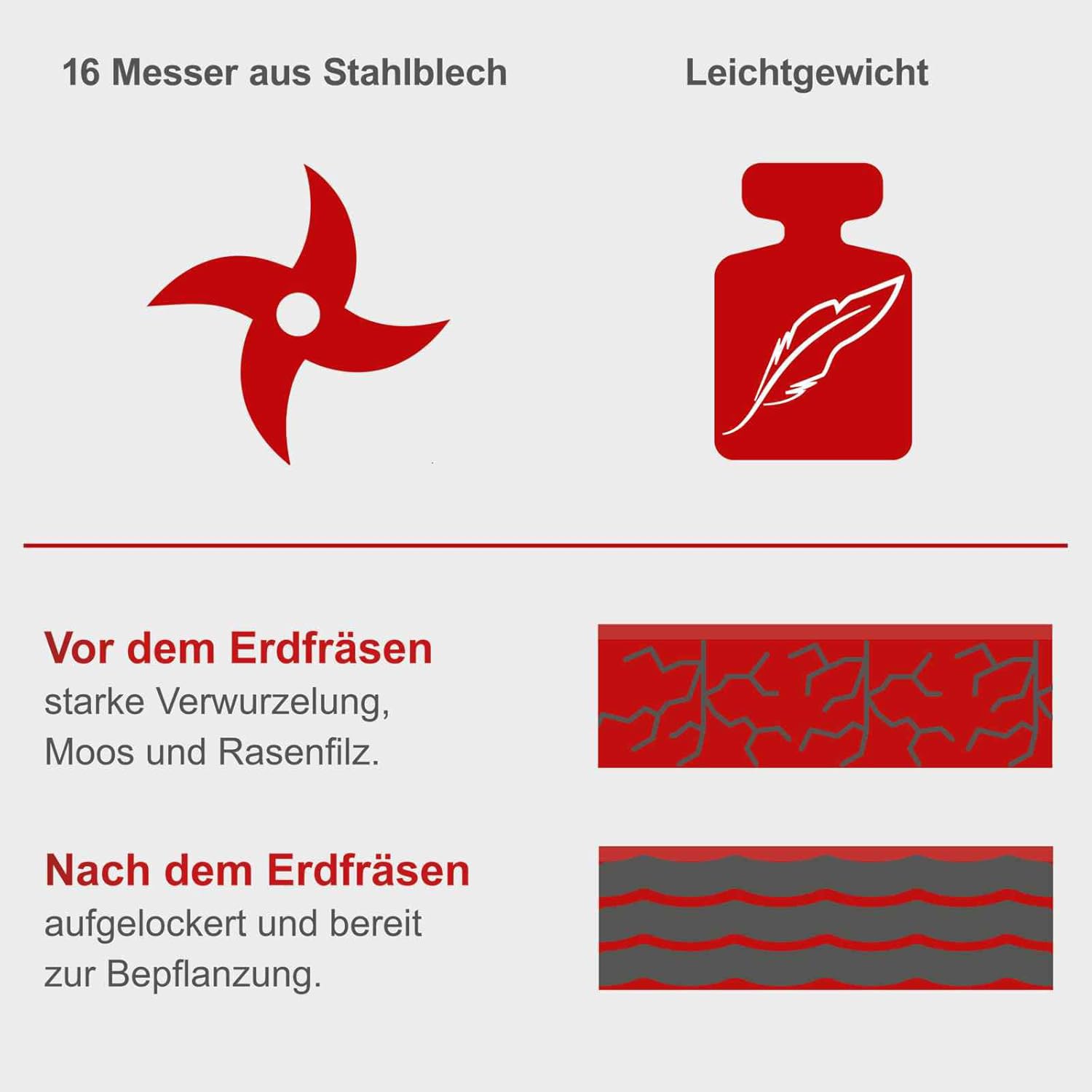
- Tines/Blades: 16 robust steel blades for effective soil loosening.
- Yipada Aabo: Integrated into the handle for immediate power cut-off.
- Apoti jia: High-quality die-cast aluminum gearbox for durability.
Nọmba 3.2: Detail of the comfortable handle with soft-start safety switch and cable strain relief for secure operation.

Nọmba 3.3: View of the robust die-cast aluminum gearbox, ensuring durability and efficient power transfer to the tines.
4. Eto ati Apejọ
The Scheppach MTE380 is designed for quick and easy assembly. Follow these steps to prepare your tiller for use:
- Yọọ kuro: Ni ifarabalẹ yọ gbogbo awọn paati kuro ninu apoti. Ṣayẹwo fun eyikeyi bibajẹ tabi sonu awọn ẹya ara.
- Mu Apejọ: Attach the upper handle section to the lower handle section using the provided fasteners. Ensure all connections are secure. The handles are foldable for transport and storage.
- Iṣakoso USB: Secure the power cable along the handle using the integrated cable clips or ties to prevent it from interfering with operation or getting caught in the tines. Ensure the cable strain relief is properly engaged.
- Ayẹwo akọkọ: Before connecting to power, ensure all bolts and screws are tightened, and the tines are free to rotate.

Nọmba 4.1: The tiller shown with its handle folded, illustrating its compact design for easy transport and space-saving storage.
5. Awọn ilana Iṣiṣẹ
Follow these guidelines for effective and safe operation of your electric tiller.
5.1 Ṣaaju Ibẹrẹ
- Ensure the work area is clear of debris.
- Wọ awọn ohun elo aabo ti o yẹ.
- Connect the tiller to a suitable outdoor-rated extension cord, ensuring the cord is positioned to avoid contact with the tines.
5.2 Bibẹrẹ ati Iduro
- Lati bẹrẹ: Press and hold the safety switch, then squeeze the operating lever. The tines will begin to rotate.
- Lati Duro: Release the operating lever. The tines will stop.
5.3 Tilling Technique
For best results and control, operate the tiller by pulling it backward towards you. This method allows for better control over the tilling depth and direction, and prevents the machine from surging forward unexpectedly.

Nọmba 5.1: A user demonstrating the proper technique for operating the electric tiller, pulling it backward to cultivate the soil.
- Make shallow passes first, gradually increasing depth with subsequent passes. The maximum working depth is 22 cm.
- Move at a steady, controlled pace. Do not force the machine.
- If the tines become jammed, immediately release the operating lever and disconnect the power supply before clearing the obstruction.
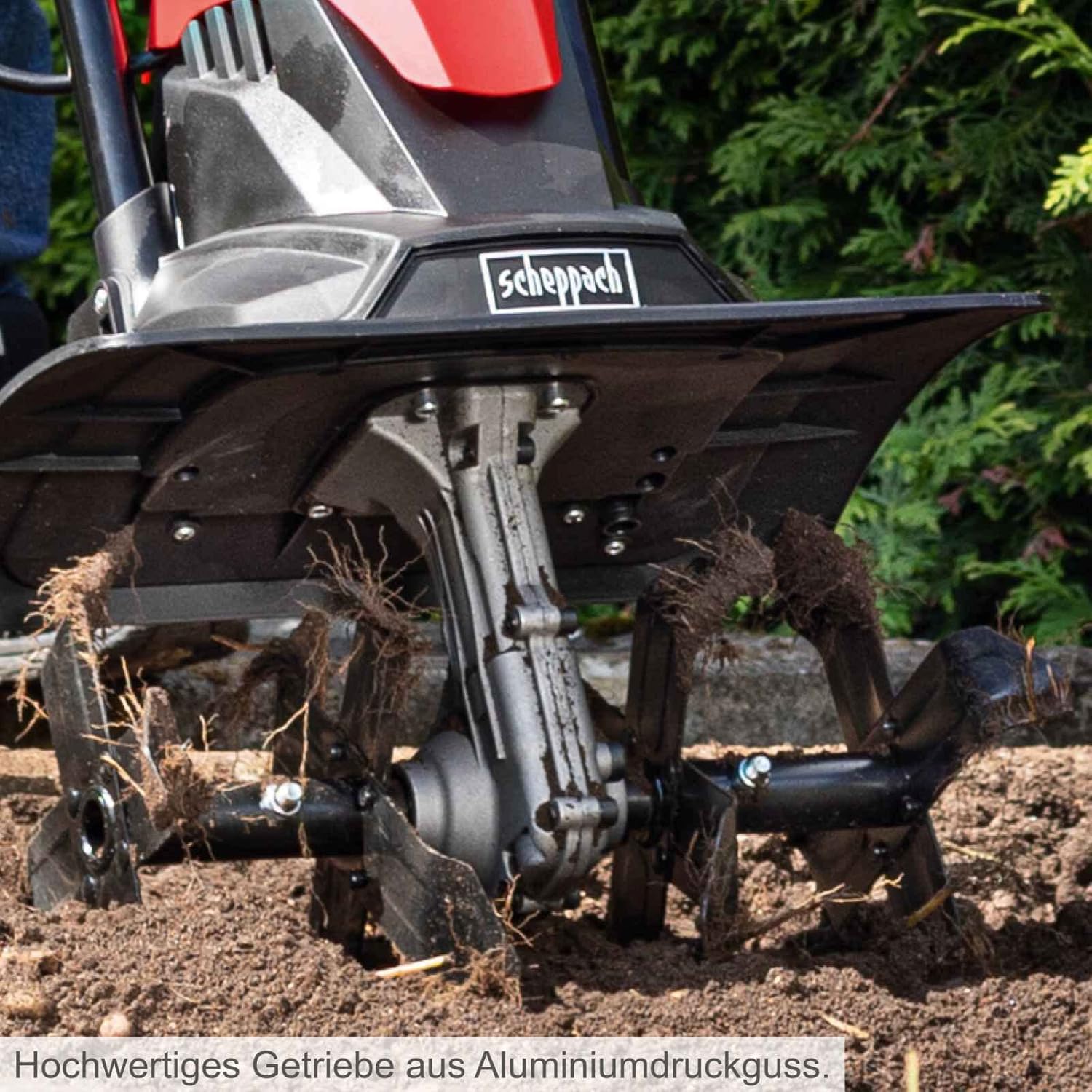
Nọmba 5.2: The 16 robust steel blades effectively breaking up and aerating the soil during operation.
5.4 Awọn ohun elo
The MTE380 is suitable for various tasks:
- Soil Loosening: Breaking up compacted soil.
- Weed Removal: Effectively dislodging weeds and their roots.
- Seedbed Preparation: Creating a fine, aerated soil structure for planting.
- Fertilizer Incorporation: Mixing compost or fertilizer into the soil.

Nọmba 5.3: Visual representation of the tiller's versatility in different gardening applications.

Nọmba 5.4: Comparison of soil structure before tilling (compacted, rooted) and after tilling (loosened, aerated).
6. Itọju ati Ipamọ
Regular maintenance ensures the longevity and safe operation of your tiller.
6.1 Ninu
- Nigbagbogbo ge asopọ ipese agbara ṣaaju ṣiṣe mimọ.
- Remove soil, plant debris, and roots from the tines and motor housing using a brush or damp cloth. Do not use water jets or harsh chemicals.
- Inspect the tines for wear or damage.
6.2 Ibi ipamọ
- Clean the tiller thoroughly before storing.
- Store the tiller in a dry, well-ventilated area, away from direct sunlight and extreme temperatures.
- Imudani ti o ṣe pọ gba laaye fun ibi ipamọ iwapọ.
- Jeki kuro ni arọwọto awọn ọmọde.
7. Laasigbotitusita
This section addresses common issues you might encounter with your Scheppach MTE380 Electric Tiller.
| Isoro | Owun to le Fa | Ojutu |
|---|---|---|
| Tiller ko bẹrẹ. | Kò sí ìpèsè agbára; Sẹ́ẹ̀tì ààbò kò ṣiṣẹ́; A kò fún ìdènà ìṣiṣẹ́ mọ́. | Check power connection and extension cord; Ensure safety switch is pressed and operating lever is squeezed simultaneously. |
| Àwọn tines kò yípo tàbí yípo díẹ̀díẹ̀. | Tines jammed by debris; Overload; Loose connection. | Disconnect power, clear debris from tines; Reduce load by taking shallower passes; Check power connections. |
| Gbigbọn pupọ tabi ariwo. | Damaged or bent tines; Loose components. | Disconnect power, inspect tines for damage and replace if necessary; Check all fasteners for tightness. |
Ti o ba pade awọn iṣoro ti a ko ṣe akojọ si ibi tabi ti awọn ipinnu aba ko ba yanju ọrọ naa, jọwọ kan si atilẹyin alabara.
8. Imọ ni pato
| Sipesifikesonu | Iye |
|---|---|
| Nọmba awoṣe | MTE380 |
| Brand | Schepach |
| Orisun agbara | Okun Itanna |
| Agbara | 1050W (1 kW) |
| Iwọn Iṣiṣẹ | 36 cm |
| Ijinle Ṣiṣẹ | 22 cm max |
| Nọmba ti Blades | 16 |
| Iwọn Nkan | 7.4 kilo |
| Olupese Apá Number | MTE380 |
9. Atilẹyin ọja ati Support
Scheppach products are manufactured to high-quality standards. In the unlikely event of a defect, please refer to your purchase documentation for warranty details. For technical support, spare parts, or service inquiries, please contact your retailer or the official Scheppach customer service. Always provide the model number (MTE380) and serial number (if applicable) when contacting support.