
1. Awọn Ilana Aabo pataki
Read and understand all safety instructions before operating the generator. Failure to follow these instructions can result in serious injury or death.
- Ewu Erogba monoxide: Generators produce carbon monoxide, an odorless, colorless, poisonous gas. Operate the generator outdoors in a well-ventilated area, far from windows, doors, and vents. Never operate indoors or in partially enclosed spaces.
- Ewu Itanna: Do not operate the generator in wet conditions. Ensure all electrical connections are dry and properly grounded. Use only approved extension cords that are rated for outdoor use and the generator's power output.
- Ewu ina: Gasoline is highly flammable. Refuel in a well-ventilated area with the engine off and cool. Do not smoke or allow open flames near the generator or fuel. Store gasoline in an approved container in a safe location.
- Awọn oju gbigbona: The generator engine and muffler become very hot during operation and remain hot for a period after shutdown. Avoid contact with hot surfaces to prevent burns.
- Awọn ọmọde ati awọn ohun ọsin: Keep children and pets away from the generator, especially during operation.
2. irinše Loriview
Familiarize yourself with the main components of your Husky HKG3000 portable gasoline generator.
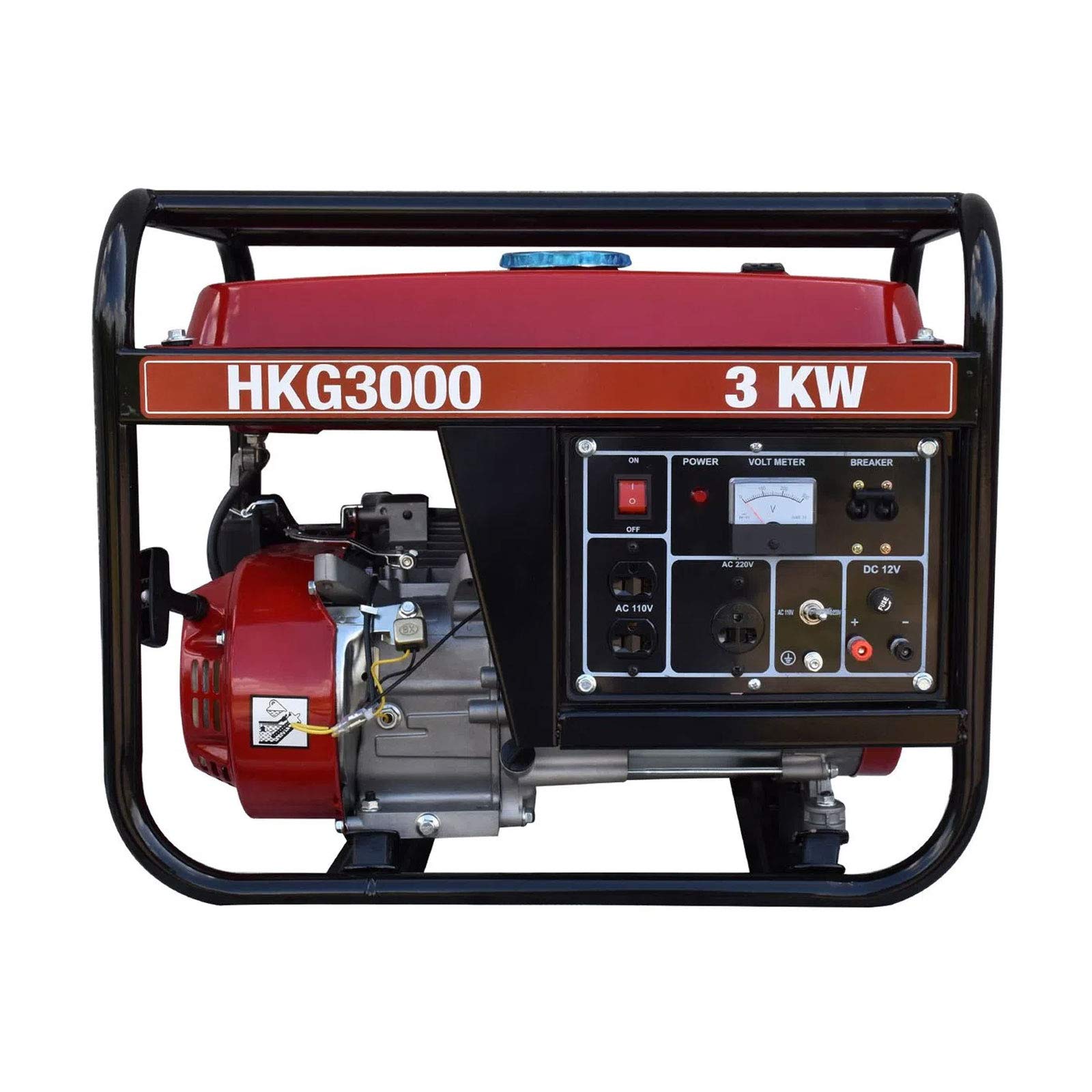
Nọmba 2.1: Lapapọ view of the Husky HKG3000 Portable Gasoline Generator, showcasing fireemu ati panẹli iṣakoso rẹ ti o lagbara.

olusin 2.2: Iwaju view of the Husky HKG3000 Portable Gasoline Generator, highlighting the control panel with power outlets, voltmeter, and circuit breakers.

olusin 2.3: Apa view of the Husky HKG3000 Portable Gasoline Generator, showing the 4-stroke engine, air filter housing, and fuel valve.

Figure 2.4: Included accessories for the Husky HKG3000 Portable Gasoline Generator, featuring the user manual, power plugs, and a spark plug wrench.
Awọn eroja pataki:
- Opo epo: Stores gasoline.
- Fila epo: Seals the fuel tank.
- Epo epo: Ṣiṣakoso ṣiṣan epo si ẹrọ naa.
- Lefa Choke: Lo fun a bẹrẹ a tutu engine.
- Ibẹrẹ Ipadabọ: Manual pull-cord for starting the engine.
- Iyipada Ẹrọ: Turns the engine ignition ON/OFF.
- Asẹ afẹfẹ: Ṣe aabo fun ẹrọ lati eruku ati idoti.
- Fila/Idipstick epo kun: For adding and checking engine oil.
- AC Outlets (110V/220V): For connecting electrical devices.
- DC 12V Outlet: For charging 12V batteries.
- Voltmeter: Han o wu voltage.
- Awọn olutọpa Circuit: Protect the generator and connected devices from overload.
- Muffler: Din ariwo engine dinku ati ṣe itọsọna awọn gaasi eefin.
3. Eto
Before first use, perform the following setup steps:
3.1 Ṣiṣii silẹ
- Fara yọ monomono kuro ninu apoti rẹ.
- Ṣe àyẹ̀wò fún ìbàjẹ́ èyíkéyìí nínú ìrìnàjò. Kan sí oníṣòwò rẹ tí a bá rí ìbàjẹ́.
- Ensure all included accessories (power plugs, spark plug wrench, manual) are present.
3.2 Fifi Engine Oil
A fi ẹ̀rọ generator náà ránṣẹ́ láìsí epo ẹ̀rọ. Ṣíṣiṣẹ́ láìsí epo yóò fa ìbàjẹ́ tó lágbára nínú ẹ̀rọ náà.
- Gbe monomono sori ipele ipele kan.
- Unscrew the oil fill cap/dipstick.
- Slowly add the recommended engine oil (e.g., SAE 10W-30) to the crankcase until it reaches the upper mark on the dipstick. Do not overfill.
- Rọpo ideri epo/dipstick naa lailewu.
3.3 fifi idana
Lo titun nikan, petirolu ti a ko leri pẹlu iwọn octane ti 87 tabi ga julọ.
- Ensure the generator engine is off and cool.
- Ṣii fila epo.
- Carefully pour gasoline into the fuel tank, avoiding spills. Do not fill above the red indicator or the bottom of the filler neck.
- Securely close the fuel cap. Wipe up any spilled fuel immediately.
3.4 Sísọ ìpìlẹ̀ ẹ̀rọ amúṣẹ́dá náà
Proper grounding is essential to prevent electrical shock.
- Connect a heavy-gauge copper wire from the generator's grounding terminal to an approved ground source, such as a ground rod driven into the earth.
- Consult a qualified electrician for local grounding requirements.
4. Awọn ilana Iṣiṣẹ
4.1 Pre-Start Checks
- Ṣayẹwo ipele epo engine.
- Ṣayẹwo ipele epo.
- Rii daju pe gbogbo awọn ẹru itanna ti ge asopọ lati monomono.
- Rí i dájú pé ẹ̀rọ amúṣẹ́dá náà wà ní ojú ilẹ̀ tí ó tẹ́jú àti ní agbègbè tí afẹ́fẹ́ ń fẹ́ dáadáa.
4.2 Starting the Engine (Manual Start)
- Tan idana àtọwọdá si awọn ON ipo.
- Gbe awọn choke lefa si awọn NIPADE (start) position if the engine is cold. If the engine is warm, set the choke to the SISI ipo.
- Tan awọn engine yipada si awọn ON ipo.
- Firmly grasp the recoil starter handle and pull it slowly until resistance is felt, then pull quickly and smoothly.
- Once the engine starts, slowly move the choke lever to the SISI (run) position.
- Gba engine laaye lati gbona fun iṣẹju diẹ ṣaaju ki o to so awọn ẹru itanna pọ.
4.3 So Àwọn Ẹ̀yà Mànàmáná pọ̀
- Rí i dájú pé ẹ̀rọ amúṣẹ́dá náà ń ṣiṣẹ́ dáadáa.
- Plug in your electrical devices one at a time, starting with the highest wattage ẹrọ.
- Má ṣe ju ìwọ̀n omi tí a fún ẹ̀rọ generator náà lọtage (2.8 kW nominal, 3 kW maximum). Overloading will trip the circuit breakers.
4.4 Idekun Engine
- Ge asopọ gbogbo awọn ẹru itanna lati monomono.
- Tan awọn engine yipada si awọn PAA ipo.
- Tan idana àtọwọdá si awọn PAA ipo.
5. Itọju
Regular maintenance ensures optimal performance and extends the life of your generator. Always perform maintenance with the engine off and cool.
5.1 Engine Oil Change
- Change the engine oil after the first 20 hours of operation, then every 50-100 hours or annually.
- Drain old oil while the engine is warm. Refill with recommended oil type and quantity.
5.2 Air Filter Cleaning
- Inspect the air filter every 50 hours or more frequently in dusty conditions.
- Fi omi gbígbóná tí ó ní ọṣẹ fọ ohun èlò ìfọ́mù náà, fi omi fọ̀ ọ́, kí o sì jẹ́ kí ó gbẹ pátápátá. Fi òróró díẹ̀ pa ohun èlò ìfọ́mù náà kí o tó tún un ṣe.
5.3 Sipaki Plug Ayewo
- Inspect the spark plug every 100 hours or annually.
- Clean carbon deposits and adjust the gap if necessary. Replace if electrodes are worn or insulation is cracked.
5.4 Idana System Itọju
- If storing the generator for more than 30 days, drain the fuel tank and carburetor, or use a fuel stabilizer.
- Regularly check fuel lines for cracks or leaks.
5.5 Ibi ipamọ
- Nu ode ti monomono.
- Tọ́jú sí ibi tí ó mọ́, gbígbẹ, tí afẹ́fẹ́ sì ń fẹ́ dáadáa, kúrò níbi tí oòrùn tààrà àti igbóná tó le koko.
- Bo monomono lati daabobo rẹ lati eruku.
6. Laasigbotitusita
Abala yii n pese awọn solusan si awọn ọran iṣiṣẹ ti o wọpọ.
6.1 Ẹ̀rọ kò ní bẹ̀rẹ̀
- Ko si epo: Check fuel level and add fresh gasoline if needed.
- Fuel Valve OFF: Tan idana àtọwọdá si ON.
- PA Ìyípadà Ẹ̀rọ: Turn engine switch to ON.
- Improper Choke Position: Adjust choke lever as per starting instructions (Section 4.2).
- Low Oil Level: Check oil level and add oil if necessary. The generator may have a low-oil shutdown feature.
- Fouled Spark Plug: Ṣe àyẹ̀wò kí o sì nu tàbí kí o yí pákì náà padà.
6.2 Ko si agbara o wu
- Alupayipo Yiyọ: Reset the AC or DC circuit breaker on the control panel. Reduce load if it trips again.
- Apọju: Disconnect some electrical devices. Do not exceed the generator's rated capacity.
- Faulty Connection: Check all power cords and connections.
6.3 Engine Runs Poorly
- Stale Fuel: Drain old fuel and refill with fresh gasoline.
- Clogged Air Filter: Nu tabi ropo air àlẹmọ.
- Fouled Spark Plug: Ṣe àyẹ̀wò kí o sì nu tàbí kí o yí pákì náà padà.
7. Awọn pato
| Sipesifikesonu | Iye |
|---|---|
| Brand | Husky |
| Awoṣe | HKG3000 |
| Engine Iru | 4-ọpọlọ |
| Engine Horsepower | 7.5 hp |
| Epo Iru | petirolu |
| Bibẹrẹ System | Manual (Recoil) |
| O pọju agbara wu | 3 kW (3000 Wattis) |
| Ifihan Agbara Iwọntun-wonsi | 2.8 kW (2800 Wattis) |
| Igbohunsafẹfẹ | 60 Hz |
| Voltage | 110V / 220V |
| Iṣeduro Lilo | Iṣowo |
| Iwọn Nkan | 70 kilo |
| Gbigbe | Gbigbe |
8. Atilẹyin ọja ati Support
This Husky generator is covered by a manufacturer's warranty. Please refer to the warranty card included with your product for specific terms and conditions.
For technical assistance, parts, or warranty claims, please contact Husky customer support through their official webaaye tabi alaye olubasọrọ ti a pese ninu iwe ọja rẹ.
Always provide your model number (HKG3000) and serial number when contacting support to ensure efficient service.