
1. Ifihan
The Rakstore ZB2L3 Battery Capacity Tester is a versatile device designed to measure the capacity of various battery types, including 18650 Lithium batteries and Lead-Acid batteries. It functions as a discharge tester, allowing users to determine the actual capacity by discharging the battery through a load and measuring the discharged energy. This manual provides detailed instructions for the safe and effective use of the ZB2L3 tester.
2. Alaye Aabo
- Always ensure correct polarity when connecting batteries to avoid damage to the tester and battery.
- Use appropriate discharge loads. Overloading the tester or using incorrect loads can cause overheating and damage.
- Ma ṣe kukuru-yika awọn ebute batiri.
- Operate the device in a well-ventilated area, especially when discharging batteries, as they can generate heat.
- Jeki ẹrọ naa kuro lati ọrinrin ati awọn iwọn otutu to gaju.
- Ẹrọ yii kii ṣe nkan isere. Tọju kuro ni arọwọto awọn ọmọde.
3. Awọn ẹya Ọja
- Ibi ti ina elekitiriki ti nwa: DC4.5-6V via micro USB interface.
- Ṣiṣẹ lọwọlọwọ: Less than 70mA.
- Idasilẹ Voltage Ibiti: 1-15V with 0.01V resolution.
- Ifopinsi Voltage Ibiti: 0.5-11.0V.
- Supported Discharge Current: Up to 3.000A with 0.001A resolution.
- Voltage Aṣiṣe Iwọn: Less than 1% + 0.02V.
- Aṣiṣe Wiwọn lọwọlọwọ: Less than 1.2% ± 0.002A.
- Iwọn Agbara Batiri: Up to 9999Ah (1Ah=1000mAh). Display adjusts decimal point for large values (e.g., X.XXX Ah, XX.XX Ah).
- Iwọn Iwapọ: Circuit board 50mm x 37mm, finished product 50mm x 37mm x 17mm (L x W x H, including copper foot height).
4. Package Awọn akoonu
- 1 x Rakstore ZB2L3 Battery Capacity Tester Unit
- (Note: Discharge resistors and battery holders are typically sold separately and are required for operation.)
5. Eto
Before operating the ZB2L3 tester, ensure all connections are made correctly.

Figure 1: ZB2L3 Battery Capacity Tester showing the micro USB power input, battery terminals, and load terminals.
- Asopọ Ipese Agbara: Connect a DC 4.5-6V power source to the micro USB port on the tester. A standard phone charger or power bank can be used. The display should light up.
- Asopọ batiri: Connect the battery to be tested to the "BAT+" and "BAT-" terminals. Ensure correct polarity. The tester will display the current battery voltage.
- Discharge Load Connection: Connect an appropriate discharge resistor (load) to the "LOAD+" and "LOAD-" terminals. The resistance value of the load will determine the discharge current. Ensure the load can handle the expected power dissipation.
Pataki: The discharge current should not exceed 3.000A. Calculate the required resistance using Ohm's Law (R = V/I) and Power Law (P = V*I or P = I²*R) to ensure the resistor can handle the power. For example, if testing a 3.7V battery at 1A, you need a 3.7 Ohm resistor capable of dissipating at least 3.7W.
6. Awọn ilana Iṣiṣẹ
Follow these steps to perform a battery capacity test:
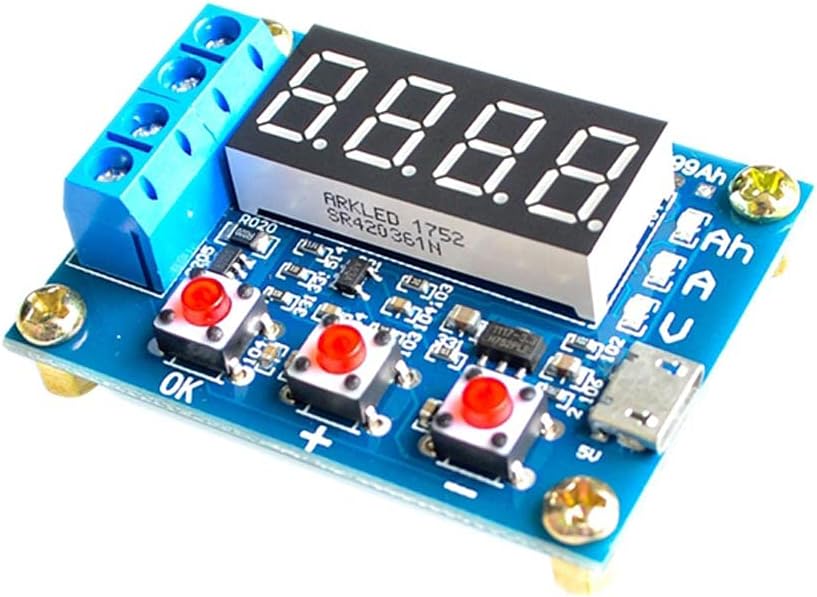
Figure 2: ZB2L3 Battery Capacity Tester showing the 'OK', '+', and '-' buttons for operation.
- Ifihan akọkọ: After connecting the power and battery, the tester will display the battery's current voltage.
- Set Termination Voltage:
- Press the "OK" button once. The display will show the current termination voltage (e.g., "U 3.00").
- Use the "+" and "-" buttons to adjust the termination voltage. Eyi ni voltage at which the discharge test will stop. For 18650 Lithium batteries, a common termination voltage is 3.0V. For Lead-Acid batteries, consult the battery's specifications.
- Press "OK" again to confirm the setting and return to the main display.
- Start Discharge Test:
- With the battery and load connected, and the termination voltage set, press and hold the "OK" button for approximately 3 seconds.
- The tester will begin discharging the battery through the connected load. The display will cycle through current voltage (V), discharge current (A), and accumulated capacity (Ah).
- Monitor Test Progress: Observe the display. The voltage will gradually decrease, and the accumulated capacity will increase.
- Test Completion: The test will automatically stop when the battery voltage reaches the set termination voltage. The display will then show the final accumulated capacity (Ah) and flash.
- View Awọn abajade: After the test stops, you can press the "OK" button to cycle through the final voltage, current, and capacity readings.
- Reset for New Test: To start a new test, disconnect the battery and load, then reconnect them, or simply press and hold the "OK" button again to clear the previous results and start a new cycle.
7. Itọju
- Ninu: Lo aṣọ rírọrùn tí ó gbẹ láti nu ẹ̀rọ náà. Má ṣe lo àwọn ohun ìfọṣọ omi tàbí àwọn ohun èlò ìfọṣọ.
- Ibi ipamọ: Tọ́jú ohun tí a fi ń dán an wò sí ibi gbígbẹ tí ó tutù, tí ó jìnnà sí oòrùn tààrà àti àwọn igbóná tí ó le koko.
- Ayewo: Periodically check the terminals and connections for any signs of wear or damage.
8. Laasigbotitusita
| Isoro | Owun to le Fa | Ojutu |
|---|---|---|
| Ifihan ko tan imọlẹ. | No power or incorrect power supply. | Ensure micro USB power supply is connected and providing DC 4.5-6V. Check cable and adapter. |
| Test does not start. | Battery not connected, load not connected, or "OK" button not held long enough. | Verify battery and load connections. Hold "OK" button for 3 seconds to initiate. |
| Incorrect capacity reading. | Incorrect termination voltage set, or load resistance is too high/low. | Verify the termination voltage setting. Ensure the discharge load is appropriate for the desired current. |
| Tester gets hot during operation. | High discharge current or insufficient ventilation. | Ensure the discharge current does not exceed 3.000A. Operate in a well-ventilated area. The discharge load resistor will also generate heat; ensure it is rated for the power. |
9. Awọn pato
| Paramita | Iye |
|---|---|
| Ipese Agbara Voltage | DC 4.5-6V (Micro USB) |
| Ṣiṣẹ Lọwọlọwọ | <70mA |
| Idasilẹ Voltage Ibiti | 1-15V (0.01V resolution) |
| Ifopinsi Voltage Ibiti | 0.5-11.0V |
| Supported Discharge Current | ≤ 3.000A (0.001A resolution) |
| Voltage Aṣiṣe wiwọn | < 1% + 0.02V |
| Current Measurement Error | <1.2% ± 0.002A |
| Agbara Batiri Range | 0-9999Ah (1Ah=1000mAh) |
| Circuit Board Size | 50mm x 37mm |
| Ti pari Iwọn Ọja | 50mm x 37mm x 17mm (L x W x H, including copper foot height) |
10. Atilẹyin ọja ati Support
This product is manufactured by Rakstore. For any technical support or warranty inquiries, please refer to the retailer where the product was purchased or visit the official Rakstore webojula fun alaye olubasọrọ.
Jọwọ ṣe idaduro ẹri rira rẹ fun awọn iṣeduro atilẹyin ọja.