
Radwag WL-213-1002
Ìwé Ìtọ́sọ́nà Olùlò Radwag PS 200/2000.R1
Model: WL-213-1002
Ọrọ Iṣaaju
This manual provides comprehensive instructions for the proper setup, operation, and maintenance of your Radwag PS 200/2000.R1 Precision Balance. This instrument is designed for precise weighing applications, offering dual range capacity of 200g/2000g with readability of 0.001g/0.01g. It features a backlit LCD display, programmable buttons, and various connectivity options to enhance your laboratory or industrial processes.
Please read this manual thoroughly before using the balance to ensure safe and efficient operation and to achieve optimal performance.
Eto ati fifi sori
1. Unpacking ati ayewo
Carefully remove the balance from its packaging. Inspect all components for any signs of damage that may have occurred during transit. Ensure all listed accessories are present.
- PS 200/2000.R1 Precision Balance unit
- Iwọn pan
- Adaparọ agbara
- Itọsọna olumulo (iwe yii)
2. Placement and Leveling
Place the balance on a stable, level surface free from vibrations, drafts, and direct sunlight. Avoid locations near air conditioning vents, windows, or heavy machinery. Use the adjustable feet at the bottom of the balance to level the unit. The integrated spirit level (bubble level) on the balance indicates when it is perfectly level.

olusin 1: Iwaju view of the Radwag PS 200/2000.R1 Precision Balance, showing the display and control panel.

olusin 2: Angled view of the balance, highlighting its compact design and adjustable feet.
3. Asopọ agbara
Connect the provided power adapter to the balance's power input port and then plug it into a suitable electrical outlet. Ensure the power supply matches the balance's requirements (100-240V AC 50/60Hz or 12V DC 1.2A).

olusin 3: Ẹyìn view of the balance, illustrating the power input and communication ports (RS232, USB).
4. Iṣatunṣe ibẹrẹ
For optimal accuracy, it is recommended to perform an initial calibration after setup and whenever the balance is moved to a new location or experiences significant temperature changes. Refer to the balance's on-screen menu or the detailed technical specifications for calibration procedures.
Operating the Balance
Ifihan ati oriṣi bọtini
The PS 200/2000.R1 features a backlit LCD display for clear readability and an intuitive keypad for easy operation. The display provides weight readings, unit indications, and menu prompts. The keypad includes dedicated buttons for common functions and programmable function keys (F1-F4) for customized shortcuts.

olusin 4: Isunmọ view of the balance's backlit LCD display, showing a weight reading and various indicators.
Basic Weighing Operations
- Titan/Apapa: Tẹ awọn Tan/Pa a button to power the balance on or off.
- Zeroing: Tẹ awọn -0- button to set the display to zero. This is typically done before placing any sample lori pan.
- Iṣẹ ṣiṣe: Place an empty container on the weighing pan. Press the -T- button to tare the container's weight. The display will show zero, allowing you to weigh only the contents.
- Aṣayan Ẹka: Tẹ awọn Awọn ẹya button to cycle through available weighing units (e.g., grams, milligrams, kilograms).
Advanced Functions and Weighing Modes
The PS 200/2000.R1 balance offers a variety of advanced functions and weighing modes to suit diverse applications:
- Ọkọ ayọkẹlẹ: Self-diagnostic function.
- Iwọn lilo: For precise dispensing of materials.
- Ìwọ̀n Ogorun: Wọ́n ìwọ̀n gẹ́gẹ́ bí ìpín ogoruntage ti a itọkasi àdánù.
- Totalizing: Accumulates multiple weighings.
- Kika Awọn Ẹya: Counts individual items based on a reference weight.
- Checkweighing: Determines if a sample's weight falls within a specified range.
- GLP Procedures: Adherence to Good Laboratory Practice guidelines for data recording.
- Newton Unit Measurement: Measures force in Newtons.
- Awọn iṣiro: Provides statistical analysis of weighing data.
- Animal Weighing: Stabilizes readings for unstable loads, such as live animals.
- Ipinnu iwuwo: Calculates the density of a substance.
- Under-Pan Weighing: Allows weighing of objects that cannot be placed on the pan, by suspending them below the balance.

Figure 5: Illustration of key features including the plastic housing, stainless steel pan, and the under-pan weighing capability.
Connectivity and Data Management
The balance is equipped with multiple interfaces for data transfer and integration:
- 2x RS232 Ports: For connecting to printers or other serial devices.
- Ibudo USB-A: For connecting USB flash drives or other USB peripherals.
- Ibudo USB-B: Fun asopọ si kọmputa kan.
- Wi-Fi (Aṣayan): For wireless data communication.
The system utilizes databases for storing information on operators (up to 10), products (up to 1000), weighings (up to 5000), tares (up to 100), and ALIBI memory (up to 100,000 weighings) ensuring data safety and continuity.

Olusin 6: Pariview of the balance's interfaces, ALIBI Memory for data safety, and integrated database capabilities.
Itoju
Ninu
To maintain the accuracy and longevity of your balance, regular cleaning is essential. Always disconnect the power before cleaning.
- Lo asọ, damp cloth with a mild, non-abrasive cleaning agent to wipe the exterior of the balance.
- A le yọ awo irin alagbara ti a fi irin ṣe fun mimọ daradara.
- Do not use harsh chemicals, solvents, or abrasive materials, as these can damage the balance's surfaces or internal components.
- Ensure no liquids enter the balance housing or display area.
Ibi ipamọ
When not in use for extended periods, store the balance in a clean, dry environment, away from extreme temperatures, humidity, and direct sunlight. It is advisable to cover the balance to protect it from dust.
Laasigbotitusita
This section provides solutions to common issues you might encounter with your PS 200/2000.R1 Precision Balance. If the problem persists, please contact customer support.
| Isoro | Owun to le Fa | Ojutu |
|---|---|---|
| Balance does not power on. | No power supply; faulty power adapter; power button issue. | Ṣayẹwo asopọ okun agbara. Rii daju pe iṣan jade jẹ iṣẹ-ṣiṣe. Gbiyanju ohun ti nmu badọgba agbara ti o yatọ ti o ba wa. |
| Awọn kika ti ko pe tabi riru. | Balance not level; vibrations; drafts; temperature fluctuations; calibration needed. | Level the balance using the adjustable feet. Move to a stable, draft-free location. Allow balance to acclimate to room temperature. Perform calibration. |
| Display shows "OVERLOAD" or "----". | Weight on pan exceeds maximum capacity; pan not properly seated. | Remove excess weight. Ensure weighing pan is correctly placed. |
| Cannot connect to computer/printer. | Incorrect cable; driver issues; incorrect communication settings. | Verify correct cable type (RS232, USB). Install necessary drivers. Check communication settings on both balance and connected device. |
Imọ ni pato
The following table outlines the key technical specifications for the Radwag PS 200/2000.R1 Precision Balance:

Figure 7: Datasheet page 1, detailing metrological parameters and available functions.
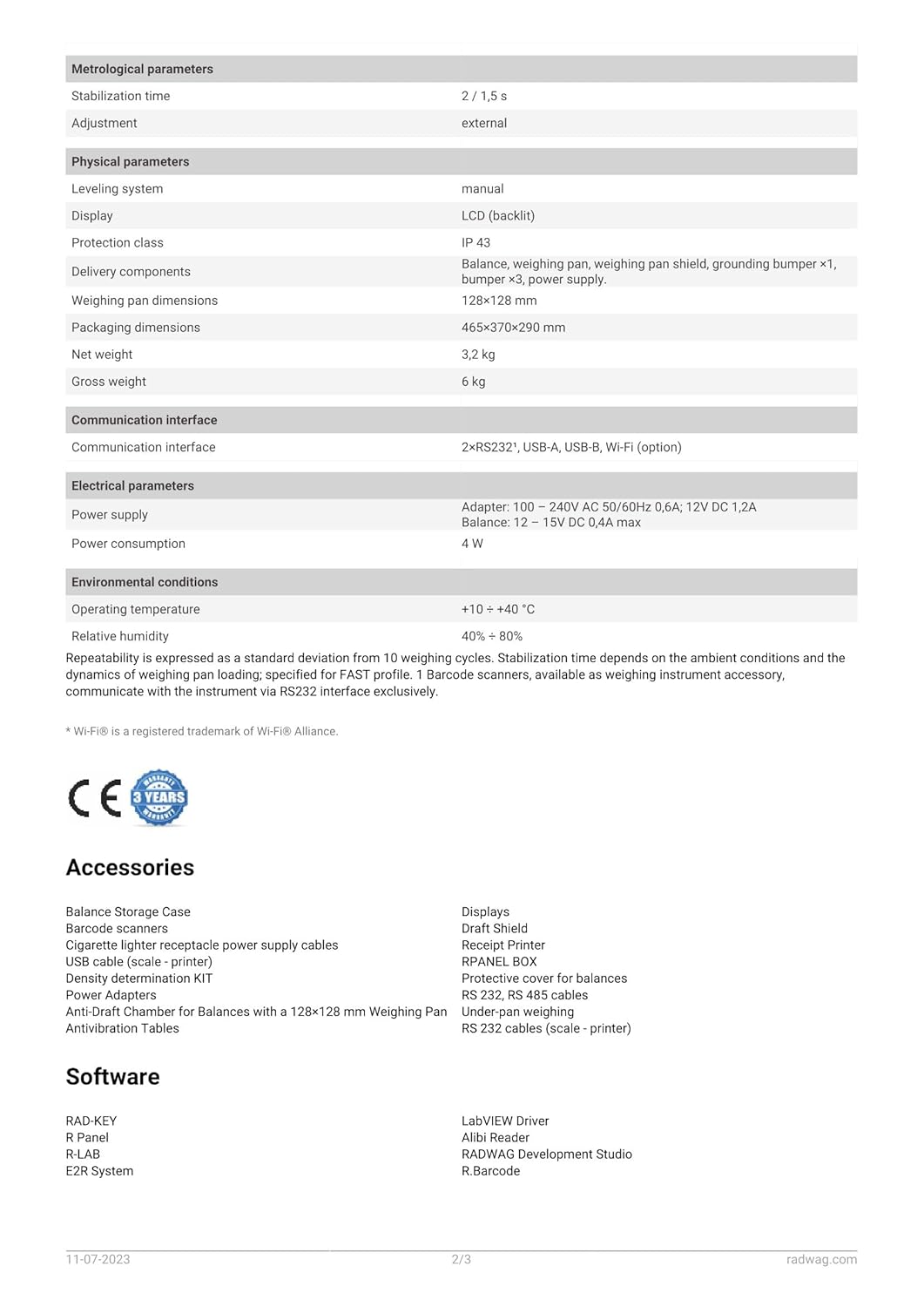
Figure 8: Datasheet page 2, detailing physical, communication, electrical, environmental parameters, accessories, and software.
Gbogbogbo Awọn alaye
- Awoṣe: WL-213-1002
- Awọn iwọn ọja: 13.11 x 8.11 x 3.94 inches
- Ìwúwo: 10 iwon
- Àwọ̀: Funfun
- Iru ifihan: LCD (Backlit)
- Ẹya Pataki: Advanced Weighing Modes, Backlit Display, Programmable Buttons
Metrological Parameters
- Dual Range Max Capacity: 200g / 2000g
- Agbara kika [d]: 0.001g / 0.01g
- Ikojọpọ Kere: 20 mg
- Ibi agbegbe: -2000 g
- Repeatability (Max): 0.001 g / 0.01 g
- Repeatability (5% Max): 0.0005 g / 0.005 g
- Iyatọ: ±0.002 g / ±0.02 g
- Akoko Iduroṣinṣin: 2/1.5 iṣẹju-aaya
- Atunṣe: Ita
Ti ara Parameters
- Leveling System: Afowoyi
- Ifihan: LCD (backlit)
- Kilasi Idaabobo: IP43
- Delivery Components: Balance, weighing pan, weighing pan shield, grounding bumper x1, bumper x3, power supply.
- Weighing Pan Dimensions: 128×128 mm
- Awọn iwọn ikojọpọ: 465×370×290 mm
- Apapọ iwuwo: 3.2 kg
- Iwon girosi: 6 kg
Ibaraẹnisọrọ Interface
- 2×RS232
- USB-A
- USB-B
- Wi-Fi (option)
Itanna paramita
- Ibi ti ina elekitiriki ti nwa: Adapter: 100 - 240V AC 50/60Hz 0.6A; 12V DC 1.2A
- Iwọntunwọnsi: 12 - 15V DC 0.4A max
- Lilo Agbara: 4 W
Awọn ipo Ayika
- Iwọn Iṣiṣẹ: +10 °C si +40 °C
- Ọriniinitutu ibatan: 40% si 80%
Note: Repeatability is expressed as a standard deviation from 10 weighing cycles. Stabilization time depends on the ambient conditions and the dynamics of weighing pan loading specified for FAST mode. 3 Barcode scanners, available as weighing instrument accessory, communicate with the instrument via RS232 interface exclusively.
Atilẹyin ọja ati Support
Radwag products are manufactured to high-quality standards. For specific warranty terms and conditions, please refer to the warranty card included with your product or visit the official Radwag webojula.
For technical support, service, or inquiries regarding your PS 200/2000.R1 Precision Balance, please contact Radwag customer service or visit their official webojula:
Visit Radwag Official Webojula
Additional information and resources, including updated drivers and software, may be available on the Radwag webojula.
Ask a question about this manual
Ask about setup, troubleshooting, compatibility, parts, safety, or missing instructions. Manuals+ will review the question and use this page’s manual context to help answer it.