
FOHERE Centrifugal Juicer
FOHERE Juicer Machine User Manual
Awoṣe: Centrifugal Juicer
1. Awọn Ilana Aabo pataki
Please read all instructions carefully before using the FOHERE Juicer Machine. Failure to follow these instructions may result in electric shock, fire, or serious injury.
- Always ensure the juicer is properly assembled and the safety locking arm is engaged before operation.
- Do not operate the juicer with a damaged cord or plug. If the appliance malfunctions or has been damaged in any manner, discontinue use and contact customer service.
- Keep hands and utensils out of the feed chute during operation to prevent injury. Use the food pusher provided.
- Ma ṣe fi omi mimọ sinu omi tabi awọn olomi miiran.
- Yọ omi ẹ̀rọ náà kúrò nínú ihò ìtajà nígbà tí kò bá sí ní lílò, kí o tó kó àwọn ẹ̀yà ara jọ tàbí kí o tó tú wọn, àti kí o tó fọ wọ́n.
- Ohun elo yii jẹ fun lilo ile nikan. Maṣe lo ni ita.
- The juicer is equipped with engine overheating protection. If the motor overheats, the unit will automatically shut off. Allow it to cool down before resuming operation.
2. Ọja Ipariview ati irinše
Familiarize yourself with the parts of your FOHERE Juicer Machine.

Image: The FOHERE Juicer Machine, showing its main body, juice spout, pulp collector, and a juice cup filled with fresh juice, alongside various fruits like oranges, lemons, and kiwis.
- Titari Ounjẹ: A lo lati dari awọn eso ati ẹfọ sinu ibi ifunni.
- Ipade ifunni: Wide opening for inserting whole or large pieces of produce.
- Ideri Sihin: Covers the juicing mechanism.
- Stainless Steel Filter Basket: Ó ní abẹ́ ìgé àti àlẹ̀mọ́ àlẹ̀mọ́ fún yíyọ omi kúrò nínú rẹ̀.
- Dimu Ajọ: Holds the filter basket in place.
- Ipilẹ mọto: Contains the powerful 400W motor and control dial.
- Safety Locking Arm: Secures the lid and filter holder to the motor base.
- Juice Spout: Where the extracted juice flows out.
- Pulp Collector: Detachable container for collecting discarded pulp.
- Juice Jug: Container for collecting fresh juice.
3. Apejọ ati Oṣo
Tẹle awọn igbesẹ wọnyi lati ṣajọpọ juicer rẹ ṣaaju lilo akọkọ.
Igbesẹ 1: Place the filter holder inside the main unit's motor base.

Image: A six-panel image illustrating the assembly process. Panel 1 shows fitting the filter holder into the juicer base.
Igbesẹ 2: Place the stainless steel filter basket inside the filter holder, ensuring it is securely seated.
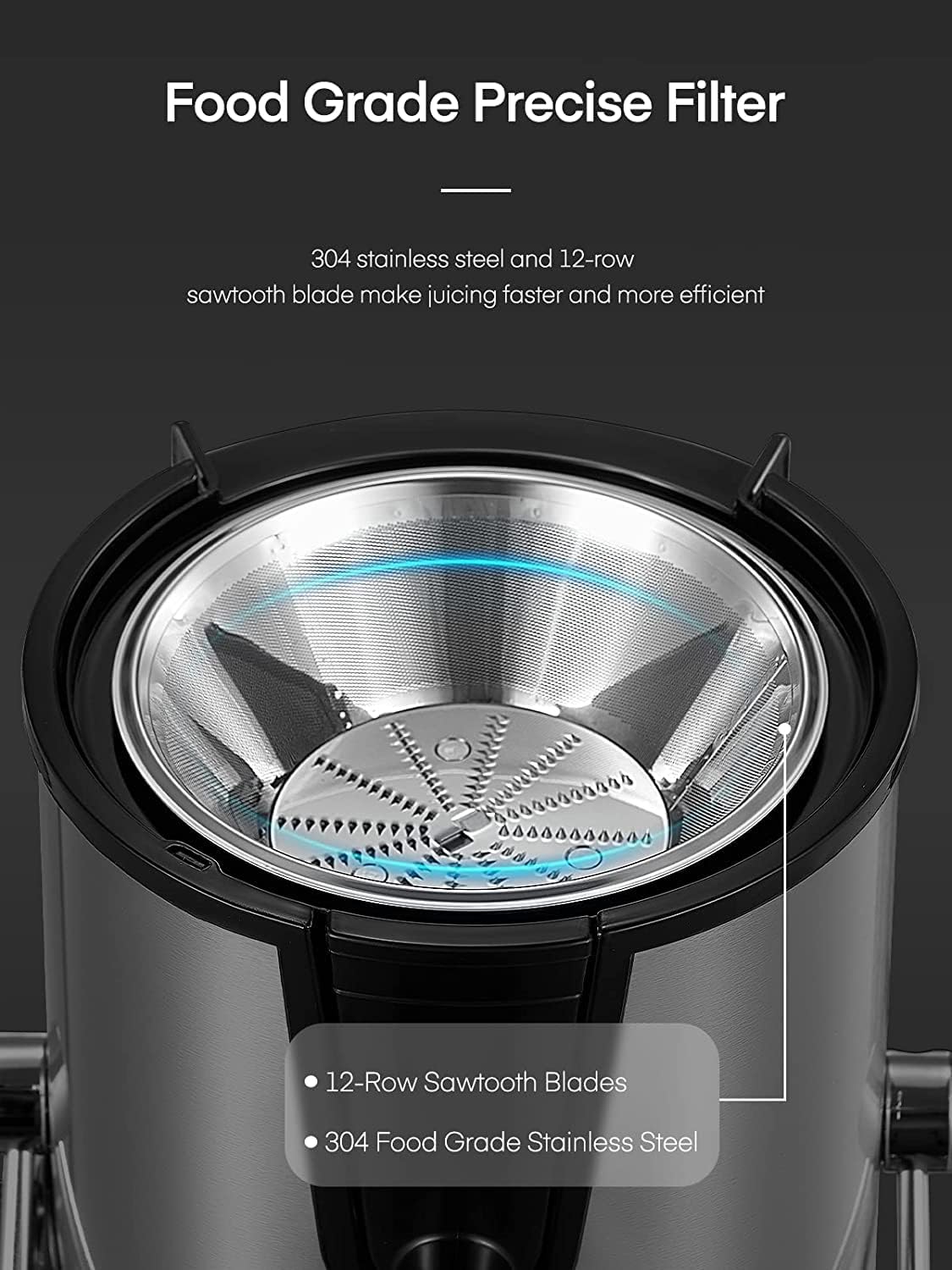
Aworan: A sunmọ-soke view of the juicer's internal filter, highlighting its 304 stainless steel construction and 12-row sawtooth blades for efficient juicing.
Image: Panel 2 of the assembly image shows placing the stainless steel filter inside the filter holder.
Igbesẹ 3: Attach the transparent lid onto the top of the filter holder and motor base.
Image: Panel 3 of the assembly image shows attaching the transparent lid.
Igbesẹ 4: Raise the safety locking arm up and locate it into the two grooves on the transparent lid. Ensure it clicks into place, indicating the juicer is securely locked.

Image: A split image showing a close-up of the safe lock arm engaging and an illustration of the internal motor with overheat protection.
Image: Panel 4 of the assembly image shows raising the safety locking arm.
Igbesẹ 5: Place the juice jug under the juice spout and the pulp collector at the back of the unit.

Aworan: Ohun oke view of the FOHERE Juicer Machine, clearly labeling the "Pulp Collector" and "Juice Jug" components. Below, examples of juice and pulp recipes are displayed.
Image: Panel 5 of the assembly image shows placing the juice jug under the spout.
4. Awọn ilana Iṣiṣẹ
Learn how to effectively use your FOHERE Juicer Machine for optimal results.
4.1 Ngbaradi Eroja
- Fọ gbogbo awọn eso ati ẹfọ daradara.
- The 3-inch wide feed chute can accommodate whole fruits and vegetables, reducing prep time. For very large items, cut them into smaller pieces that fit comfortably.
- Remove large seeds (e.g., from peaches, mangoes) and hard pits.
- For citrus fruits, peel them before juicing as the rind can impart a bitter taste.
- For leafy greens, roll them into a tight ball before inserting.
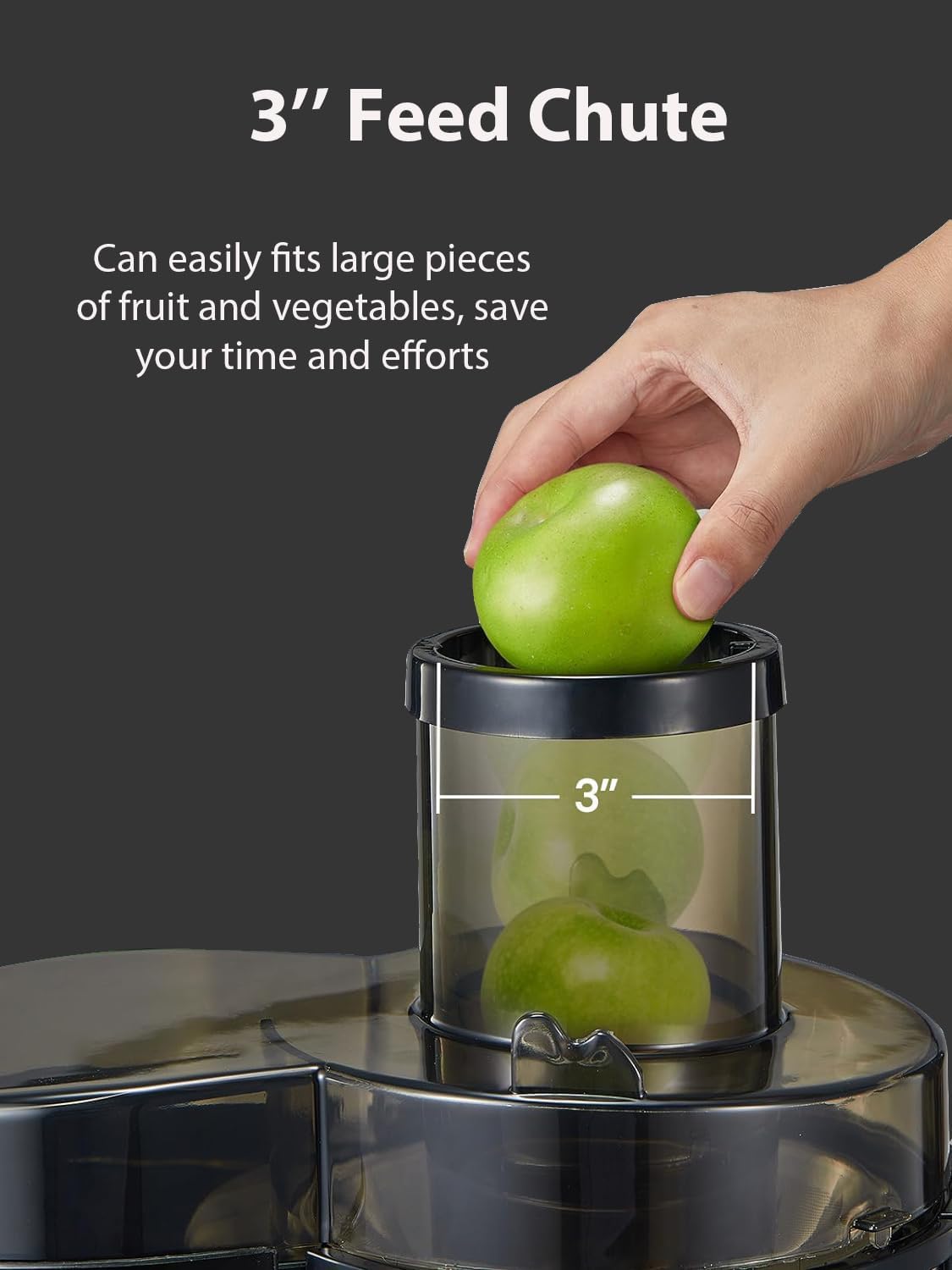
Image: A hand demonstrating how a whole green apple easily fits into the juicer's 3-inch wide feed chute, illustrating its time-saving design.
4.2 ilana oje
- Ensure the juicer is properly assembled and plugged into a grounded electrical outlet.
- Select the appropriate speed setting using the control dial:
- "1" (Low Speed): Ideal for soft fruits and vegetables such as oranges, kiwis, grapes, tomatoes, and leafy greens. (12000 to 15000 RPM)
- "2" (High Speed): Suitable for hard fruits and vegetables like apples, carrots, celery, beets, and ginger. (15000 to 18000 RPM)
- "P" (Pulse Function): Provides maximum speed instantly for short bursts, useful for tough ingredients or clearing blockages.
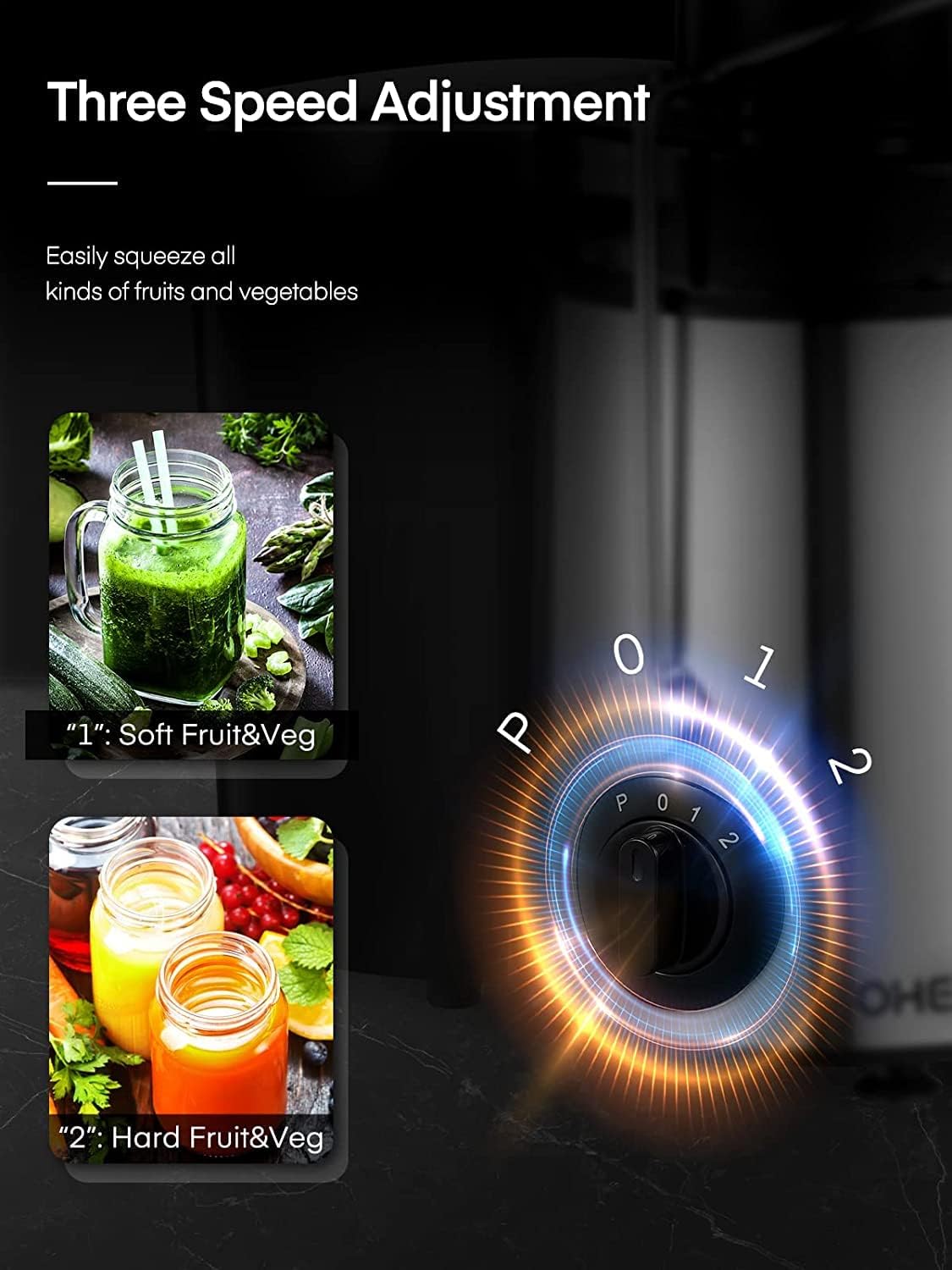
Image: A close-up of the juicer's control dial, showing the "P" (Pulse), "0" (Off), "1" (Soft Fruit & Veg), and "2" (Hard Fruit & Veg) settings. Accompanying images illustrate examples of produce for each speed.

Image: A visual guide comparing the "Soft Speed" (12000-15000 RPM) recommended for fruits like oranges, strawberries, and kiwis, and the "Hard Speed" (15000-18000 RPM) for apples, carrots, and celery.
- Turn the dial to the desired speed setting (1 or 2).
- Gradually feed the prepared ingredients into the feed chute using the food pusher. Apply gentle, even pressure. Do not force ingredients down.
- Allow the juicer to process the ingredients completely. Juice will flow into the juice jug, and pulp will collect in the pulp collector.
- Once juicing is complete, turn the dial to "0" (Off) and unplug the appliance.
4.3 Juice Yield and Benefits
The FOHERE Juicer Machine is designed for high juice extraction, retaining more nutrients.

Image: A visual comparison demonstrating the FOHERE Juicer's superior juice yield (80%) compared to other juicers (55%), highlighting its efficiency.

Image: A chart illustrating the juicing rates for different fruits and vegetables with the FOHERE Juicer, showing high percentages for orange (72.7%), tomato (76.6%), apple (75.8%), and carrot (69.8%).
Freshly made juice can be stored in a bottle for later consumption, allowing you to enjoy nutritious juice anytime.

Image: Three bottles filled with different colored homemade fresh juices (green, orange, and red) positioned next to the FOHERE Juicer Machine, emphasizing the convenience of storing fresh juice.
5. Ninu ati Itọju
Ṣiṣe mimọ nigbagbogbo ṣe idaniloju gigun ati mimọ ti juicer rẹ.
Disas Karo: Unplug the juicer. Disassemble all removable parts: food pusher, lid, filter basket, filter holder, pulp collector, and juice jug.
Rinsin: Fi omi tó ń ṣàn wẹ gbogbo àwọn ẹ̀yà tó lè yọ kúrò kí ó tó di pé wọ́n lò ó, kí ó má baà gbẹ tàbí kí ó má lẹ̀ mọ́.
Fifọ:
- Most disassembled small parts are dishwasher safe. Place them on the top rack of your dishwasher.
- Alternatively, wash parts by hand using warm, soapy water and a non-abrasive brush for the filter basket to remove all pulp residue.

Image: A split image demonstrating cleaning methods: the top panel shows disassembled juicer parts placed in a dishwasher, while the bottom panel illustrates manual cleaning of the filter under running water, emphasizing ease of cleaning.
Ipilẹ mọto: Pa mọto mimọ pẹlu ipolowoamp asọ. Maṣe fi ipilẹ motor bọ inu omi.
Gbigbe ati Ibi ipamọ: Ensure all parts are completely dry before reassembling or storing the juicer. Store in a clean, dry place.
6. Laasigbotitusita
Awọn oran ti o wọpọ ati awọn ojutu wọn.
| Isoro | Owun to le Fa | Ojutu |
|---|---|---|
| Juicer ko ni tan. | Not plugged in; Safety locking arm not engaged; Overheat protection activated. | Ensure plug is firmly in outlet. Check if safety locking arm is securely in place. If motor is hot, unplug and let cool for 30 minutes before restarting. |
| Ikore oje kekere tabi ti ko nira tutu. | Incorrect speed setting; Overfeeding; Filter basket clogged. | Use appropriate speed for ingredients. Feed ingredients slowly and evenly. Clean the filter basket thoroughly. |
| Gbigbọn pupọ tabi ariwo. | Improper assembly; Damaged filter basket. | Disassemble and reassemble all parts, ensuring they are correctly seated. Inspect filter basket for damage; replace if necessary. |
| Juice leaks from unit. | Lid not properly secured; Pulp collector or juice jug overflowing. | Ensure lid is securely locked with the safety arm. Empty pulp collector and juice jug regularly during extended use. |
7. Awọn alaye ọja
| Ẹya ara ẹrọ | Ẹ̀kúnrẹ́rẹ́ |
|---|---|
| Brand | NIPA |
| Awoṣe | Juicer Centrifugal |
| Àwọ̀ | Fadaka |
| Agbara / Wattage | 400 Watts (Upgraded Motor) |
| Agbara to pọju | 800 Wattis |
| Agbara (Oje oje) | 1.6 Liters (Pulp Collector) |
| Ohun elo | Irin ti ko njepata |
| Nọmba ti Awọn iyara | 3 (Irẹlẹ̀, Gíga, Ìlù) |
| Ifunni Chute Iwon | 3 inches (Extra Wide) |
| Iwọn Nkan | 3.14 kg |
| Ọja Mefa | 30D x 19W x 31H |
| Awọn ilana Itọju | Ailewu Apoti (awọn ẹya yiyọ kuro) |
| Pataki Awọn ẹya ara ẹrọ | Built-In Froth Separator, Safety Lock Protection, Overheat Protection |
8. Atilẹyin ọja ati Support
Ìwífún nípa àtìlẹ́yìn àti ìrànlọ́wọ́ oníbàárà kò sí nínú dátà ọjà tí a pèsè. Jọ̀wọ́ tọ́ka sí àpótí ọjà náà tàbí ilé iṣẹ́ olùpèsè. website for detailed warranty terms and contact information for customer service.
For general inquiries or assistance, you may visit the FOHERE Store on Amazon: FOHERE Store.
Ask a question about this manual
Ask about setup, troubleshooting, compatibility, parts, safety, or missing instructions. Manuals+ will review the question and use this page’s manual context to help answer it.