
1. Ifihan
This manual provides essential information for the safe and efficient operation of your PowerWalker VFI 1000 AT FR Online Uninterruptible Power Supply (UPS). The VFI AT series utilizes double-conversion technology to provide reliable power protection for critical devices. Please read this manual thoroughly before installation and use, and retain it for future reference.
2. Awọn ilana aabo
WARNING: Failure to follow these safety instructions can result in fire, electric shock, serious injury, or death.
- Maṣe ṣii UPS casing. Ko si awọn ẹya ti olumulo-iṣẹ ninu. Tọkasi gbogbo iṣẹ si awọn oṣiṣẹ iṣẹ ti o peye.
- Do not connect appliances that could overload the UPS, such as hair dryers or vacuum cleaners.
- Ensure the UPS is connected to a properly grounded power outlet.
- Do not block ventilation openings. Maintain adequate clearance around the UPS for proper airflow.
- Yago fun fifi sori ẹrọ UPS ni awọn agbegbe pẹlu eruku pupọ, ọriniinitutu, tabi awọn iwọn otutu to gaju.
- In case of emergency, press the OFF button and disconnect the UPS from the AC power source.
3. Ọja Ipariview
The PowerWalker VFI 1000 AT FR UPS is designed to provide clean, stable power to your connected equipment. It features a user-friendly interface and various connectivity options.
3.1 Igbimọ iwaju

Figure 3.1: Front Panel of the UPS. This image shows the main display screen indicating input and output voltage, battery status, and load level. Below the screen are four control buttons: ON, OFF, ENTER, and ESC.
The front panel includes an LCD display that provides real-time information about the UPS status, such as input/output voltage, battery charge, and load level. Control buttons allow for easy navigation and configuration.
- Ifihan LCD: Shows operational status and parameters.
- LORI Bọtini: Powers on the UPS.
- Bọtini PA: Powers off the UPS.
- Tẹ Bọtini: Jẹrisi awọn aṣayan tabi tẹ awọn akojọ aṣayan sii.
- Bọtini ESC: Ti jade kuro ninu akojọ aṣayan tabi fagile awọn iṣẹ.
3.2 ru Panel
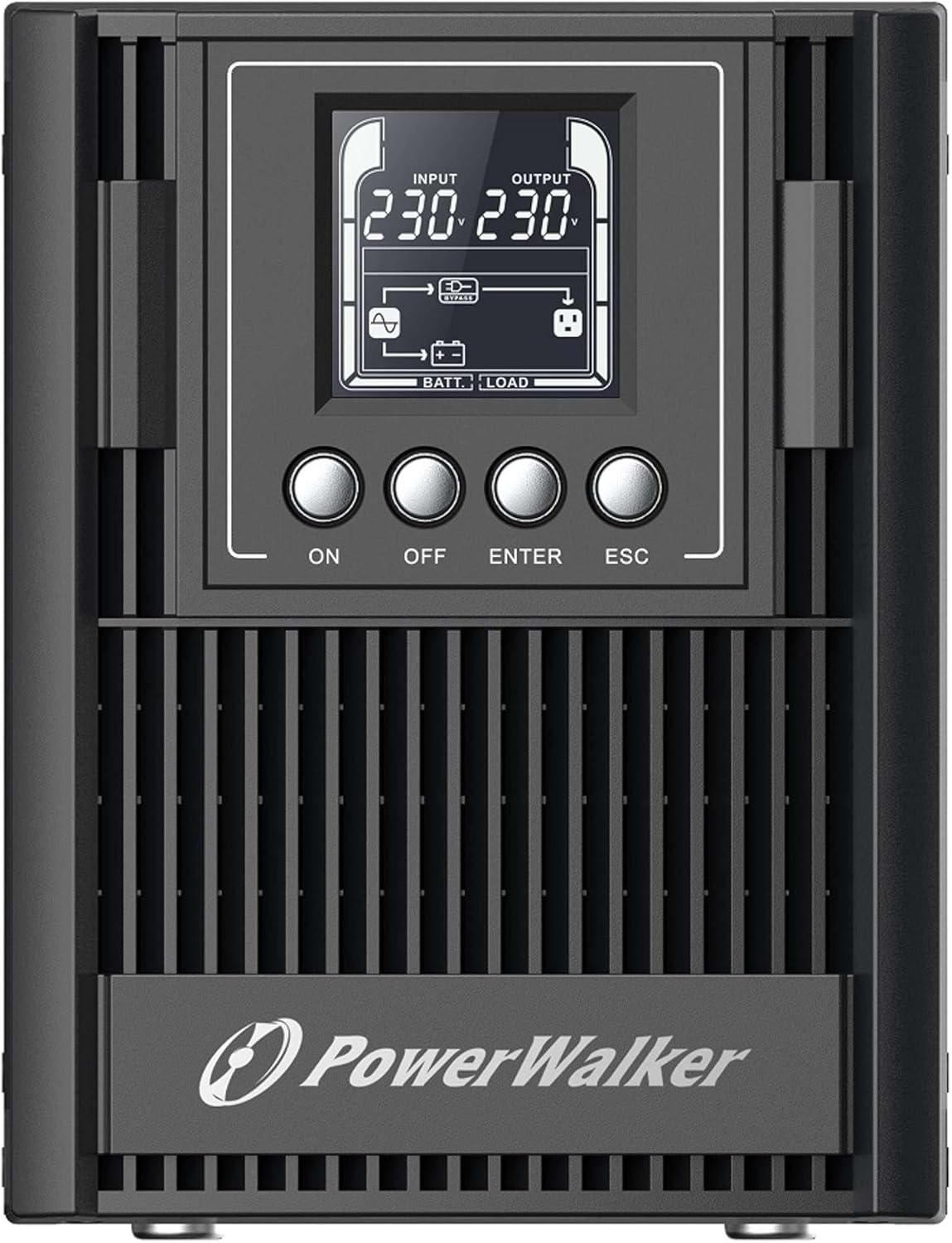
Figure 3.2: Rear Panel of the UPS. This image displays the connectivity options including a serial port (DB9), cooling fan, multiple Type F outlets, a USB port, an EPO (Emergency Power Off) terminal, and the AC input socket.
The rear panel provides all necessary connections for input power, output to protected devices, and communication interfaces.
- Iṣawọle AC: So UPS pọ mọ ipese agbara akọkọ.
- Awọn Sockets Ijade: Type F, Type E, or Type G outlets (depending on model) for connecting protected equipment.
- Ibudo USB: For communication with a computer and monitoring software.
- RS-232 Port (Serial): For advanced communication and monitoring.
- EPO (Emergency Power Off) Terminal: For remote emergency shutdown.
- Intelligent Slot: For optional communication cards (e.g., SNMP card).
- Asopọ Pack Batiri Ita: For connecting optional external battery packs to extend backup time.
4. Eto
4.1 Unpacking ati ayewo
Carefully unpack the UPS and inspect it for any shipping damage. If any damage is found, do not install the unit and contact your dealer.
4.2 Ibi
Place the UPS in a clean, dry, and well-ventilated area. Ensure sufficient clearance (at least 20 cm) around the unit for proper heat dissipation. Avoid direct sunlight, heat sources, and excessive moisture.
4.3 Gbigba agbara akọkọ
Before initial use, connect the UPS to a standard AC power outlet for at least 8 hours to ensure the internal batteries are fully charged. The UPS will charge its batteries whether it is turned ON or OFF.
4.4 Ohun elo Nsopọ
- Connect your critical equipment (computers, monitors, network devices) to the output sockets on the rear panel of the UPS.
- Connect the UPS power cord to a grounded AC power outlet.
- (Optional) Connect the USB or RS-232 cable from the UPS to your computer for monitoring and management.
- (Optional) If using external battery packs, connect them according to their specific instructions to the designated connector on the UPS.
5. Ṣiṣẹ awọn Soke
5.1 Títẹ̀ sí UPS
Tẹ mọlẹ ON button on the front panel for approximately 2 seconds until you hear a beep and the LCD display illuminates. The UPS will perform a self-test and then enter normal operating mode.
5.2 Pa UPS
To turn off the UPS, press and hold the PAA button for approximately 2 seconds until the LCD display turns off. Ensure all connected equipment is properly shut down before turning off the UPS.
5.3 LCD Ifihan ati Lilọ kiri
The LCD display provides various operational parameters. Use the WOLE ati ESC buttons to navigate through menus and view different information screens. The display automatically darkens after a period of inactivity and can be woken up with a single button press.
5.4 Remote Shutdown (RPO)
The UPS supports Remote Power Off (RPO) functionality. Connect an external switch to the EPO terminal on the rear panel. Activating this switch will immediately shut down the UPS and connected equipment. Refer to the wiring diagram in the advanced user manual for proper connection.
6. Itọju
6.1 batiri Itọju
The UPS contains internal lithium batteries. To maximize battery life:
- Keep the UPS connected to AC power to keep batteries charged.
- Avoid storing the UPS in extreme temperatures.
- Perform a battery calibration (if available via software) or a full discharge/recharge cycle every 3-6 months.
- Replace batteries when their capacity significantly degrades. Battery replacement should only be performed by qualified personnel.
6.2 Ninu
Fi aṣọ gbígbẹ tó rọ, tó sì rọ̀ mọ́ ìta UPS náà. Má ṣe lo ohun èlò ìfọmọ́ omi tàbí aerosol. Rí i dájú pé àwọn ihò afẹ́fẹ́ kò ní eruku àti èérí.
6.3 Ibi ipamọ
If storing the UPS for an extended period, ensure the batteries are fully charged. Recharge the batteries every three months to prevent permanent damage.
7. Laasigbotitusita
This section provides solutions to common issues you may encounter with your UPS. If the problem persists, contact technical support.
| Isoro | Owun to le Fa | Ojutu |
|---|---|---|
| UPS ko ni tan. | No AC input power; Low battery charge. | Check AC power connection; Allow UPS to charge for 8 hours. |
| UPS beeps nigbagbogbo. | Overload; Low battery; Fault condition. | Reduce connected load; Allow batteries to charge; Check LCD for error codes. |
| Akoko afẹyinti kukuru. | Batteries not fully charged; Batteries reaching end of life. | Ensure full charge; Consider battery replacement. |
| Ohun elo ti a ti sopọ ko gba agbara. | UPS is off; Output sockets not enabled; UPS in fault mode. | Turn on UPS; Check LCD for status; Consult manual for output settings. |
8. Awọn pato
| Ẹya ara ẹrọ | Ẹ̀kúnrẹ́rẹ́ |
|---|---|
| Awoṣe | VFI 1000 AT FR (Model Number: 10122183) |
| Brand | PowerWalker |
| Agbara Agbára Ìjáde | 900W |
| Iṣagbewọle Voltage | 220V (Wide input voltage ibiti) |
| Batiri Iru | Litiumu |
| O wu Sockets | Type F, Type E, Type G (various versions available) |
| Awọn ibudo Ibaraẹnisọrọ | USB (HID support), RS-232, Intelligent Slot |
| Awọn iwọn (H x W x D) | 50 x 10 x 48 cm (isunmọ) |
| Iwọn | 2 kilo |
| Pataki Awọn ẹya ara ẹrọ | Double-conversion online technology, Generator compatible, RPO, External battery pack support, Automatically darkening LCD. |
9. Atilẹyin ọja ati Support
The PowerWalker VFI 1000 AT FR UPS is covered by a standard manufacturer's warranty. Please refer to the warranty card included with your product or visit the official PowerWalker webAaye fun alaye atilẹyin ọja ofin ati ipo.
For technical support, troubleshooting assistance beyond this manual, or spare parts inquiries, please contact your local dealer or PowerWalker customer service. The EU Spare Part Availability Duration is 2 Years.


