
1. Ifihan
Thank you for choosing the JATRHG EV Charging Cable. This manual provides important information regarding the safe and efficient use of your 22KW, 32A, 3-phase, 5-meter Type 2 to Type 2 charging cable. Please read this manual thoroughly before using the product and retain it for future reference.
This cable is designed for charging electric vehicles and plug-in hybrids equipped with a Type 2 charging port, compatible with public charging stations and home wall-mounted chargers.
2. Awọn Ikilọ Abo pataki
Ikuna lati tẹle awọn ilana aabo wọnyi le ja si mọnamọna, ina, ipalara nla, tabi iku.
- Fifi sori: This device must be installed by a qualified electrician in accordance with local standards. Incorrect installation can cause risks of electric shock or fire.
- Lilo: Use this equipment only for its intended purpose. Any modification or inappropriate use may lead to damage or safety risks.
- Abojuto: Do not leave the device operating unattended. In case of any problem, turn it off immediately and consult a professional.
- Ayika: Use the equipment under recommended conditions. Avoid exposure to excessive humidity or extreme temperatures.
- Itọju: Do not attempt to repair the device yourself. Entrust all repairs to a qualified technician.
- Aabo: Keep the equipment out of reach of children and animals.
- Ge asopọ: Disconnect the device in case of emergency to avoid any danger.
3. Awọn ẹya Ọja
- Agbara giga: 22KW maximum output power, 32A three-phase current for fast charging.
- Ikole ti o tọ: Outer shell material made of TPU for enhanced durability and flexibility.
- Alatako oju ojo: IP54 protection class, suitable for various environmental conditions.
- Igbesi aye gigun: Mechanical life of plugging and unplugging (no load) > 10,000 times.
- Apẹrẹ Ergonomic: Lightweight and easy to transport, with an ergonomic and anti-skid design for comfortable handling.
- Ifọwọsi Aabo: CE and TÜV certified for safety and quality assurance.
4. Package Awọn akoonu
Lẹhin ṣiṣi silẹ, jọwọ rii daju pe gbogbo awọn nkan wa ati pe ko bajẹ:
- EV Charging Cable (Type 2 to Type 2)
- Afowoyi Olumulo (iwe-ipamọ yii)
- Apo ipamọ
- Handle (if applicable, for wall mounting)
5. Eto ati Asopọ
The JATRHG EV Charging Cable is designed for straightforward use. Ensure your vehicle and charging station are compatible with Type 2 connectors.
5.1 Ibẹrẹ Ayẹwo
Before each use, visually inspect the cable and connectors for any signs of damage, wear, or foreign objects. Do not use the cable if it appears damaged.
5.2 Nsopọ USB
- Ensure both your electric vehicle and the charging station are turned off or in a safe state for connection.
- Open the charging port cover on your vehicle.
- Insert one end of the Type 2 charging cable firmly into the vehicle's charging port. Ensure it clicks into place.
- Insert the other end of the Type 2 charging cable firmly into the charging station's output port. Ensure it clicks into place.
- Once both ends are securely connected, you can initiate the charging process according to your vehicle's and charging station's instructions.

Image: The JATRHG EV charging cable connected to a vehicle's charging port, showing the secure connection and illuminated charging indicator.

Aworan: A sunmọ-soke view illustrating the compatibility of the Type 2 connector with various vehicle charging ports.
6. Awọn ilana Iṣiṣẹ
6.1 Initiating Charging
After securely connecting the cable to both the vehicle and the charging station:
- Follow the instructions on your charging station to start the charging session. This may involve swiping a card, using an app, or pressing a button.
- Monitor the charging status indicators on your vehicle dashboard or the charging station.
6.2 Ending Charging
To safely end the charging session:
- Stop the charging session via your vehicle's controls or the charging station's interface.
- Wait for the charging station and vehicle to indicate that the session has ended and the cable is unlocked.
- Disconnect the cable from the vehicle first, then from the charging station.
- Replace the protective caps on the connectors to prevent dust and moisture ingress.
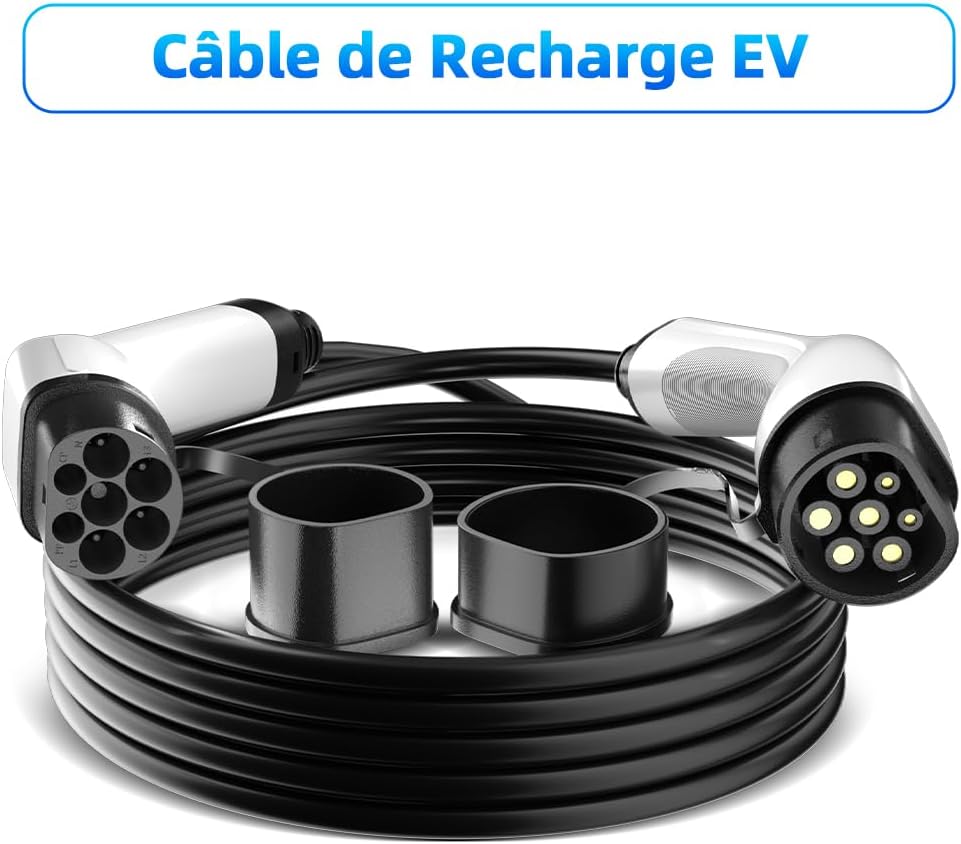
Image: The JATRHG EV charging cable, showing both Type 2 connectors with protective caps, ready for storage or use.
7. Itọju ati Ipamọ
7.1 Ninu
Keep the charging cable clean and free from dirt, dust, and moisture. Use a soft, dry cloth to wipe down the cable and connectors. Do not use harsh chemicals or abrasive cleaners.
7.2 Ibi ipamọ
When not in use, store the cable in a dry, cool place, away from direct sunlight and extreme temperatures. Use the provided storage bag to protect the cable from damage and keep the connectors clean. Avoid kinking or bending the cable sharply.

Aworan: A alaye view of the ergonomic and anti-skid design of the Type 2 connector, highlighting its comfortable grip.
8. Laasigbotitusita
If you encounter issues during charging, refer to the following common problems and solutions:
| Isoro | Owun to le Fa | Ojutu |
|---|---|---|
| Gbigba agbara ko bẹrẹ. |
|
|
| Iyara gbigba agbara lọra. |
|
|
| Káàbù náà máa ń gbóná nígbà tí a bá ń gba agbára. |
|
|
Tí ìṣòro náà bá ń bá a lọ lẹ́yìn tí a bá ti gbìyànjú àwọn ìdáhùn wọ̀nyí, jọ̀wọ́ kan sí olùrànlọ́wọ́ oníbàárà tàbí onímọ̀ iná mànàmáná tó mọ̀ nípa rẹ̀.
9. Imọ ni pato
| Ẹya ara ẹrọ | Sipesifikesonu |
|---|---|
| Nọmba awoṣe | EV-IEC-AC-32-PV |
| Brand | JATRHG |
| Asopọmọra Iru | Type 2 to Type 2 (IEC 62196-2) |
| O pọju o wu Power | 22 KW |
| Ti isiyi Rating | 32 A (Three-Phase) |
| Voltage Rating | 400 Volt (AC) |
| USB Ipari | 5 Mita |
| Lode ikarahun elo | TPU |
| Awọn iwọn otutu ti nṣiṣẹ | -40 ℃ si + 85 ℃ |
| Kilasi Idaabobo | IP54 |
| Igbesi aye ẹrọ | > 10,000 plugging/unplugging cycles (no load) |
| Awọn iwe-ẹri | CE, TÜV, Rhos |
| Awọn ẹrọ ibaramu | Type 2 Electric and Plug-in Hybrid Vehicles |
| Iwọn Nkan | 4 kilo |
10. atilẹyin ọja Information
The JATRHG EV Charging Cable comes with a 2-odun atilẹyin ọja on spare parts, as per EU availability. This warranty covers defects in materials and workmanship under normal use. It does not cover damage resulting from misuse, accidents, unauthorized modifications, or improper installation.
Jọwọ ṣe idaduro ẹri rira rẹ fun awọn iṣeduro atilẹyin ọja.
11. Onibara Support
For technical assistance, warranty claims, or any questions regarding your JATRHG EV Charging Cable, please contact your retailer or visit the official JATRHG webojula fun support alaye.
Manufacturer: Eway New Energy