

1. Awọn Ilana Aabo pataki
Jọ̀wọ́ ka gbogbo ìtọ́ni kí o tó lo ohun èlò ìgbóná yìí dáadáa. Àìtẹ̀lé àwọn ìtọ́ni wọ̀nyí lè yọrí sí iná, ìkọlù iná mànàmáná, tàbí ìpalára.
- Do not use this heater outdoors. It is designed for indoor use only.
- Nigbagbogbo pulọọgi awọn igbona taara sinu iṣan ogiri kan/apoti. Maṣe lo pẹlu okun itẹsiwaju tabi fọwọkan agbara ti o ṣee gbe (ibọsẹ/adiha agbara).
- Olugbona yii gbona nigba lilo. Lati yago fun gbigbona, maṣe jẹ ki awọ igboro kan awọn aaye ti o gbona.
- Tọju awọn ohun elo ijona, gẹgẹbi awọn aga, awọn irọri, ibusun, awọn iwe, awọn aṣọ, ati awọn aṣọ-ikele ni o kere ju ẹsẹ mẹta (3 m) lati iwaju ẹrọ ti ngbona ki o pa wọn mọ kuro ni ẹgbẹ ati sẹhin.
- Išọra to gaju jẹ dandan nigbati ẹrọ igbona eyikeyi ba nlo nipasẹ tabi sunmọ awọn ọmọde tabi awọn alaiṣe ati nigbakugba ti ẹrọ igbona ba ṣiṣẹ ati laini abojuto.
- Yọọ ẹrọ igbona nigbagbogbo nigbati o ko ba wa ni lilo.
- Ma ṣe ṣiṣẹ ẹrọ igbona eyikeyi pẹlu okun ti o bajẹ tabi pulọọgi tabi lẹhin ti ẹrọ ti ngbona ba ṣiṣẹ, ti lọ silẹ tabi bajẹ ni eyikeyi ọna. Pada alagbona si ile-iṣẹ iṣẹ ti a fun ni aṣẹ fun idanwo, itanna tabi atunṣe ẹrọ, tabi atunṣe.
- Ma ṣe fi sii tabi gba awọn ohun ajeji laaye lati wọ inu afẹfẹ eyikeyi tabi ṣiṣi eefin nitori eyi le fa ina mọnamọna tabi ina, tabi ba ẹrọ igbona jẹ.
- Lati ṣe idiwọ ina ti o ṣeeṣe, maṣe dina awọn gbigbe afẹfẹ tabi eefi ni eyikeyi ọna. Ma ṣe lo lori awọn aaye rirọ, bii ibusun, nibiti awọn ṣiṣi le di dina.
- This heater has an automatic overheat protection system. If the heater overheats, it will automatically shut off. Unplug the heater, wait 10 minutes for it to cool down, then plug it back in.
- This heater is equipped with a tip-over safety switch. If the heater is accidentally tipped over, it will automatically shut off. Place the heater on a firm, level surface to resume operation.
2. Ọja Ipariview
The PELONIS PSH10C2ABB is a compact and portable 1500W ceramic electric fan heater designed for efficient indoor heating. It features multiple heat settings and a fan-only mode for year-round use.
Awọn ẹya pataki:
- 3 Eto Ooru: 700W, 900W, and 1500W for customizable warmth.
- Ipò Àìfẹ́ Nikan: Allows for air circulation without heat, suitable for all seasons.
- Òtútù Títúnṣe: Ṣetọju iwọn otutu yara ti o fẹ.
- Iwapọ ati Apẹrẹ to gbe: Easy to move between rooms with a cool-touch handle.
- Ohun elo alapapo seramiki: Provides rapid and energy-efficient heating.
- Awọn ẹya Aabo: Overheat protection and tip-over switch for enhanced safety.
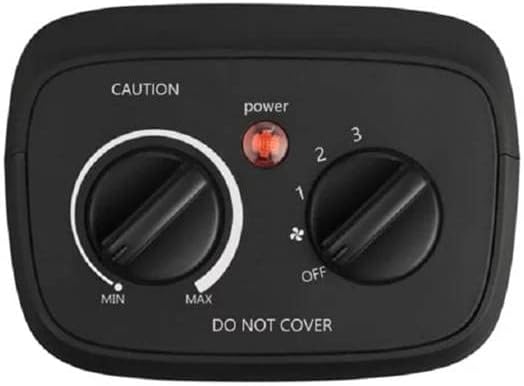
Aworan: Oke view of the heater's control panel, showing the thermostat dial (Min to Max) and the mode selector dial (Off, Fan, Heat 1, Heat 2, Heat 3) with a power indicator light.
3. Eto
Awọn akoonu idii:
- PELONIS PSH10C2ABB Ceramic Electric Fan Heater
- Itọsọna olumulo
Ibi:
- Unpack the heater from its packaging and remove all packing materials.
- Place the heater on a firm, level, and stable surface. Ensure it is at least 3 feet (0.9 meters) away from walls, furniture, and other combustible materials.
- Rí i dájú pé okùn agbára náà kò ní ìfúnpọ̀ tàbí kí a gbé e sí abẹ́ ẹ̀rọ ìgbóná.
- Plug the heater directly into a 127V AC, 60Hz wall outlet. Do not use extension cords or power strips.

Image: The PELONIS ceramic heater positioned on a shelf, demonstrating proper placement in a living space.
4. Awọn ilana Iṣiṣẹ
The heater features two control dials on the top panel: one for thermostat control and one for mode selection.
Mode Selection Dial:
This dial controls the power and operating mode of the heater. Rotate the dial to select your desired setting:
- PA: Pa ẹrọ ti ngbona kuro.
- FAN (indicated by fan icon): Ó ń mú kí afẹ́fẹ́ ṣiṣẹ́ láìsí ooru, ó sì ń pèsè ìṣàn afẹ́fẹ́.
- HEAT 1 (700W): Eto ooru kekere.
- HEAT 2 (900W): Eto ooru alabọde.
- HEAT 3 (1500W): High heat setting for maximum warmth.
Titẹ Iṣakoso Gbona:
This dial allows you to set your desired room temperature. It works in conjunction with the heat settings.
- Turn the Mode Selection Dial to one of the HEAT settings (1, 2, or 3).
- Rotate the Thermostat Control Dial clockwise towards "MAX" for higher temperatures, or counter-clockwise towards "MIN" for lower temperatures.
- Once the room reaches your desired temperature, slowly turn the Thermostat Control Dial counter-clockwise until the heater turns off. The heater will now cycle on and off to maintain this temperature.
Ina Atọka Agbara: A red light on the control panel illuminates when the heater is powered on and operating.
5. Itọju
Regular cleaning and proper storage will help ensure the longevity and efficient operation of your heater.
Ninu:
- Yọọ ẹrọ ti ngbona nigbagbogbo ki o jẹ ki o tutu patapata ṣaaju ṣiṣe mimọ.
- Lo asọ, damp aṣọ láti nu àwọn ojú ìta ti ẹ̀rọ ìgbóná náà. Má ṣe lo àwọn ohun ìfọṣọ tàbí àwọn ohun èlò ìfọṣọ.
- Use a vacuum cleaner with a brush attachment to gently remove dust and lint from the air intake and exhaust grilles.
- Má ṣe fi omi rì ohun èlò ìgbóná náà tàbí kí o jẹ́ kí omi máa rọ̀ sínú inú ohun èlò ìgbóná náà.
Ibi ipamọ:
When not in use, store the heater in its original packaging or a clean, dry place. Wrap the power cord loosely to prevent damage.
6. Laasigbotitusita
| Isoro | Owun to le Fa | Ojutu |
|---|---|---|
| Alagbona ko ni tan-an. |
|
|
| Heater produces no heat in a heat setting. |
|
|
| A máa ń lo ẹ̀rọ ìgbóná nígbà gbogbo. |
|
|
7. Awọn pato
- Awoṣe: PSH10C2ABB (DUDULAILE-311-2643)
- Brand: PELLISN .SÌ
- Ijade agbara: 700W / 900W / 1500W
- Voltage: 127 Volts
- Nọmba Awọn Iyara: 3 (Heat settings) + Fan-only
- Awọn iwọn: Approximately 26 x 22 x 13 cm (Package dimensions, actual unit is similar)
- Ìwúwo: O fẹrẹ to 500 g
- Awọn ẹya pataki: Compact, space-saving, energy-saving, lightweight, portable, overheat protection, tip-over switch.
- Àwọ̀: Dudu

Image: Diagram showing the approximate dimensions of the PELONIS heater: 23cm height, 10cm depth, 20cm width.
8. Atilẹyin ọja ati Support
For warranty information and customer support, please refer to the warranty card included with your product or visit the official PELONIS webojula. Tọju iwe-ẹri rira rẹ bi ẹri rira fun eyikeyi awọn ibeere atilẹyin ọja.
If you experience any issues not covered in the troubleshooting section, please contact PELONIS customer service for assistance.
Awọn orisun Ayelujara:
- Official PELONIS Webojula: www.pelonis.com (Akiyesi: Eyi jẹ aaye ibi URL, please refer to your product documentation for the correct webojula.)