
1. Ifihan
Thank you for choosing the DIGISHUO 14.6V 10A LiFePO4 Battery Charger. This charger is specifically designed for charging and maintaining 12V (12.8V) LiFePO4 lithium-ion batteries. It features a 2-stage ibakan lọwọlọwọ / ibakan voltage (CC/CV) charge algorithm to optimize charging efficiency and battery lifespan. Please read this manual thoroughly before use to ensure safe and effective operation.
2. Alaye Aabo
WARNING: Risk of Electric Shock. Do not open the charger casing.
- This charger is designed exclusively for 12V (12.8V) LiFePO4 batteries. Do not use it with other battery types (e.g., lead-acid, Ni-Cd, Ni-MH) as this may cause damage to the battery or charger, or result in injury.
- Ensure the charger is connected to a power outlet with the correct voltage (100-220V AC).
- Always connect the charger to the battery terminals correctly: red clip to positive (+), black clip to negative (-). Reverse connection can cause damage.
- Operate the charger in a well-ventilated area. Do not cover the charger during operation.
- Keep the charger away from water, moisture, and flammable materials.
- Do not use the charger if the cables, clips, or casing ti bajẹ.
- Unplug the charger from the power outlet before making or breaking connections to the battery.
- Jeki kuro ni arọwọto awọn ọmọde.

Image: The DIGISHUO LiFePO4 Battery Charger features built-in protections against over-temperature, reverse polarity, over-voltage, ati kukuru-Circuit.
3. Ọja Ipariview
The DIGISHUO 14.6V 10A LiFePO4 Battery Charger includes the main charging unit, power supply cable, and alligator clips for battery connection.
Awọn akoonu idii:
- 1 x 14.6V Lithium Battery Charger with Crocodile Clip
- 1 x US Plug Power Supply Cable
- 1 x Afowoyi Gẹẹsi (iwe yii)
- 1 x Backup Fuse

Image: The package includes the charger unit, power cable, and alligator clips.
Charger Components:
- Charger Unit: Durable aluminum alloy casing with built-in cooling fan.
- Atọka LED: Ó ń fi ipò agbára hàn (Pupa fún agbára, Àwọ̀ ewé fún agbára gbígbà gbogbo).
- Àwọn Àkójọpọ̀ Àgbàlagbà: Pupa fun rere (+), Dudu fun odi (-).
- Ibudo Nwọle Agbara: Fún síso okùn agbára AC pọ̀.
- Dimu Fuse: Contains a replaceable fuse for protection.

Aworan: Iwaju view of the charger showing the main unit, alligator clips, and power cord.
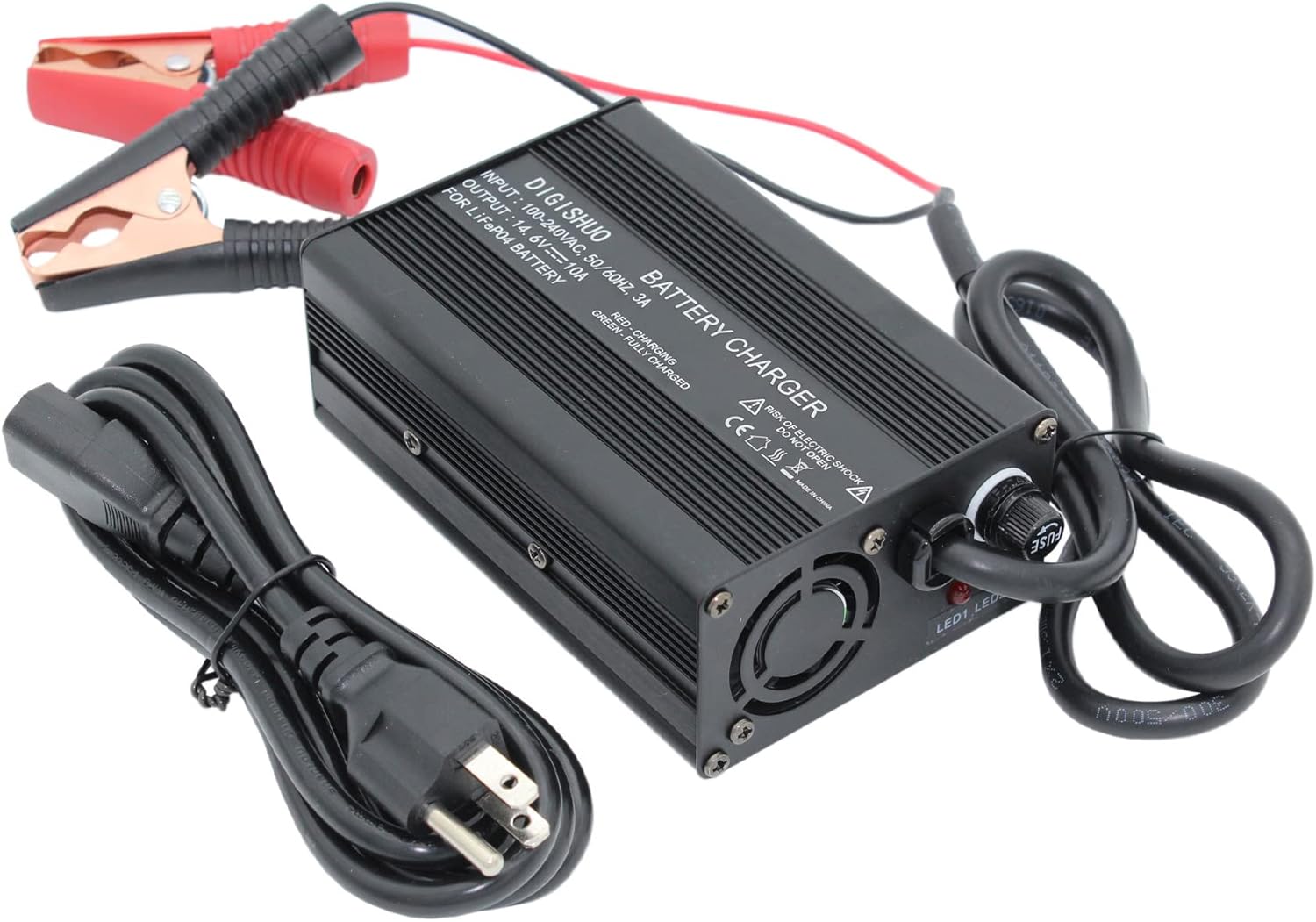
Aworan: Angled view highlighting the cooling fan and fuse holder on the charger unit.
4. Awọn pato
| Brand | DIGISHUO |
| Awoṣe | B0C3GYRHS4 |
| Iṣagbewọle Voltage | 100-220V AC |
| O wujade Voltage | 14.6V |
| Gbigba agbara lọwọlọwọ | 10 Amps |
| Niyanju Agbara Batiri | 30~50 Amp Hours and above (12V LiFePO4) |
| Ọja Mefa | 8"D x 4"W x 2"H |
| Ohun elo Ile | Ti o tọ Aluminiomu Alloy |
| Itutu agbaiye | -Itumọ ti ni itutu Fan |
5. Eto
- Mura Batiri naa: Ensure the 12V LiFePO4 battery is clean and its terminals are free from corrosion.
- Sopọ si Batiri:
- Sopọ awọn PUPA alligator agekuru si awọn rere (+) ebute oko.
- Sopọ awọn DUDU alligator agekuru si awọn odi (-) ebute oko.
- Sopọ si Agbara: Insert the AC power cable into the charger's power input port, then plug the other end into a standard 100-220V AC wall outlet.
Pataki: Always connect the charger to the battery first, then to the AC power outlet. When disconnecting, unplug from the AC outlet first, then disconnect from the battery.
6. Awọn ilana Iṣiṣẹ
Ilana gbigba agbara:
- Once properly connected (as per Section 5), the charger will automatically begin the charging process.
- Awọn Atọka LED on the charger will illuminate PUPA, indicating that the battery is currently charging.
- Ṣaja naa nlo 2-stage Constant Lọwọlọwọ/Ibakan Voltage (CC/CV) algorithm for efficient and safe charging.
- Nigbati batiri naa ba ti gba agbara ni kikun, awọn Atọka LED yoo yipada ALAWE. The charger will automatically stop charging to prevent overcharging.
0V Charging Function (Battery Reactivation):
This charger supports a 0V charging function, which can help reactivate or repair long-unused LiFePO4 batteries that have entered a deep discharge state. When connected to such a battery, the charger will attempt to bring its voltage up to a level where normal charging can commence. This process may take longer than regular charging.
7. Itọju
- Keep the charger clean and dry. Wipe the exterior with a soft, dry cloth. Do not use solvents or abrasive cleaners.
- Regularly inspect the cables and alligator clips for any signs of damage, fraying, or corrosion. Replace if necessary.
- Ensure the cooling fan is not obstructed to allow for proper heat dissipation.
- Tọju ṣaja ni itura, ibi gbigbẹ nigbati ko si ni lilo.
- If the fuse blows, replace it with a fuse of the same type and rating (a backup fuse is included in the package).
8. Laasigbotitusita
| Isoro | Owun to le Fa | Ojutu |
|---|---|---|
| LED charger ko tan ina. | No power from outlet; Loose connection; Blown fuse. | Check power outlet; Ensure all connections are secure; Check and replace fuse if necessary. |
| LED duro ni pupa fun igba pipẹ. | Battery is deeply discharged or high capacity; Battery fault. | Allow more time for charging, especially for large or deeply discharged batteries. If it never turns green, the battery may be faulty. |
| LED naa yipada si alawọ ewe lẹsẹkẹsẹ lẹhin ti o ba so pọ. | Battery is already fully charged; Poor connection. | This is normal if the battery is full. If not, check connections for proper contact. |
| Ṣaja n gbona nigba isẹ. | Normal operation; Obstructed cooling fan. | Some heat is normal. Ensure the cooling fan is not blocked and the charger is in a well-ventilated area. If excessively hot, disconnect and contact support. |
9. Atilẹyin ọja ati Support
This DIGISHUO product comes with a 1-odun atilẹyin ọja from the date of purchase, covering defects in materials and workmanship under normal use. This warranty does not cover damage caused by misuse, accident, unauthorized modification, or improper installation.
For technical support, warranty claims, or any questions regarding your DIGISHUO charger, please contact our customer service team through the retailer where the product was purchased or visit the official DIGISHUO webojula fun alaye olubasọrọ.