
Ọrọ Iṣaaju
The InstallGear Ground Loop Noise Isolator is designed to eliminate unwanted electrical noise, such as alternator whine or engine hum, from your car audio or home stereo system. This device helps ensure a clean and clear audio signal by breaking the ground loop that causes interference. It is suitable for use with any audio device that utilizes RCA connections.
Ọja Awọn ẹya ara ẹrọ
- Two-Channel Noise Isolation: Effectively eliminates ground loop noise in both car audio and home stereo systems, providing clear sound.
- Apẹrẹ Iwapọ: Its small size allows for easy integration into various audio setups without occupying excessive space.
- Reduces High-Pitched Whine: Specifically engineered to minimize alternator noise and other high-pitched electrical interference.
- Enhances Audio Quality: Contributes to an improved audio experience by removing distracting background noise.
- Ohun elo to pọ: Compatible with car audio, portable audio devices, and professional audio equipment.
Package Awọn akoonu
- 2 x InstallGear Ground Loop Noise Isolators
Eto ati fifi sori
The Ground Loop Noise Isolator is designed for straightforward installation. It connects inline with your RCA audio cables between the source (e.g., head unit, receiver) and the amplifier tabi agbohunsoke.
Aworan Asopọ Gbogbogbo
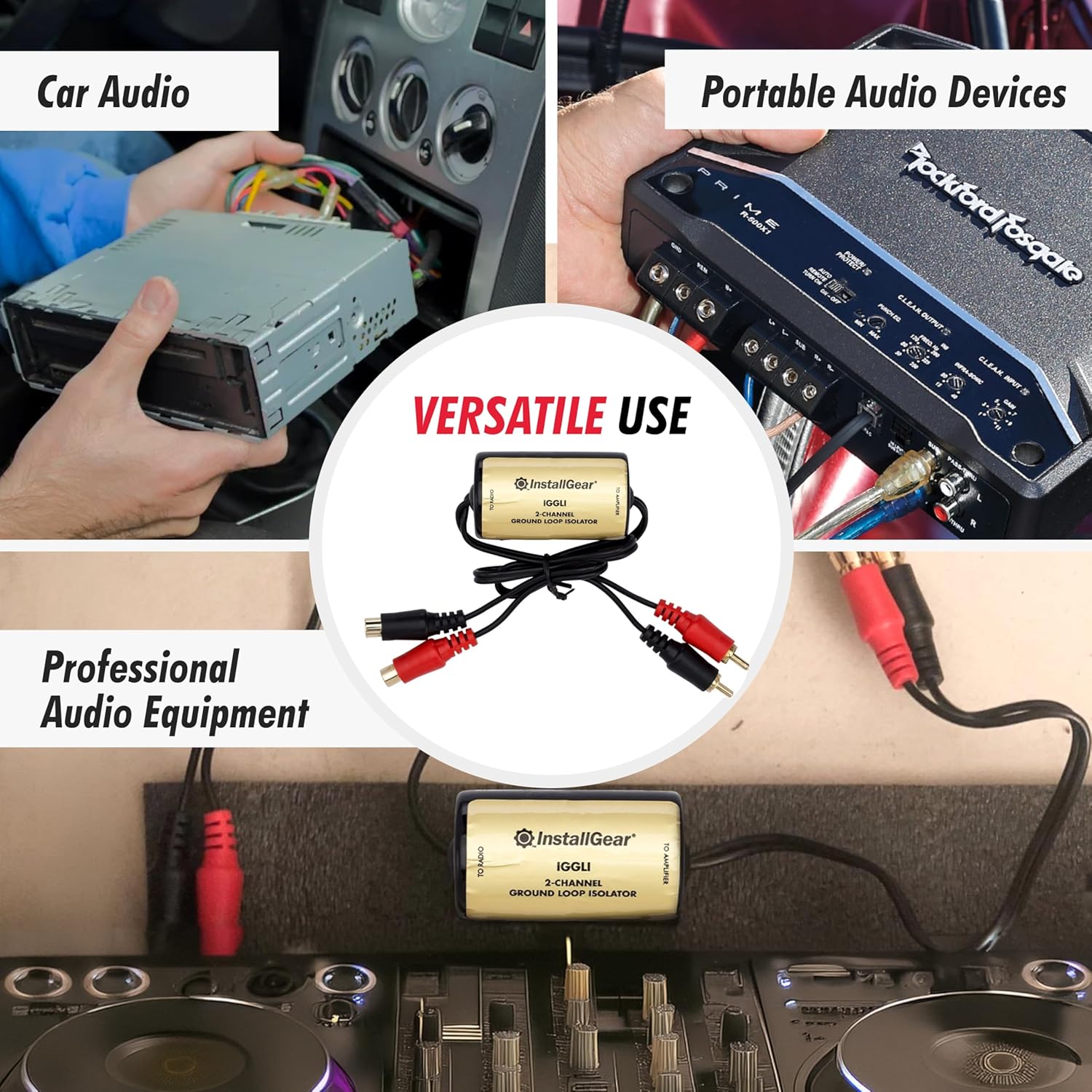
- Identify the RCA audio cables connecting your audio source (e.g., car stereo head unit, home receiver) to your amplifier tabi agbara agbohunsoke.
- Disconnect the RCA cables from either the source output or the ampigbewọle lifier.
- Connect the RCA input side of the InstallGear Ground Loop Noise Isolator to the output of your audio source. The isolator is labeled 'TO RADIO' or 'INPUT' on one side.
- Connect the RCA output side of the InstallGear Ground Loop Noise Isolator to the input of your amplifier or powered speakers. The isolator is labeled 'TO AMPLIFIER' or 'OUTPUT' on the other side.
- Rii daju pe gbogbo awọn asopọ wa ni aabo.
Car Audio Installation Example

In car audio systems, the isolator is typically installed between the head unit's RCA outputs and the amplifier's RCA inputs. This helps to eliminate alternator whine and other electrical interference common in vehicle environments.
Home Stereo Installation Example

For home stereo systems, the isolator can be used between components like a turntable preamp, receiver, or mixer and your amplifier or powered speakers to remove hum or buzz caused by ground loops.
Fidio fifi sori ẹrọ
Awọn ilana Iṣiṣẹ
Once installed, the InstallGear Ground Loop Noise Isolator operates automatically. It requires no external power or configuration. Simply ensure it is correctly connected inline with your RCA audio cables. The device passively filters out ground loop interference, allowing your audio signal to pass through cleanly.
Itoju
The InstallGear Ground Loop Noise Isolator is a passive device and requires minimal maintenance. Keep the unit and its connections clean and free from dust or debris. Avoid exposing the isolator to extreme temperatures or moisture. Periodically check the RCA connections to ensure they are secure.
Laasigbotitusita
- Noise persists after installation:
- Ensure the isolator is connected correctly, with the 'TO RADIO' side facing the audio source and 'TO AMPLIFIER' side facing the amplifier / agbohunsoke.
- Verify that all RCA cables are securely connected and not damaged.
- Confirm that the noise is indeed a ground loop issue. Other types of noise (e.g., engine noise from spark plugs, poor shielding) may require different solutions.
- Test the audio system without the isolator to confirm the noise source.
- Reduced audio quality or volume:
- While designed to be transparent, some isolators can slightly affect audio signals. Ensure you are using high-quality RCA cables.
- Check if the audio source or amplifier settings have been inadvertently changed.
- Ko si igbejade ohun:
- Double-check all RCA connections for proper seating.
- Ensure the audio source and amplifia naa ni agbara ati pe o n ṣiṣẹ daradara.
Awọn pato
| Nọmba awoṣe | P-Igr-GLI-Fltr2Pk |
| Nọmba ti awọn ikanni | 2 |
| Iṣagbesori Iru | Oke Oke |
| Iwọn Nkan | 6.7 iwon |
| Package Mefa | 6.1 x 3.7 x 2.17 inches |
| UPC | 850034241173 |
Atilẹyin ọja ati Support
For warranty information and technical support, please refer to the official InstallGear webojula tabi kan si wọn onibara iṣẹ taara. Tọju iwe-ẹri rira rẹ bi ẹri rira fun eyikeyi awọn ibeere atilẹyin ọja.