
MONOKEI STND87
MONOKEI Standard Keyboard User Manual
Model: STND87
Ọrọ Iṣaaju
Welcome to the user manual for your MONOKEI Standard Keyboard. This mechanical keyboard is designed for versatility and a superior typing experience, featuring hot-swappable MX switches and durable PBT keycaps. It supports both wired and wireless connectivity, making it suitable for various devices and environments. This manual provides essential information for setup, operation, maintenance, and troubleshooting to ensure optimal performance and longevity of your keyboard.
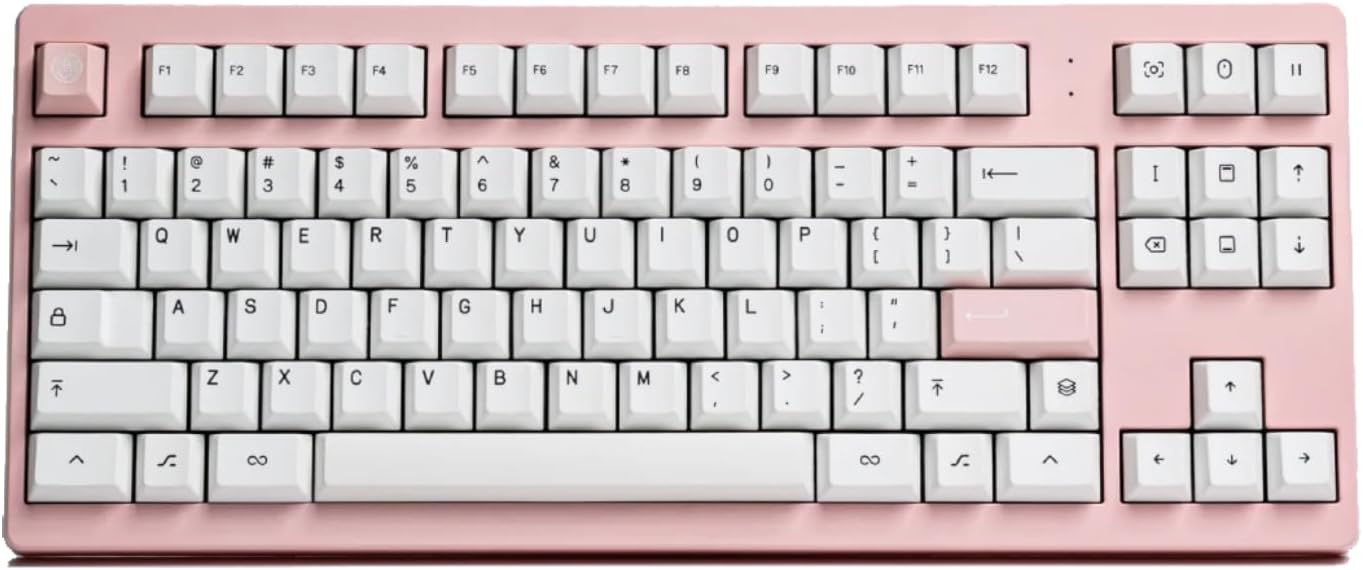
Aworan: Oke-isalẹ view of the MONOKEI Standard Keyboard in Blush Pink with white keycaps.
Ohun ti o wa ninu Apoti
Upon unboxing your MONOKEI Standard Keyboard, please verify that all the following components are present:
- MONOKEI Standard Keyboard
- Keycap Puller
- Okun USB (USB-C si USB-A)

Image: The keyboard box open, showing the keyboard, keycap puller, and USB cable neatly arranged inside.
Ṣeto
Gbigba agbara ni ibẹrẹ
Before first use, it is recommended to fully charge your MONOKEI Standard Keyboard.
- So okùn USB-C tí a pèsè mọ́ ibudo USB-C ti keyboard.
- Connect the other end of the USB cable to a powered USB port on your computer or a wall adapter.
- The keyboard's indicator light will show charging status (refer to LED indicator section for details).
Awọn aṣayan Asopọmọra
The MONOKEI Standard Keyboard offers both wireless (Bluetooth) and wired (USB-C) connectivity.
Alailowaya (Bluetooth) Asopọ
- Rii daju pe o ti gba agbara fun keyboard.
- Locate the connectivity switch on the keyboard (usually on the back or side) and set it to Bluetooth mode.
- On your device (Laptop, PC, Smartphone, Tablet), navigate to Bluetooth settings.
- Wa fun available devices and select "MONOKEI Standard" from the list.
- Tẹle eyikeyi awọn ilana loju iboju lati pari ilana sisopọ.
- The keyboard can connect wirelessly to multiple devices, allowing quick switching.
Wired (USB-C) Connection
- So okùn USB-C tí a pèsè mọ́ ibudo USB-C ti keyboard.
- So opin okun USB pọ si ibudo USB kan lori kọnputa rẹ.
- Awọn bọtini itẹwe yoo jẹ idanimọ laifọwọyi ati ṣetan fun lilo.

Image: The MONOKEI Standard Keyboard positioned next to a laptop, illustrating its use in a typical setup.
Awọn ilana Iṣiṣẹ
Lilo gbogbogbo
The MONOKEI Standard Keyboard is designed for intuitive use. Simply connect it via your preferred method (Bluetooth or USB-C) and begin typing. The keyboard features a standard 87-key layout, providing a familiar and efficient typing experience.
Gbona-Swappable Yipada
One of the key features of your MONOKEI Standard Keyboard is its hot-swappable sockets, allowing you to change out mechanical switches without soldering. This enables customization of your typing feel.
- Yiyọ Yipada kan: Use the provided switch puller tool. Gently grip the switch from the top and bottom (where the clips are located) and pull upwards with even pressure until the switch detaches from the PCB.
- Fifi Yipada sori ẹrọ: Align the pins of the new switch with the holes on the PCB. Ensure the pins are straight to avoid bending. Gently push the switch down until it clicks into place. Do not force the switch if it doesn't go in easily; check pin alignment.

Image: A hand demonstrating the use of a switch puller tool to remove a mechanical switch from the keyboard.
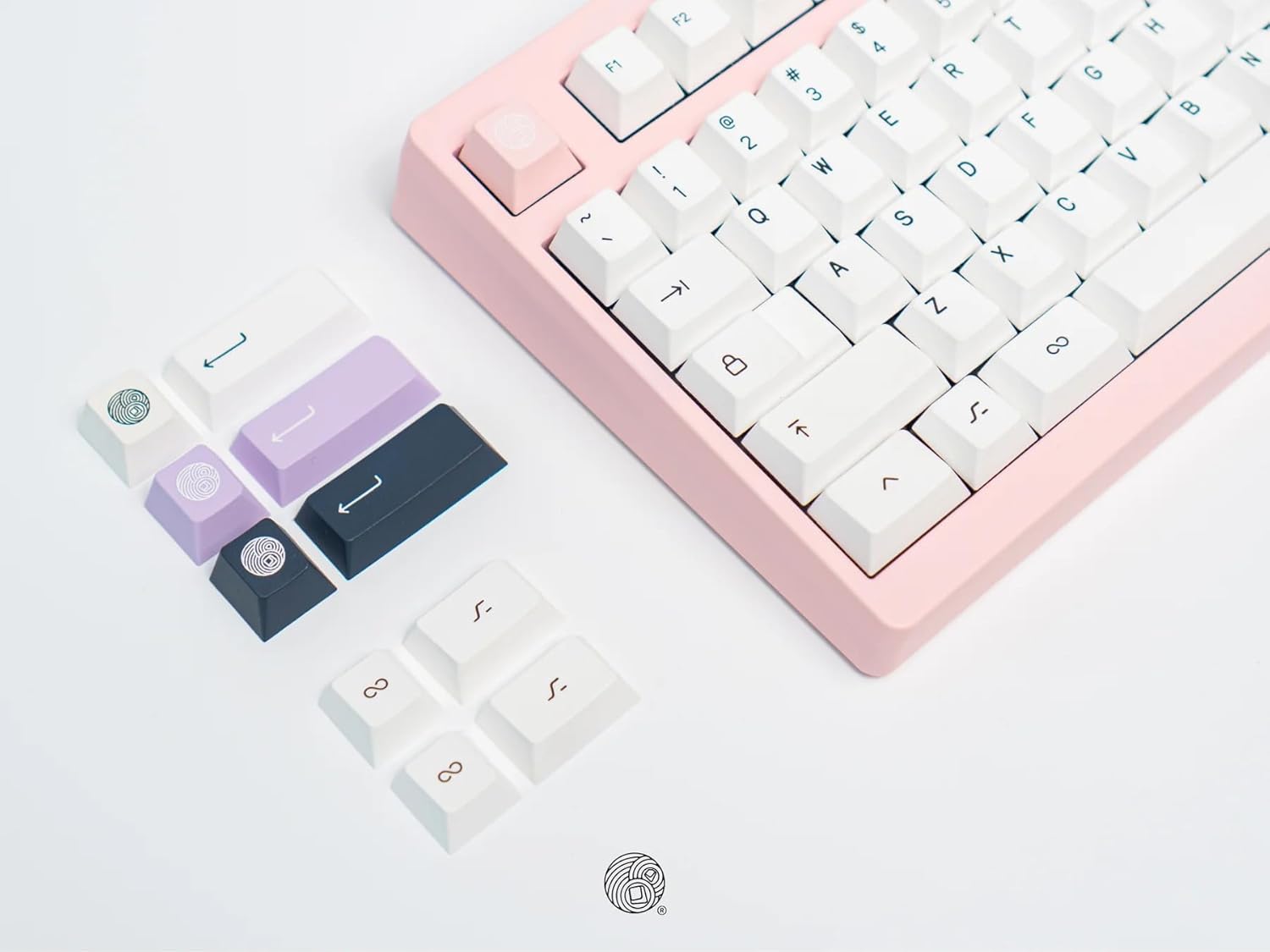
Image: A collection of different colored keycaps and a keycap puller tool, highlighting the customization options.
Iyipada Keycap
The keyboard comes installed with Series 1 doubleshot PBT keycaps, known for their durability. You can replace them with other compatible keycaps.
- Removing a Keycap: Use the provided keycap puller. Place the puller over the keycap, ensuring the wires hook under opposite sides of the keycap. Pull straight up with gentle, even force.
- Installing a Keycap: Align the cross-shaped stem on the underside of the keycap with the stem on the switch. Press down firmly until the keycap is seated securely.
Itoju
Ninu rẹ Keyboard
Regular cleaning helps maintain the appearance and functionality of your keyboard.
- Awọn bọtini bọtini: For general cleaning, wipe keycaps with a soft, damp cloth. For deeper cleaning, keycaps can be removed (using the keycap puller) and washed with mild soap and water. Ensure they are completely dry before reattaching.
- Ara Keyboard: Lo asọ rirọ, ti ko ni lint, die-die dampened with water or a mild cleaning solution, to wipe down the keyboard body. Avoid excessive moisture.
- Laarin awọn bọtini: Use compressed air to blow out dust and debris from between the keycaps. A small brush can also be used to dislodge stubborn particles.
Iṣọra: Do not immerse the keyboard in water or any liquid. Avoid using harsh chemicals or abrasive materials for cleaning.
Laasigbotitusita
| Isoro | Owun to le Fa | Ojutu |
|---|---|---|
| Keyboard ko dahun (Ti firanṣẹ) | Asopọ USB ti o ni alaimuṣinṣin, okun waya ti ko ni abawọn, iṣoro awakọ. |
|
| Kííbọọ̀dù kò dáhùn (Bluetooth) | Keyboard not paired, out of range, low battery, Bluetooth interference. |
|
| Awọn bọtini kii ṣe iforukọsilẹ tabi titẹ-meji | Loose or faulty switch, debris under keycap/switch. |
|
| Batiri ko ngba agbara | Faulty USB cable, power source issue, keyboard defect. |
|
Awọn pato
- Nọmba awoṣe: STND87
- Awọn iwọn ọja: 14.3 x 5.9 x 1.5 inches (36.32 x 14.99 x 3.81 cm)
- Ìwọ̀n Nkan: 2.1 poun (0.95 kg)
- Olupese: MONOKEI
- Imọ-ẹrọ Asopọmọra: Bluetooth BLE 5.1, USB-C
- Apejuwe Keyboard: Ẹ̀rọ
- Nọmba Awọn bọtini: 87
- Awọn ẹya pataki: Hot-Swappable, Long lasting PBT keycaps, Positive typing experience, Wired, Wireless, Bluetooth
- Awọn ẹrọ ibaramu: Laptop, PC, Smartphone, Tablet (macOS / iOS / Windows / Android)
- Igbesi aye batiri: Up to 30 days (based on 8 hours/day usage)
- Igun Titẹ: 5 iwọn

Image: A graphic displaying key specifications of the MONOKEI Standard Keyboard, including compatibility, connectivity, dimensions, weight, battery life, and typing angle.
Atilẹyin ọja ati Support
For warranty information and customer support, please refer to the official MONOKEI webojula tabi kan si wọn onibara iṣẹ taara. Jeki ẹri rira rẹ fun awọn iṣeduro atilẹyin ọja.
O le ṣàbẹwò awọn MONOKEI Store on Amazon fun alaye diẹ sii ati awọn imudojuiwọn ọja.
Ask a question about this manual
Ask about setup, troubleshooting, compatibility, parts, safety, or missing instructions. Manuals+ will review the question and use this page’s manual context to help answer it.