
1. Ọja Ipariview
The MONOKEI Standard Keyboard is a mechanical keyboard designed for a versatile typing experience. It features a durable construction, hot-swappable switches, and multiple connectivity options.
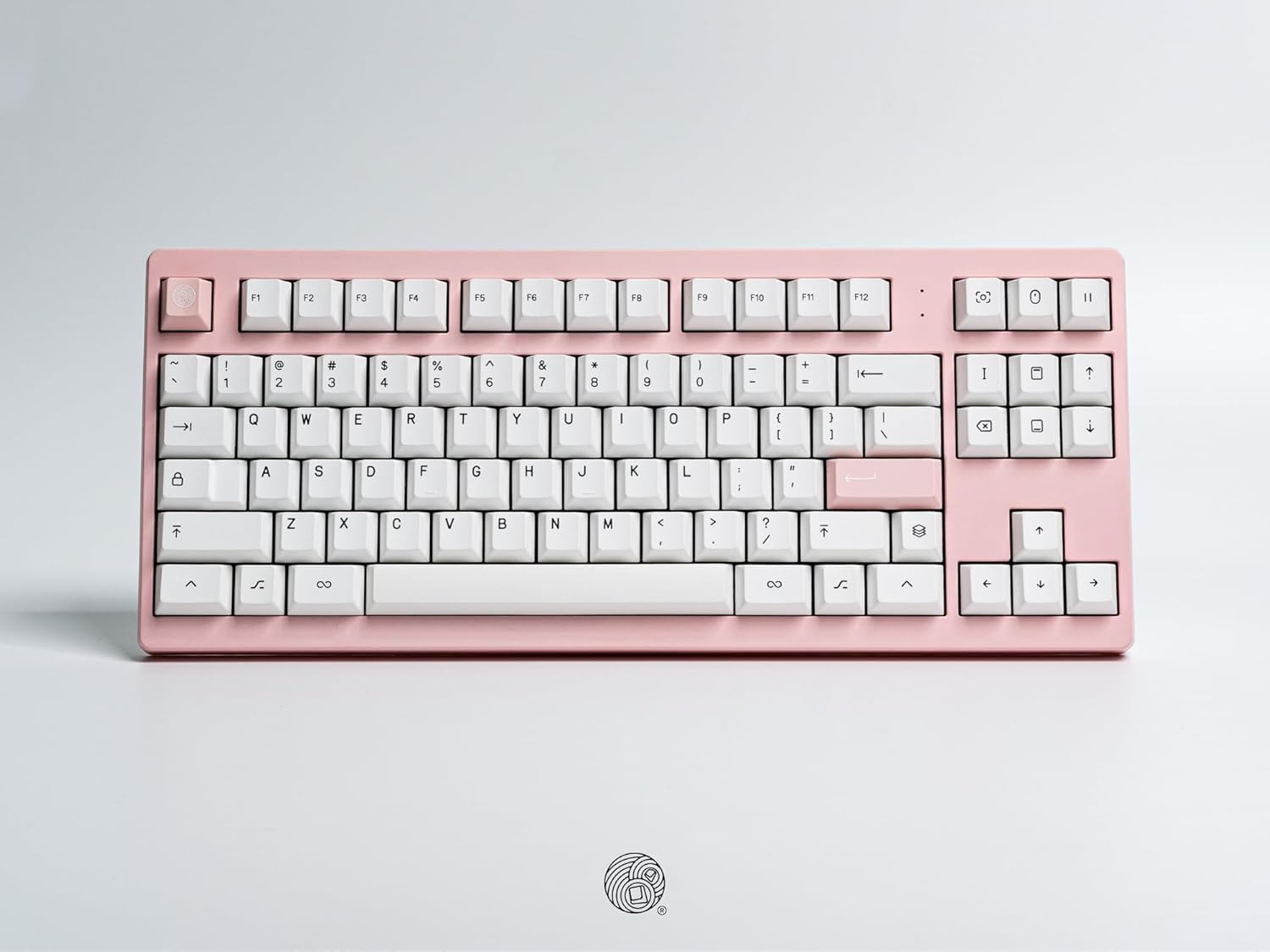
An oke view of the MONOKEI Standard Keyboard, showcasing its full layout in a blush pink casing with white PBT keycaps. The keyboard features a standard 87-key layout, including function keys, arrow keys, and a navigation cluster.
2. Eto
2.1 Ṣíṣí àpótí àti Àkóónú rẹ̀
Carefully remove the keyboard and accessories from the packaging. The box should contain:
- MONOKEI Standard Keyboard
- Okun USB-C
- Keycap Puller
2.2 Ibẹrẹ Asopọ
The MONOKEI Standard Keyboard supports both wired and wireless (Bluetooth) connectivity.
Asopọ onirin:
- Connect the provided USB-C cable to the port on the keyboard.
- So opin miiran ti okun USB-C si ibudo USB ti o wa lori kọnputa rẹ.
- Awọn bọtini itẹwe yoo jẹ idanimọ laifọwọyi nipasẹ ẹrọ iṣẹ rẹ.
Ailokun (Bluetooth) Asopọ:
- Rii daju pe o ti gba agbara tabi so keyboard nipasẹ USB-C fun iṣeto akọkọ.
- Turn on the keyboard's Bluetooth mode (refer to the Operating section for specific key combinations).
- On your device (PC, laptop, smartphone, tablet), navigate to Bluetooth settings.
- Wa fun available devices and select 'MONOKEI Standard' to pair.
- Tẹle eyikeyi awọn ilana loju iboju lati pari ilana sisopọ.
2.3 Gbigba agbara
Connect the USB-C cable to the keyboard and a power source (e.g., computer USB port, wall adapter). The keyboard can operate for up to 30 days on a full charge in wireless mode.
3. Awọn ilana Iṣiṣẹ
3.1 Ipilẹ Key Awọn iṣẹ
The MONOKEI Standard Keyboard features a standard 87-key layout. All alphanumeric keys, symbols, and basic modifiers (Shift, Ctrl, Alt, Fn) function as expected.
3.2 Awọn bọtini iṣẹ pataki
The F1-F12 keys may have secondary functions when pressed in combination with the 'Fn' key. Refer to the keycap legends for specific media controls or system functions.
3.3 Operating System Mode Switching
The keyboard may default to a specific operating system layout (e.g., Mac). To switch between operating system modes (e.g., Windows/Mac), use the designated hotkey combination. Consult the included quick start guide for the specific key sequence.
3.4 Switching Between Paired Devices
If multiple devices are paired via Bluetooth, use the designated function keys (often Fn + 1, 2, or 3) to switch between them quickly.
4. Itọju
4.1 Ninu Keyboard
To clean the keyboard, power it off and disconnect it from your device. Use a soft, lint-free cloth lightly dampened with water or a mild cleaning solution. Avoid spraying liquids directly onto the keyboard. For cleaning between keycaps, use compressed air or a small brush.
4.2 Keycap ati Yipada Rirọpo
The MONOKEI Standard Keyboard features hot-swappable sockets, allowing for easy replacement of switches without soldering. To replace keycaps or switches:
- rọra yọ bọtini bọtini kuro ni lilo fifa bọtini bọtini ti a pese.
- Once the keycap is removed, use a switch puller (not included, but often bundled with replacement switches) to carefully extract the switch from its socket.
- Mú àwọn pinni ti yíyípadà tuntun náà pọ̀ mọ́ àwọn ihò inú PCB náà kí o sì tẹ̀ ẹ́ dáadáa títí tí yóò fi tẹ ibi tí ó wà.
- Place the desired keycap onto the new switch stem.
Akiyesi: Opening the keyboard casing may void the warranty. Exercise caution if considering internal modifications.
5. Laasigbotitusita
5.1 Asopọmọra Oran
- Keyboard ko sopọ nipasẹ Bluetooth: Ensure Bluetooth is enabled on both the keyboard and your device. Try unpairing and re-pairing the keyboard. Ensure the keyboard is sufficiently charged.
- A ko mọ asopọ onirin: Try a different USB port or cable. Ensure the cable is fully inserted into both the keyboard and the computer.
5.2 Àwọn kọ́kọ́rọ́ tí kò dáhùn
- Individual keys: If a single key is not responding, the switch may be faulty or improperly seated. Try removing the keycap and switch, then re-inserting the switch firmly. If the issue persists, consider replacing the switch.
- Multiple keys: Ensure the keyboard is properly connected (wired or wireless). Restart your computer or device. If using wireless, check battery level.
5.3 Awọn ọran gbigba agbara
- Ensure the USB-C cable is securely connected to both the keyboard and a working power source.
- Gbiyanju okun USB-C ti o yatọ tabi ohun ti nmu badọgba agbara.
6. Awọn pato
| Ẹya ara ẹrọ | Ẹ̀kúnrẹ́rẹ́ |
|---|---|
| Ọja Mefa | 14.3 x 5.9 x 1.5 inches (14.3"L x 5.9"W x 1.5"H) |
| Iwọn Nkan | 2.1 iwon |
| Ohun elo | Polybutylene Terephthalate (PBT Keycaps) |
| Asopọmọra Technology | Bluetooth, USB-C |
| Pataki Awọn ẹya ara ẹrọ | Hot-Swappable, Long-lasting PBT keycaps, Wired, Wireless |
| Awọn irinše to wa | Keycap Puller, USB Cable |
| Awọn ẹrọ ibaramu | Kọǹpútà alágbèéká, PC, Foonuiyara, Tabulẹti |
7. Atilẹyin ọja ati Support
7.1 atilẹyin ọja Alaye
MONOKEI products are manufactured to high-quality standards. For specific warranty terms and conditions, please refer to the warranty card included with your product or visit the official MONOKEI webojula. Jeki ẹri rira rẹ fun awọn iṣeduro atilẹyin ọja.
7.2 Onibara Support
If you encounter any issues or have questions not covered in this manual, please contact MONOKEI customer support. You can find more information and contact details on the official MONOKEI store page: