
Ọrọ Iṣaaju
The First Alert SMICO100-AC is an Interconnect Hardwire 2-in-1 Smoke & Carbon Monoxide Alarm with Battery Backup. It incorporates Precision Detection technology, designed to reduce nuisance alarms from cooking while providing early warning for fire and carbon monoxide hazards. This alarm is designed for easy installation and interconnection with compatible alarms, creating a comprehensive safety system throughout your home.
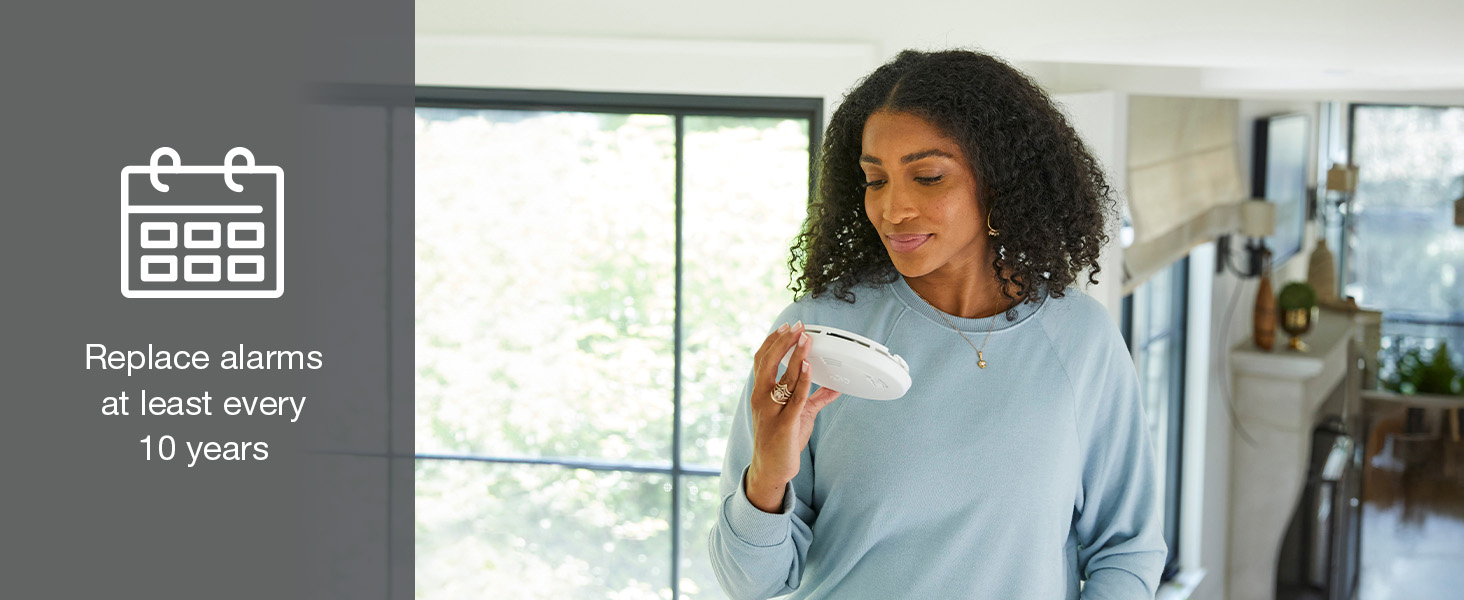
Image: First Alert - Most Trusted Brand in Fire Safety.
Alaye Aabo
IKILO! Carbon monoxide cannot be seen or smelled but can kill you. If the alarm sounds, follow these steps:
- Ṣiṣẹ idanwo/bọtini ipalọlọ.
- Pe awọn iṣẹ pajawiri rẹ (Ẹka ina tabi 911).
- Immediately move to fresh air - outdoors or by an open door/window.
PATAKI! This smoke alarm contains a maximum of 1.0 microcuries (37kBq) of Americium 241, a radioactive material. Distributed under U.S. NRC License No. 13-23889-01E and is made in compliance with U.S. NRC safety criteria in 10CFR32.27. The purchaser is exempt from any regulatory requirements.
Ibi ti a ṣe iṣeduro
Install alarms on every level of your home and in every bedroom to ensure optimal protection. Proper placement is crucial for early detection of smoke and carbon monoxide.
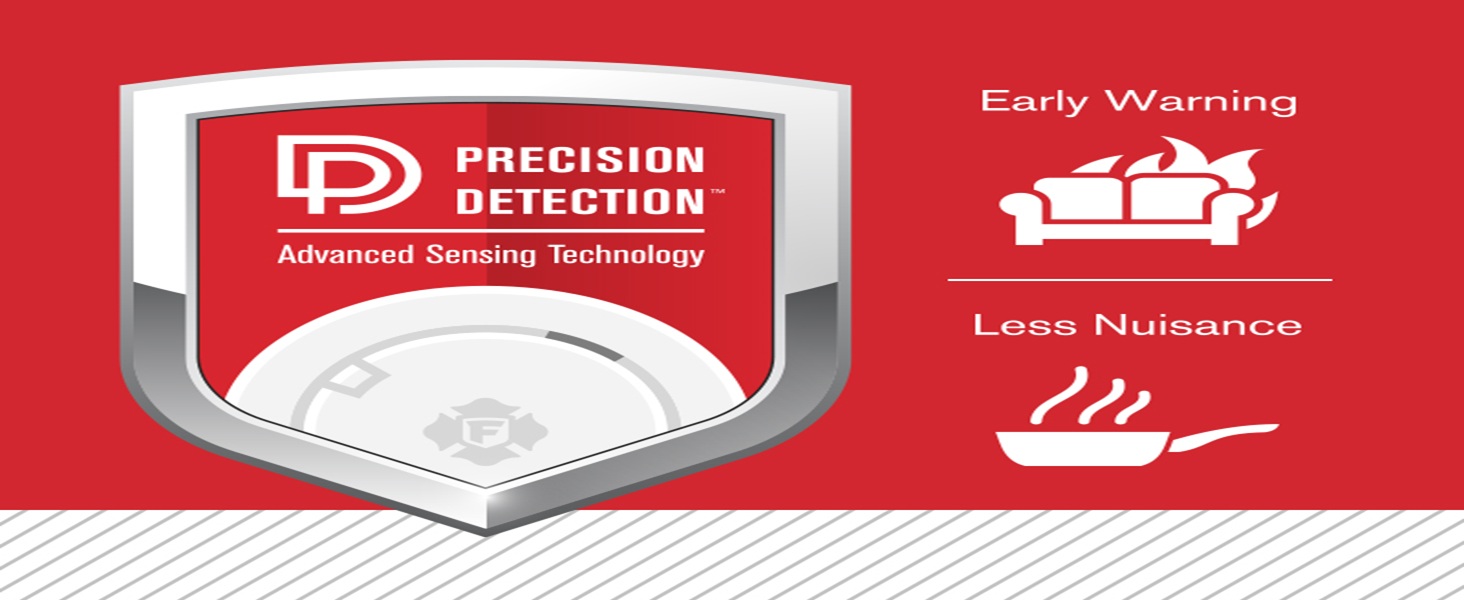
Image: Recommended placement diagram for smoke and CO alarms.
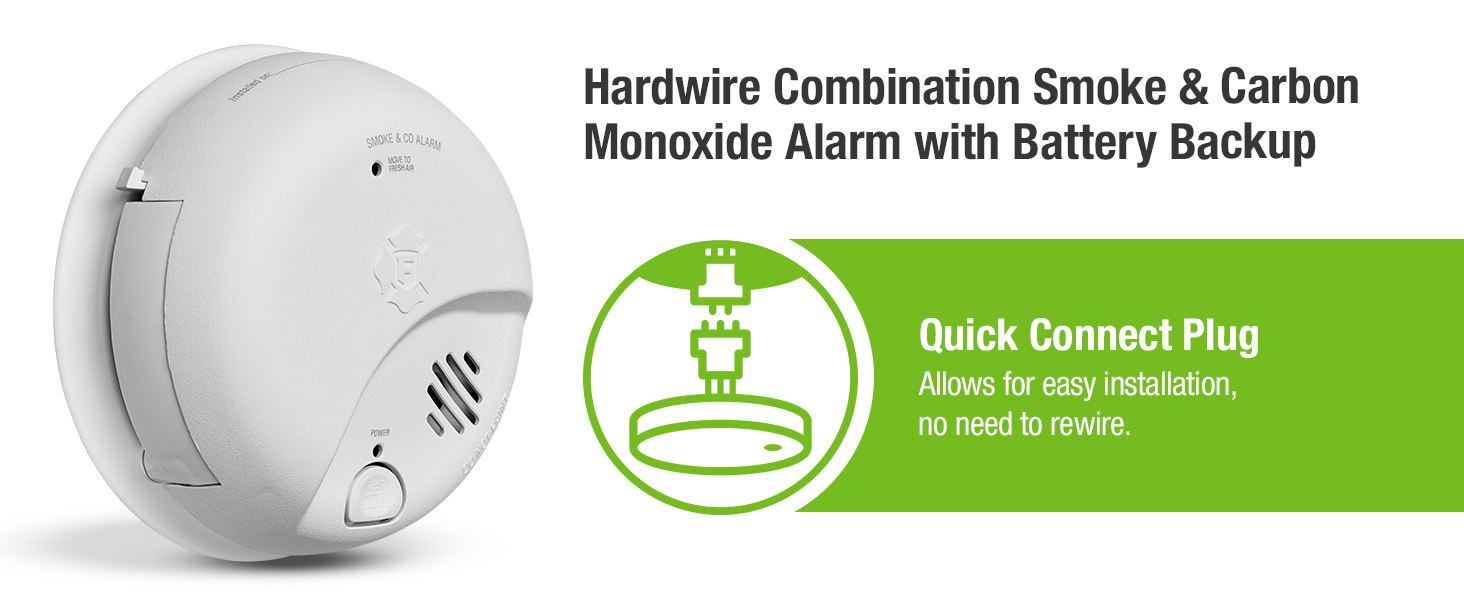
Image: Install alarms on every level and in every bedroom.
Eto ati fifi sori
The SMICO100-AC alarm is designed for hardwired installation and includes a 9V battery backup. It features a Quick Connect Plug for simplified wiring.
Ṣaaju fifi sori:
- Ensure power is OFF at the circuit breaker for the circuit you will be working on.
- Familiarize yourself with local electrical codes and installation requirements.
Awọn igbesẹ fifi sori ẹrọ:
- Yọ itaniji atijọ kuro: Disconnect the old alarm from its wiring harness and mounting bracket.
- Wire New Harness: If your existing wiring harness is not compatible, use the new Quick Connect Plug provided. Connect the black wire to the hot wire, white to neutral, and orange to the interconnect wire (if applicable). Ensure all connections are secure with wire nuts.
- Iṣagbesori Akọmọ: Attach the new mounting bracket to the electrical box on the ceiling or wall. The bracket is designed to accommodate various screw arrangements.
- Connect Alarm: Plug the wiring harness into the back of the SMICO100-AC alarm.
- Fi Batiri sii: The alarm comes with a pre-installed 9V Duracell battery. Remove the plastic tab to activate it.
- Secure Alarm: Align the alarm with the mounting bracket and twist clockwise until it locks securely into place.
- Pada Agbara pada: Tan-an agbara ni Circuit fifọ.
- Itaniji Idanwo: Press and hold the Test/Silence button until the alarm sounds. Refer to the 'Operating Instructions' section for expected alarm patterns.

Aworan: Pada view of the alarm with wiring harness.

Image: Quick Connect Plug for easy installation.
Video: Detailed guide on hardwired smoke detector installation, including wiring and mounting.
Video: Demonstration of easy installation with a universal mount for the smoke and carbon monoxide alarm.
Awọn ilana Iṣiṣẹ
The SMICO100-AC alarm provides distinct audible signals for smoke and carbon monoxide detection, as well as for low battery, malfunction, and end-of-life conditions.
Idanwo/Bọtini ipalọlọ:
Press and hold the Test/Silence button to test the alarm's functionality. The alarm will sound if working correctly. This button can also be used to temporarily silence nuisance alarms.

Image: Hand pressing the Test/Silence button.
Alarm Guide:
- 3 Beeps: Itaniji ẹfin
- 4 Beeps: Erogba Monoxide (CO) Itaniji
- 1 "Chirp" every Minute: Low Battery - Replace Battery
- 3 "Chirps" every Minute: Malfunction - Replace Alarm
- 5 "Chirps" every Minute: End of Life - Replace Alarm
Itoju
Regular maintenance ensures the continued reliability of your alarm. Gently vacuum or use clean compressed air to remove accumulated dust monthly. Never use water, cleaners, or solvents, as these may damage the unit. Press the test button after installation, weekly, and after cleaning to check all alarm functions.
Eto Iyipada:
Replace the alarm at least every 10 years after installation to ensure optimal performance and safety.
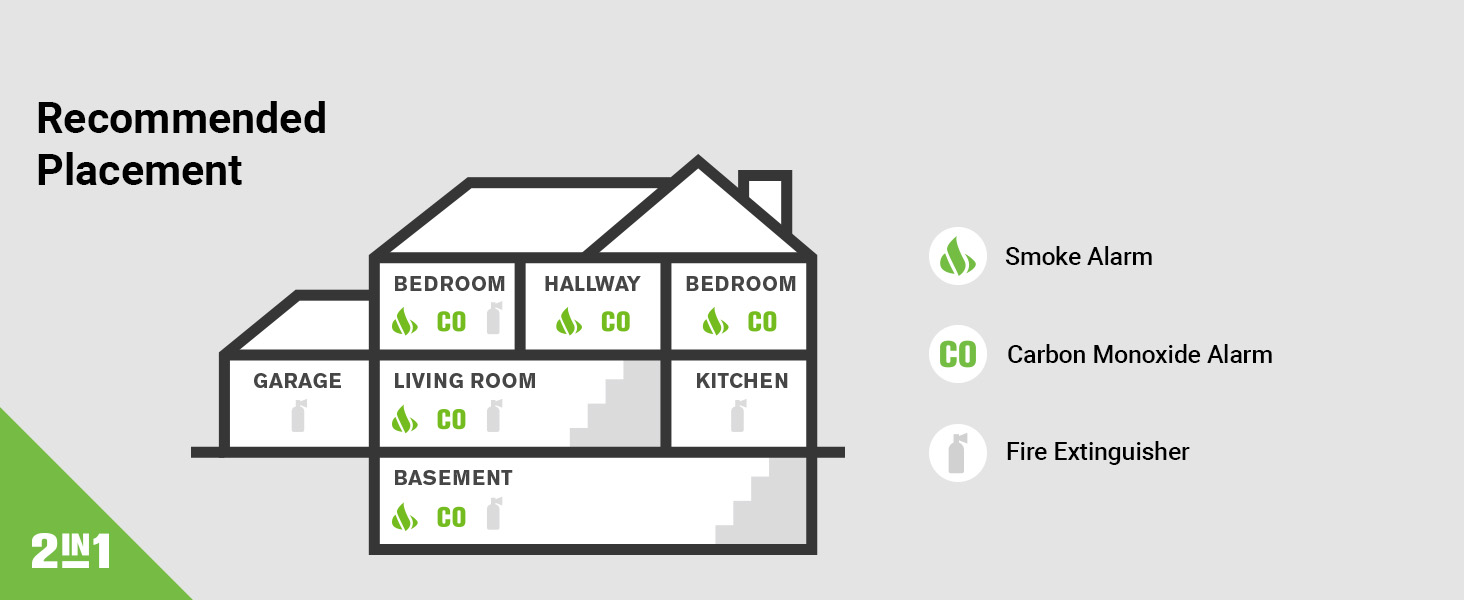
Image: Test alarms regularly.
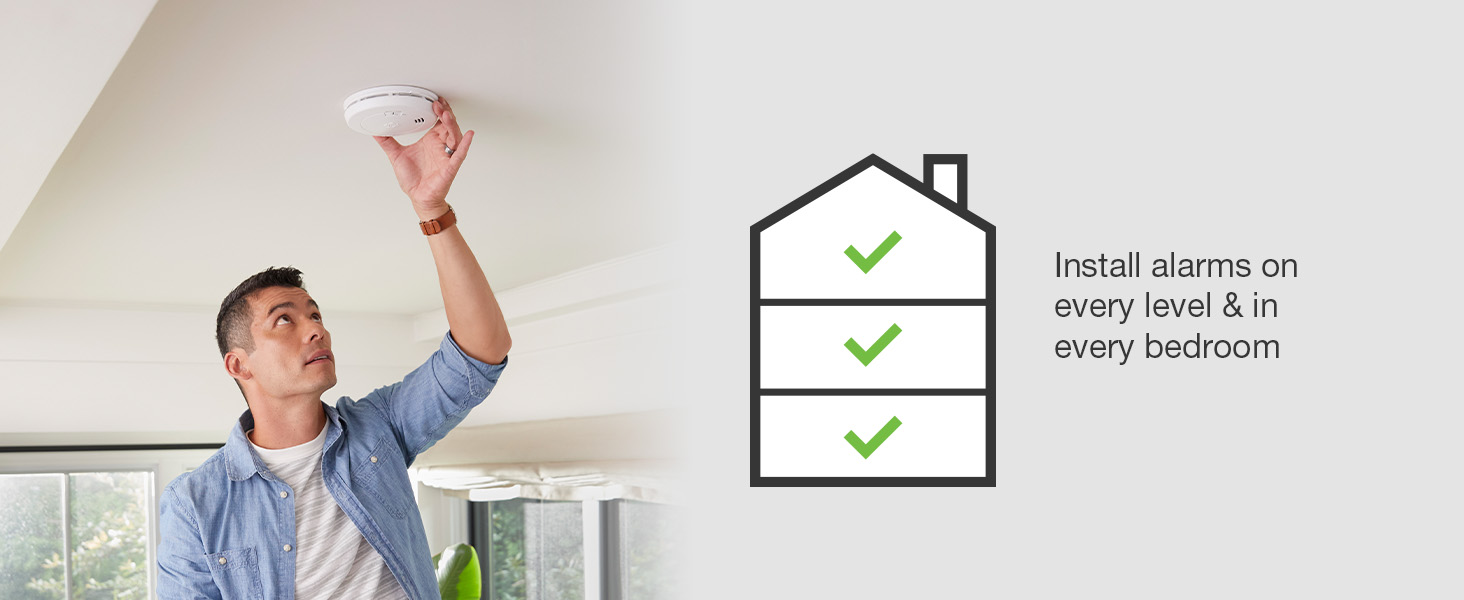
Image: Replace alarms at least every 10 years.
Video: Information on how often to replace First Alert detectors for optimal safety.
Video: Discussion on the importance of replacing old smoke detectors to maintain home safety.
Laasigbotitusita
If your alarm is chirping or sounding unexpectedly, refer to the Alarm Guide in the 'Operating Instructions' section to identify the specific issue. Common issues and their resolutions include:
- Nuisance Alarms (Cooking Smoke): The SMICO100-AC features Precision Detection technology to minimize nuisance alarms. If an alarm sounds due to cooking, use the Test/Silence button to temporarily silence it. Ensure proper ventilation in cooking areas.
- Batiri Kekere: A single chirp every minute indicates a low battery. Replace the 9V battery immediately.
- Aṣiṣe: Three chirps every minute indicate a malfunction. The alarm unit needs to be replaced.
- Ipari aye: Five chirps every minute indicate the alarm has reached its end of life and needs to be replaced.
Awọn pato
| Ẹya ara ẹrọ | Ẹ̀kúnrẹ́rẹ́ |
|---|---|
| Nọmba awoṣe | SMICO100-AC |
| Erin Awari | Smoke (Ionization Sensor) & Carbon Monoxide |
| Orisun agbara | Agbára líle (120V AC) pẹ̀lú Àtìlẹ́yìn Batiri 9V |
| Batiri Iru | 9V Alkaline (tí ó wà pẹ̀lú rẹ̀) |
| Interconnect | Yes, with compatible alarms |
| Àwọ̀ | Funfun |
| Iwọn Nkan | 1.68 iwon |
| Ọja Mefa | 21.5 x 7.5 x 3.5 inches |
| Olupese | Ibugbe |
| UPC | 029054022769 |
Atilẹyin ọja ati Support
For detailed warranty information and user manuals, please refer to the official First Alert webojula tabi kan si atilẹyin alabara.
- Egbe Iṣẹ Onibara: 1-800-323-9005
- Webojula: firstalert.com