
1. Ifihan
Thank you for choosing the Genesis 80GMVS Multi-Functional Vacuum Sealer. This appliance is designed to preserve food, liquids, and dry goods efficiently, making it suitable for food preservation, meal preparation, and sous vide cooking. Please read this manual thoroughly before operating the device to ensure safe and optimal performance.
Awọn Itọsọna Aabo pataki
- Ka gbogbo awọn ilana ṣaaju lilo.
- Maṣe fi ohun elo, okun agbara, tabi pulọọgi sinu omi tabi awọn olomi miiran.
- Pa á mọ́ kúrò lọ́wọ́ àwọn ọmọdé. A kò ṣe é fún àwọn tí agbára wọn kò gbé, tí agbára wọn kò gbé, tàbí tí agbára wọn kò gbé, àyàfi tí a bá ń tọ́jú rẹ̀.
- Yọọ pulọọgi kuro ni ijade nigbati ko si ni lilo ati ṣaaju ṣiṣe mimọ.
- Ma ṣe ṣiṣẹ ohun elo eyikeyi pẹlu okun tabi pulọọgi ti o bajẹ, tabi lẹhin aiṣe ohun elo tabi ti bajẹ ni eyikeyi ọna.
- Lo awọn asomọ ti a ṣe iṣeduro olupese nikan.
- Maṣe lo ni ita.
- Nigbagbogbo gbe ohun elo sori iduro, alapin, dada sooro ooru.
- Yago fun olubasọrọ pẹlu gbigbe awọn ẹya ara.
- Do not use for purposes other than its intended use.
2. Ọja irinše
Familiarize yourself with the main parts of your Genesis 80GMVS Vacuum Sealer:
- Ibi iwaju alabujuto: Buttons for various sealing modes (Normal, Soft, Seal, External) and Stop.
- Idipo Ididi: Heats to create a strong seal on vacuum bags.
- Ikanni igbale: Agbegbe ti a ti fa afẹfẹ jade lati inu apo naa.
- Lid Latch: O fi ideri naa pamọ lakoko iṣẹ.
- Ibudo Ẹya: For connecting an external vacuum hose (not included) for containers.
- Okun Agbara: Ó so ẹ̀rọ náà pọ̀ mọ́ ibi tí iná mànàmáná ti ń jáde.
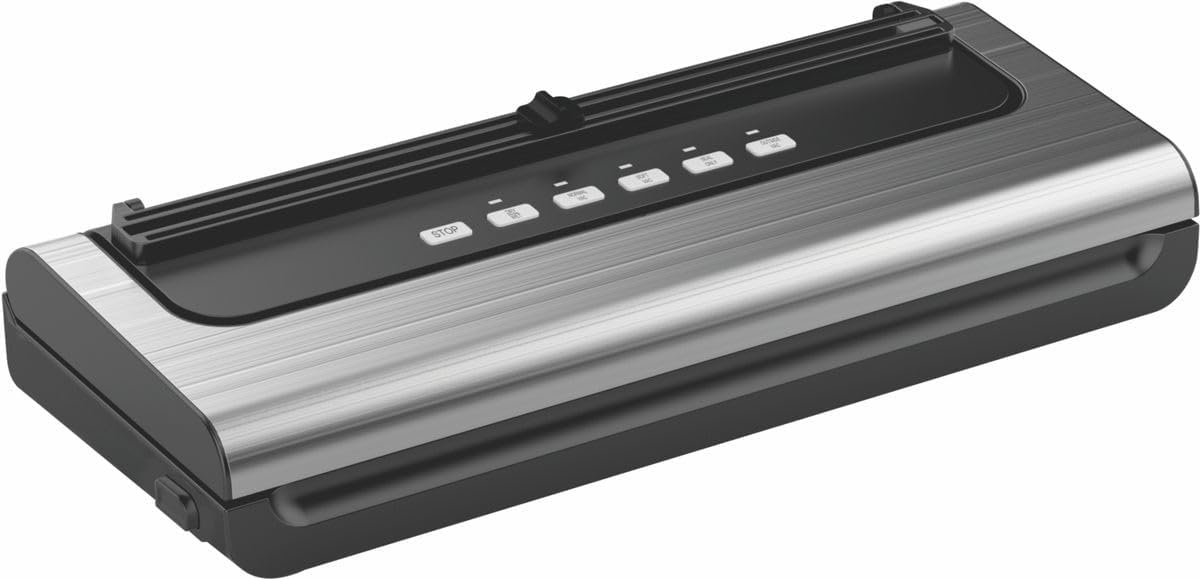
Olusin 2.1: Pariview of the Genesis 80GMVS Multi-Functional Vacuum Sealer. This image displays the top view of the vacuum sealer, highlighting its sleek design and the control panel with various function buttons.
3. Eto
- Yọọ kuro: Carefully remove the vacuum sealer from its packaging. Retain packaging for future storage or transport.
- Ṣayẹwo: Ṣayẹwo ohun elo fun eyikeyi awọn ami ti ibajẹ. Maṣe lo ti o ba bajẹ.
- Ibi: Place the vacuum sealer on a dry, flat, and stable surface, ensuring adequate space around the unit for ventilation.
- Asopọ agbara: Plug the power cord into a standard electrical outlet. The indicator light may illuminate, indicating the unit is ready.
4. Awọn ilana Iṣiṣẹ
This section details how to use your vacuum sealer for various food types and sealing methods.
4.1 Preparing Bags and Food
- Use only vacuum sealer bags designed for this appliance.
- Ensure the bag is clean and dry inside the sealing area.
- Leave at least 7-10 cm of space between the food and the top of the bag for proper sealing.
- For moist foods, pre-freeze or place a paper towel inside the bag to absorb excess moisture.
4.2 Vacuum Sealing (Dry Mode)
- Place the open end of the bag into the vacuum channel. Ensure it lies flat and smooth over the sealing strip.
- Close the lid firmly until the latches click into place.
- Tẹ awọn Deede button for standard vacuum and seal. The appliance will automatically vacuum the air and then seal the bag.
- Once the process is complete, the indicator light will turn off. Press the lid release buttons (if present) or gently lift the lid to open.
- Yọ àpò tí a ti dì mọ́ kúrò.
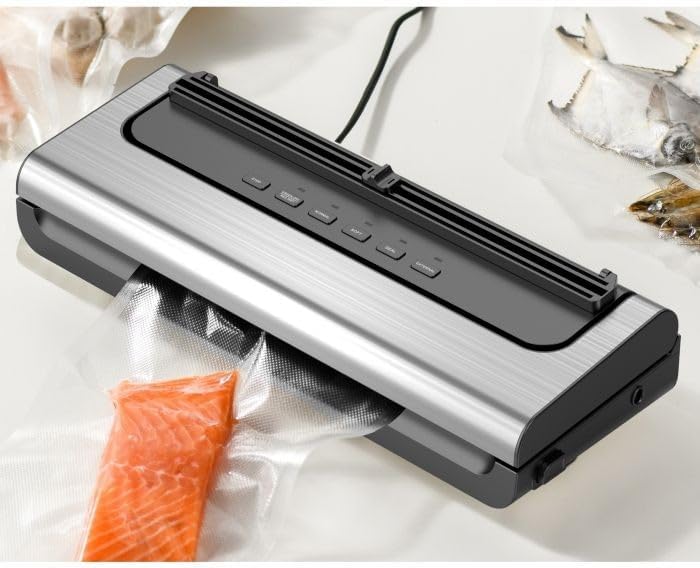
Figure 4.1: The Genesis 80GMVS vacuum sealer in operation, sealing a bag containing salmon. This image demonstrates the appliance actively extracting air from a bag, preparing it for preservation.
4.3 Vacuum Sealing (Wet/Moist Mode)
For foods with moisture, use the OMI setting (often combined with Normal/Soft depending on model, or indicated by a specific button if available). This mode adjusts the vacuum pressure and sealing time to accommodate liquids, preventing them from being drawn into the vacuum pump.
- Follow steps 1 and 2 from "Vacuum Sealing (Dry Mode)".
- Tẹ awọn OMI button (if available) or select the appropriate setting for moist food.
- The appliance will proceed with vacuuming and sealing.
- Once complete, open the lid and remove the sealed bag.
4.4 Soft Vacuum Mode
For delicate items like bread, chips, or pastries, use the RỌRỌ mode to prevent crushing. This mode reduces the vacuum pressure.
- Follow steps 1 and 2 from "Vacuum Sealing (Dry Mode)".
- Tẹ awọn RỌRỌ bọtini.
- Monitor the vacuum process. When the desired air removal is achieved, press the SEAL button immediately to stop vacuuming and initiate sealing.
- Once complete, open the lid and remove the sealed bag.

olusin 4.2: A sunmọ-soke view of the Genesis 80GMVS control panel and the sealing area with meat inside a bag. This image highlights the various control buttons, including 'STOP', 'NORMAL', 'SOFT', 'SEAL', and 'EXTERNAL', providing a clear view of the user interface during operation.
4.5 Seal Only Function
Lo awọn SEAL button to create a seal without vacuuming. This is useful for making custom-sized bags from a roll or for resealing bags of snacks.
- Fi opin apo naa sori okun ti a fi n di i.
- Pa ideri naa duro.
- Tẹ awọn SEAL button. The sealing indicator light will illuminate.
- Once the light turns off, the seal is complete. Open the lid and remove the bag.
4.6 External Vacuum Function
Awọn ODE function is used with an external vacuum hose (sold separately) to vacuum seal canisters, jars, or wine stoppers.
- Connect one end of the external vacuum hose to the accessory port on the vacuum sealer.
- Connect the other end of the hose to the port on your vacuum-sealable container.
- Tẹ awọn ODE button. The appliance will begin to extract air.
- The vacuuming will stop automatically or when you press DURO.
- Remove the hose from the container and the appliance.

Olusin 4.3: Examples of various food items, including sliced meat, fish, and dried goods, successfully vacuum-sealed in transparent bags. This image illustrates the effectiveness of the vacuum sealer in preserving different types of food.
5. Itọju ati Cleaning
Regular cleaning and maintenance will extend the life of your vacuum sealer.
- Ṣaaju ki o to sọ di mimọ: Máa yọ ẹ̀rọ náà kúrò láti inú ihò agbára nígbà gbogbo.
- Òde: Mu ese ita kuro pẹlu ipolowoamp Aṣọ àti ọṣẹ díẹ̀. Má ṣe lo àwọn ohun ìfọṣọ tàbí kí o fi omi tẹ ẹ̀rọ náà mọ́lẹ̀.
- Ikanni igbale: Clean any food residue or liquids from the vacuum channel using a damp asọ. Rii daju pe o ti gbẹ patapata ṣaaju lilo atẹle.
- Idipo Ididi: Gently wipe the sealing strip with a soft, dry cloth. Do not scratch or damage the strip, as this can affect sealing performance.
- Ibi ipamọ: Store the appliance in a clean, dry place with the lid unlatched to prevent compression of the sealing gaskets, which can lead to poor seals over time.
6. Laasigbotitusita
Ti o ba pade awọn iṣoro pẹlu sealer igbale rẹ, wo awọn iṣoro ati awọn solusan ti o wọpọ wọnyi:
| Isoro | Owun to le Fa | Ojutu |
|---|---|---|
| Ohun elo ko tan. | Ko edidi ni; aiṣedeede agbara iṣan. | Rii daju pe okun agbara ti wa ni edidi ni aabo sinu iṣan-iṣẹ iṣẹ. |
| Àpò kì í fi omi gbóná dáadáa. | Lid not properly closed; bag not positioned correctly; bag is damaged; moisture in vacuum channel. | Ensure lid is latched; reposition bag so opening is flat in vacuum channel; check bag for holes; clean and dry vacuum channel. |
| Àpò kì í dí. | Sealing strip is dirty or damaged; bag is wrinkled; too much moisture. | Clean sealing strip; ensure bag is flat; pre-freeze moist foods or use paper towel. |
| Afẹ́fẹ́ ń jò sínú àpò lẹ́yìn tí a bá ti fi ìdìpọ̀ dì í. | Improper seal; sharp objects in bag; bag material defect. | Re-seal the bag; ensure no sharp edges on food; use high-quality vacuum bags. |
7. Awọn pato
| Ẹya ara ẹrọ | Ẹ̀kúnrẹ́rẹ́ |
|---|---|
| Brand | Genesisi |
| Nọmba awoṣe | 80GMVS |
| Ohun elo | Ṣiṣu |
| Ipo Isẹ | Afowoyi |
| Ọja Mefa | 44L x 18.5W x 10.5H sẹntimita |
| Iwọn Nkan | 1.4 kg |
| Àwọ̀ | Multicolor |
8. Atilẹyin ọja ati Support
For warranty information and customer support, please refer to the documentation provided with your purchase or contact Genesis customer service. Keep your proof of purchase for warranty claims.
Olupese: Genesisi