
CJ TECH 25057 - PA
USB C Hub 5-in-1 Adapter User Manual
Model: 25057 - PA
Brand: CJ TECH
Ọja Pariview
The CJ TECH USB C Hub 5-in-1 Adapter is a versatile docking station designed to expand the connectivity of your USB Type-C enabled devices. It transforms a single USB-C port into multiple ports, including USB 3.0, USB 2.0, USB-C for data and power delivery, and an HDMI output.
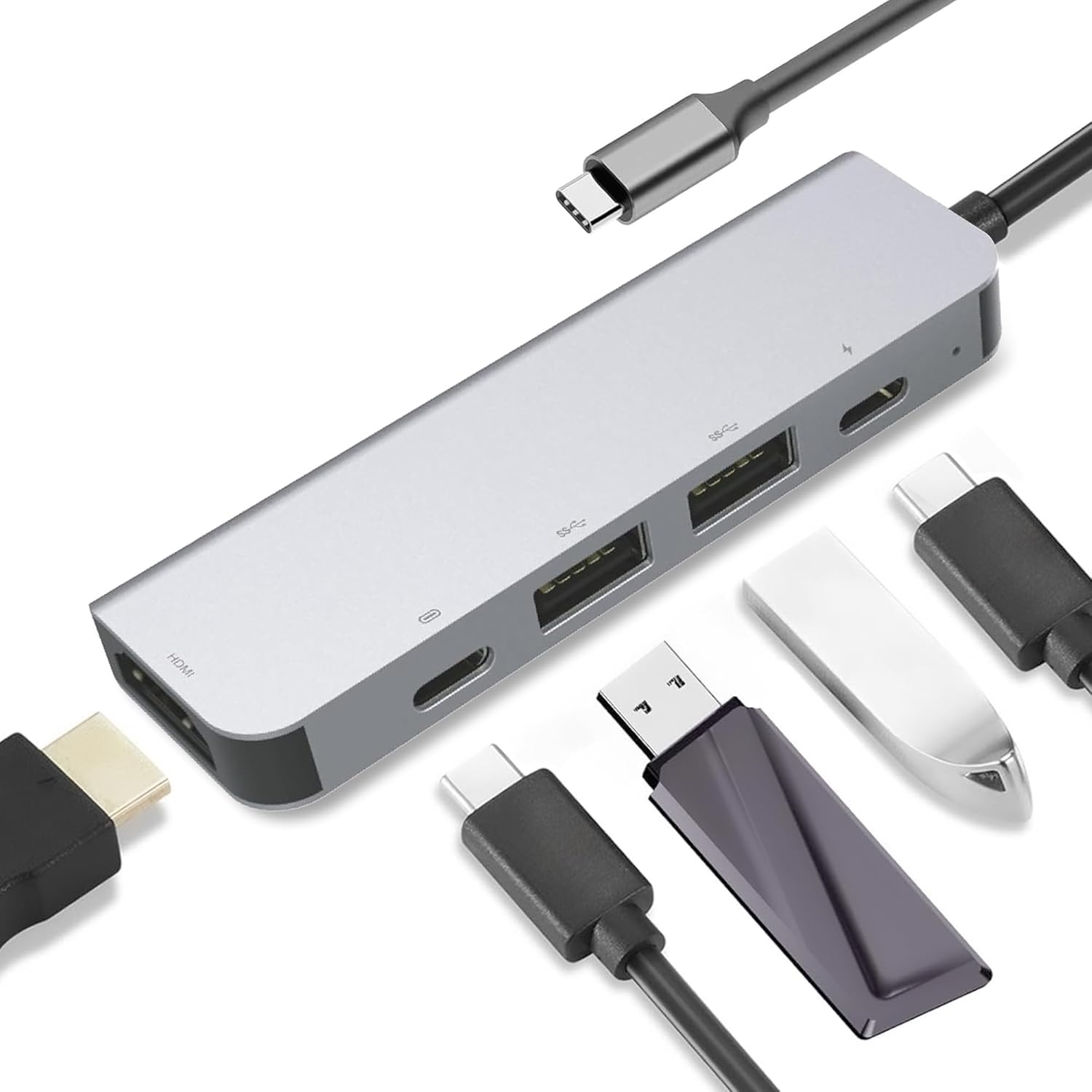
Image: The CJ TECH USB C Hub, displaying its compact silver design and various ports, including USB-A, USB-C, and HDMI, ready for connection.
This hub is ideal for laptops, MacBooks, gaming consoles like PS4 and PS5, and other devices requiring expanded USB and display capabilities. It supports fast charging and high-speed data transfer, making it a comprehensive solution for your connectivity needs.
Awọn ẹya pataki:
- Powerful USB Hub: Transforms your USB Type-C port into a versatile docking station with expansive connectivity.
- Great for Gaming Consoles: Enhances gaming setups by connecting additional peripherals to consoles like PS4 and PS5.
- Multiple USB Ports for Laptop: Expands laptop capabilities with USB 2.0, USB 3.0, and two USB Type-C ports for efficient data transfer and charging.
- Fast Charging Hub: Equipped with a USB Type-C PD 3.0 port supporting up to 100W for fast charging multiple devices.
- USB Expansion Hub: Supports 4K HDTV and is backwards compatible with 1080P & 720P, providing a comprehensive data transfer and display solution.
Eto Itọsọna
Follow these steps to set up your USB C Hub 5-in-1 Adapter:
- So Hub: Plug the USB Type-C male connector of the hub into an available USB Type-C port on your host device (laptop, MacBook, PS5, etc.). Ensure your device's USB Type-C port supports USB 3.0/3.1 specifications for full functionality, including video output and power delivery.
- Ifijiṣẹ Agbara (Aṣayan): If your device requires charging through the hub, connect your original USB-C power adapter to the USB Type-C PD 3.0 port on the hub. This port supports up to 100W power input.
- Awọn Agbeegbe Sopọ:
- Awọn ẹrọ USB: Connect your USB-A peripherals (e.g., mouse, keyboard, USB flash drives) to the USB 3.0 or USB 2.0 ports.
- Awọn ẹrọ USB-C: Connect USB-C peripherals to the dedicated USB Type-C data port.
- HDMI Ifihan: Connect an HDMI cable from the hub's HDMI port to your monitor, TV, or projector. Ensure the display is set to the correct HDMI input.

Image: A visual representation of the USB C Hub connected to a laptop, illustrating the various ports and their functions for connecting external devices like monitors and USB drives.
The hub is plug-and-play, meaning no drivers are typically required for most operating systems.
Awọn ilana Iṣiṣẹ
Once connected, the USB C Hub operates seamlessly with your device. Here's how to utilize its features:
Gbigbe Data USB:
- Awọn ibudo USB 3.0: These ports support data transfer rates up to 5Gbps, ideal for external hard drives, SSDs, and high-speed flash drives.
- Ibudo USB 2.0: This port supports data transfer rates up to 480Mbps, suitable for keyboards, mice, and other standard USB peripherals.
- USB Type-C Data Port: This port also supports data transfer up to 480Mbps, allowing connection of USB-C peripherals.
Ijade fidio HDMI:
- The HDMI port supports resolutions up to 4K (3840x2160) at 30Hz. It is backwards compatible with 1080P and 720P displays.
- To use, simply connect an HDMI cable from the hub to your display. Your device should automatically detect the external display. You may need to adjust display settings (e.g., mirror or extend desktop) in your operating system.
Ifijiṣẹ Agbara (PD):
- The USB Type-C PD 3.0 port allows you to charge your host device while using the hub. Connect your device's original power adapter to this port. It supports up to 100W power input.
- This feature is crucial for laptops and other devices that rely on USB-C for charging, ensuring continuous power supply even with multiple peripherals connected.

Image: An illustration highlighting the hub's capabilities: 4K UHD video output, fast charging, and high-speed data transfer, emphasizing its multi-functional design.
Itoju
To ensure the longevity and optimal performance of your USB C Hub, follow these maintenance guidelines:
- Ninu: Use a soft, dry, lint-free cloth to clean the hub's exterior. Avoid using liquid cleaners, aerosols, or abrasive solvents, as they may damage the finish or internal components.
- Ibi ipamọ: Nigbati o ko ba wa ni lilo, tọju ibudo naa ni itura, aye gbigbẹ kuro lati orun taara ati awọn iwọn otutu to gaju.
- Mimu: Avoid dropping the hub or subjecting it to strong impacts. Do not bend or excessively pull the integrated USB-C cable.
- Asopọmọra: Always grasp the plug when connecting or disconnecting cables, rather than pulling on the cable itself, to prevent damage to the connectors.
Laasigbotitusita
If you encounter issues with your USB C Hub, refer to the following common problems and solutions:
Ko si Ijade ifihan nipasẹ HDMI:
- Ṣayẹwo Awọn isopọ: Rii daju pe okun HDMI ti sopọ ni aabo si ibudo mejeeji ati ifihan.
- Orisun igbewọle: Verify that your display is set to the correct HDMI input source.
- Ibamu Ẹrọ: Confirm that your host device's USB Type-C port supports DisplayPort Alternate Mode (Alt Mode) for video output. Not all USB-C ports support video.
- Awọn Eto ipinnu: Try lowering the display resolution on your host device to see if the display appears. Some older displays or cables may not support 4K resolution.
- Tun bẹrẹ: Disconnect and reconnect the hub, or restart your host device.
USB Devices Not Recognized or Working:
- Tun sopọ: Ge asopọ ko si tun ẹrọ USB pọ si ibudo.
- Ibi ti ina elekitiriki ti nwa: If connecting high-power devices (e.g., external hard drives), ensure the hub is connected to a power source via its PD port, or that your host device can supply sufficient power.
- Gbiyanju Ibudo ti o yatọ: Test the device in a different USB port on the hub or directly on your host device to isolate the issue.
- Awọn ọran Awakọ: While typically plug-and-play, ensure your host device's USB drivers are up to date.
Awọn iyara Gbigbe Data lọra:
- Iru Port: Ensure you are using the USB 3.0 ports for high-speed data transfer. USB 2.0 and USB-C data ports on this hub have lower speeds.
- Ibamu Ẹrọ: Verify that the connected USB device itself supports USB 3.0 speeds.
- Didara okun: Use high-quality USB 3.0 cables for optimal performance.
Charging Issues (PD Port):
- Adapter agbara: Ensure your USB-C power adapter is functioning correctly and provides sufficient wattage (up to 100W supported).
- USB: Use a USB-C cable that supports Power Delivery.
- Ibamu Ẹrọ: Confirm your host device supports charging via its USB-C port.
Awọn pato
| Ẹya ara ẹrọ | Ẹ̀kúnrẹ́rẹ́ |
|---|---|
| Ọja Mefa | 6.69 x 2.75 x 0.63 inches |
| Iwọn Nkan | 1.76 iwon |
| Nọmba awoṣe | 25057 - PA |
| Brand | Imọ-ẹrọ CJ |
| Àwọ̀ | Fadaka |
| Ni wiwo Hardware | USB, USB Type C, HDMI, USB 2.0 |
| Pataki Ẹya | Gbigba agbara yara |
| Awọn ẹrọ ibaramu | PS4, PS5, Laptops, MacBooks, and other devices with USB-C ports |
| HDMI Ijade | 4K (3840x2160) @ 30Hz, backwards compatible with 1080P & 720P |
| USB 3.0 Data Transfer Rate | Titi di 5Gbps |
| USB 2.0 Data Transfer Rate | Titi di 480Mbps |
| USB Type-C PD Port | 20V@5A, Max 100W Power Input |
| USB Type-C Data Port | Max 480Mbps rate transmission |
Atilẹyin ọja ati Support
For warranty information and technical support regarding your CJ TECH USB C Hub 5-in-1 Adapter, please refer to the documentation included with your product packaging or visit the official CJ TECH webojula. Awọn ofin atilẹyin ọja le yatọ.
If you require further assistance, please contact CJ TECH customer support through their official channels.
Ask a question about this manual
Ask about setup, troubleshooting, compatibility, parts, safety, or missing instructions. Manuals+ will review the question and use this page’s manual context to help answer it.