
1. Ifihan
This manual provides essential information for the safe and effective use of the JOCCOS ES-M2 Sensor Proximity Switch. The ES-M2 is a long-distance fiber amplifier split type sensor designed for industrial applications requiring precise object detection. Please read this manual thoroughly before installation and operation, and retain it for future reference.
2. Alaye Aabo
Always observe the following safety precautions to prevent injury and damage to the product or connected equipment.
- Ibi ti ina elekitiriki ti nwa: Rii daju pe ipese agbara voltage matches the specifications of the ES-M2 sensor. Incorrect voltage le fa ibajẹ.
- Asopọmọra: All wiring should be performed by qualified personnel in accordance with local electrical codes. Disconnect power before wiring.
- Ayika: Do not install the sensor in environments with excessive dust, moisture, corrosive gases, or extreme temperatures outside the specified operating range.
- Iṣagbesori: Securely mount the sensor and fiber optic cables to prevent vibration or accidental displacement.
- Itọju: Do not attempt to disassemble or modify the sensor. Refer all servicing to authorized personnel.
3. Ọja Ipariview
The ES-M2 system consists of a fiber amplifier unit and separate fiber optic cables (sold separately or as part of a kit) that transmit and receive light. This split-type design allows for flexible installation in various industrial settings.

Figure 3.1: The ES-M2 fiber amplifier unit with its integrated cables. This unit processes the light signals transmitted through the fiber optic cables for object detection.
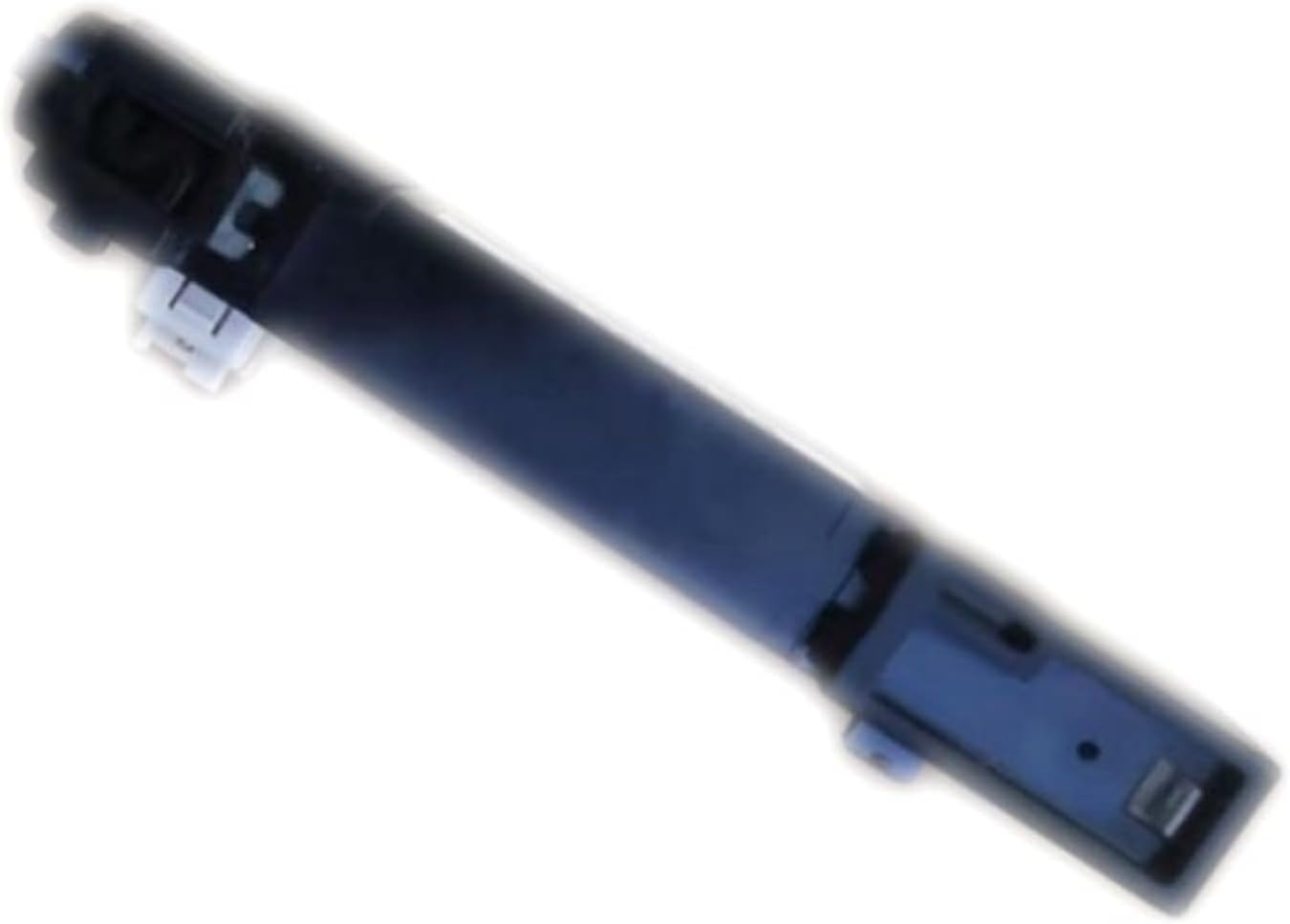
olusin 3.2: A sunmọ-soke view of a fiber optic cable, which connects to the amplifier unit to extend the sensing range and allow for detection in confined spaces.
4. Eto
4.1 Ṣiṣii silẹ
Carefully remove the ES-M2 sensor and its components from the packaging. Inspect all items for any signs of damage during transit. If any damage is found, contact your supplier immediately.
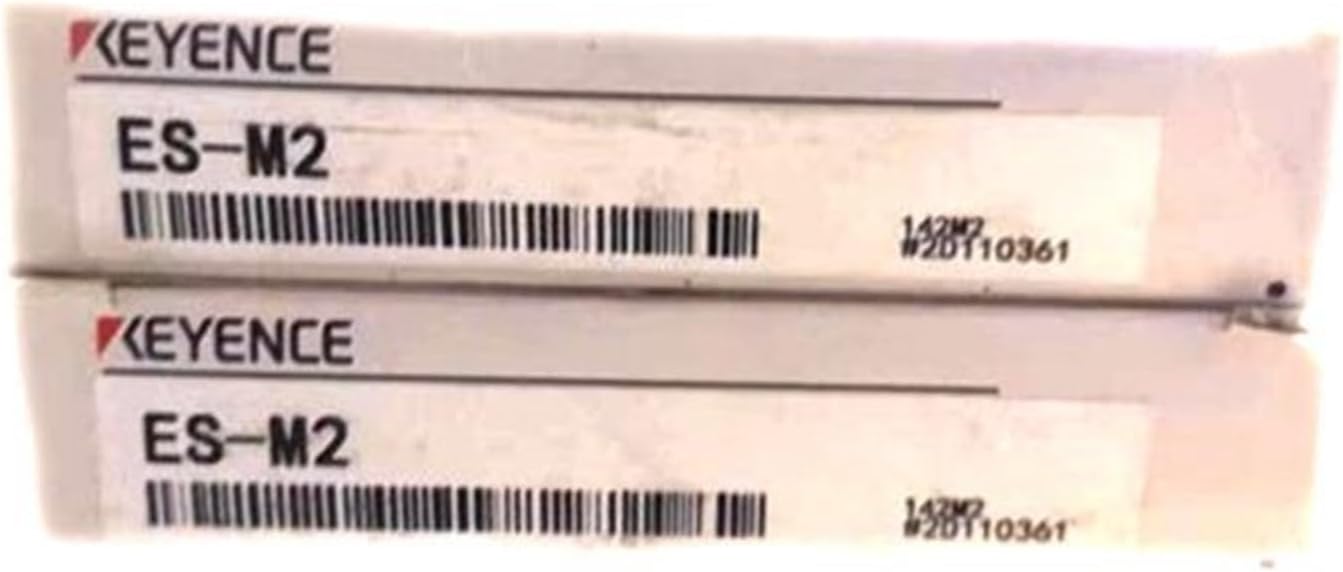
Olusin 4.1: Example of product packaging for the ES-M2 sensor. Ensure all components listed in the packing list are present.
4.2 Iṣagbesori awọn Amplifier Unit
Awọn amplifier unit should be mounted in a stable location, free from excessive vibration and within the specified operating temperature range. Use appropriate mounting hardware (not included) to secure the unit. Ensure adequate space for wiring and fiber optic cable connections.
4.3 Àwọn okùn okùn okùn tí ń sopọ̀ mọ́ra
Insert the fiber optic cables into the designated ports on the amplifier unit. Ensure a secure and clean connection. Avoid bending the fiber optic cables sharply, as this can damage the internal fibers and impair performance.
4.4 Wiring the Sensor
Refer to the wiring diagram provided with your specific ES-M2 model for correct connections. Typically, the sensor requires a DC power supply and provides an output signal.
- Agbara: Connect the positive (+) terminal of the power supply to the designated power input terminal and the negative (-) terminal to the common ground.
- Abajade: Connect the output terminal to your control system (e.g., PLC, relay). The output type (NPN/PNP) will depend on the specific model.
Iṣọra: Double-check all wiring before applying power to prevent damage to the sensor or control system.
5. Awọn ilana Iṣiṣẹ
5.1 Agbara Lori
Once all connections are secure, apply power to the ES-M2 sensor. The power indicator LED (if present) should illuminate.
5.2 Atunse ifamọ
The ES-M2 fiber amplifier typically features a sensitivity adjustment mechanism (e.g., a potentiometer or digital buttons) to fine-tune the detection threshold.
- Place the target object at the desired sensing distance.
- Adjust the sensitivity until the output indicator LED reliably changes state when the object is present and absent.
- Test with multiple objects to ensure consistent detection.
Akiyesi: Over-sensitivity can lead to false triggers, while under-sensitivity may result in missed detections. Optimize for your specific application.
5.3 Output Configuration (if applicable)
Some models may allow configuration of the output mode (e.g., Light-ON/Dark-ON). Refer to the specific model's datasheet for details on how to change these settings.
6. Itọju
6.1 Ninu
Regularly clean the sensing heads of the fiber optic cables and the amplifier unit's display (if applicable) to ensure optimal performance.
- Use a soft, dry cloth to wipe away dust and debris.
- For stubborn dirt, a cloth lightly dampened with isopropyl alcohol may be used. Avoid abrasive cleaners or solvents.
- Ensure the fiber optic cable ends are free from dust or smudges, as this can significantly reduce sensing distance and reliability.
6.2 ayewo
Ṣe àyẹ̀wò sensọ̀ náà àti àwọn okùn rẹ̀ lẹ́ẹ̀kọ̀ọ̀kan fún àwọn àmì ìbàjẹ́ ara, ìbàjẹ́, tàbí àwọn ìsopọ̀ tí ó bàjẹ́.
- Check fiber optic cables for kinks, cuts, or excessive bending.
- Verify that all wiring connections are secure.
- Ensure the mounting of the amplifier unit and fiber heads remains stable.
7. Laasigbotitusita
If the ES-M2 sensor is not functioning as expected, refer to the following troubleshooting guide:
| Isoro | Owun to le Fa | Ojutu |
|---|---|---|
| Sensor not powering on | Kò sí ìpèsè agbára; ìdìpọ̀ tí kò tọ́tage; faulty wiring. | Check power connections; verify power supply voltage; inspect wiring for breaks or shorts. |
| No detection or inconsistent detection | Incorrect sensitivity setting; dirty fiber heads; damaged fiber cable; target too far/small; ambient light interference. | Adjust sensitivity; clean fiber heads; inspect/replace fiber cable; reposition sensor or target; shield from strong ambient light. |
| Ìjáde nígbà gbogbo máa ń TAN/PA | Incorrect sensitivity; faulty output wiring; sensor malfunction. | Re-adjust sensitivity; check output wiring to control system; if problem persists, sensor may be faulty. |
8. Awọn pato
The following specifications are typical for the JOCCOS ES-M2 Sensor Proximity Switch. Refer to the product datasheet for precise details of your specific model.
- Awoṣe: ES-M2
- Iru: Long Distance Fiber Amplifier Split Type Photoelectric Sensor
- Olupese: JOCCOS
- Ìwọ̀n Nkan: 1.76 iwon (nipa 50 giramu)
- Awọn iwọn idii: 1.18 x 0.79 x 0.39 inches (iwọn 3 x 2 x 1 cm)
- Apejọ ti a beere: Rara
- Nọmba Awọn nkan: Ọdun 1 (ampẹ̀rọ ìdènà)
- ASIN: B0CQG6CXWH
Akiyesi: Voltage, sensing distance, output type (NPN/PNP), and response time vary by specific fiber optic cable and amplifier iṣeto ni.
9. Atilẹyin ọja ati Support
For warranty information and technical support, please refer to the documentation provided with your purchase or contact your authorized JOCCOS distributor. Keep your purchase receipt as proof of purchase.
For further assistance, you may visit the JOCCOS official webojula tabi kan si wọn onibara iṣẹ Eka.