
1. Ifihan
This manual provides essential information for the safe and efficient operation, installation, and maintenance of the JOCCOS MRHQ16D-90S Pneumatic Rotating Clamping Finger Cylinder. Please read this manual thoroughly before using the product and retain it for future reference.
The MRHQ16D-90S is a single-action pneumatic cylinder designed for clamping and rotating applications, featuring a pneumatic buffer and magnetic sensing capabilities. It is part of the MRHQ series of rotating claw type clamping fingers.
2. Alaye Aabo
WARNING: Failure to follow these safety instructions may result in serious injury or equipment damage.
- Ensure all pneumatic connections are secure and free from leaks before applying pressure.
- Always depressurize the system before performing any maintenance or adjustments.
- Do not exceed the maximum operating pressure specified for the cylinder.
- Wear appropriate personal protective equipment (PPE) during installation, operation, and maintenance.
- Jeki ọwọ ati awọn ẹya ara miiran kuro ninu awọn ẹya gbigbe lakoko iṣẹ.
- Oṣiṣẹ oṣiṣẹ nikan yẹ ki o fi sori ẹrọ, ṣiṣẹ, ati ṣetọju ohun elo yii.
3. Ọja Ipariview
The JOCCOS MRHQ16D-90S is a compact and robust pneumatic rotating clamping finger cylinder. It is designed for precise gripping and rotational movements in automated systems.
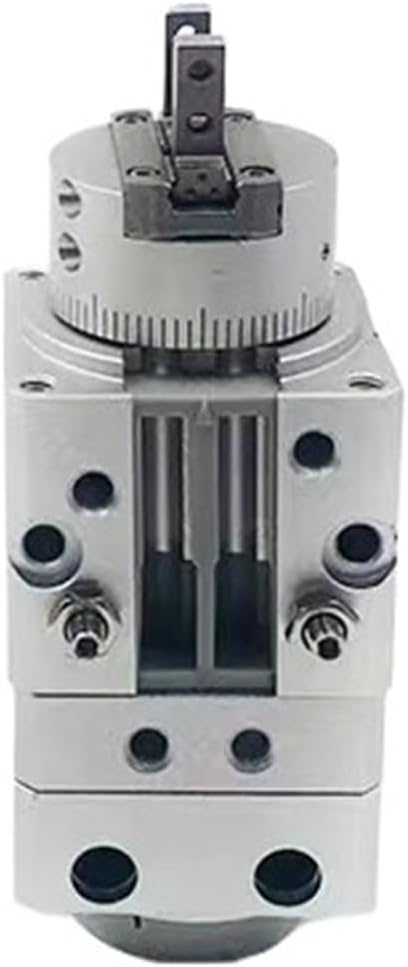
olusin 3.1: Iwaju view of the MRHQ16D-90S cylinder, showing the clamping fingers and rotational mechanism.

Figure 3.2: Diagram illustrating the model numbering system for the MRHQ series, including details on bore size, action type, rotation angle, and magnetic switch options. This diagram provides a comprehensive breakdown of how different model variations are designated based on their features.
olusin 3.3: Apa view of the MRHQ16D-90S cylinder, highlighting the pneumatic ports and mounting points.

olusin 3.4: Ẹyìn view of the MRHQ16D-90S cylinder, showing additional mounting features and structural details.

olusin 3.5: Top view of the MRHQ16D-90S cylinder, illustrating the clamping finger mechanism and rotation scale.

olusin 3.6: Isalẹ view of the MRHQ16D-90S cylinder, showing the base and additional connection points.
4. Awọn pato
| Ẹya ara ẹrọ | Ẹ̀kúnrẹ́rẹ́ |
|---|---|
| Awoṣe | MRHQ16D-90S |
| Iru | Pneumatic Rotating Clamping Finger Cylinder |
| Ipo igbese | Nikan Ise |
| Yiyi Itọsọna | Left and Right Rotation |
| Buffer Form | Pneumatic Buffer |
| Oofa | Bẹẹni |
| Connection Form | 1 |
| Package Mefa | 1.18 x 0.79 x 0.39 inches |
| Iwọn Nkan | 1.76 iwon |
| Olupese | JOCCOS |
5. Eto ati fifi sori
Proper installation is crucial for the optimal performance and longevity of the cylinder. Follow these steps carefully:
- Iṣagbesori: Securely mount the cylinder to a stable surface using appropriate fasteners. Ensure the mounting surface is flat and rigid to prevent misalignment or stress on the cylinder. Refer to the product diagram for mounting hole locations.
- Awọn isopọ Pneumatic: Connect the air supply lines to the designated pneumatic ports. Ensure all connections are tight and sealed to prevent air leakage. Use appropriate thread sealant if necessary.
- Didara Afẹfẹ: Ensure the compressed air supply is clean, dry, and filtered to prevent contamination and damage to internal components. An air filter, regulator, and lubricator (FRL unit) are recommended upstream of the cylinder.
- Magnetic Switch Installation (Optional): If using magnetic switches for position sensing, install them according to the manufacturer's instructions. Ensure they are correctly positioned to detect the desired stroke endpoints.
- Ṣayẹwo akọkọ: Before applying full operating pressure, perform a low-pressure test to check for leaks and proper movement of the clamping fingers and rotation.
6. Awọn ilana Iṣiṣẹ
The MRHQ16D-90S cylinder operates by pneumatic pressure to achieve clamping and rotational movements. As a single-action cylinder, it typically uses air pressure for one direction of movement (e.g., clamping or rotating) and a spring return or external force for the other.
- Agbara afẹfẹ: Apply regulated air pressure to the appropriate port to actuate the cylinder. The operating pressure range should be within the cylinder's specifications.
- Clamping Action: When air is supplied, the clamping fingers will move to grip the workpiece. Ensure the workpiece is correctly positioned before clamping.
- Rotational Action: The cylinder provides left and right rotational movement. The specific port for rotation control will determine the direction.
- Titunṣe Iyara: If equipped with speed control valves, adjust them gradually to achieve the desired clamping and rotational speed. Avoid excessively fast movements that could cause impact damage.
- Iduro Pajawiri: Familiarize yourself with the system's emergency stop procedures to quickly de-energize the pneumatic supply in case of malfunction or hazard.
7. Itọju
Regular maintenance ensures the longevity and reliable performance of your pneumatic cylinder.
- Awọn iṣayẹwo ojoojumọ:
- Inspect for air leaks at connections and seals.
- Check for smooth operation of the clamping fingers and rotation.
- Verify that mounting bolts are secure.
- Awọn ayẹwo Ọsẹ:
- Clean the exterior of the cylinder to prevent accumulation of dust and debris.
- Check for any signs of wear or damage on the cylinder body or fingers.
- Lubrication Igbakọọkan: If the system includes a lubricator, ensure it is adequately filled with the recommended pneumatic oil. If not, consult the system designer for appropriate lubrication intervals and methods.
- Iyipada edidi: Over time, seals may wear out. If excessive leakage or reduced performance is observed, seals may need replacement. This should be performed by qualified personnel.
- Ibi ipamọ: If storing the cylinder for an extended period, ensure it is clean, depressurized, and stored in a dry, dust-free environment.
8. Laasigbotitusita
This section addresses common issues you might encounter with the MRHQ16D-90S cylinder.
| Isoro | Owun to le Fa | Ojutu |
|---|---|---|
| Cylinder does not move or moves slowly. |
|
|
| Air leakage from cylinder. |
|
|
| Inconsistent or jerky movement. |
|
|
9. Atilẹyin ọja ati Support
For warranty information or technical support, please contact your supplier or the manufacturer, JOCCOS. Keep your purchase receipt and product model number (MRHQ16D-90S) readily available when seeking assistance.
Manufacturer: JOCCOS