
1. Ifihan
This manual provides detailed instructions for the setup, operation, maintenance, and troubleshooting of your Arducam USB 3.0 Camera. Please read this manual thoroughly before using the product to ensure optimal performance and longevity.
2. Ọja Ipariview
2.1. Ohun ti o wa ninu Apoti
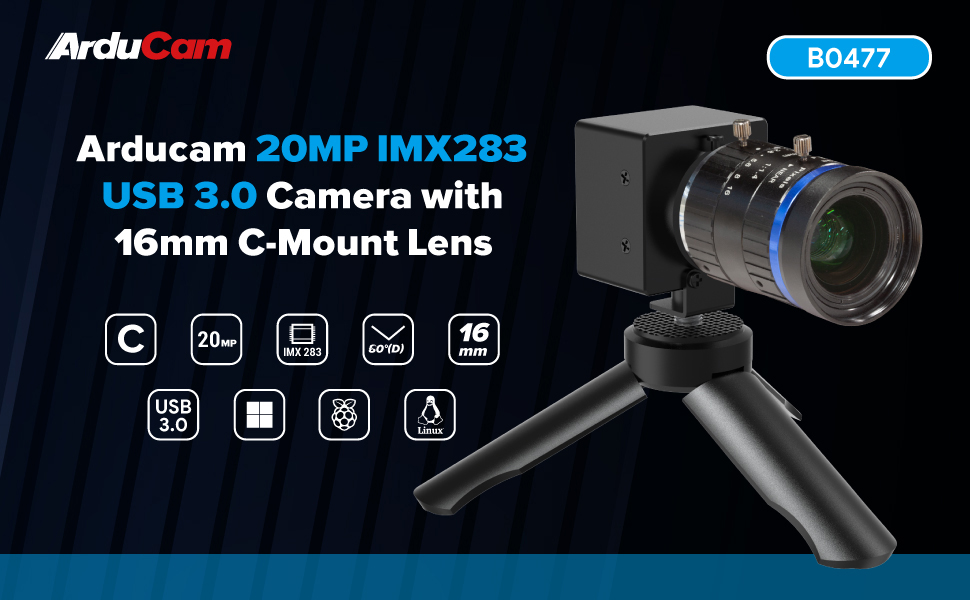
- 1 x IMX283 USB3.0 Camera Module with Metal Case
- 1 x 1m USB A to Type-C Cable
2.2. Key Awọn ẹya ara ẹrọ
- Superior Imaging: Utilizes a 1-inch IMX283 CMOS sensor, achieving a maximum still resolution of 5472x3648 pixels.
- Flexible Frame Rates: Supports programmable frame rates, reaching up to 120fps at 720p resolution.
- Ilọsiwaju Aworan: Features proprietary on-board ISP for image enhancement, including de-Bayer, gamma correction, BLC, AE, AWB, CCM, and RGB2YUV conversion.
- Telephoto Precision: Equipped with a 16mm C-mount lens, offering a 60° diagonal field of view (DFOV).
- Plug and Play Design: Encased in a durable metal housing, designed for easy plug-and-play operation.
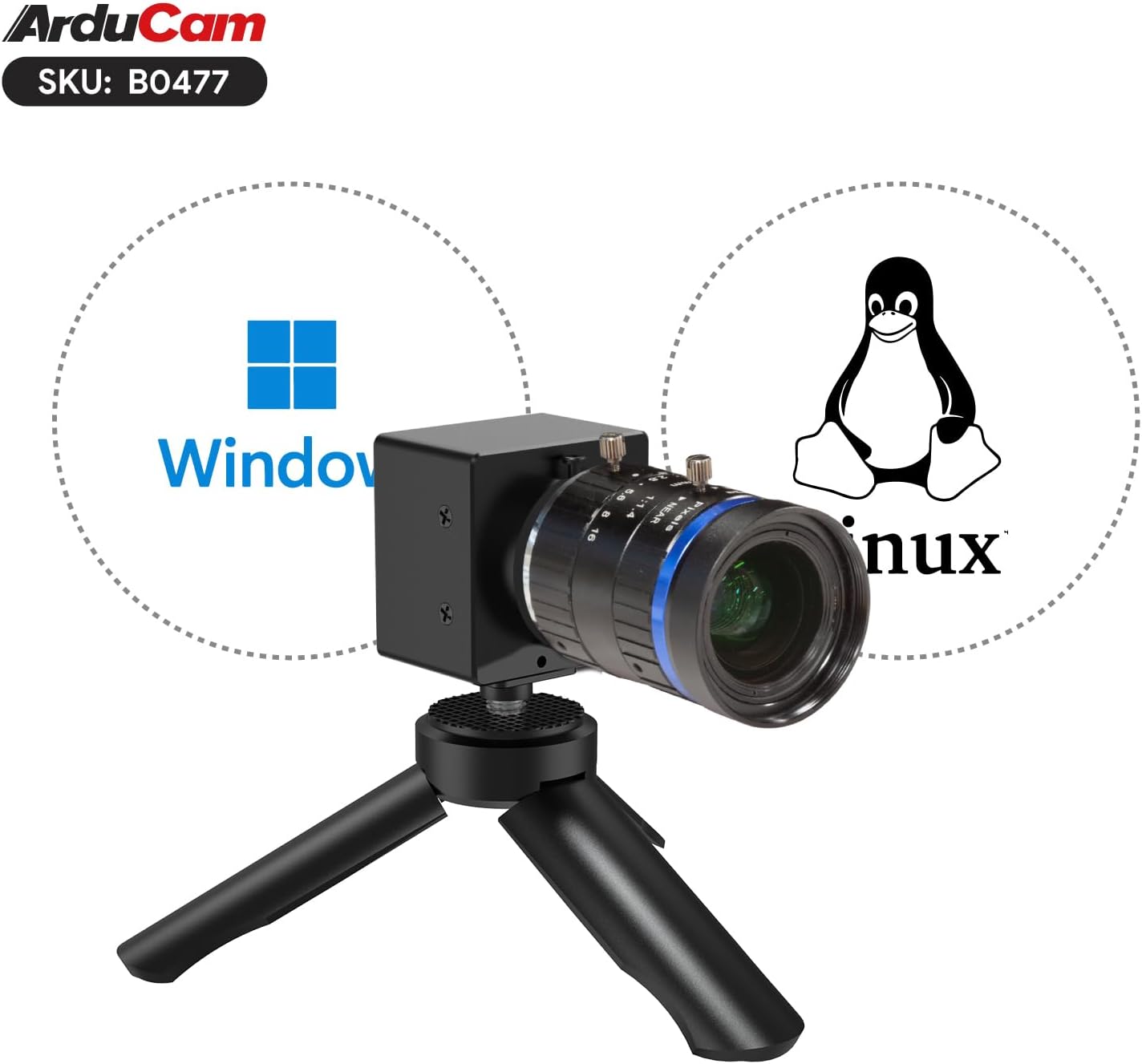
- Ibamu Eto Iṣiṣẹ: Compatible with Windows and Linux operating systems.
2.3. Ọja irinše


3. Awọn ilana iṣeto
3.1. So awọn lẹnsi
- Carefully remove the protective cap from the camera module's C-mount interface.
- Align the 16mm C-mount lens with the camera module's C-mount thread.
- Gently screw the lens onto the camera module until it is securely fastened. Avoid overtightening.
- Yọ ideri lẹnsi iwaju kuro.
3.2. Nsopọ si Kọmputa kan
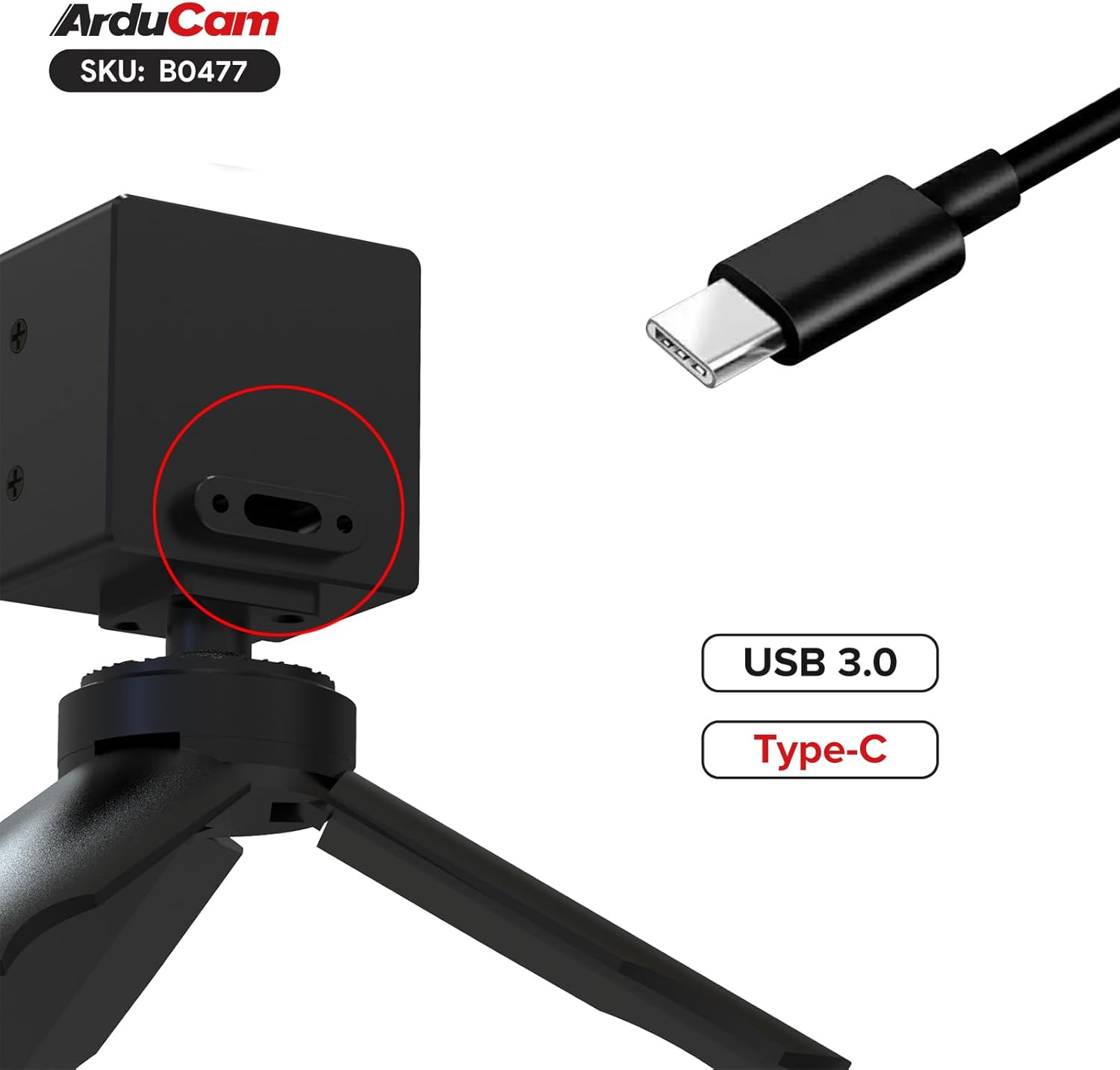
- Connect the USB Type-C end of the provided cable to the camera module's USB 3.0 port.
- Connect the USB-A end of the cable to an available USB 3.0 port on your computer. For optimal performance, ensure you use a USB 3.0 port (typically blue).
- The camera is UVC (USB Video Class) compliant and should be recognized automatically by most operating systems without requiring specific driver installation.
4. Awọn ilana Iṣiṣẹ
4.1. Basic Operation (Windows)
- After connecting the camera, open a compatible camera application (e.g., Windows Camera app, OBS Studio, AmCap, or Arducam's own software if available).
- Select the Arducam USB 3.0 Camera as your video input device.
- Adjust resolution, frame rate, and other image settings (exposure, white balance, gain) within the application's settings. The camera supports up to 5472x3648 resolution and 120fps at 720p.
4.2. Basic Operation (Linux)
The camera is designed to be UVC compliant for Linux. You can use standard Linux camera applications like Cheese, VLC, or OBS Studio.
- Connect the camera to your Linux system.
- Open your preferred camera application and select the Arducam camera as the input source.
- Configure video settings as needed.
Note: Some users have reported intermittent issues with the camera not re-initializing correctly on Linux after closing an application. If this occurs, try unplugging and re-plugging the camera, or restarting your system. Ensure your Linux distribution and kernel are up-to-date for best compatibility.
4.3. Atunse lẹnsi
- Idojukọ: Rotate the focus ring on the lens to achieve sharp imagery at your desired distance.
- Iho: Adjust the aperture ring to control the amount of light entering the lens and the depth of field. A smaller aperture number (e.g., f/1.4) means a wider opening and shallower depth of field, while a larger number (e.g., f/16) means a narrower opening and greater depth of field.
5. Itọju
5.1. Nu lẹnsi ati sensọ nu
- Use a soft, lint-free microfiber cloth specifically designed for optical surfaces to clean the lens.
- For stubborn smudges, use a small amount of lens cleaning solution applied to the cloth, not directly to the lens.
- Avoid touching the sensor directly. If dust is visible on the sensor, use an air blower to gently remove it. Do not use compressed air from a can, as it can leave residue.
- Important: Some units may have dust or fingerprints between the sensor and its protective window from manufacturing. If this significantly impacts image quality, contact Arducam support.
5.2. Ìtọ́jú Gbogbogbòò àti Ìpamọ́
- Store the camera in a dry, dust-free environment when not in use.
- Protect the lens with its cap when stored or transported.
- Yago fun ṣiṣafihan kamẹra si awọn iwọn otutu tabi ọriniinitutu.
- Handle the camera by its metal case, avoiding direct pressure on the lens or sensor area.
6. Laasigbotitusita
- Problem: Camera not detected or showing a black screen.
Ojutu:
- Ensure the USB cable is securely connected to both the camera and a USB 3.0 port on your computer.
- Gbiyanju ibudo USB miiran tabi okun USB.
- Tun kọmputa rẹ bẹrẹ.
- On Linux, if the camera stops working after closing an application, try unplugging and re-plugging the camera, or restarting your system.
- Verify that the camera is selected as the input device in your application.
- Problem: Image quality is poor or blurry.
Ojutu:
- Adjust the focus ring on the 16mm C-mount lens until the image is sharp.
- Ensure the lens and sensor are clean (refer to Section 5.1).
- Check lighting conditions; insufficient light can lead to noisy or blurry images.
- Verify that the correct resolution and frame rate settings are applied in your camera application.
- Problem: Dust or spots visible in the image.
Ojutu:
- Clean the front element of the lens.
- Use an air blower to gently clear any dust from the sensor surface.
- If the dust appears to be internal (between the sensor and its protective window), contact Arducam support for assistance.
7. Awọn pato
| Ẹya ara ẹrọ | Ẹ̀kúnrẹ́rẹ́ |
|---|---|
| Sensọ | 1-inch IMX283 CMOS |
| Max Still Resolution | 5472x3648 (20MP) |
| Ipinnu Yaworan fidio | Titi di 720p |
| Oṣuwọn fireemu ti o pọju | 120fps at 720p |
| Lẹnsi Iru | 16mm C-Mount Lens |
| Aguntan Field ti View (DFOV) | 60° |
| Ni wiwo | USB 3.0 (Type-C connector on camera) |
| Ibamu System isẹ | Windows, Lainos |
| Ibugbe | Irin Case |
| Iwọn Nkan | 4.8 iwon |
| Package Mefa | 3 x 2.7 x 2.7 inches |
8. Atilẹyin ati Atilẹyin ọja
For technical support, product inquiries, or warranty information, please visit the official Arducam webojula tabi kan si wọn onibara iṣẹ taara. Awọn ofin atilẹyin ọja le yatọ nipasẹ agbegbe ati ipo rira.
O le wa alaye diẹ sii ati awọn orisun atilẹyin lori awọn Ile itaja Arducam lori Amazon.