
1. Ifihan
This manual provides essential information for the proper setup, operation, and maintenance of your NexiGo NG17QH 4K Portable Monitor. Please read this manual thoroughly before using the device to ensure optimal performance and to prevent damage. Keep this manual for future reference.

Image: The NexiGo NG17QH 4K Portable Monitor, showcasing its sleek design and smart cover.
2. Package Awọn akoonu
Verify that all items listed below are included in your package. If any items are missing or damaged, please contact NexiGo customer support.
- NexiGo NG17QH 4K Portable Monitor
- Smart Cover / Stand
- USB-C si okun USB-C
- Mini HDMI si HDMI Cable
- USB-A to USB-C Power Cable
- Adapter agbara
3. Ọja Ipariview
Familiarize yourself with the ports and controls on your NexiGo NG17QH portable monitor.
Aworan: Alaye view ti awọn atẹle ká ebute oko ati idari.
Awọn ibudo ati awọn bọtini:
- Ibudo USB-C ti o ni Ifihan ni kikun: Used for power, video, and audio transmission with compatible devices.
- Ibudo HDMI Mini: Used for video and audio transmission with HDMI-compatible devices.
- Bọtini agbara: Press and hold to power the monitor on or off. Short press to access the OSD menu.
- Ina Atọka Agbara: Indicates the monitor's power status.
- Multi-Function Key: Used to navigate the OSD menu and adjust settings.
- OTG Interface (USB-C): Allows connection of USB peripherals like keyboards or mice when the monitor is connected via the full-featured USB-C port.
- Jack agbekọri 3.5mm: Fun sisopọ awọn ohun elo ita gbangba.
4. Eto
Follow these steps to set up your NexiGo NG17QH portable monitor.
4.1 Agbara Atẹle
- Using a single USB-C cable (Full-Featured): If your device (laptop, smartphone) supports full-featured USB-C output, connect the monitor to your device using the provided USB-C to USB-C cable. This single cable can provide both power and display signal.
- Using an external power adapter: If your device does not provide sufficient power or if you are using the Mini HDMI port, connect the provided USB-A to USB-C power cable to the monitor's full-featured USB-C port and plug the USB-A end into the power adapter, then into a wall outlet.
4.2 Nsopọ si Awọn ẹrọ
- Laptop/PC (USB-C): Connect the monitor to your laptop/PC using the USB-C to USB-C cable. Ensure your laptop's USB-C port supports DisplayPort Alternate Mode.
- Laptop/PC (HDMI): Connect the monitor to your laptop/PC using the Mini HDMI to HDMI cable. Ensure the monitor is powered externally via the USB-C power cable.
- Gaming Consoles (PS5, Xbox, Switch): Connect the monitor to your console using the Mini HDMI to HDMI cable. Ensure the monitor is powered externally via the USB-C power cable.
- Foonuiyara: Connect the monitor to your smartphone using the USB-C to USB-C cable. Ensure your smartphone's USB-C port supports video output.
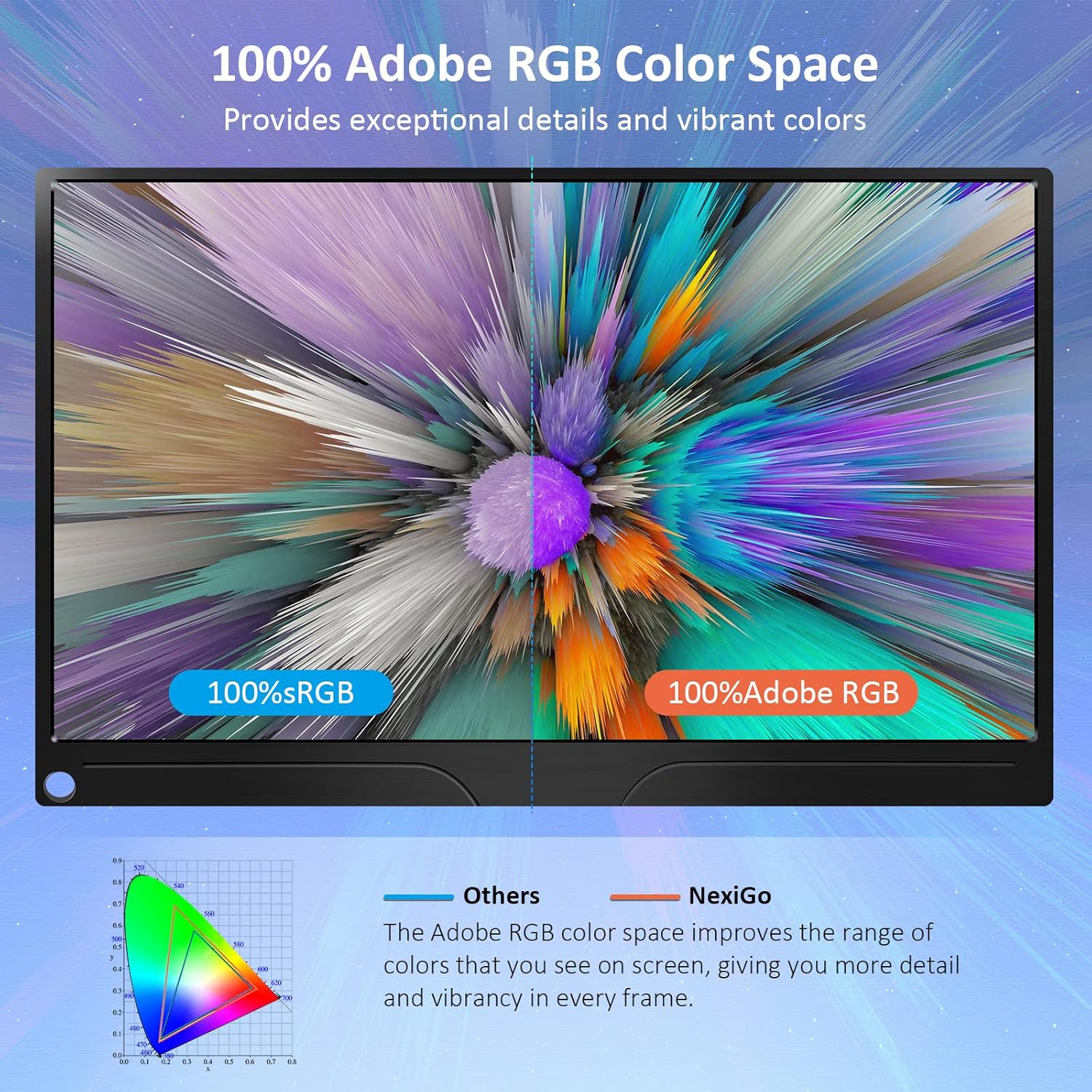
Image: The portable monitor connected to a laptop, demonstrating an extended display setup.
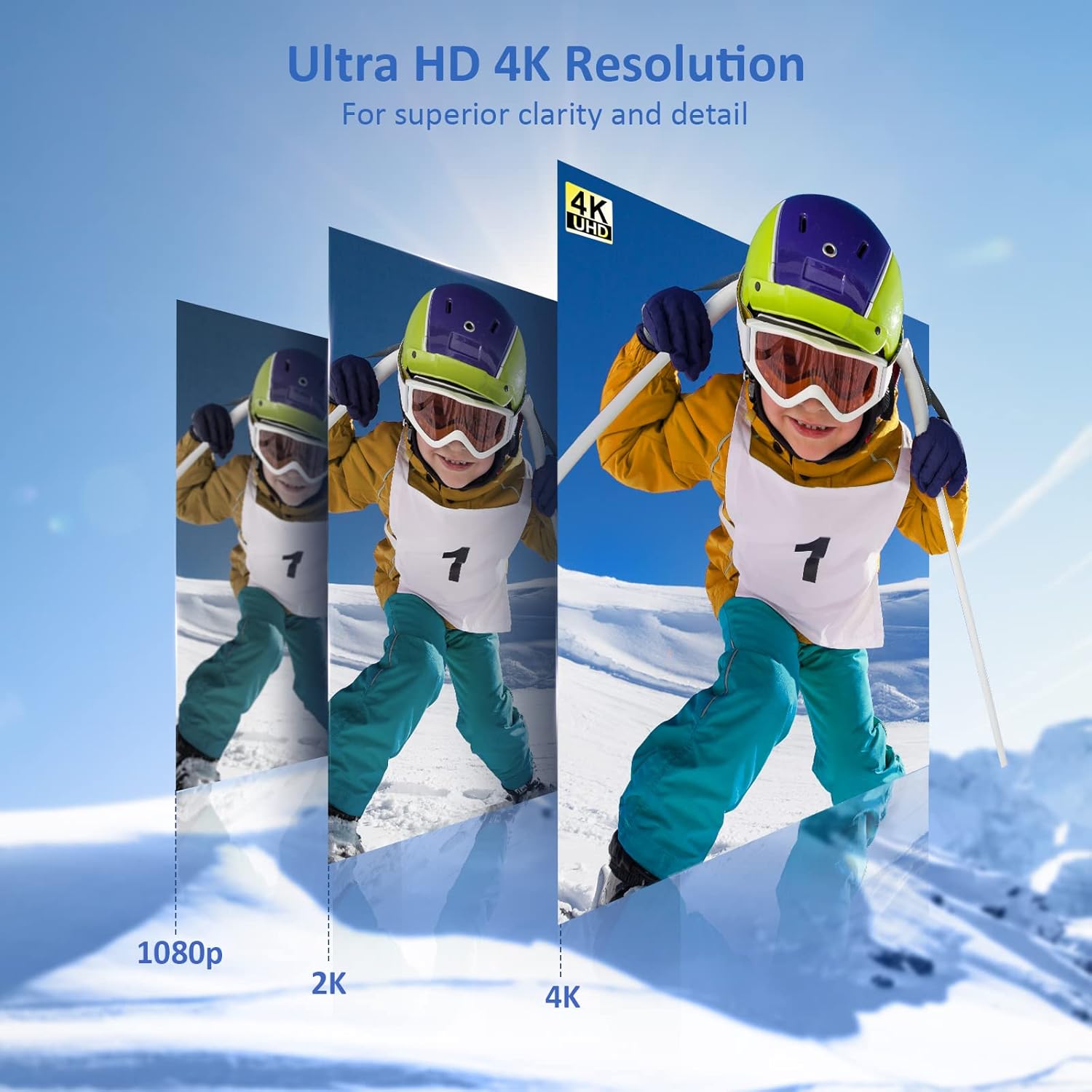
Image: The portable monitor connected to a smartphone, displaying content.
4.3 VESA iṣagbesori
The monitor is compatible with VESA mounts (75x75mm). To mount the monitor, remove the smart cover and attach it to a compatible VESA arm or wall mount using appropriate screws (not included).
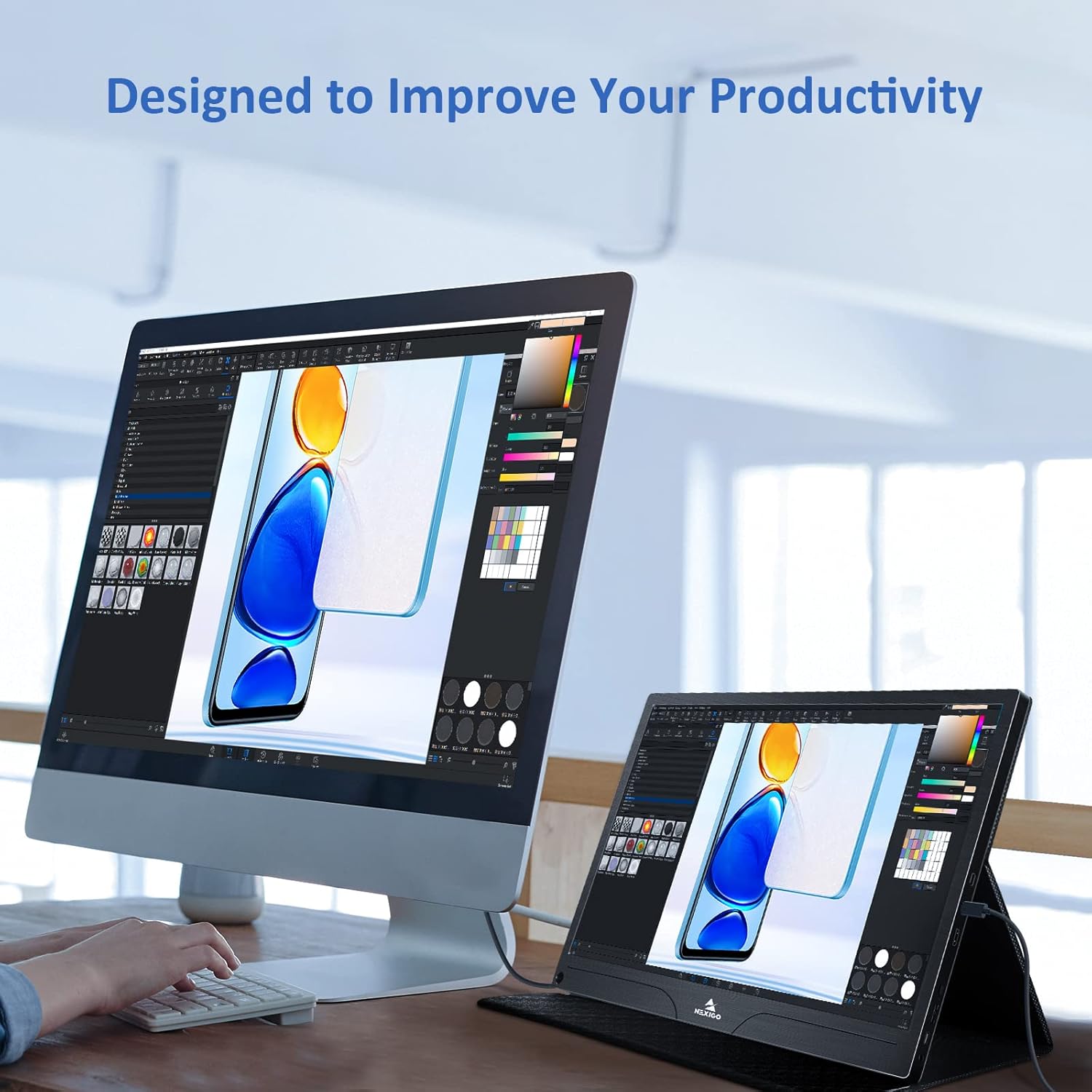
Image: The monitor mounted on a VESA-compatible desk arm.
5. Ṣiṣẹ Atẹle
5.1 Agbara Tan / Pa
Tẹ mọlẹ Bọtini agbara for approximately 3 seconds to turn the monitor on or off.
5.2 Lori-iboju Ifihan (OSD) Akojọ aṣyn
The OSD menu allows you to adjust various display settings. Short press the Bọtini agbara to open the OSD menu. Use the Opo-Iṣẹ Pupọ to navigate and select options.
- Soke/Isalẹ: Move the Multi-Function Key up or down to navigate through menu options.
- Wọle: Press the Multi-Function Key inward to select an option or confirm a setting.
- Jade: Press the Power Button to exit the current menu or the OSD.
5.3 Ifihan Eto
- Imọlẹ/Itọtọ: Satunṣe awọn ìwò luminance ati itansan ti awọn àpapọ.
- Eto awọ: Ṣe àtúnṣe iwọn otutu awọ, àwọ̀, àti ìtẹ́lọ́rùn.
- Ipo HDR: Enable or disable High Dynamic Range for enhanced visual quality with compatible content.
- FreeSync: Enable FreeSync for smoother gaming experiences by synchronizing the monitor's refresh rate with your GPU's frame rate.
- Ipin Ipin: Ṣatunṣe ipin abala ifihan (fun apẹẹrẹ, 16:9, 4:3).
5.4 Eto ohun
Adjust the volume of the built-in dual speakers or connected headphones through the OSD menu.
6. Itọju
- Ninu iboju: Lo asọ rirọ, ti ko ni lint ni sere dampened pẹlu omi tabi a ti kii-abrasive iboju regede. Ma ṣe sokiri omi taara si iboju.
- Ninu ile Casing: Pa atẹle naa nu casing with a soft, dry cloth. Avoid using harsh chemicals or solvents.
- Ibi ipamọ: When not in use, store the monitor in a cool, dry place, preferably in its original packaging or smart cover to protect it from dust and scratches.
- Yago fun awọn ipo to gaju: Ma ṣe fi atẹle naa han si awọn iwọn otutu to gaju, ọriniinitutu, tabi oorun taara.
7. Laasigbotitusita
Ti o ba ba pade awọn ọran pẹlu atẹle rẹ, tọka si tabili atẹle fun awọn iṣoro ati awọn solusan ti o wọpọ.
| Isoro | Owun to le Fa | Ojutu |
|---|---|---|
| No display / "No Signal" message | Incorrect cable connection, insufficient power, incorrect input source. | Ensure cables are securely connected. Verify external power is supplied if needed. Check the input source setting in the OSD menu. |
| Atẹle ko ni agbara lori | No power supply, faulty cable. | Ensure the power adapter is connected and working. Try a different USB-C cable or power source. |
| Iboju ti n tan imọlẹ | Faulty cable, unstable power, incompatible resolution/refresh rate. | Replace the cable. Ensure stable power. Adjust the display resolution or refresh rate on your connected device. |
| Ko si ohun | Volume too low, incorrect audio output setting, faulty cable. | Increase volume via OSD or connected device. Ensure the monitor is selected as the audio output device on your source. Check cable connections. |
| OTG port not working | Monitor not powered via full-featured USB-C, device incompatibility. | Ensure the monitor is connected to a device via the full-featured USB-C port that supports OTG functionality. |
8. Awọn pato
Detailed technical specifications for the NexiGo NG17QH 4K Portable Monitor.
| Ẹya ara ẹrọ | Sipesifikesonu |
|---|---|
| Nọmba awoṣe | NG17QH |
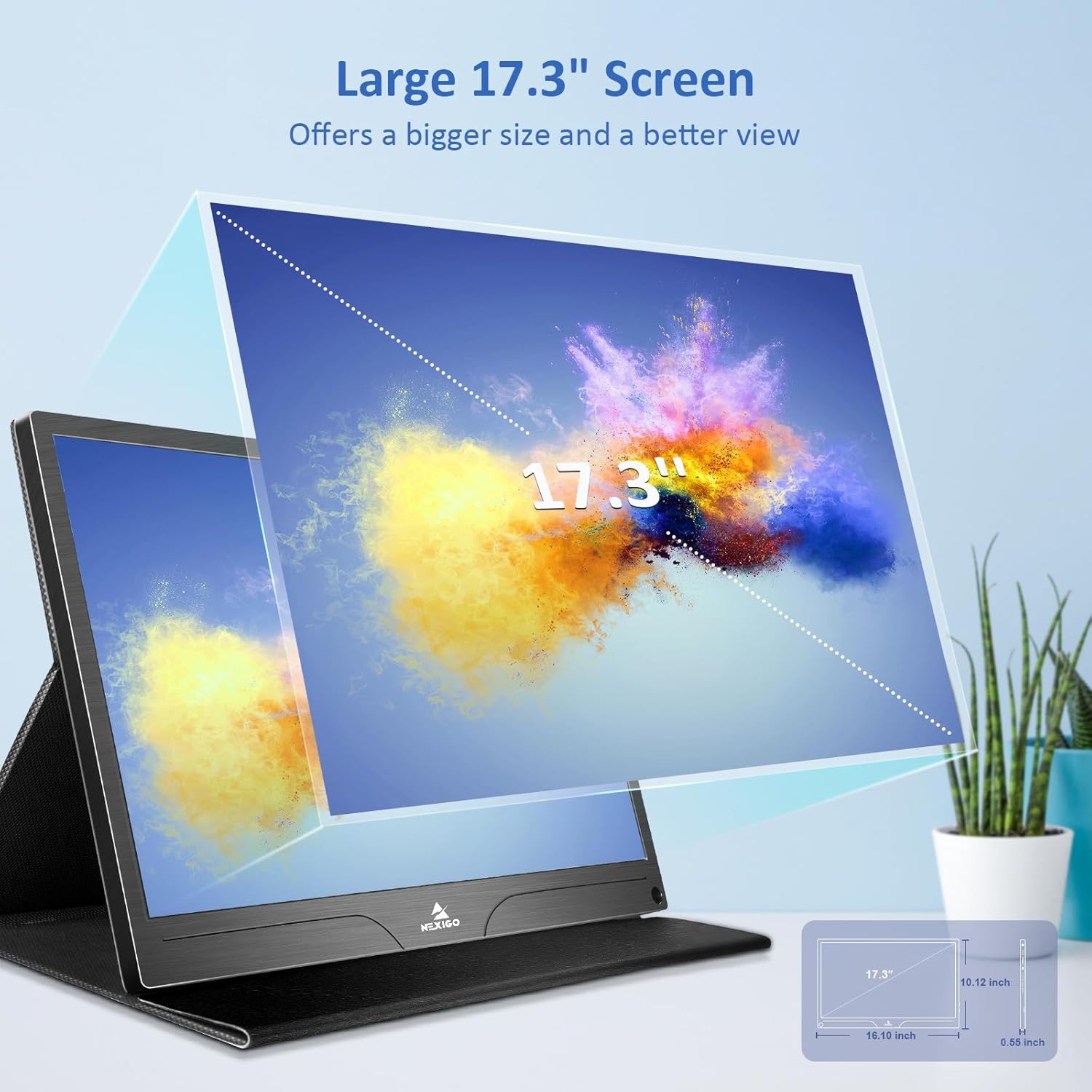
| Iwon iboju | 17.3 inches |
| Ipinnu | 3840 x 2160 (4K UHD) |
| Panel Iru | IPS |
| Imọlẹ | 400 cd/m² |
| Awọ Gamut | 100% Adobe RGB |
| Apakan Ipin | 16:9 |
| Viewigun igun | 178° |
| Awọn ẹya ara ẹrọ | FreeSync, HDR, Eye Care Screen |
| Awọn agbọrọsọ | Dual Built-in Speakers |
| Asopọmọra | Full-Featured USB-C (x1), Mini HDMI (x1), OTG USB-C (x1), 3.5mm Audio Jack (x1) |
| VESA ibamu | 75 x 75 mm |
| Ọja Mefa | 16.1 x 10.12 x 0.55 inches |
| Iwọn Nkan | 6.39 iwon |

Image: Visual comparison of 1080p, 2K, and 4K resolutions, demonstrating the clarity of the 4K display.
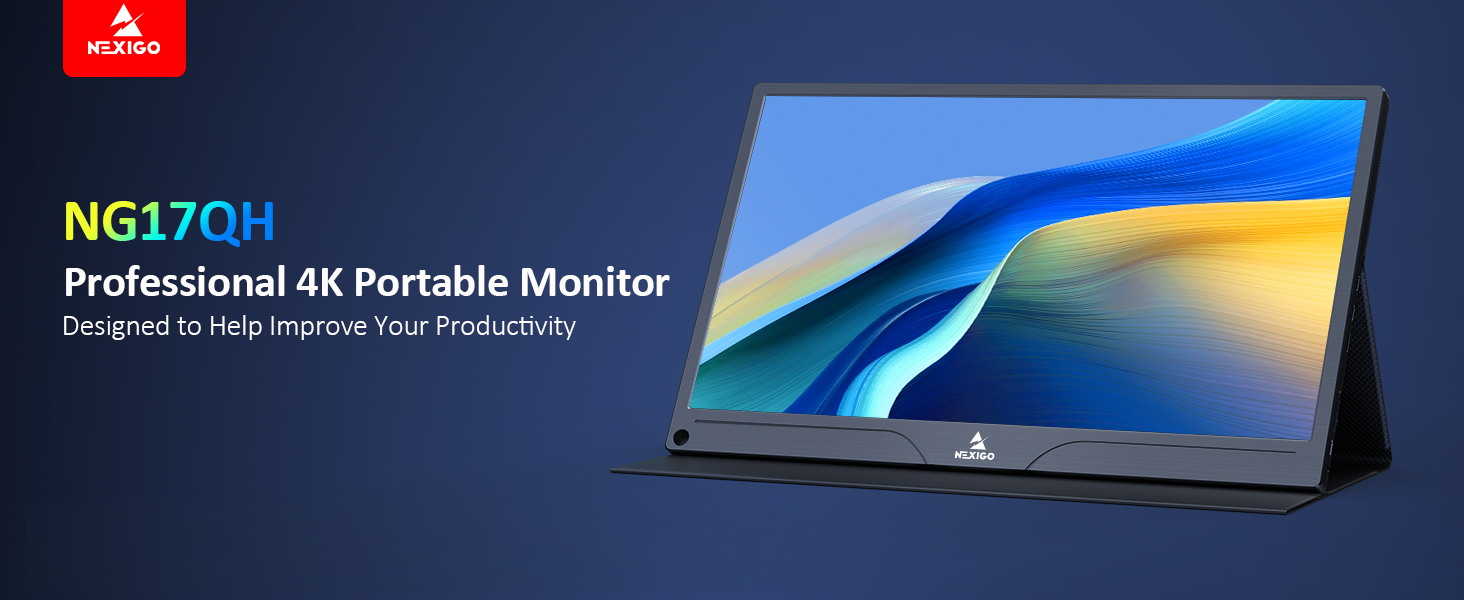
Image: A visual representation of 100% Adobe RGB color space coverage, indicating vibrant and detailed color reproduction.
9. Atilẹyin ọja ati Support
Your NexiGo NG17QH Portable Monitor comes with a manufacturer's warranty. For detailed warranty information, product registration, or technical support, please visit the official NexiGo webojula tabi kan si wọn onibara iṣẹ taara. Tọju iwe-ẹri rira rẹ bi ẹri rira fun awọn iṣeduro atilẹyin ọja.
NexiGo Official Webojula: www.nexigo.com