
1. Ifihan
The Optex ORT8915-UHD is a state-of-the-art 4K DVB-T2 terrestrial digital television receiver. This device allows you to receive terrestrial digital television programs in stunning 4K quality, providing a high-quality visual and audio experience. It supports HEVC encoding for efficient broadcasting and offers various features to enhance your viewiriri iriri.
2. Package Awọn akoonu
Ṣaaju ki o to tẹsiwaju pẹlu fifi sori ẹrọ, jọwọ rii daju pe gbogbo awọn nkan wa ninu package:
- Optex ORT8915-UHD 4K DVB-T2 Receiver x1
- Adapter agbara x1
- 1.5V Batteries x2
- Ilana olumulo x1
- Iṣakoso latọna x1
- HDMI Okun x1

Image 2.1: The Optex ORT8915-UHD receiver along with its included accessories: power adapter, batteries, user manual, remote control, and HDMI cable.
3. Ọja Ipariview
3.1 Igbimọ iwaju
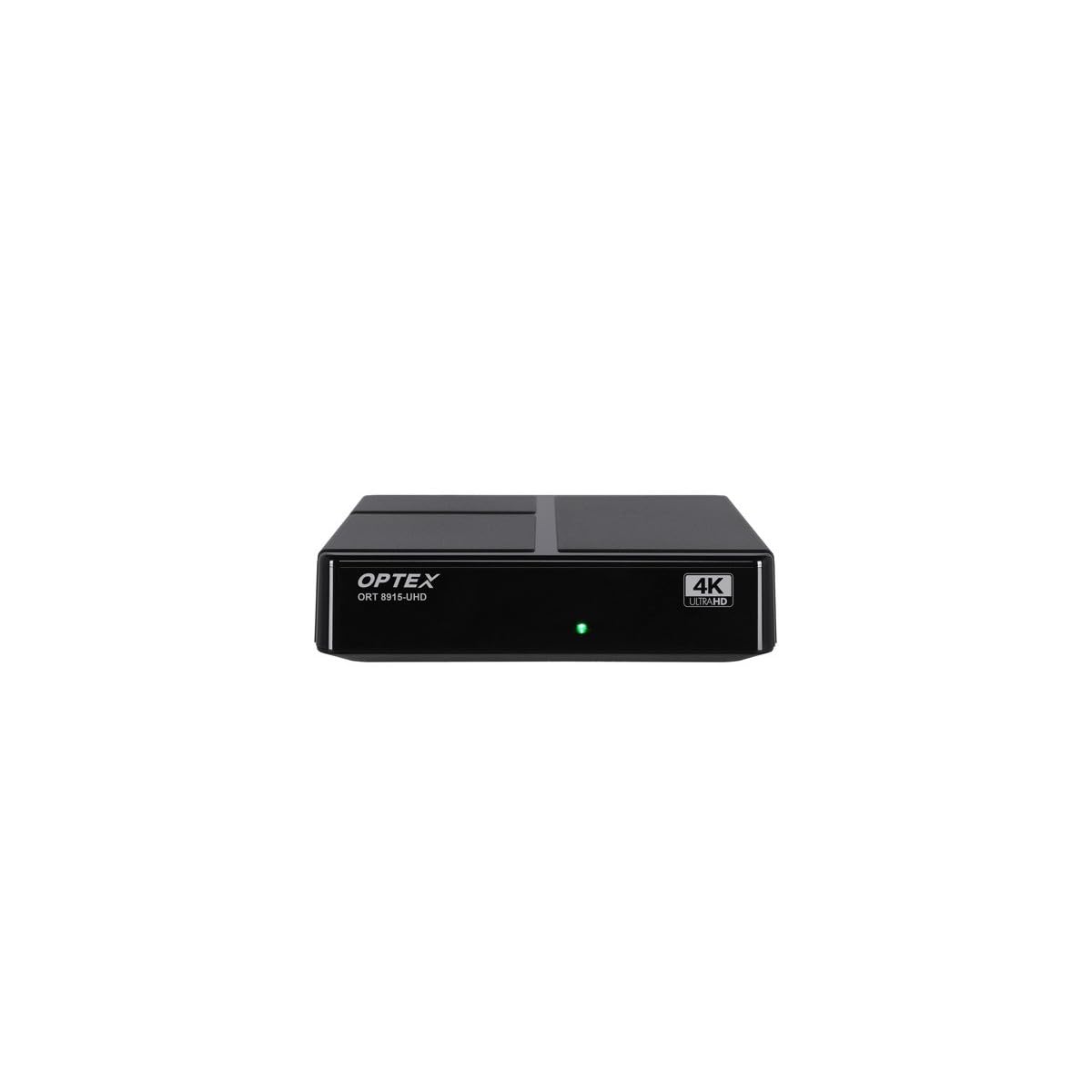
Aworan 3.1: Iwaju view of the Optex ORT8915-UHD receiver, showing the USB port and control buttons.
The front panel features a USB port for connecting external storage devices, along with basic control buttons for power, menu navigation, channel selection (CH+/CH-), and volume adjustment (V+/V-).
3.2 ru Panel

Aworan 3.2: Ẹyin view of the Optex ORT8915-UHD receiver, displaying various input/output ports.
Panel ẹhin pẹlu awọn asopọ wọnyi:
- ANT IN: For connecting your terrestrial antenna.
- OPTIC: Ìjáde ohùn oní-nọ́ńbà optíkì.
- TI: Analog video/audio output.
- HDMI: High-Definition Multimedia Interface output for connecting to a TV.
- DC NINU: Ipese agbara fun ohun ti nmu badọgba naa.
3.3 Iṣakoso latọna jijin

Image 3.3: The remote control for the Optex ORT8915-UHD receiver, featuring various function buttons.
The remote control provides full functionality for navigating menus, changing channels, adjusting volume, accessing program guides, and utilizing special features like Timeshift and USB recording.
4. Eto
- Asopọmọra Antenna: Connect your terrestrial antenna cable to the "ANT IN" port on the rear panel of the receiver.
- Sopọ si TV:
- For High-Definition (HD) connection: Use the provided HDMI cable to connect the "HDMI" port on the receiver to an HDMI input on your television.
- For Standard-Definition (SD) connection: Use an AV cable (not included) to connect the "AV" ports on the receiver to the corresponding AV inputs on your television.
- So agbara: Plug the power adapter into the "DC IN" port on the receiver, then plug the adapter into a power outlet.
- Fi awọn batiri sii si Latọna jijin: Open the battery compartment on the back of the remote control and insert the two 1.5V batteries, ensuring correct polarity.
- Agbara Tan: Press the power button on the receiver or the remote control to turn on the device.
- Yan Igbewọle TV: On your television, select the correct HDMI or AV input source that corresponds to the connection you made in step 2.
5. Awọn ilana Iṣiṣẹ
5.1 Initial Channel Scan
Upon first use or after a factory reset, the receiver will guide you through an initial setup process, including a channel scan. Follow the on-screen prompts to automatically search for available DVB-T2 channels in your region. Ensure your antenna is properly connected for optimal results.
5.2 Ipilẹ Awọn iṣẹ
- Lilọ kiri ikanni: Lo awọn CH+ ati CH- buttons on the remote or front panel to change channels.
- Iṣakoso iwọn didun: Lo awọn V+ ati V- awọn bọtini lati ṣatunṣe iwọn didun.
- Wiwọle Akojọ aṣayan: Tẹ awọn Akojọ bọtini lati wọle si akojọ aṣayan akọkọ fun awọn eto ati awọn ẹya ara ẹrọ.
- Itọsọna Eto (EPG): Tẹ awọn EPG bọtini lati view the Electronic Program Guide, which displays broadcast schedules.
- Ọrọ telifoonu: Access teletext services by pressing the TTX bọtini.
5.3 To ti ni ilọsiwaju Awọn ẹya ara ẹrọ
- Timeshift (Live Control): Connect a USB storage device to the receiver. Press the Iyipada akoko button (often a pause/play icon) to pause live TV, allowing you to resume viewnigbamii.
- USB Recording (PVR): With a USB storage device connected, you can record live TV programs. Use the REC button on the remote to start recording.
- Sisisẹsẹhin Multimedia: The USB port also supports playback of various multimedia files (audio, video, images) from a connected USB storage device. Navigate to the multimedia section in the main menu to access this feature.
- Iṣakoso obi: Set up parental control features through the menu to restrict access to certain channels or programs based on age ratings.
- Àwọn Àkójọ Àyànfẹ́: Create customized lists of your favorite channels for quick access.
6. Itọju
- Ninu: Lo aṣọ rírọrùn tí ó gbẹ láti nu ìta olugba náà. Má ṣe lo àwọn ohun èlò ìfọmọ́ omi tàbí àwọn ohun èlò ìpara.
- Afẹfẹ: Ensure the receiver is placed in a well-ventilated area to prevent overheating. Do not block the ventilation holes.
- Awọn imudojuiwọn sọfitiwia: Periodically check for software updates via USB to ensure optimal performance and access to new features. Refer to the main menu settings for update options.
7. Laasigbotitusita
| Isoro | Owun to le Fa | Ojutu |
|---|---|---|
| Ko si aworan tabi ohun | Incorrect TV input selected, loose cable connections, power issue. |
|
| Ko si awọn ikanni ti a rii | Antenna not connected or positioned correctly, no channel scan performed. |
|
| Isakoṣo latọna jijin ko ṣiṣẹ | Dead batteries, obstructed signal, remote not paired (if applicable). |
|
| Didara aworan ti ko dara | Weak antenna signal, incorrect resolution settings. |
|
8. Awọn pato
| Ẹya ara ẹrọ | Ẹ̀kúnrẹ́rẹ́ |
|---|---|
| Awoṣe | ORT8915-UHD |
| Brand | Optex |
| Ọja Iru | 4K DVB-T2 Terrestrial Receiver |
| Fidio fifi koodu | HEVC |
| Awọn ẹrọ ibaramu | Television, Game Console, Tablet, Personal Computer, Amplifier, Speaker, Smartphone |
| Asopọmọra Technology | USB |
| Ipo Ijade Ohun | Sitẹrio |
| Audio o wu Iru | HDMI, Optical |
| Kakiri Ohun ikanni iṣeto ni | 5.1, 7.1, 9.2 |
| Pataki Ẹya | Oluwari išipopada |
| Lapapọ HDMI Ports | 1 |
| Lilo Agbara (Iduroṣinṣin) | <0.5 W |
| Àwọn ìwọ̀n (Gígùn x Fífẹ̀) | 126.0 mm x 125.0 mm |
| Iwọn Ọja | 470 g |
9. Atilẹyin ọja ati Support
For warranty information and technical support, please refer to the official Optex webojú òpó wẹ́ẹ̀bù tàbí kí o kàn sí olùtajà agbègbè rẹ. Pa ìwé ẹ̀rí ìrajà rẹ mọ́ gẹ́gẹ́ bí ẹ̀rí ìrajà fún èyíkéyìí ẹ̀tọ́ àtìlẹ́yìn.
Software updates are guaranteed until an unknown date, as per product information. For the latest information, please visit the manufacturer's support page.