
Ọrọ Iṣaaju
This manual provides detailed instructions for the installation, operation, maintenance, and troubleshooting of your ASUS TUF GAMING Z890-PLUS WIFI motherboard. Designed for Intel Core Ultra 200S Plus and 200S Series processors, this ATX motherboard features DDR5 memory support, PCIe 5.0, Wi-Fi 7, and Intel 2.5 Gb Ethernet, offering a robust foundation for high-performance computing.
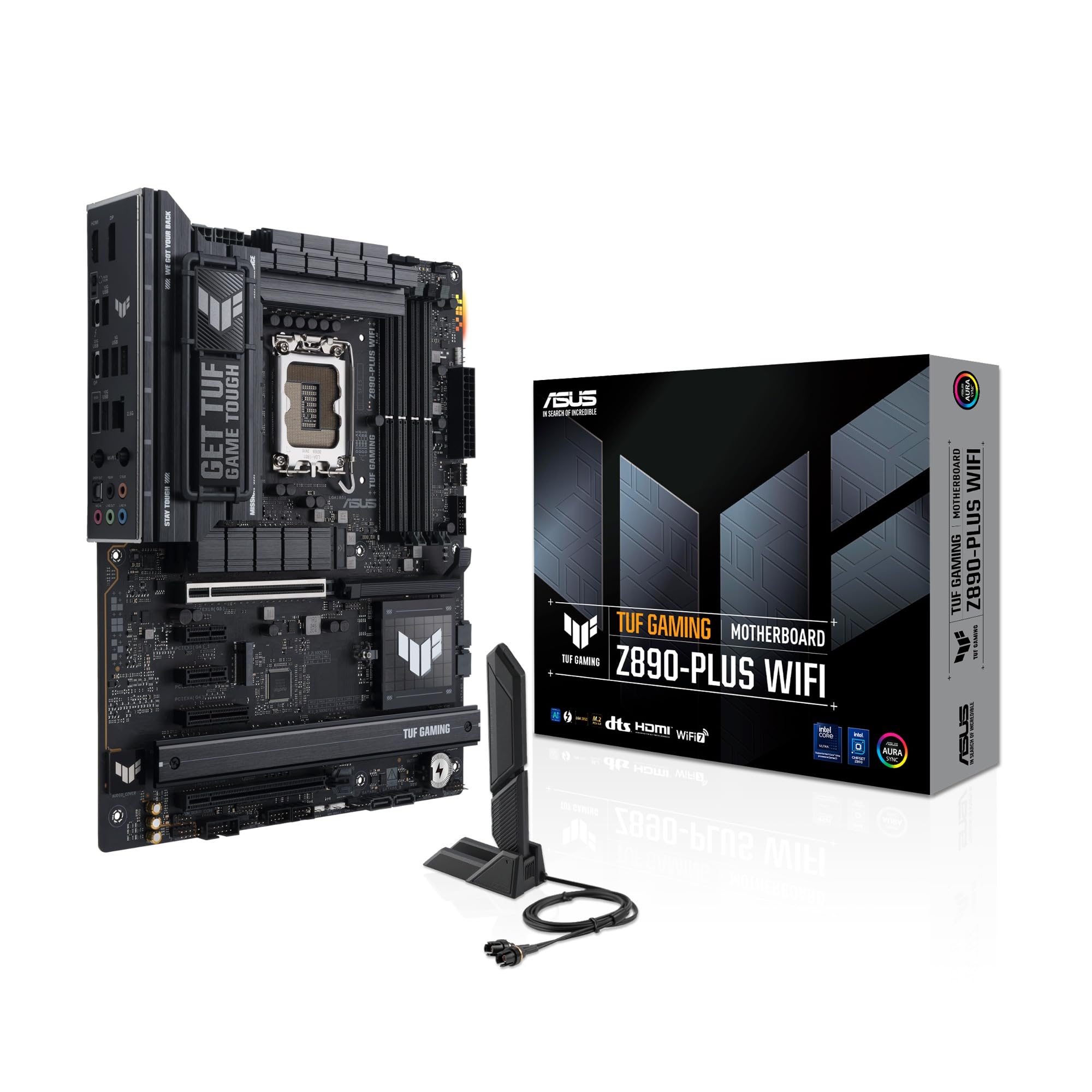
Figure 1: ASUS TUF GAMING Z890-PLUS WIFI Motherboard with its retail packaging and included Wi-Fi antenna.
Eto ati fifi sori
Tẹle awọn igbesẹ wọnyi fun fifi sori ẹrọ to dara ti modaboudu rẹ ati awọn paati rẹ.
1. Unpacking ati Ibẹrẹ Ayewo
Carefully remove all components from the packaging. Verify that all items listed in the 'What's in the Box' section are present and inspect the motherboard for any visible damage.

Figure 2: Contents typically found in the ASUS TUF GAMING Z890-PLUS WIFI retail box.
2. Fifi sori ẹrọ Sipiyu (LGA 1851)
Open the CPU socket retention lever. Align the triangular mark on your Intel processor with the corresponding mark on the socket. Gently place the CPU into the socket, ensuring it sits flush. Close the retention lever to secure the CPU.

Olusin 3: Pariview of the motherboard layout, showing the LGA 1851 CPU socket.
3. Memory (Àgbo) fifi sori
This motherboard supports DDR5 memory modules. Open the clips on the DIMM slots. Align the notch on the DDR5 memory module with the key in the DIMM slot. Press down firmly on both ends of the memory module until the clips snap into place. The motherboard supports up to 256GB of DDR5 RAM across its four slots.
4. Ibi ipamọ (M.2 SSD) fifi sori
The motherboard features multiple M.2 slots for high-speed NVMe SSDs. Utilize the ASUS M.2 Q-Latch and M.2 Q-Release features for tool-less installation. To install, remove the M.2 heatsink (if present) by tapping the M.2 Q-Release button. Insert the M.2 SSD into the slot, then secure it with the M.2 Q-Latch mechanism. The M.2 Q-Slide design accommodates various SSD sizes.

Figure 4: EZ PC DIY features for simplified component installation, including M.2 Q-Latch and Q-Release.

Figure 5: Demonstrating the M.2 heatsink removal process.
5. Fifi Kaadi Imugboroosi sori ẹrọ (PCIe)
Insert your graphics card or other PCIe expansion cards into the appropriate PCIe slots. The primary PCIe 5.0 x16 slot is designed for next-generation GPUs. Use the PCIe Slot Q-Release button to easily unlock the security latch for card removal.

Figure 6: Layout of PCIe slots, indicating PCIe 5.0 and PCIe 4.0 compatibility.
6. Asopọmọra Peripherals ati Power
Connect your power supply unit (PSU) cables to the motherboard's 24-pin ATX power connector and CPU power connectors. Attach front panel connectors (USB, audio, power/reset switches) to their respective headers. Install the included Wi-Fi antenna to the rear I/O panel for Wi-Fi 7 connectivity. Connect USB devices, Ethernet cables, and display outputs as needed.

Figure 7: Detail of a USB header for connecting front panel USB ports.

Figure 8: The rear input/output panel, showing various ports and the Wi-Fi antenna connection.
Ṣiṣẹ rẹ modaboudu
Once assembled, power on your system and configure the BIOS/UEFI settings.
1. BIOS / UEFI iṣeto ni
Access the BIOS/UEFI setup utility by pressing the 'Delete' or 'F2' key during system startup. The intuitive interface allows for easy navigation and configuration of system settings, boot order, and hardware parameters.
2. AI Intelligence Features
The ASUS TUF GAMING Z890-PLUS WIFI motherboard integrates several AI-powered features to enhance user experience and system performance:
- Olùdámọ̀ràn AI: Utilizes AI technology to understand natural-language questions, helping users explore motherboard functionality and BIOS settings.
- AI Itutu II: Optimizes thermal performance and reduces noise through dynamic adjustment of fan speeds based on CPU temperatures.
- Nẹtiwọki AI II: Mu iṣẹ nẹtiwọọki pọ si fun isọpọ ailopin ati awọn iyara Wi-Fi 7 ti o pọju.

Olusin 9: Pariview of the motherboard's AI Intelligence features.

Figure 10: The AI Advisor interface, providing assistance with motherboard functions.
3. Performance Optimization
Leverage advanced features for optimal system performance:
- AEMP III: Advanced firmware for unparalleled memory performance with cutting-edge DDR5 modules.
- Ìbámu DIMM: Ẹ̀yà BIOS ASUS kan tí ó ń ṣàyẹ̀wò àwọn modulu ìrántí ẹnìkọ̀ọ̀kan láti mú kí iṣẹ́ wọn sunwọ̀n síi àti láti tọ́ka sí àwọn ìṣòro tó lè ṣẹlẹ̀.
- Igbega NPU: This BIOS feature overclocks the NPU with one click, increasiniṣiṣẹ g nipasẹ to 24%.

Figure 11: Key performance enhancement features of the motherboard.
Itoju
Itọju to dara ṣe idaniloju gigun ati iṣẹ iduroṣinṣin ti modaboudu rẹ.
1. Gbona Management
The motherboard features an optimized thermal design, including large VRM heatsinks, M.2 heatsinks, and PCH heatsinks, along with hybrid fan headers and Fan Xpert 4 with AI Cooling II. Ensure proper airflow within your PC case and regularly clean dust from fans and heatsinks to maintain optimal temperatures.

Figure 12: The motherboard designed for efficient cooling, compatible with advanced cooling solutions.

Figure 13: AI Cooling II dynamically adjusts fan speeds for optimal thermal performance.
2. Ninu
Periodically clean the motherboard and internal components of your PC using compressed air to remove dust buildup. Ensure the system is powered off and unplugged before cleaning.
Laasigbotitusita
If you encounter issues, consider the following basic troubleshooting steps:
- Ko si Agbara: Check all power connections from the PSU to the motherboard and components. Ensure the power supply is switched on.
- Ko si Ifihan: Verify that the graphics card is properly seated and connected to the monitor. Test with a different display cable or monitor if possible.
- Aiduroṣinṣin eto: Ensure RAM modules are correctly installed. Check for proper CPU cooler installation. Update BIOS to the latest version.
- Awọn oran Nẹtiwọọki: Confirm Wi-Fi antenna is securely attached. Check Ethernet cable connections. Utilize the AI Networking II feature for diagnostics.
- Consult AI Advisor: For specific issues, the AI Advisor can provide guidance based on natural language queries.
For more detailed troubleshooting, refer to the official ASUS support webojula tabi okeerẹ olumulo Afowoyi PDF.
Awọn pato
Key technical specifications for the ASUS TUF GAMING Z890-PLUS WIFI motherboard:

Olusin 14: Pariview of advanced connectivity and memory features.
| Ẹya ara ẹrọ | Ẹ̀kúnrẹ́rẹ́ |
|---|---|
| Brand | ASUS |
| Orukọ awoṣe | 90MB1IQ0-M0EAY0 |
| Sipiyu Socket | LGA 1851 |
| Awọn isise ibaramu | Intel Core Ultra 200S Plus and 200S Series |
| Chipset Iru | Intel Z890 |
| Ramu ọna ẹrọ | DDR5 |
| Iyara aago iranti | Titi di 8600 MHz |
| Max Ramu Agbara | 256 GB |
| Iho iranti | 4 |
| Ni wiwo Graphics | PCI-Express x16 (PCIe 5.0 supported) |
| Total PCI Slots | 4 |
| Total SATA Ports | 6 |
| Lapapọ Awọn ibudo USB | 15 (various types including USB4, USB 20Gbps) |
| Àjọlò | Intel 2.5 Gb Ethernet |
| Alailowaya Asopọmọra | Wi-Fi 7 (802.11be) |
| Awọn iwọn (LxWxH) | 24.4L x 24.4W x 1H cm |
| Iwọn | 1.5 kilo |

Figure 15: Highlighting the DDR5 memory speed support.

Figure 16: The integrated Intel 2.5 Gb Ethernet controller.
Atilẹyin ọja ati Support
1. Atilẹyin ọja
This ASUS motherboard comes with a 2-odun atilẹyin ọja lati ọjọ ti o ra. Jọwọ ṣe idaduro ẹri rira rẹ fun awọn iṣeduro atilẹyin ọja.
2. Olupese Olubasọrọ Alaye
For technical support, warranty inquiries, or further assistance, please contact ASUS:
- Olupese: ASUS Kọmputa GmbH
- Imeeli: LegalCompliance@asus.com
- Webojula: https://www.asus.com/it/
- Adirẹsi: Harkortstraße 21-23, Ratingen, 40880, Germany
3. Afikun Iwe
Further detailed information can be found in the official PDF documents: