
Ọrọ Iṣaaju
Thank you for choosing the Donner Adjustable Piano Bench, Model EC7163. This manual provides essential information for the proper assembly, operation, maintenance, and care of your piano bench. Please read these instructions thoroughly before use to ensure safe and optimal performance.
Alaye Aabo
- Always assemble the bench according to the provided instructions.
- Maṣe kọja opin iwuwo ti o pọju ti 400 poun (181 kg).
- To maintain the finish, avoid exposure to direct sunlight.
- Always keep the bench on a stable, level surface to prevent tipping.
- Be aware of the blue lubricant on the lifting mechanism during initial adjustments. It may transfer to surfaces if not wiped clean.
Package Awọn akoonu
Rii daju pe gbogbo awọn paati wa ṣaaju ki o to bẹrẹ apejọ:
- Piano Bench Seat with integrated lifting mechanism
- 4 x Bench Legs
- Ohun elo iṣagbesori (bolts, washers, eso)
- Ìdènà fún àkójọpọ̀
Awọn ilana Apejọ
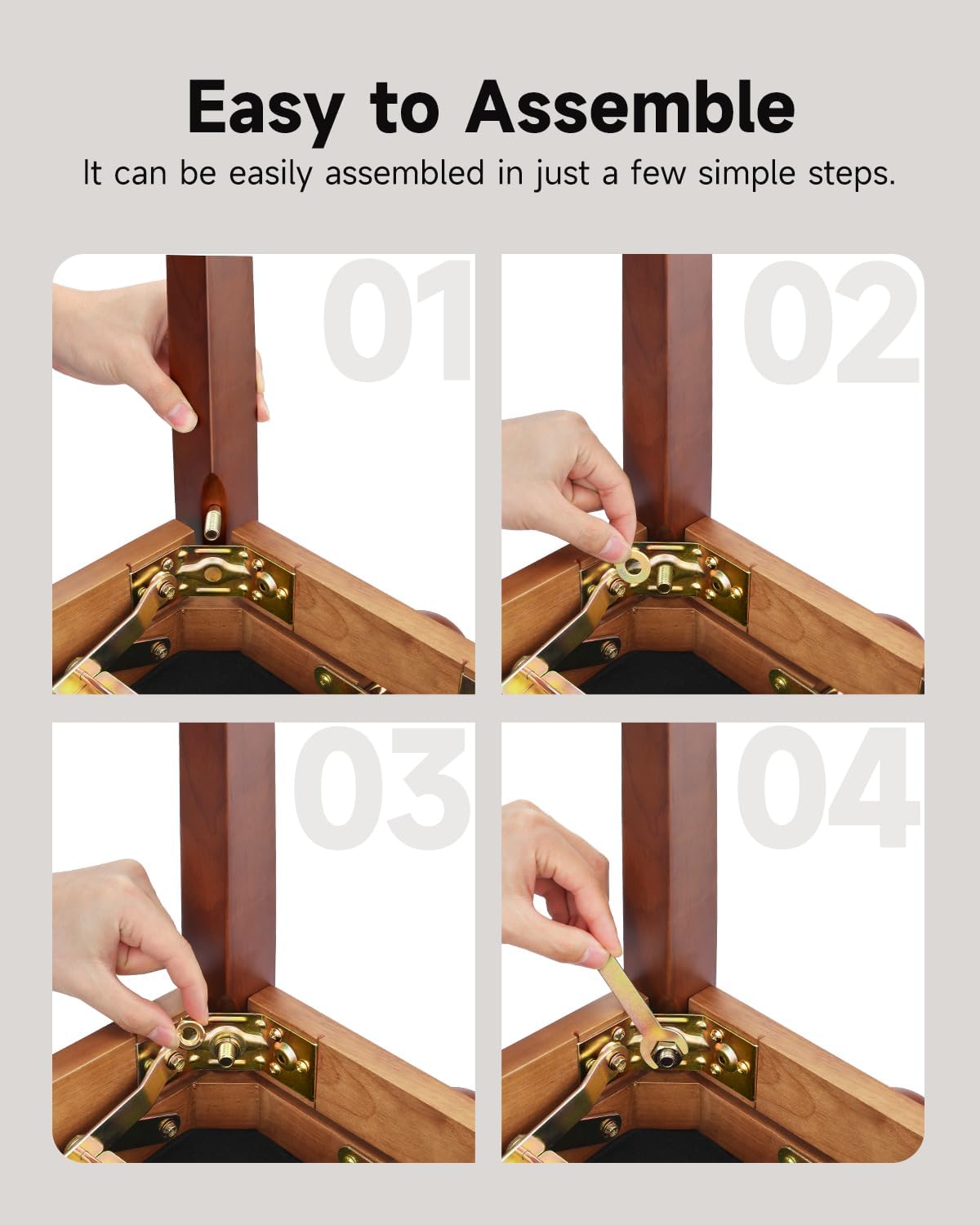
Assembly of the Donner Adjustable Piano Bench is straightforward and requires minimal tools. Follow these steps:
- Turn the piano bench seat upside down, ensuring the bottom is facing upwards.
- Align each leg with the corner brackets on the underside of the bench.
- Insert the bolts through the leg and bracket, then thread the washers onto the bolts.
- Thread the nuts onto the bolts.
- Using the provided wrench, tighten all nuts securely. Ensure all legs are firmly attached and stable.

Awọn ilana Iṣiṣẹ
Adjusting Bench Height
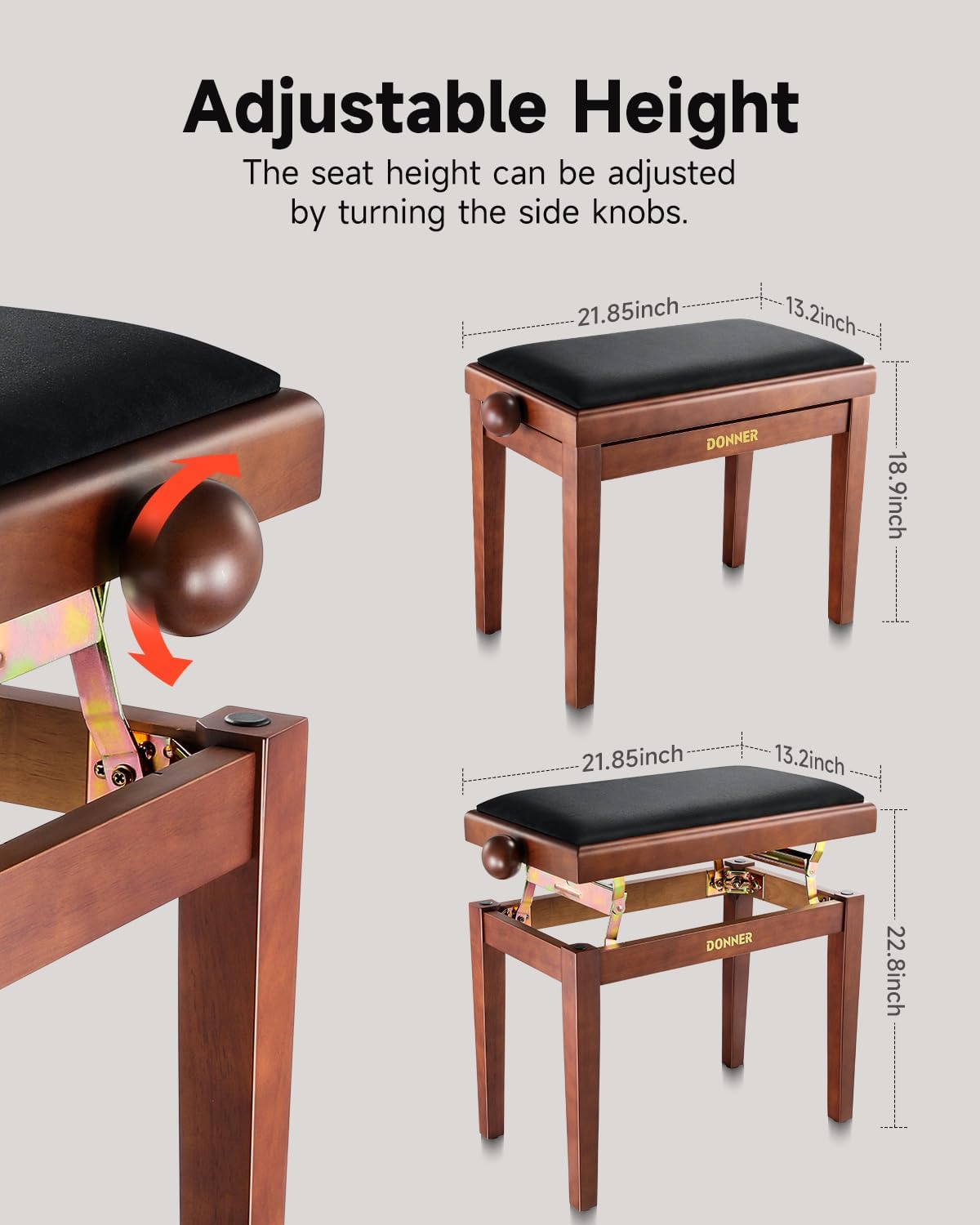
The Donner Adjustable Piano Bench features a metal lifting mechanism that allows for height adjustment. The seat height can be adjusted within a range of 18.9 inches (48 cm) to 22.8 inches (58 cm).
- Locate the adjustment knobs on both sides of the bench seat.
- Turn the knobs to raise or lower the seat to your desired height. Ensure both knobs are turned evenly to maintain a level seat.
- Once the desired height is achieved, ensure the knobs are tightened sufficiently to secure the seat in place.


Itoju
Ninu
- For the wooden frame, use a soft, dry cloth to wipe away dust and dirt. Avoid abrasive cleaners or harsh chemicals that could damage the finish.
- For the high-density sponge cushion, use a slightly damp cloth with mild soap if necessary, then wipe dry immediately. Do not saturate the cushion.
- Regularly check the metal lifting mechanism for any dust or debris that might impede smooth operation.
Gbogbogbo Itọju
- Periodically inspect all bolts and connections to ensure they remain tight. Retighten if necessary.
- Keep the bench away from extreme temperature changes and high humidity to prevent warping or damage to the wood.
- The non-slip rubber pads on the legs help protect your floor and provide stability. Ensure they are clean and intact.


Laasigbotitusita
Bench Feels Unstable
- Ensure all leg bolts are securely tightened.
- Verify that the bench is placed on a flat, level surface. Uneven floors can cause instability.
- Check the non-slip pads on the bottom of the legs for wear or damage. Replace if necessary.
Iṣoro Iṣatunṣe Giga
- Ensure both adjustment knobs are loosened sufficiently before attempting to change the height.
- Check for any obstructions in the lifting mechanism.
- Apply a small amount of silicone-based lubricant to the metal parts of the lifting mechanism if it feels stiff. Wipe away any excess lubricant, especially the blue lubricant that may be present from manufacturing, to prevent staining.
Awọn pato
| Ẹya ara ẹrọ | Ẹ̀kúnrẹ́rẹ́ |
|---|---|
| Nọmba awoṣe | EC7163 |
| Ọja Mefa | 13.4"D x 25.2"W x 18.9"-22.8"H (Adjustable) |
| Àwọ̀ | Brown |
| Ohun elo | Solid Wood, High-Density Sponge Cushion |
| O pọju iwuwo Agbara | 400 lbs (181 kg) |
| Iwọn Nkan | 19.8 poun (9 kg) |
| Ibijoko Agbara | 1 |

Atilẹyin ọja ati Support
For warranty information, technical support, or any inquiries regarding your Donner Adjustable Piano Bench, please visit the official Donner webojula tabi kan si wọn onibara iṣẹ Eka. Tọju iwe-ẹri rira rẹ fun awọn ẹtọ atilẹyin ọja.