
1. Alaye Aabo pataki
Please read and understand all instructions and warnings before assembling and using this basketball hoop system. Failure to follow these instructions may result in serious injury or property damage.
- Abojuto Agba: Always ensure adult supervision when children are using the basketball hoop.
- Apejọ to tọ: Assemble the unit strictly according to the provided instructions. Ensure all bolts, nuts, and fasteners are securely tightened before use.
- Iduroṣinṣin ipilẹ: The base must be filled with the provided Base Gel and water, or sand, to ensure maximum stability. An improperly weighted base can cause the hoop to tip over, leading to injury. The fill capacity is 400 lbs.
- Yẹra fún gbígbé ara ró: Do not hang on the rim, net, or any part of the backboard or support pole. This can cause the unit to tip or components to break.
- Awọn ipo oju ojo: Do not use the basketball hoop during strong winds or severe weather. Secure or lay down the unit to prevent damage or injury.
- Residential Use Only: Ọja yii jẹ apẹrẹ fun lilo ibugbe nikan.
- ASTM Ifọwọsi: This product is ASTM-certified, indicating compliance with safety standards.
2. Package Awọn akoonu
Rí i dájú pé gbogbo àwọn ohun èlò wà níbẹ̀ kí o tó bẹ̀rẹ̀ sí í kó wọn jọ. Tí àwọn ohun èlò kan bá sọnù tàbí tí wọ́n bá bàjẹ́, kan sí iṣẹ́ oníbàárà.
- Basketball Hoop System (Backboard, Rim, Pole, Base)
- (2) Nẹtiwọọki
- Base Gel (1 Pound)
- Ohun elo Apejọ (bolts, eso, washers, etc.)
3. Apejọ Awọn ilana
Assembly is required for this basketball hoop system. It is recommended to have at least two adults for assembly. Follow the detailed instructions provided in the separate assembly manual included with your product. The general steps involve:
- Ipilẹ Ipilẹ: Connect the base components.
- Pole Attachment: Securely attach the pole sections to the base.
- Backboard and Rim Installation: Mount the shatterproof backboard and spring-mounted rim to the pole. Ensure the net is properly attached to the rim.
- Nkún ipilẹ: This is a critical step for stability.
3.1 Base Gel Application
The included Base Gel is essential for stabilizing the hoop. Mix the gel with water to achieve the required weight for the base.

Apejuwe aworan: This image illustrates the four steps for filling the base. Panel 1 shows the base cap removed. Panel 2 shows the opening for filling. Panel 3 shows pouring the Base Gel into the opening. Panel 4 shows filling the base with water using a garden hose. This process adds up to 400 lbs of support.
Steps for Base Filling:
- Remove the cap from the base filling port.
- Pour the entire contents of the Base Gel package into the base.
- Slowly fill the base with water using a hose until it reaches the maximum capacity (approximately 400 lbs).
- Rọpo fila ni aabo.
Akiyesi: The Base Gel expands when mixed with water, providing significant weight for stability. Alternatively, sand can be used to fill the base, but it may not provide the same level of stability as the gel/water mixture.
4. Eto ati Gbe
Once assembled and the base is filled, the basketball hoop can be positioned for use.
4.1 Adjusting Rim Height
The hoop features an easy-lift handle for quick height adjustment, allowing it to be set from 4.4 feet to 10 feet.
Apejuwe aworan: This image displays two identical basketball hoops, one adjusted to its minimum height of 4.4 feet and the other to its maximum height of 10 feet, illustrating the adjustable rim height feature. Incremental heights like 4.9ft, 5.4ft, 5.9ft, 6.4ft, 8ft, 8.5ft, 9ft, 9.5ft are also indicated.

Apejuwe aworan: This image shows a person using the trigger and lock handle to easily adjust the height of the basketball hoop. Inset images highlight the 'Trigger & Lock Handle' mechanism and the 'Built-in Wheels' on the base for portability.
Lati ṣatunṣe giga:
- Locate the easy-lift handle on the support pole.
- Engage the handle mechanism to unlock the pole.
- Carefully raise or lower the backboard and rim to the desired height.
- Release the handle to lock the pole in place. Ensure it is securely locked before use.
4.2 Gbigbe
The base is equipped with built-in wheels for easy relocation. When the base is filled, tilt the hoop system onto its wheels and roll it to the desired location. This allows for versatile placement, such as a front yard or poolside.

Apejuwe aworan: This split image demonstrates the versatility of the basketball hoop. On the left, the hoop is positioned next to a swimming pool, labeled 'POOLSIDE'. On the right, a father and son are playing basketball with the hoop in a driveway, labeled 'FRONT YARD'.
5. Awọn ilana Iṣiṣẹ
Once the hoop is assembled, filled, and positioned, it is ready for use.
5.1 Gbogbogbo Lo
Use standard basketballs appropriate for the rim size. Ensure the area around the hoop is clear of obstructions and other players to prevent collisions.
5.2 Ball Return Feature
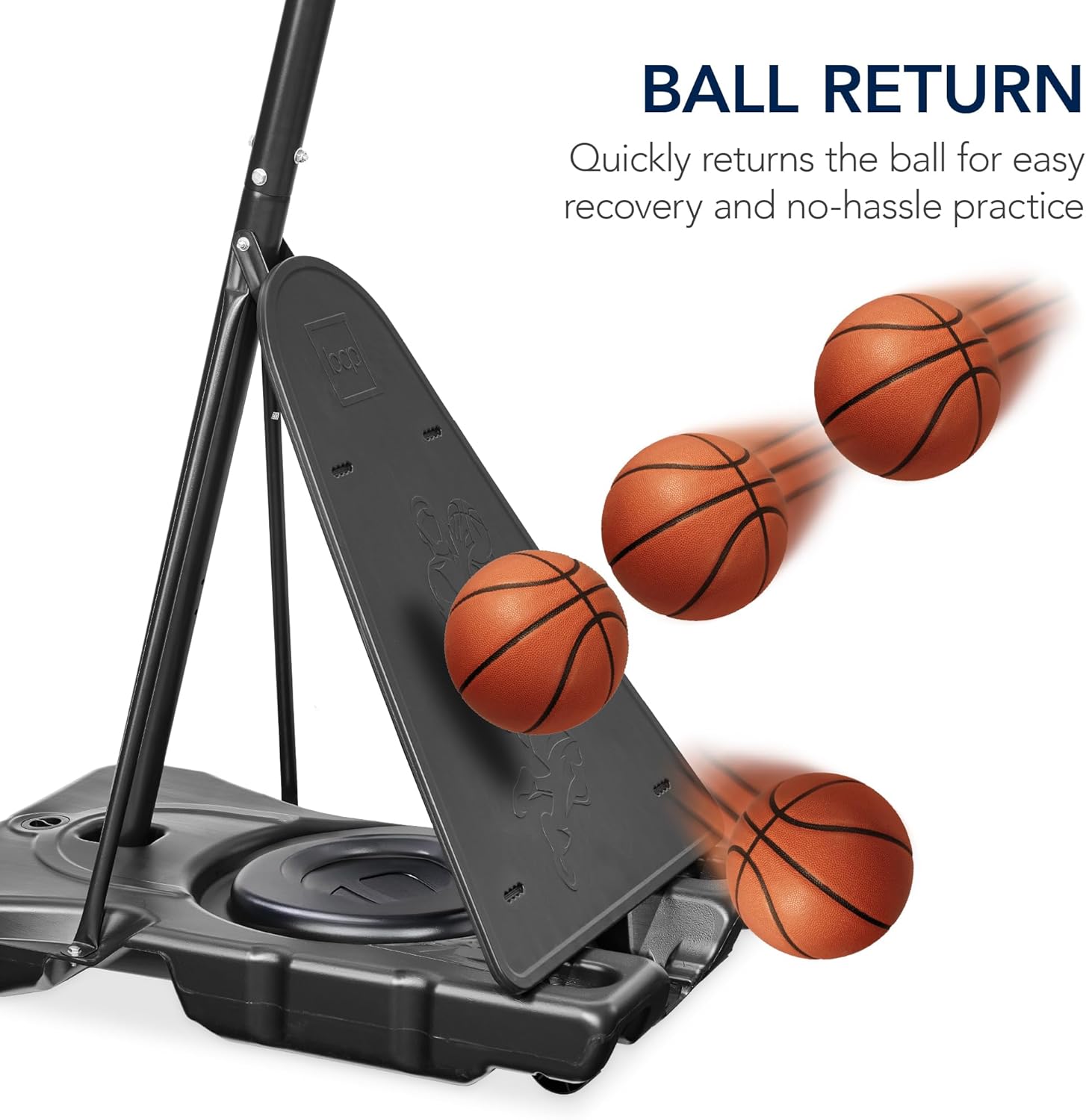
The angled ball return plate is designed to enhance rebounds and return the ball closer to the player, facilitating continuous play and practice.
Apejuwe aworan: This image highlights the 'BALL RETURN' feature. It shows three basketballs in motion, bouncing off the angled return plate at the base of the hoop, indicating that the ball is quickly returned for easy recovery and practice.
6. Itọju
Regular maintenance will extend the life of your basketball hoop system.
- Ṣayẹwo Awọn ohun elo: Periodically inspect all bolts, nuts, and connections to ensure they are tight. Re-tighten as necessary.
- Ipele Ipilẹ: Ensure the base remains filled and level. Check for any leaks or cracks in the base.
- Ninu: Clean the backboard, rim, and pole with a mild soap and water solution. Avoid abrasive cleaners.
- Idaabobo oju ojo: While the hoop is designed to be rain and wind resistant, prolonged exposure to extreme weather conditions can cause wear. Consider covering the unit or storing it indoors during harsh weather seasons.

Apejuwe aworan: This image features the basketball hoop set up outdoors, with graphic overlays indicating its 'Rain Resistant' and 'Wind Resistant' qualities. The text 'BUILT TO LAST' highlights that the quality materials withstand the elements.
6.1 Shatterproof Backboard
The backboard is constructed from a durable polycarbonate surface combined with a spring-mounted rim, designed to withstand impact.

Apejuwe aworan: This image shows a person reaching for the rim with a basketball, emphasizing the 'SHATTERPROOF BACKBOARD'. The description states it combines a solid polycarbonate board with a spring-mounted rim for a true basketball experience.
7. Laasigbotitusita
If you encounter issues with your basketball hoop, refer to the following common problems and solutions.
- Hoop is unstable or wobbly:
- Ensure the base is completely filled with the Base Gel and water (or sand) to its maximum capacity (400 lbs).
- Check all assembly bolts and nuts for tightness. Re-tighten any loose fasteners.
- Ensure the hoop is on a flat, level surface.
- Height adjustment mechanism is stuck:
- Ensure the handle is fully engaged or disengaged as required.
- Check for any obstructions in the adjustment mechanism.
- Clean any dirt or debris from the pole and adjustment components.
- Backboard appears warped:
- While the backboard is shatterproof, extreme temperature fluctuations or improper storage can affect its shape. Ensure the hoop is not exposed to prolonged direct sunlight in very hot climates without proper ventilation, or extreme cold.
- Verify that all backboard mounting hardware is correctly installed and tightened according to the assembly instructions.
8. Awọn pato
Detailed specifications for the Best Choice Products Adjustable Regulation Basketball Hoop, Model SKY9400.

Apejuwe aworan: This diagram provides key dimensions of the basketball hoop system. It shows the backboard as 44 inches wide by 29.5 inches high. The base is 43 inches long by 37 inches wide. The adjustable rim height ranges from 4.4 feet to 10 feet, and the overall backboard height ranges from 6.4 feet to 12 feet.
| Ẹya ara ẹrọ | Sipesifikesonu |
|---|---|
| Apapọ Awọn iwọn (L x W x H) | 43" x 44" x 53.8-145" (109.22 x 111.76 x 368.3 cm) |
| Awọn iwọn ipilẹ (L x W) | 43" x 37" |
| Backboard Dimensions (W x H) | 44" x 29.5" |
| Adjustable Rim Height | 4.4 ft - 10 ft (53.8" - 121") |
| Adjustable Backboard Height | 77.8"-145" |
| Ball Return Plate (L x H) | 29.5" x 44" |
| Ọpá Opin | 1.5" |
| Base Fill Capacity | 400 lbs (with Base Gel and water) |
| Iwọn Ọja | 66 lbs (29.94 kg) |
| Ohun elo | Steel, Polycarbonate, Nylon, Plastic |
| Niyanju Ọjọ ori | Ọdun 8 + |
| Apejọ ti a beere | Bẹẹni |
| Ijẹrisi | ASTM-certified |
| Nọmba awoṣe | SKY9400 |
| UPC | 842957160761 |
9. Atilẹyin ọja ati Support
For warranty information and customer support, please refer to the documentation included with your purchase or contact Best Choice Products directly through their official webojula tabi onibara iṣẹ awọn ikanni. Jeki ẹri rira rẹ fun eyikeyi awọn ibeere atilẹyin ọja.