
GPD RM-Pocket-4
Apo GPD 4 Mini Laptop User Afowoyi
Model: RM-Pocket-4 | Brand: GPD
1. Ifihan
Welcome to the user manual for your GPD Pocket 4 Mini Laptop. This document provides essential information for setting up, operating, maintaining, and troubleshooting your device. The GPD Pocket 4 is a high-performance, ultra-portable 2-in-1 device designed for both productivity and entertainment, featuring an AMD Ryzen AI 9 HX 370 CPU and an 8.8-inch 2.5K 144Hz touchscreen display.
Please read this manual thoroughly before using your GPD Pocket 4 to ensure proper operation and to maximize its capabilities.
2. Alaye Aabo
- Ibi ti ina elekitiriki ti nwa: Use only the original power adapter provided with the device. Using unauthorized adapters may damage the device and void the warranty.
- Itọju Batiri: Do not attempt to replace the battery yourself. Avoid exposing the device to extreme temperatures (below 0°C or above 35°C) or direct sunlight for prolonged periods.
- Omi ati Ọrinrin: Jẹ́ kí ẹ̀rọ náà jìnnà sí omi, òjò àti ọ̀rinrin tó pọ̀ jù. Má ṣe fi ọwọ́ tó rọ̀ ṣiṣẹ́.
- Afẹfẹ: Ensure proper ventilation. Do not block the ventilation openings, especially during heavy use, to prevent overheating.
- Ninu: Disconnect the power before cleaning. Use a soft, dry cloth. Avoid liquid cleaners or aerosols.
- Disas Karo: Do not attempt to disassemble or repair the device yourself. This may cause damage and void the warranty. Contact authorized service personnel for repairs.
3. Package Awọn akoonu
Please check the package contents upon unboxing. If any items are missing or damaged, contact your retailer immediately.
- GPD Pocket 4 Mini Laptop
- USB-C Power Adapter (100W PD Fast Charging)
- USB-C si okun USB-C
- Afowoyi Olumulo (iwe-ipamọ yii)
4. Ọja Ipariview
The GPD Pocket 4 is a versatile 2-in-1 device, combining a mini laptop with a tablet. It features a high-resolution touchscreen and a physical keyboard.
4.1 Key Awọn ẹya ara ẹrọ
- Olupilẹṣẹ: AMD Ryzen AI 9 HX 370 CPU (up to 5.1 GHz)
- Awọn aworan: AMD Radeon 890M iGPU (RDNA 3.5 architecture)
- Ifihan: 8.8-inch 2.5K (2560x1600) IPS Touchscreen, 144Hz refresh rate
- Iranti: 32GB LPDDR5X RAM (7500 MT/s)
- Ibi ipamọ: 2TB M.2 NVMe PCIe 4.0 SSD
- Eto isesise: Windows 11 Ile
- Asopọmọra: Wi-Fi 6E, Bluetooth 5.3
- Batiri: 44.8Wh, up to 9 hours video playback
- Awọn ibudo: HDMI 2.1, 2x USB-C (full-featured), USB-A, RJ45 Network Port, Earphone/Microphone Ports
- Modular IO: Support for 4G, MicroSD, KVM, and RS-232 modules.
4.2 Ifilelẹ ẹrọ

Figure 4.2.1: Side and rear view of the GPD Pocket 4 highlighting ports and features.
- Top/Rear: Charge Indicator, USB4, Memory Card Readers, Reset Button, HDMI 2.1, USB A 3.2 Gen 2, Speaker Port.
- Apa osi: Full-Featured USB-C, Air Outlet, RJ45 Network Port, Lanyard Hole, Earphone/Microphone Ports, USB-A, Power Button/Fingerprint.
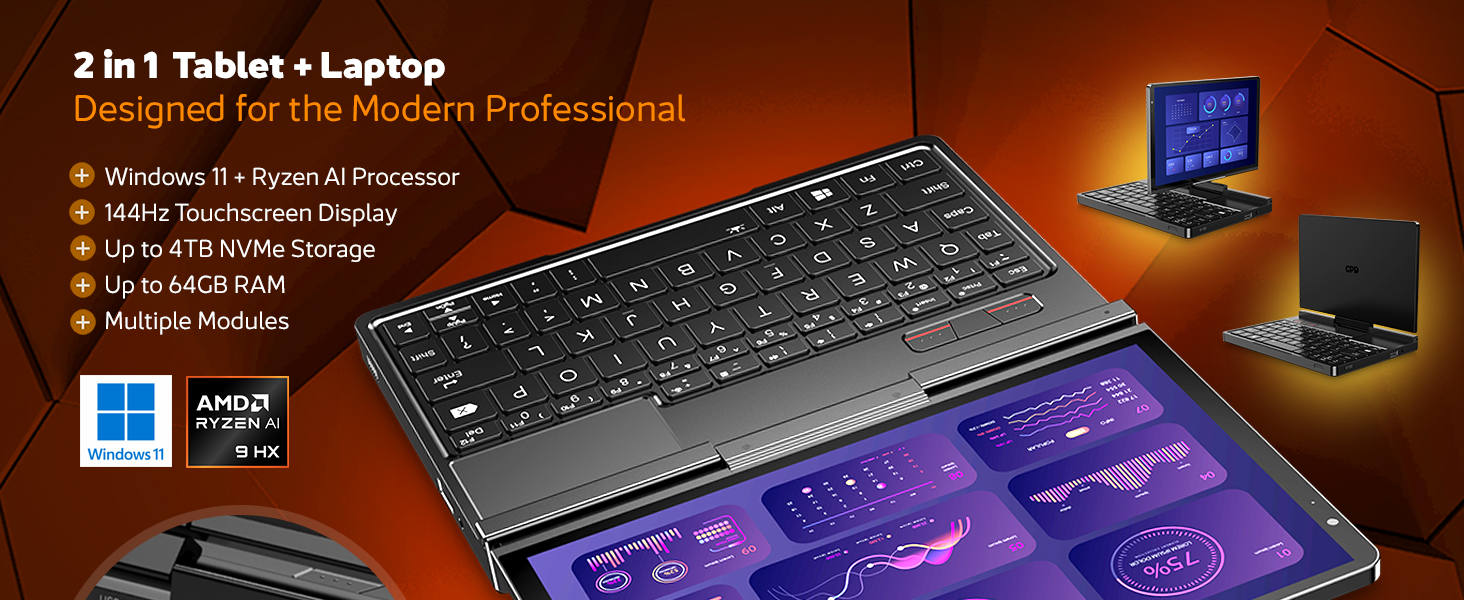
Olusin 4.2.2: Pariview of the GPD Pocket 4's core specifications and 2-in-1 design.
This image illustrates the device's key technical specifications, including its modular IO, screen, CPU, GPU, RAM, storage, OS, battery, and connectivity, emphasizing its nature as a pocket-sized modular AI PC.

Figure 4.2.3: Modular expansion options for the GPD Pocket 4.
The GPD Pocket 4 supports various modular expansions, including KVM, Memory Card Reader, 4G LTE, and RS-232 modules, enhancing its versatility for different professional needs.
5. Eto
5.1 Ibẹrẹ Agbara Lori
- Gba agbara si Ẹrọ naa: Before first use, connect the GPD Pocket 4 to the power adapter using the provided USB-C cable. Plug the adapter into a wall outlet. The charge indicator light will illuminate.
- Agbara Tan: Press and hold the Power Button (integrated with the fingerprint sensor) for a few seconds until the GPD logo appears on the screen.
- Eto Windows: Follow the on-screen instructions to complete the Windows 11 Home setup process. This includes selecting your region, language, connecting to Wi-Fi, and creating a user account.
5.2 Nsopọ Peripherals
- Ifihan ita: Connect an external monitor via the HDMI 2.1 port or one of the full-featured USB-C ports.
- Awọn ẹrọ USB: Use the USB-A or USB-C ports for connecting external keyboards, mice, USB drives, or other peripherals.
- Nẹtiwọọki: For a wired internet connection, connect an Ethernet cable to the RJ45 network port.
- Ohun: Connect headphones or external speakers to the 3.5mm earphone/microphone port.
6. Operating the GPD Pocket 4
6.1 Awọn ọna ti Isẹ
- Ipo Kọǹpútà alágbèéká: Use the integrated keyboard and touchpad for traditional laptop functionality. The 8.8-inch display provides a compact yet clear workspace.
- Ipo tabulẹti: Fold the screen back to transform the device into a tablet. The 10-point multi-touch display allows for intuitive navigation and interaction.

Figure 6.1.1: GPD Pocket 4 in tablet mode, showcasing its touch interface.
The device seamlessly transitions between laptop and tablet modes, offering flexibility for various tasks.
6.2 Keyboard ati Touchpad
- The integrated keyboard is designed for comfortable typing in a compact form factor.
- The touchpad supports multi-touch gestures for navigation. Refer to Windows settings for customization.
- The power button doubles as a fingerprint sensor for secure login.

Figure 6.2.1: User interacting with the GPD Pocket 4's keyboard and touchpad.
This image highlights the comfortable keyboard and backlit trackpad, along with the integrated camera and microphone for meetings.
6.3 batiri Management
- The GPD Pocket 4 features a 44.8Wh battery.
- For optimal battery life, adjust power settings in Windows.
- The device supports 100W PD fast charging. Use the provided charger for quickest recharge times.

olusin 6.3.1: Ti abẹnu view showing the 44.8Wh battery and device dimensions.
This image provides a visual representation of the device's internal battery and its compact dimensions, emphasizing its portability and power endurance.
7. Itọju
7.1 Ninu
- Always power off the device and disconnect the charger before cleaning.
- Use a soft, lint-free cloth to wipe the screen and chassis. For stubborn smudges on the screen, lightly dampen the cloth with water or a screen-specific cleaner (do not spray directly on the screen).
- Use a soft brush or compressed air to clean dust from the keyboard and ventilation openings.
- Yẹra fun lilo awọn kẹmika ti o lewu, awọn olutọpa abrasive, tabi awọn nkanmimu.
7.2 Software imudojuiwọn
- Regularly check for Windows updates to ensure your system has the latest security patches and performance improvements. Go to Eto> Imudojuiwọn Windows.
- Periodically check the GPD official website for driver updates, especially for graphics (AMD Radeon 890M) and chipset drivers, to ensure optimal performance.
7.3 Ibi Management
- Paarẹ nigbagbogbo ti ko wulo files and applications to free up storage space.
- Ronu nipa lilo ibi ipamọ awọsanma fun awọn nla files lati dinku lilo ibi ipamọ agbegbe.
- The 2TB M.2 NVMe SSD is expandable; consult GPD support for compatible upgrade options if needed.
8. Laasigbotitusita
| Isoro | Owun to le Fa | Ojutu |
|---|---|---|
| Ẹrọ naa ko ṣiṣẹ. | Low battery; Power adapter not connected; Hardware issue. | Ensure the device is fully charged. Verify the power adapter and cable are securely connected. If issues persist, perform a hard reset (press and hold power button for 15 seconds). |
| Iboju naa ṣofo tabi o n tan imọlẹ. | Display driver issue; Incorrect resolution; Hardware fault. | Restart the device. Update graphics drivers. Check display settings in Windows. |
| Wi-Fi tabi Bluetooth ko ṣiṣẹ. | Wireless adapter disabled; Driver issue; Interference. | Check Wi-Fi/Bluetooth settings in Windows. Restart the device. Update wireless drivers. Ensure no physical obstructions or strong interference sources. |
| Ẹ̀rọ náà lọ́ra tàbí kò dáhùn. | Too many applications running; Low storage space; Overheating. | Close unnecessary applications. Free up disk space. Ensure ventilation is not blocked. Check Task Manager for resource-intensive processes. |
| Iboju ifọwọkan ko dahun. | Software glitch; Driver issue; Physical damage. | Restart the device. Check for touchscreen driver updates. If physically damaged, contact support. |
9. Awọn pato
| Ẹya ara ẹrọ | Ẹ̀kúnrẹ́rẹ́ |
|---|---|
| Brand | GPD |
| Orukọ awoṣe | Pocket (RM-Pocket-4) |
| isise | AMD Ryzen AI 9 HX 370 (5.1 GHz) |
| Olupilẹṣẹ Graphics | Radeon™ 890M |
| Àgbo | 32 GB LPDDR5X |
| Ibi ipamọ | 2 TB NVMe PCIe Gen4 SSD |
| Iwon iboju | 8.8 inches |
| Ipinnu iboju | 2560 x 1600 awọn piksẹli (2.5K) |
| Oṣuwọn sọtun | 144Hz |
| Eto isesise | Windows 11 Ile |
| Alailowaya Iru | 802.11ax (Wi-Fi 6E), Bluetooth 5.3 |
| Apapọ batiri Life | 9 Hours (video playback) |
| Iwọn Nkan | 1.6 poun (725 Giramu) |
| Ọja Mefa | 8.11 x 5.67 x 0.87 inches |
| Àwọ̀ | Dudu |
10. Atilẹyin ọja ati Support
GPD products typically come with a limited manufacturer's warranty. Please refer to the warranty card included in your package or visit the official GPD webAaye fun awọn ofin atilẹyin ọja alaye ni pato si agbegbe rẹ.
For technical support, troubleshooting assistance beyond this manual, or warranty claims, please contact GPD customer support through their official webojú-òpó wẹ́ẹ̀bù tàbí olùtajà tí o ti ra ẹ̀rọ náà lọ́wọ́.
GPD Official Webojula: www.gpd.hk
Please have your product model number (RM-Pocket-4) and purchase information ready when contacting support.
Ask a question about this manual
Ask about setup, troubleshooting, compatibility, parts, safety, or missing instructions. Manuals+ will review the question and use this page’s manual context to help answer it.