
Pisichen 21.5INTS-White-NEW
Pisichen 21.5-Inch Touchscreen Monitor User Manual
Model: 21.5INTS-White-NEW
Ọrọ Iṣaaju
This user manual provides comprehensive instructions for the setup, operation, maintenance, and troubleshooting of your Pisichen 21.5-Inch Touchscreen Monitor. Please read this manual thoroughly before using the product to ensure proper functionality and to prevent damage.
The Pisichen 21.5-inch touch monitor is designed to enhance your work efficiency and provide an interactive experience with its responsive 10-point capacitive touchscreen. It features a Full HD 1920x1080 resolution display, built-in speakers, and versatile connectivity options including HDMI, VGA, and USB for touch functionality.
Key Awọn ẹya ara ẹrọ
- Sensitive 10-Point Capacitive Touchscreen: Offers seamless and responsive interaction, allowing direct engagement with content and simultaneous multi-finger input.
- Stunning FHD 1080P Display: A 21.5-inch Full HD (1920x1080) resolution screen with a 1000:1 contrast ratio, 250cd/㎡ brightness, 170° viewing angle, and 60Hz refresh rate for clear and smooth visuals. Includes low-blue-light and eye-care technology.
- Ibamu Ohun elo ti o gbooro: Equipped with USB2.0 (for touch), HDMI, VGA, and DC ports for easy connection to PCs, laptops, PS3/4, and gaming consoles.
- Awọn ọna Ifihan to pọ: Supports duplicate, extend, and second-screen modes to enhance productivity and workspace.
- Built-in Speakers and VESA Mounting: Integrated speakers provide audio, and the 75x75mm VESA mount allows for flexible installation options.
Package Awọn akoonu
Please verify that all items are present in the package before proceeding with the setup.

The package includes the Pisichen 21.5-inch touchscreen monitor, a user manual, an HDMI cable, a USB cable, and a power adapter, ensuring it is ready for immediate use.
- Pisichen 21.5-Inch Touchscreen Monitor
- Adapter agbara
- Okun HDMI
- USB Cable (for touch function)
- Itọsọna olumulo
Awọn ilana iṣeto
1. Nsopọ Atẹle
The monitor offers various connection options to suit your needs. Ensure all connections are secure before powering on the device.

Alaye view of the monitor's input/output ports, including HDMI, VGA, headphone, DC power, and USB 2.0 touch ports.
- Asopọ agbara: Connect the provided power adapter to the DC power port on the monitor and then plug it into a wall outlet.
- Asopọ fidio (HDMI): Use the HDMI cable to connect the monitor's HDMI port to the HDMI output port on your computer, laptop, or gaming console.
- Ìsopọ̀ fídíò (VGA): Alternatively, use a VGA cable to connect the monitor's VGA port to the VGA output port on your computer or laptop.
- Touch Function Connection: To enable the touch function, connect the included USB cable from the monitor's USB 2.0 touch port to an available USB port on your computer. This step is crucial for touch signal transmission.
- Ijade Olohun (Aṣayan): If you prefer external audio, you can connect headphones or external speakers to the headphone jack. The monitor also has built-in speakers.
2. iṣagbesori Aw
The Pisichen monitor supports both desktop placement and VESA wall mounting for flexible setup.
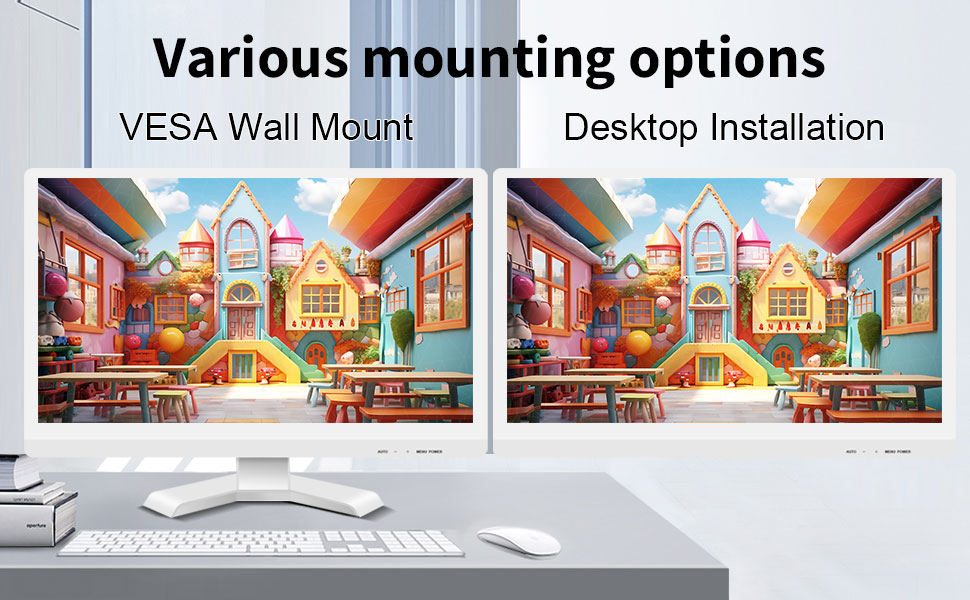
The monitor can be set up on a desktop stand or mounted on a wall using a VESA compatible bracket.
- Fifi sori ẹrọ tabili: Attach the provided stand to the monitor base and place it on a stable, flat surface.
- Ògiri Ògiri VESA: The monitor features a 75x75mm VESA mounting pattern. Use a compatible VESA bracket (not included) to mount the monitor on a wall or an adjustable arm. Ensure the mount can support the monitor's weight (9.88 pounds).

Ẹyìn view of the monitor highlighting the VESA 75x75mm mounting pattern and overall dimensions.
Awọn ilana Iṣiṣẹ
1. Agbara lori / Paa
Locate the power button on the monitor. Press it to turn the monitor on or off. The power indicator light will illuminate when the monitor is on.
2. Using the Touchscreen Function
Once the USB cable is connected to your computer, the 10-point capacitive touch function will be active. You can interact with the screen using your fingers or a passive capacitive stylus.

The monitor supports direct touch interaction for intuitive control.
- Fọwọkan Nikan: Ti o dọgba si asin tẹ.
- Fọwọ ba Mu: Ni deede si titẹ-ọtun.
- Fa: Move items by touching and dragging.
- Fun pọ-si- Sun-un: Lo ika meji lati sun sinu tabi jade lori akoonu.
- Fọwọkan pupọ: The monitor supports up to 10 simultaneous touch points, enabling collaborative work or complex gestures.

The 10-point multi-touch feature allows for multiple users or complex interactions simultaneously.
Akiyesi pataki: The touch functionality is disabled on Mac OS, iPad OS, and iOS. This monitor only supports passive capacitive styluses.
3. Awọn ọna ifihan
The monitor supports various display modes when connected to a computer:
- Ipò Àdáwòkọ: Displays the same content on both your primary screen and the Pisichen monitor.
- Fa Ipo: Ó fẹ̀ síi kọ̀ǹpútà rẹ káàkiri àwọn ìbòjú méjèèjì, ó sì ń fúnni ní ibi iṣẹ́ púpọ̀ sí i.
- Second Screen Only Mode: Displays content only on the Pisichen monitor, turning off your primary screen.
You can typically switch between these modes through your operating system's display settings (e.g., Windows Display Settings).
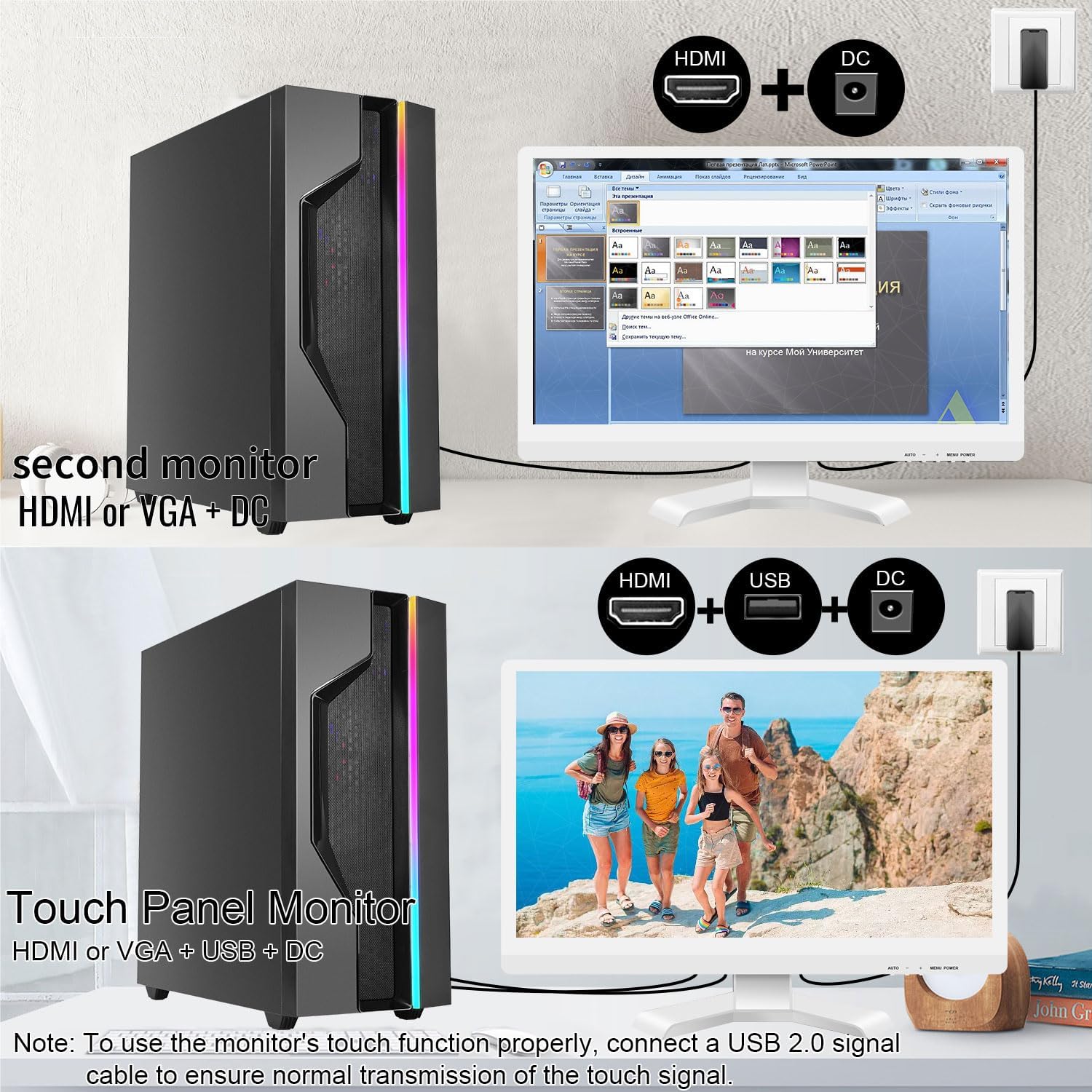
Illustrations of connecting the monitor as a secondary display or as a touch-enabled display.
4. On-iboju Ifihan (OSD) Akojọ aṣyn
The monitor features an OSD menu for adjusting display settings. Use the buttons located on the monitor's frame (usually on the bottom right) to navigate and select options.
- Bọtini Akojọ: Ṣii akojọ aṣayan OSD.
- Awọn bọtini oke/isalẹ: Lilö kiri nipasẹ awọn aṣayan akojọ aṣayan.
- Enter/Select Button: Jẹrisi yiyan tabi tẹ akojọ aṣayan-ipin sii.
- Bọtini Jade: Jade ni ti isiyi akojọ tabi OSD.
Common OSD settings include brightness, contrast, color temperature, input source selection, and aspect ratio.
Itọju ati Itọju
- Ninu iboju:
Always power off the monitor and unplug it before cleaning. Use a soft, lint-free cloth lightly dampened with water or a non-abrasive, monitor-specific cleaning solution. Do not spray liquid directly onto the screen. Avoid using alcohol, ammonia, or abrasive cleaners, as they can damage the screen surface.
- Ninu ile Casing:
Pa atẹle naa nu casing with a soft, dry cloth. If necessary, a slightly damp cloth can be used, but ensure no moisture enters the vents or ports.
- Ibi ipamọ:
When not in use for extended periods, store the monitor in a cool, dry place, away from direct sunlight and extreme temperatures. If possible, use the original packaging for protection.
- Afẹfẹ:
Ensure the monitor's ventilation openings are not blocked. Proper airflow is essential to prevent overheating.
- Mimu:
Handle the monitor with care. Avoid dropping it or subjecting it to strong impacts. Do not place heavy objects on top of the monitor.
Laasigbotitusita
| Isoro | Owun to le Fa | Ojutu |
|---|---|---|
| Ko si aworan loju iboju |
|
|
| Iboju ifọwọkan ko dahun |
|
|
| Aworan jẹ blur tabi daru |
|
|
| Ko si ohun lati inu agbohunsoke |
|
|
Awọn pato
| Nọmba awoṣe | 21.5INTS-White-NEW |
| Iwon iboju | 21.5 inches |
| Ipinnu | Awọn piksẹli 1920 x 1080 (FHD 1080p) |
| Apakan Ipin | 16:9 |
| Imọlẹ | 250 Candela (cd/㎡) |
| Ipin Itansan | 1000:1 |
| Viewigun igun | 170° |
| Oṣuwọn sọtun | 60Hz |
| Fọwọkan Imọ-ẹrọ | 10-Point Capacitive Fọwọkan |
| Awọn ibudo igbewọle | HDMI, VGA, USB 2.0 (for touch), DC Power |
| Ohun | Built-in Speakers, Headphone Jack |
| VESA Oke ibamu | 75x75mm |
| Awọn iwọn Ọja (L x W x H) | 0.78 x 20.4 x 14.9 inches |
| Iwọn Nkan | 9.88 iwon |
| Olupese | Shenzhen Konowa Electronics Co., LTD |
| Ilu isenbale | China |
Atilẹyin ọja ati Support
For warranty information and technical support, please refer to the official Pisichen website or contact their customer service directly. Details are typically provided on the product packaging or the manufacturer's official support channels.
O le ṣàbẹwò awọn Pisichen Store on Amazon for more product information and potential support contacts.
Ask a question about this manual
Ask about setup, troubleshooting, compatibility, parts, safety, or missing instructions. Manuals+ will review the question and use this page’s manual context to help answer it.