
1. Ifihan
This manual provides essential information for the proper setup, operation, and maintenance of your Pisichen 24-inch 2K QHD 2560x1440 IPS Touchscreen Monitor. Please read this manual thoroughly before using the product to ensure optimal performance and safety.
The Pisichen 24-inch monitor features a 2K QHD (2560x1440) resolution IPS panel, a 100Hz refresh rate, and 10-point multi-touch functionality, designed for both productivity and entertainment.
2. Package Awọn akoonu
Verify that all items listed below are present in your product package. If any items are missing or damaged, please contact customer support.
- Pisichen 24-inch 2K QHD Touchscreen Monitor
- Iduro Iduro (Ipilẹ ati Ọrun)
- DP Cable
- Okun HDMI
- USB B Touch Cable
- Okun CC USB
- DC Agbara Adaṣe
- Afowoyi Olumulo (iwe-ipamọ yii)

Nọmba 2.1: Included accessories with the Pisichen 24-inch monitor.
3. Awọn ilana iṣeto
3.1. Nto Iduro Atẹle
- Fara yọ atẹle naa kuro ki o duro awọn paati lati apoti.
- So ọrùn ìdúró mọ́ pánẹ́lì àtẹ̀gùn náà. Rí i dájú pé ó tẹ ibi tí ó wà dáadáa tàbí pé ó so mọ́ skru tí a pèsè.
- So ipilẹ iduro mọ ọrùn iduro naa. Fi skru atanpako di ni isalẹ ipilẹ naa mu lati le so o mọ.
- Gbe atẹle ti o pejọ sori iduro, dada alapin.
3.2. Sísopọ̀ mọ́ ẹ̀rọ kan
The monitor offers multiple connectivity options. Choose the appropriate cable for your device.
- HDMI Asopọ: Connect one end of the HDMI cable to the HDMI port on your computer or device and the other end to the HDMI port on the monitor.
- Asopọ USB-C: Connect one end of the USB-C cable to a compatible USB-C port on your computer or device (which supports video output) and the other end to the USB-C port on the monitor. This connection can also provide power and data.
- Asopọmọra DisplayPort (DP): Connect one end of the DP cable to the DisplayPort on your computer or device and the other end to the DP port on the monitor.
- USB B for Touch Function: For touch functionality with a PC, connect the included USB B Touch Cable from the USB-B port on the monitor to a standard USB-A port on your computer. This is essential for enabling touch input.

Nọmba 3.1: Universal connectivity options for the monitor.
3.3. Agbara Lori
- Connect the DC Power Adapter to the power input port on the monitor.
- Pulọọgi ohun ti nmu badọgba agbara sinu iṣan ogiri kan.
- Press the power button on the monitor (location may vary, typically on the back or bottom right) to turn it on.
4. Awọn ilana Iṣiṣẹ
4.1. Ipilẹ isẹ
- Titan/Apapa: Tẹ bọtini agbara lati tan atẹle naa si tan tabi pa.
- Aṣayan Orisun Iṣawọle: Use the monitor's OSD (On-Screen Display) menu buttons to select the desired input source (HDMI, USB-C, DP).
- OSD Akojọ Lilọ kiri: The monitor features physical buttons (usually on the back or bottom) to access and navigate the OSD menu. These buttons typically include Menu, Up, Down, and Exit/Select.
4.2. Iṣẹ́ ìfọwọ́kan
The Pisichen monitor supports 10-point multi-touch input, allowing for intuitive interaction with your content. To enable touch functionality:
- Ensure the USB B Touch Cable is connected from the monitor's USB-B port to your computer's USB-A port.
- Your operating system should automatically detect the touch input device. No additional drivers are typically required for Windows.

Nọmba 4.1: Direct touch control on the monitor.
Touch Compatibility
The touch function is widely compatible with various devices. Refer to the compatibility chart below for optimal performance.

Nọmba 4.2: Touch compatibility for various devices.
Akiyesi: Some devices, including certain gaming consoles (PS3/4/5, Xbox, Steam Deck) and mobile devices (iPhone, iPad, Switch, Fire TV), do not support the touch functionality of this monitor due to platform-specific restrictions.
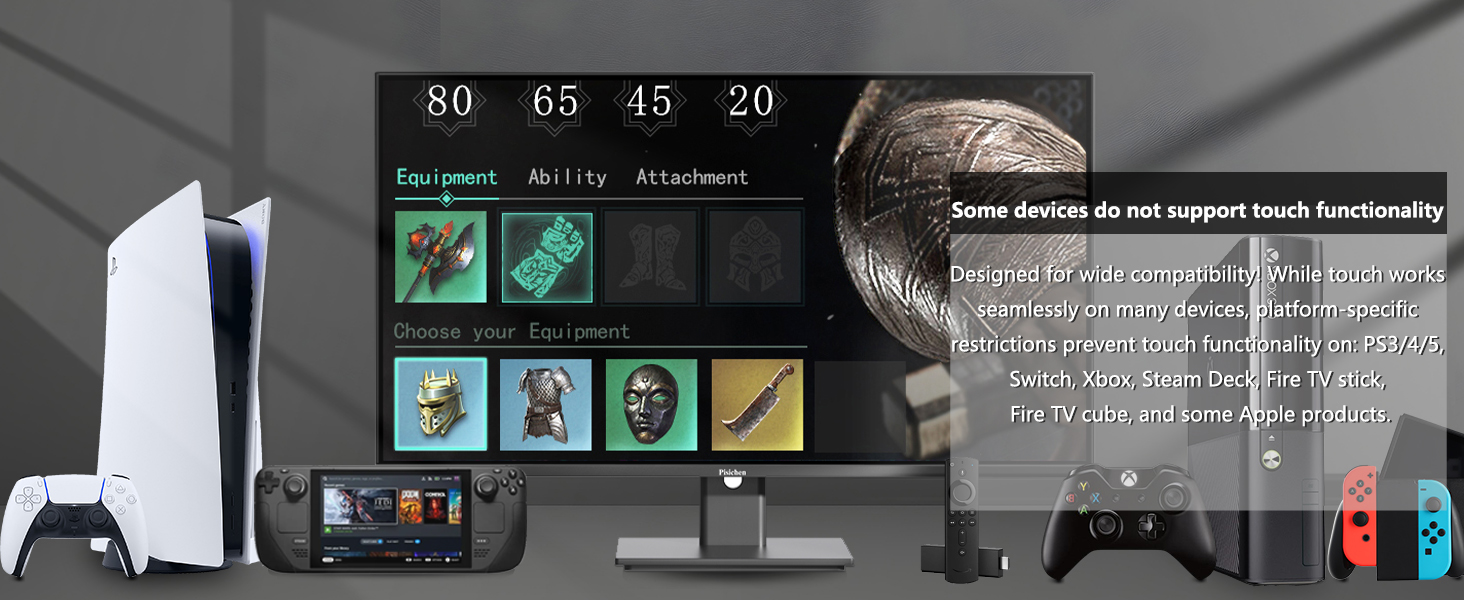
Nọmba 4.3: Devices where touch functionality is not supported.
5. Ifihan Eto
Access the OSD menu to adjust various display settings for optimal viewing.
- Ipinnu: The monitor supports a native resolution of 2560x1440 (2K QHD). Ensure your device's display settings are configured to this resolution for the sharpest image.
- Oṣuwọn isọdọtun: The monitor operates at a 100Hz refresh rate, providing smoother visuals compared to standard 60Hz monitors.
- Imọlẹ & Iyatọ: Adjust these settings to suit your environment and personal preference. The monitor features 400 cd/m² brightness and a 1500:1 contrast ratio.
- Eto awọ: Fine-tune color temperature, gamma, and other color parameters. The IPS panel ensures wide viewing awọn igun ati deede awọ atunse.
- Eye Comfort Features: The monitor includes Flicker-Free technology and Low Bluelight modes to reduce eye strain during extended use.

Nọmba 5.1: Visual comparison of 2K QHD vs. Full HD resolution.

Nọmba 5.2: IPS panel benefits: True Color, True Vision from Any Angle.

Nọmba 5.3: Advanced Eye-Comfort features.
6. Itọju
6.1. Ninu Atẹle
- Nigbagbogbo pa atẹwo naa kuro ki o yọọ okun agbara ṣaaju ṣiṣe mimọ.
- Lo asọ asọ, ti ko ni lint die-die dampened pẹlu omi tabi ìwọnba, ti kii-abrasive iboju regede.
- Fi rọra nu iboju ati awọn ita ita. Yẹra fun titẹ pupọju.
- Maṣe lo oti, awọn olutọpa orisun amonia, tabi awọn ohun elo abrasive, nitori iwọnyi le ba oju iboju jẹ.
6.2. Ibi ipamọ
If storing the monitor for an extended period, ensure it is powered off, unplugged, and stored in a cool, dry place away from direct sunlight and extreme temperatures. Use the original packaging if available for best protection.
7. Laasigbotitusita
Ti o ba pade awọn ọran pẹlu atẹle rẹ, tọka si awọn igbesẹ laasigbotitusita ti o wọpọ wọnyi:
- Ko si Agbara: Ensure the power adapter is securely connected to both the monitor and a working power outlet. Check if the power indicator light on the monitor is on.
- Ko si ifihan agbara: Verify that the video cable (HDMI, USB-C, or DP) is securely connected to both the monitor and your source device. Ensure the correct input source is selected via the OSD menu.
- No Touch Functionality: Confirm that the USB B Touch Cable is properly connected from the monitor to your computer. Check your computer's device manager to see if the touch device is recognized.
- Iboju didan: Check the video cable connection. Try a different cable or input port. Ensure your graphics card drivers are up to date.
- Pipajẹ Aworan/Awọn awọ ti ko tọ: Reset the monitor to factory settings via the OSD menu. Adjust brightness, contrast, and color settings.
Fun awọn iṣoro ti o tẹsiwaju ti a ko le yanju nipasẹ awọn igbesẹ wọnyi, jọwọ kan si atilẹyin alabara.
8. Awọn pato
| Ẹya ara ẹrọ | Sipesifikesonu |
|---|---|
| Nọmba awoṣe | QHD-2k100hz-24INTS |
| Iwon iboju | 24 inches |
| Ipinnu | 2560 x 1440 Pixels (QHD Fife 1440p) |
| Apakan Ipin | 16:9 |
| Oṣuwọn sọtun | 100Hz |
| Akoko Idahun | 3ms |
| Panel Iru | IPS |
| Iṣẹ Ikan | 10-Point Multi-Fọwọkan |
| Imọlẹ Aworan | Káńdélà 400 (cd/m²) |
| Ipin Itansan | 1500:1 |
| Iboju Dada Apejuwe | Didan |
| Asopọmọra | HDMI, USB-C, USB A, USB B (for Touch Function) |
| Lapapọ Awọn ibudo USB | 2 (USB-C, USB-B) |
| Ọja Mefa | 1.97 x 21.26 x 12.6 inches |
| Iwọn Nkan | 10.08 iwon |
| Olupese | Shenzhen Konowa Electronics Co., LTD |
9. Atilẹyin ọja ati Support
For warranty information, please refer to the warranty card included in your product packaging or visit the official Pisichen website. If you require technical assistance, troubleshooting, or have questions about your product, please contact Pisichen customer support through their official channels.
Jọwọ ṣe idaduro ẹri rira rẹ fun awọn iṣeduro atilẹyin ọja.