
1. Ifihan
Thank you for choosing the Pisichen 22-inch Touch Screen Monitor with Webcam (Model 22CMR-HD). This monitor is designed to provide a high-quality visual and interactive experience for various applications, including work, education, and entertainment. It features a Full HD 1920x1080P display, 10-point touch functionality, an integrated HD webcam, and multiple connectivity options. Please read this manual thoroughly before using the monitor to ensure proper setup and operation.
2. Alaye Aabo
- Máa gbé àtẹ̀gùn náà sí orí ilẹ̀ tí ó dúró ṣinṣin, tí ó tẹ́jú kí ó má baà jábọ́.
- Ma ṣe fi atẹle naa han si ojo tabi ọrinrin lati yago fun mọnamọna tabi ina.
- Keep the monitor away from direct sunlight, heat sources, or extreme temperatures.
- Rii daju pe fentilesonu to dara ni ayika atẹle naa. Ma ṣe dina awọn ṣiṣi atẹgun.
- Use only the power adapter provided with the monitor.
- Unplug the power cord from the outlet if the monitor will not be used for an extended period.
- Má ṣe gbìyànjú láti tún monitor náà ṣe fúnra rẹ. Tọ́ka gbogbo iṣẹ́ ìtọ́jú náà sí àwọn òṣìṣẹ́ tó mọ̀ nípa rẹ̀.
3. Package Awọn akoonu
Jẹrisi pe gbogbo awọn ohun kan wa ninu package:
- Pisichen 22-inch Touch Screen Monitor
- Atẹle Iduro
- DC Agbara Adaṣe
- Okun HDMI
- USB Fọwọkan USB
- Afowoyi Olumulo (iwe-ipamọ yii)

Nọmba 3.1: Awọn ẹya ẹrọ ti o wa pẹlu
This image displays the Pisichen 22-inch monitor alongside its standard accessories, which include a user manual, a DC power adapter, an HDMI cable, a USB touch cable, and the monitor stand. These components are provided to ensure the monitor is ready for immediate use.
4. Ọja Ipariview
4.1 Àwọn Ẹ̀yà Àtòjọ
- 22-inch Full HD (1920x1080P) IPS Display
- 10-ojuami Capacitive Touchscreen
- HD ti a ṣepọ Webkamẹra
- 400 nits Imọlẹ
- 3000: 1 Iyatọ Itansan
- 100Hz Refresh Rate with FreeSync and HDR support
- Multiple Connectivity: HDMI, USB Type-C, VGA
- Awọn Agbọrọsọ ti a ṣe sinu
- VESA Oke ibamu
olusin 4.1: Iwaju View ti Monitor
This image shows the front of the Pisichen 22-inch touch screen monitor, featuring its white design and a vibrant display. The integrated webcam is visible at the top center of the bezel.
4.2 Awọn ibudo ati Awọn iṣakoso
The monitor provides various ports for connecting to different devices and controls for adjusting settings.

Figure 4.2: Rear Ports
This diagram illustrates the connectivity options located on the rear of the monitor. These include an HDMI port, a VGA port, a USB Type-C port, and the DC power input. These ports allow for versatile connections to various computers, laptops, and other devices.
- Ibudo HDMI: Connects to devices via HDMI cable for video and audio transmission.
- Ibudo VGA: Connects to older devices via VGA cable for video transmission.
- Ibudo Iru-C USB: Supports single-cable video transmission, power delivery, and touch data for compatible devices.
- Iṣawọle agbara DC: Sopọ si ohun ti nmu badọgba agbara ti a pese.
- Bọtini agbara: Located on the bottom right of the monitor.
- OSD Menu Buttons: Typically located near the power button for navigating the On-Screen Display menu.
5. Eto
5.1 Nto Iduro Atẹle
- Fara yọ atẹle naa kuro ki o duro awọn paati lati apoti.
- Attach the base to the stand pillar, securing it with the provided screws if necessary.
- Align the assembled stand with the mounting points on the back of the monitor and secure it firmly.
The monitor also supports VESA mounting (100x100mm) for alternative installation options. Ensure to use appropriate VESA screws and mounting hardware (not included).
5.2 Nsopọ si ẹrọ kan
Choose the appropriate connection method based on your device:
- HDMI Asopọ: Connect one end of the HDMI cable to the HDMI port on your computer/laptop and the other end to the HDMI port on the monitor.
- Asopọ VGA: Connect one end of the VGA cable to the VGA port on your computer/laptop and the other end to the VGA port on the monitor.
- USB Type-C Connection (for video, power, and touch): For compatible devices (e.g., laptops, smartphones with DP Alt Mode), connect one end of the USB Type-C cable to your device and the other end to the USB Type-C port on the monitor. This single cable can transmit video, power, and touch signals.
- USB Touch Cable (for touch functionality with HDMI/VGA): If using HDMI or VGA for video, connect the USB Touch Cable from your computer's USB port to the monitor's USB-B port (if available, or a dedicated USB port for touch data) to enable touch functionality.

Figure 5.1: Connection Scenarios
This image demonstrates two common connection scenarios: using the monitor as a second display via HDMI/VGA + DC power, and using it as a touchscreen camera monitor via HDMI + USB-C + DC power. The USB-C connection is crucial for enabling both touch and camera functions when not using a single USB-C cable for all data.
5.3 Asopọ agbara
Connect the DC power adapter to the monitor's DC power input, then plug the adapter into a power outlet.
6. Awọn ilana Iṣiṣẹ
6.1 Titan / Pa a
- Lati Fi agbara: Press the Power button located on the bottom right of the monitor.
- Lati Paarẹ: Press and hold the Power button for a few seconds until the monitor turns off.
6.2 Touchscreen Iṣẹ
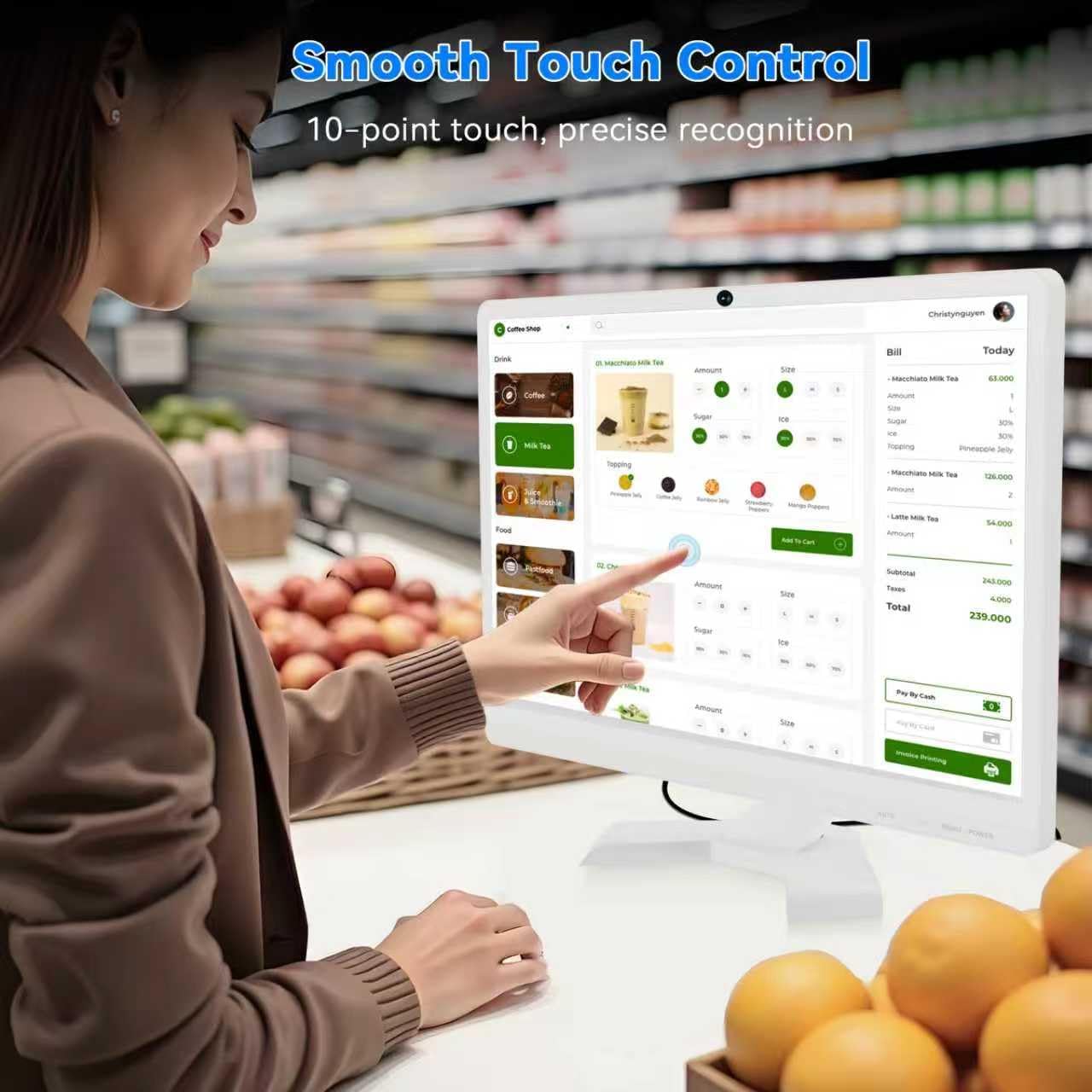
The monitor features a 10-point capacitive touchscreen. Ensure the USB Touch Cable is connected to your computer (if using HDMI/VGA) or that the USB Type-C cable supports touch data. Once connected, the touchscreen should function automatically with compatible operating systems (e.g., Windows, macOS, Android).

Figure 6.1: Touchscreen Interaction
This image shows a user interacting with the monitor's touchscreen, highlighting its responsive 10-point touch control for precise recognition and intuitive operation, similar to a tablet or smartphone.
6.3 Integrated HD Webkamẹra
HD ti a ṣe sinu rẹ webcam is ready for use with video conferencing applications (e.g., Zoom, Microsoft Teams, Google Meet) and other communication software. No additional drivers are typically required for basic functionality.

olusin 6.2: Integrated Webkamẹra
This image focuses on the integrated HD webcam, positioned discreetly at the top center of the monitor's bezel. This feature allows for convenient video communication without the need for external peripherals.
6.4 Lori-iboju Ifihan (OSD) Akojọ aṣyn
Use the OSD menu buttons (usually located on the bottom right of the monitor) to adjust various display settings. Common settings include:
- Imọlẹ/Itọtọ: Ṣatunṣe itanna gbogbogbo ati iyatọ laarin ina ati awọn agbegbe dudu.
- Eto awọ: Ṣe àtúnṣe iwọn otutu awọ, àwọ̀, àti ìtẹ́lọ́rùn.
- Orisun igbewọle: Manually select between HDMI, VGA, or USB Type-C inputs.
- Eto ohun: Adjust volume for built-in speakers.
- HDR/FreeSync: Enable or disable these features for enhanced visual experience with compatible content and graphics cards.
7. Itọju
- Ninu iboju: Rọra nu iboju naa pẹlu asọ ti ko ni lint. Fun awọn ami alagidi, dampFi omi tàbí ohun ìfọmọ́ ìbòjú tí kò ní bàjẹ́ sí aṣọ náà díẹ̀. Má ṣe fọ́n omi síta tààrà sí ojú ìbòjú náà.
- Ninu ile Casing: Lo asọ ti o rọ, ti o gbẹ lati nu atẹle naa casing.
- Yago fun Awọn olutọpa Abrasive: Do not use alcohol, ammonia-based cleaners, or abrasive materials, as they can damage the screen or casing.
- Afẹfẹ: Ensure the ventilation holes on the monitor are clear of dust and obstructions.
8. Laasigbotitusita
8.1 Ko si Agbara
- Check if the power adapter is securely connected to the monitor and the power outlet.
- Daju pe iṣan agbara n ṣiṣẹ daradara.
- Ensure the monitor's power button has been pressed.
8.2 Kò sí àwòrán lórí ìbòjú
- Confirm that the video cable (HDMI, VGA, or USB Type-C) is securely connected to both the monitor and your device.
- Rí i dájú pé a yan orísun ìtẹ̀wọlé tó tọ́ nínú àkójọ OSD.
- Check if your computer/device is powered on and not in sleep mode.
- Test the monitor with another device or cable if possible.
8.3 Iboju Ifọwọkan Ko Dahun
- If using HDMI or VGA, ensure the USB Touch Cable is connected from the monitor to your computer.
- If using USB Type-C, verify that your device and cable support touch data transmission.
- Restart your computer and the monitor.
- Check your operating system's settings for touch screen calibration or driver issues.
8.4 Webcam Not Working
- Ensure the monitor is properly connected to your computer (USB Type-C or USB Touch Cable).
- Check your operating system's privacy settings to ensure camera access is granted to applications.
- Jẹrisi pe o tọ webcam is selected in your video conferencing application settings.
9. Awọn pato
| Ẹya ara ẹrọ | Sipesifikesonu |
|---|---|
| Brand | Pisichen |
| Nọmba awoṣe | 22CMR-HD |
| Iwon iboju | 21.5 inches |
| Ipinnu | FHD 1920x1080P |
| Apakan Ipin | 16:9 |
| Ifihan Iru | LED IPS Panel |
| Imọlẹ | 400 Candela (awọn ọra) |
| Ipin Itansan | 3000:1 |
| Oṣuwọn sọtun | 100 Hz |
| Akoko Idahun | 3 Milise-aaya |
| Amuṣiṣẹpọ Adaptive | FreeSync |
| Picture Quality Enhancement | HDR |
| Asopọmọra | HDMI, USB 3.1 Type-C, VGA |
| Afikun Awọn ẹya ara ẹrọ | Built-In Speakers, Built-In Webcam, 10-Point Touchscreen |
| Awọn iwọn Nkan (D x W x H) | 0.78"D x 20.4"W x 14.9"H |
| VESA Oke ibamu | Bẹẹni (100x100mm) |
10. Atilẹyin ọja ati Support
This product comes with a 1-year manufacturer's warranty. For warranty claims, technical support, or any inquiries regarding your Pisichen monitor, please contact the seller or manufacturer directly. Refer to your purchase documentation for specific contact details.
Fun atilẹyin afikun, o le ṣabẹwo si Pisichen Store on Amazon.