Ọrọ Iṣaaju
The System Sensor 5151 is a combination fixed temperature and rate-of-rise heat detector designed to provide reliable fire detection. This plug-in unit is engineered to respond to both a rapid increase in ambient temperature and when the ambient temperature reaches a pre-set threshold. It is an essential component for fire alarm systems, ensuring early warning in the event of a fire.

olusin 1: Iwaju view of the System Sensor 5151 Heat Detector.
Eto ati fifi sori
Proper installation is crucial for the optimal performance of your System Sensor 5151 heat detector. This device is a plug-in type and requires a compatible, UL-listed heat detector base (not included) for operation. Always refer to local codes and standards, such as NFPA 72, for specific installation requirements.
Awọn igbesẹ fifi sori ẹrọ:
- Yan Ibi: Select a suitable location in accordance with fire safety codes. Heat detectors are typically installed on ceilings or high on walls.
- Install Detector Base: Securely mount the compatible heat detector base to the ceiling or wall using appropriate fasteners. Ensure all wiring connections to the base are correct and secure, following the wiring diagram provided with the base.
- Attach Detector Head: Align the System Sensor 5151 detector head with the installed base. Gently push the detector head onto the base and twist clockwise until it locks into place.
- Eto Idanwo: After installation, test the entire fire alarm system to ensure the detector communicates properly and triggers an alarm when activated.

olusin 2: Top view of the System Sensor 5151, showing its circular design and mounting points.
Awọn Ilana Iṣiṣẹ
The System Sensor 5151 operates on two primary principles to detect fire conditions:
- Fixed Temperature Detection: The detector is designed to trigger an alarm when the ambient temperature at the detector location reaches a pre-set fixed temperature of 135°F (57.2°C). This ensures detection even if the temperature rise is slow.
- Rate-of-Rise Detection: In addition to fixed temperature detection, the 5151 also activates if the temperature rises rapidly, specifically at a rate of 15°F (8.3°C) per minute or more. This feature allows for earlier detection of fast-developing fires.
When either of these conditions is met, the detector sends a signal to the connected fire alarm control panel, initiating an audible alarm and other system responses.
Itoju
Regular maintenance ensures the continued reliability and performance of your heat detector. Follow these guidelines for proper care:
- Ninu: Periodically clean the exterior of the detector with a soft, damp asọ lati yọ eruku ati idoti. Maṣe lo awọn kẹmika ti o lewu tabi awọn afọmọ abrasive.
- Idanwo: Conduct functional tests as recommended by local fire codes and the fire alarm system manufacturer. This typically involves using a heat source to activate the detector and verify it triggers an alarm.
- Ayewo wiwo: Regularly inspect the detector for any signs of damage, discoloration, or obstruction. Ensure it is securely attached to its base.
For detailed testing procedures, consult the installation manual for your specific fire alarm control panel and local fire safety regulations.
Laasigbotitusita
If you experience issues with your System Sensor 5151 heat detector, consider the following common problems and solutions:
| Isoro | Owun to le Fa | Ojutu |
|---|---|---|
| Oluwadi kii ṣe itaniji lakoko idanwo | Insufficient heat applied; wiring issue; faulty detector or base. | Ensure adequate heat is applied for testing. Check wiring connections at the base. If issues persist, consult a qualified technician. |
| Awọn itaniji eke | Detector located too close to heat sources (e.g., furnace, oven, direct sunlight); dust accumulation. | Relocate detector away from heat sources. Clean the detector as per maintenance instructions. |
| Detector not securely attached | Not twisted fully onto the base. | Ensure the detector head is fully twisted and locked onto its compatible base. |
For complex issues or if troubleshooting steps do not resolve the problem, contact a certified fire alarm technician.
Awọn pato
Key technical specifications for the System Sensor 5151 Fixed Rate Of Rise Heat Detector:
- Nọmba awoṣe: 5151
- Nọmba apakan: 5151
- Brand: Sensọ eto
- Olupese: SENSOR
- Irisi Iwari: Fixed Temperature and Rate-of-Rise
- Fixed Temperature Threshold: 135°F (57.2°C)
- Ipele-iwọn-dide: 15°F (8.3°C) per minute
- Iru itaniji: Audible (via connected system)
- Orisun Agbara: Corded Electric (requires compatible base)
- Ìwọ̀n Nkan: 0.352 ounces (approximately 0.02 Pounds)
- Awọn iwọn idii: 4.8 x 4.2 x 1.8 inches
- Awọn batiri: Not required, Not included
- Maximum Installation Temperature: 100°F (38°C)
- UPC: 0670875922105
- Akọkọ Wa: Oṣu Kẹta Ọjọ 11, Ọdun 2012
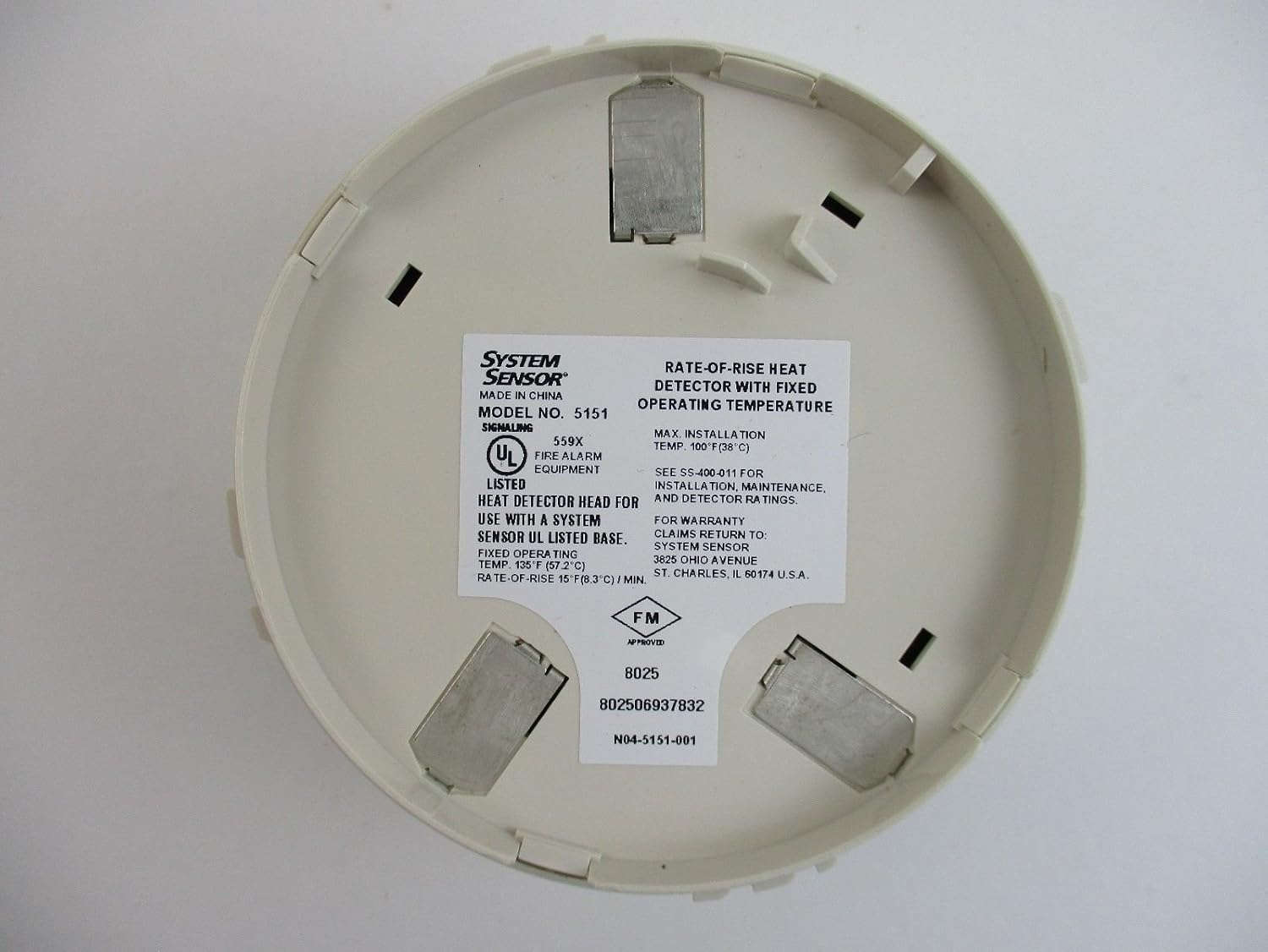
olusin 3: Isalẹ view of the System Sensor 5151, showing product label with specifications and certifications.

Figure 4: Product packaging label for the System Sensor 5151, displaying model number and UPC.
Atilẹyin ọja ati Support
For information regarding the warranty of your System Sensor 5151 heat detector, please refer to the documentation provided with your purchase or visit the official System Sensor webojula. Awọn ofin atilẹyin ọja le yatọ.
For technical support, installation assistance, or any other inquiries, please contact System Sensor customer service or a qualified fire alarm system professional. Always ensure that any work on fire alarm systems is performed by certified personnel.
Olupese: SENSOR
Webojula: www.systemsensor.com (This is a general link, specific support pages may vary)


