1. Ifihan
This user manual provides detailed instructions for the proper setup, operation, calibration, maintenance, and troubleshooting of your Oakton WD-35613-82 Ion 6+ Handheld Meter Kit. To ensure accurate measurements and extend the lifespan of your device, please read this manual thoroughly before use and retain it for future reference.
2. Ọja Ipariview
The Oakton Ion 6+ is a versatile handheld meter designed for precise pH and ion measurements. This kit includes essential components for immediate use in various applications.
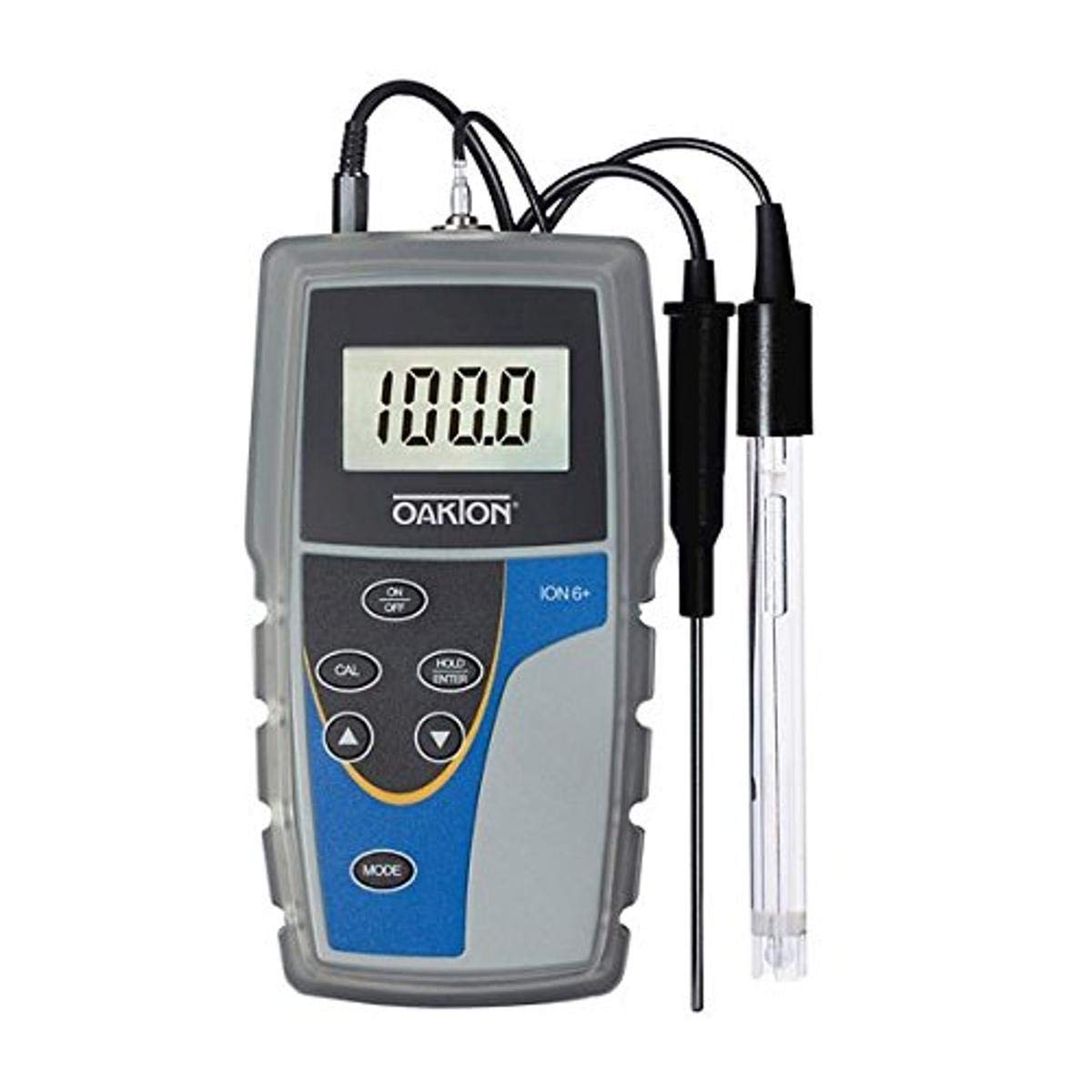
This image displays the Oakton Ion 6+ handheld meter, a gray and blue device with a digital display showing '100.0'. It has control buttons for ON/OFF, CAL, HOLD/ENTER, MODE, and arrow keys. Two probes are connected to the top: a black temperature probe and a clear pH/ATC probe.
3. Awọn akoonu Kit
Your Oakton WD-35613-82 Ion 6+ Handheld Meter Kit typically includes the following items:
- Oakton Ion 6+ Handheld Meter
- pH elekiturodu
- ATC (Automatic Temperature Compensation) probe
- Bata roba idaabobo
- Awọn solusan ifipamọ pH
- Solution bottles
- Rinse bottle
- Awọn batiri
- Apo ti n gbe
4. Eto
Follow these steps for initial setup of your meter:
- Fi Awọn batiri sii: Open the battery compartment on the back of the meter and insert the specified batteries, observing correct polarity.
- Sopọ Awọn iwadii: Carefully connect the pH electrode and the ATC probe to their respective ports at the top of the meter. Ensure connections are secure.
- Prepare Electrodes: If the pH electrode is dry, condition it according to the electrode's specific instructions (usually by soaking in storage solution or buffer for a period).
5. Isẹ
To take a measurement with your Ion 6+ meter:
- Agbara Tan: Tẹ awọn TAN/PA bọtini lati tan-an mita.
- Yan Ipo: Tẹ awọn MODE button to cycle through available measurement modes (e.g., pH, mV, Ion). Select the desired mode.
- Ṣe iwọn: Perform a calibration as described in Section 6 before taking critical measurements.
- Ìwádìí Ìtẹ̀mọ́lẹ̀: Rinse the electrode with distilled water and immerse it into the sample solution. Ensure the electrode tip is fully submerged.
- Ka Iwọn: Allow the reading on the display to stabilize. The meter will typically indicate stability.
- Di Kíkà Mú: Tẹ awọn HOLD/ENTER bọ́tìnì láti dì kíkà tó wà lórí ìbòjú náà. Tẹ̀ lẹ́ẹ̀kan síi láti tú u sílẹ̀.
- Agbara Pa: Tẹ awọn TAN/PA button to turn off the meter after use.
6. Iṣatunṣe
Regular calibration is crucial for accurate measurements. Refer to the specific instructions for your pH electrode and buffer solutions for the exact calibration procedure. Generally, calibration involves:
- Prepare Buffers: Use fresh, appropriate pH buffer solutions (e.g., pH 4.01, 7.00, 10.00).
- Tẹ Ipo Iṣatunṣe: With the meter on and in pH mode, press the CAL bọtini.
- Calibrate Points: Immerse the electrode in the first buffer solution. The meter will automatically recognize the buffer and calibrate. Repeat for subsequent buffer solutions as prompted by the meter.
- Jẹ́rìí sí Ìṣàtúnṣe: Once all points are calibrated, the meter will typically confirm successful calibration.
7. Itọju
Proper maintenance ensures optimal performance and longevity of your meter and probes:
- Ninu Electrode: Regularly clean the pH electrode according to its specific instructions, especially if readings become sluggish or inaccurate.
- Itọju itanna: Store the pH electrode in its designated storage solution or a suitable buffer when not in use. Never store it dry.
- Ìmọ́tótó Mita: Wipe the meter body with a damp asọ. Ma ṣe lo abrasive ose tabi epo.
- Rirọpo Batiri: Replace batteries promptly when the low battery indicator appears to prevent data loss or meter malfunction.
8. Laasigbotitusita
If you encounter issues with your Oakton Ion 6+ meter, consider the following:
- Ko si Agbara: Ṣayẹwo fifi sori batiri ati rii daju pe awọn batiri jẹ alabapade.
- Awọn kika aiduroṣinṣin: Ensure the electrode is properly conditioned and clean. Recalibrate the meter. Check for air bubbles around the electrode.
- Awọn kika ti ko pe: Calibrate the meter with fresh, accurate buffer solutions. Check the condition of the pH electrode; it may need cleaning or replacement. Ensure the ATC probe is connected and functioning correctly.
- Awọn ifiranṣẹ aṣiṣe: Refer to the specific error codes in the full product manual (if available) or contact technical support.
9. Awọn pato
| Ẹya ara ẹrọ | Ẹ̀kúnrẹ́rẹ́ |
|---|---|
| Nọmba awoṣe | WD-35613-82 |
| Olupese | OAKTON irinṣẹ |
| Package Mefa | 7 x 4 x 3 inches |
| Package iwuwo | 5 iwon |
| Ilu isenbale | Orilẹ Amẹrika |
| ASIN | B00AM2302G |
10. Atilẹyin ọja ati Support
For warranty information, technical support, or service inquiries, please contact OAKTON Instruments directly or refer to their official webojula. Jeki iwe rira rẹ ati nọmba awoṣe ni ọwọ nigbati o ba kan si atilẹyin.


