1. Ifihan
This manual provides detailed instructions for the installation, operation, and maintenance of the Supermicro MBD-X10SLH-F-O uATX Server Motherboard. Please read this manual thoroughly before beginning installation to ensure proper setup and to maximize the performance and longevity of your system. This motherboard is designed for server applications, supporting Intel LGA1150 processors and DDR3 memory.
2. Ọja Ipariview
The Supermicro MBD-X10SLH-F-O is a high-performance uATX server motherboard featuring the Intel C226 chipset. It is engineered for reliability and efficiency in server environments.
Awọn ẹya pataki:
- Sipiyu Socket: LGA1150, supporting Intel Xeon E3-1200 v3/v4 series, 4th/5th Gen Core i3, Pentium, Celeron processors.
- Iranti: 4x 204-pin DDR3-1600 SODIMM slots, supporting up to 32GB ECC/non-ECC Unbuffered memory.
- Awọn Iho Imugboroosi: 1x PCI-Express 3.0 x16, 1x PCI-Express 2.0 x8, 1x PCI-Express 2.0 x4.
- Ibi ipamọ: 6x SATA3 (6Gbps) ports.
- Asopọmọra: Dual Gigabit Ethernet LAN ports (2x RJ45) and 1x Dedicated IPMI LAN port (RJ45).
- Awọn ibudo USB: 4x USB 3.0 ports, 6x USB 2.0 ports.
- Ijade fidio: 1x VGA port.
- Okunfa Fọọmu: uATX (9.6" x 9.6").
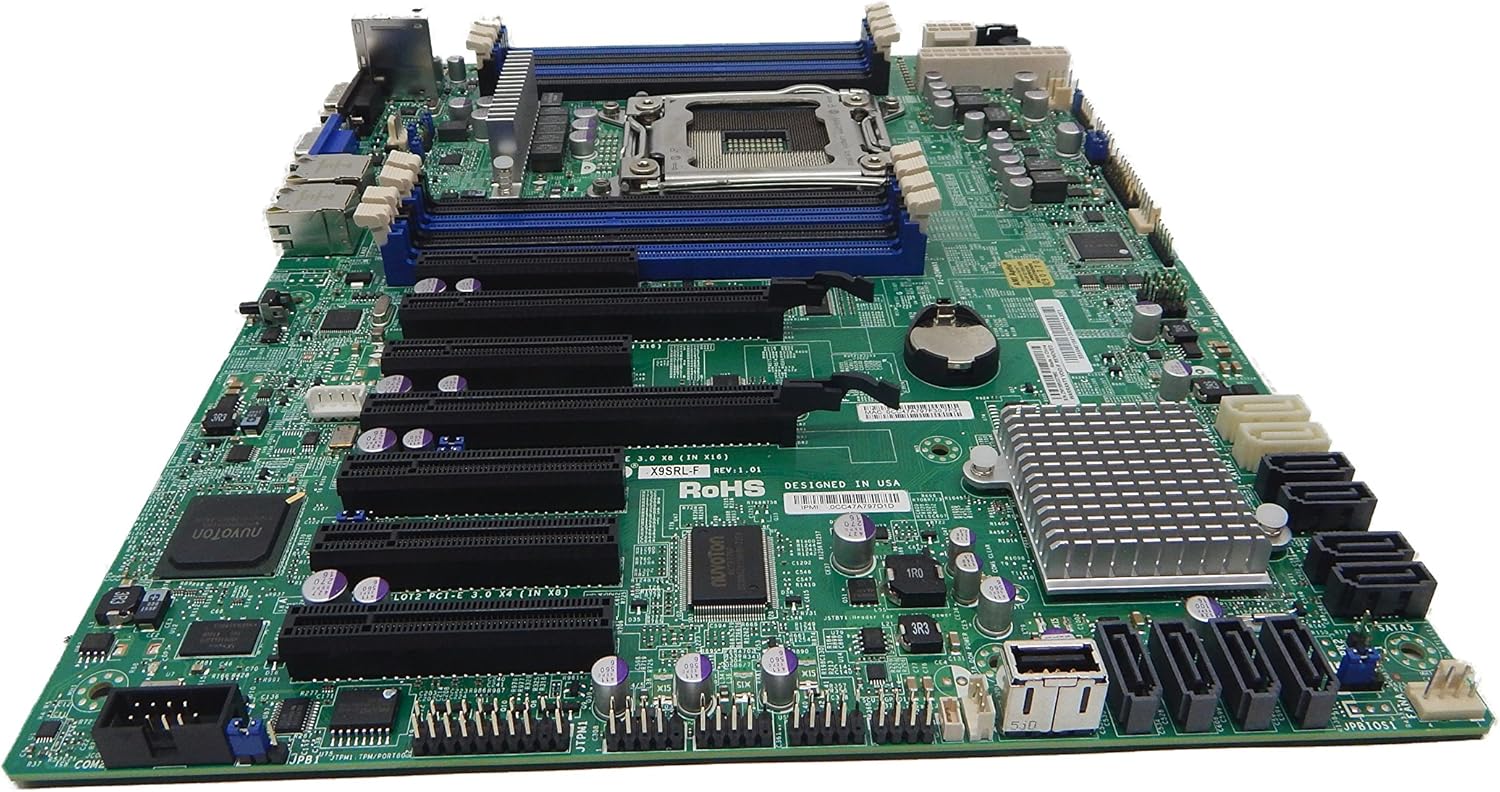
Nọmba 2.1: Oke-isalẹ view of the Supermicro MBD-X10SLH-F-O motherboard, showing the CPU socket, RAM slots, and various expansion slots.

Nọmba 2.2: Igun view of the motherboard, highlighting the LGA1150 CPU socket and the four DDR3 SODIMM memory slots.

Nọmba 2.3: Ẹyìn view of the Supermicro MBD-X10SLH-F-O motherboard, displaying the I/O panel with USB, VGA, LAN, and IPMI ports.

Nọmba 2.4: Sun mo tipetipe view of the motherboard, showing the six SATA3 ports and other onboard connectors.
3. Awọn pato
| Ẹya ara ẹrọ | Sipesifikesonu |
|---|---|
| Brand | Supermicro |
| Orukọ awoṣe | MBD-X10SLH-F-O |
| Sipiyu Socket | LGA 1150 |
| Chipset Iru | Intel C226 |
| Awọn isise ibaramu | Intel Core i3-4xxx, i5-4xxx, i7-4xxx, i3-5xxx, i5-5xxx, i7-5xxx, Intel Xeon E3-1200 v3/v4 series |
| Ramu Memory Technology | DDR3 |
| Iyara Iranti | 1600 MHz |
| Max Ramu atilẹyin | 32 GB |
| Nọmba ti USB 2.0 Ports | 6 |
| Nọmba ti USB 3.0 Ports | 4 |
| Awọn ibudo SATA | 6x SATA3 (6Gbps) |
| Imugboroosi Iho | 1x PCIe 3.0 x16, 1x PCIe 2.0 x8, 1x PCIe 2.0 x4 |
| Fọọmù ifosiwewe | uATX |
| Awọn iwọn (LxWxH) | 14 x 11 x 3.5 inches |
| Iwọn Nkan | 3.52 iwon |
4. Eto
Before beginning installation, ensure your system is powered off and disconnected from the power source. Always handle the motherboard by its edges to avoid static discharge.
4.1. Sipiyu fifi sori
- Fi ọwọ́ rọra gbé ẹ̀rọ ìdènà ihò CPU náà sókè.
- Mu Sipiyu pọ pẹlu iho, aridaju onigun mẹta goolu lori Sipiyu baamu onigun mẹta lori iho naa.
- Farabalẹ gbe Sipiyu sinu iho lai fi agbara mu.
- Lower the socket lever and secure it.
- Waye lẹẹ igbona ki o fi ẹrọ itutu Sipiyu sori ẹrọ ni ibamu si awọn ilana olupese rẹ.
4.2. Fifi sori iranti
- Ṣii awọn agekuru ni awọn mejeji opin ti DIMM Iho.
- Align the memory module's notch with the key in the DIMM slot.
- Tẹ mọlẹ ṣinṣin lori awọn opin mejeeji ti module iranti titi awọn agekuru yoo fi rọ si aaye.
4.3. Fifi sori Kaadi Imugboroosi
- Remove the corresponding slot cover from your chassis.
- Ṣètò kaadi imugboroosi pẹlu iho PCIe ti o fẹ.
- Press down firmly until the card is fully seated.
- Secure the card with a screw or retention clip.
4.4. Ìsopọ̀ Ẹ̀rọ Ìpamọ́
- So opin kan SATA data USB to a SATA ibudo lori modaboudu.
- So opin keji okun data SATA pọ mọ ẹrọ ipamọ rẹ (HDD/SSD).
- So okun agbara SATA kan lati ipese agbara rẹ si ẹrọ ipamọ.
4.5. Awọn isopọ Agbara
- So 24-pin ATX asopo agbara akọkọ lati ipese agbara rẹ si modaboudu.
- So asopọ agbara CPU ATX 12V 8-pin (tabi 4-pin) pọ mọ modaboudu naa.
4.6. Iwaju Panel Awọn isopọ
Connect the front panel headers (Power LED, HDD LED, Power Switch, Reset Switch, USB, Audio) to the corresponding pins on the motherboard. Refer to the motherboard's silkscreen labels for correct pin orientation.
5. Awọn ilana Iṣiṣẹ
5.1. Bẹ̀rẹ̀ Ìbẹ̀rẹ̀
- After all components are installed and connected, connect the power cord to your power supply and turn on the power switch.
- Press the power button on your chassis.
- The system should power on, and you should see a display on your monitor.
5.2. BIOS/UEFI Access
To enter the BIOS/UEFI setup utility, press the designated key (commonly DEL or F2) during the initial boot sequence. The exact key may vary; observe the on-screen prompts.
5.3. IPMI Remote Management
This motherboard features a dedicated IPMI LAN port for remote management. To access the IPMI interface, connect the IPMI LAN port to your network. Obtain the IP address assigned to the IPMI interface (either from BIOS or a network scan) and access it via a web browser from another computer on the same network. Java may be required for remote console functionality.
6. Itọju
Regular maintenance helps ensure the stability and longevity of your motherboard and system.
- Yiyọ eruku kuro: Lorekore nu eruku lati modaboudu ati irinše lilo fisinuirindigbindigbin air. Rii daju pe eto naa ti wa ni pipa ati yọọ kuro ṣaaju ṣiṣe mimọ.
- Iṣakoso USB: Ensure all cables are neatly routed and secured to prevent obstruction of airflow and accidental disconnections.
- Awọn imudojuiwọn BIOS/Firmware: Ṣayẹwo Supermicro website for the latest BIOS and IPMI firmware updates. Follow the provided instructions carefully. Note that IPMI BIOS upgrades may require a separate license. Always update BIOS before IPMI firmware.
- Awọn Iṣayẹwo Ẹka: Occasionally inspect all connections (power, data, expansion cards) to ensure they are securely seated.
7. Laasigbotitusita
Abala yii n ṣalaye awọn ọran ti o wọpọ ti o le ba pade.
7.1. System Fails to Boot
- Ṣayẹwo Awọn isopọ Agbara: Ensure the 24-pin ATX and 8-pin CPU power connectors are securely attached.
- Tun awọn eroja pada: Remove and re-install the CPU, memory modules, and any expansion cards to ensure they are properly seated.
- Ko CMOS kuro: Refer to your motherboard's detailed manual for instructions on how to clear the CMOS, which can resolve boot issues caused by incorrect BIOS settings.
- Iṣeto ti o kere julọ: Try booting with only essential components (CPU, one RAM stick, power supply, and display) to isolate the problem.
7.2. Fan Speed Issues
Some low RPM, high-efficiency fans may not be accurately detected by the motherboard's fan controller, leading to erratic fan speed behavior (e.g., fans spinning up to max RPM). This is often due to the controller expecting server-grade fans with higher RPM ranges.
- Awọn eto BIOS: Check BIOS settings for fan control options. Adjust fan curves or modes if available.
- 3-Pin vs. 4-Pin Fans: If using 4-pin PWM fans that exhibit this behavior, consider using 3-pin adapters if available with your fans. This can sometimes provide a more stable, albeit less precise, fan control.
- IPMI Fan Control: While IPMI offers fan control, it may have limitations for low RPM fans.
7.3. SATA Port Obstruction
When installing a full-size graphics processing unit (GPU), some SATA ports may become physically blocked or difficult to access.
- Gbero siwaju: Connect SATA cables to the necessary ports before installing large expansion cards.
- Angled SATA Cables: Use SATA cables with angled connectors if straight connectors are obstructed.
- Alternative Ports: Utilize any unblocked SATA ports first.
8. Atilẹyin ọja ati Support Alaye
For detailed warranty information, including terms, conditions, and duration, please refer to the official Supermicro website or the warranty card included with your product. For technical support, driver downloads, and additional documentation, visit the Supermicro support portal.
Supermicro Official Webojula: www.supermicro.com