Ọrọ Iṣaaju
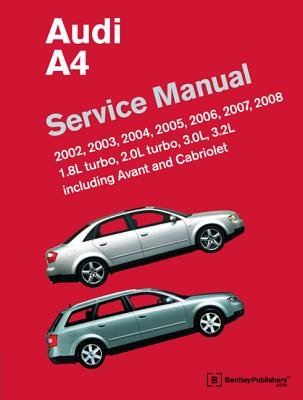
This manual provides comprehensive service and repair information for Audi A4 models (B6 and B7 platforms) manufactured between 2002 and 2008. It covers 1.8L Turbo, 2.0L Turbo, 3.0L, and 3.2L engines, including Avant and Cabriolet body styles. The content is designed for professional technicians and experienced do-it-yourselfers seeking detailed procedures and specifications for vehicle maintenance and repair.
Gbogbogbo Alaye ati Abo
Awọn akiyesi Aabo pataki
- Nigbagbogbo wọ ohun elo aabo ti ara ẹni ti o yẹ (PPE) gẹgẹbi awọn gilaasi ailewu ati awọn ibọwọ.
- Disconnect the battery before working on electrical systems to prevent accidental short circuits.
- Ensure the vehicle is securely supported on jack stands before working underneath. Never rely solely on a jack.
- Refer to specific torque specifications for all fasteners to prevent damage or component failure.
Lilo Afowoyi
This manual is organized by vehicle system for ease of navigation. Use the detailed index to locate specific procedures quickly. Illustrations and diagrams are provided to aid understanding of complex assemblies and processes. Always read through the entire procedure before beginning any work.
Engine Systems
This section provides detailed procedures for engine removal, installation, disassembly, inspection, and reassembly. It includes specifications for cylinder head, valvetrain, crankshaft, pistons, and connecting rods for all covered engine variants.
1.8L Turbo Engine
Specific service data and repair procedures for the 1.8-liter turbocharged engine, including timing belt replacement, turbocharger service, and fuel system diagnostics.
2.0L Turbo Engine
Specific service data and repair procedures for the 2.0-liter turbocharged engine, covering common issues like PCV system maintenance and direct injection system service.
3.0L and 3.2L Engines
Specific service data and repair procedures for the 3.0-liter and 3.2-liter naturally aspirated engines, including timing chain service and variable valve timing system diagnostics.
Gbigbe ati Iwakọ
Service information for both manual and automatic transmissions, including clutch replacement, fluid changes, and component overhaul. Covers front-wheel drive and quattro all-wheel drive systems, including differentials, drive shafts, and constant velocity (CV) joints.
Ẹnjini ati Idadoro
Procedures for front and rear suspension components, including shock absorbers, springs, control arms, and wheel bearings. Detailed instructions for brake system inspection, pad and rotor replacement, fluid bleeding, and Anti-lock Braking System (ABS) diagnostics.
Itanna Systems
Comprehensive wiring diagrams, component locations, and diagnostic procedures for various electrical systems, including engine management, lighting, climate control, and infotainment. Includes information on sensor testing and module replacement.
Body and Interior
Instructions for removal and installation of exterior body panels, bumpers, and trim. Detailed procedures for interior component removal, including dashboard, door panels, seats, and console. Specific information for the operation and repair of the Cabriolet's convertible top mechanism and associated hydraulic systems.
Awọn iṣeto itọju
Recommended service intervals and procedures to ensure optimal vehicle performance and longevity. Adhering to these schedules is crucial for preventing premature wear and maintaining vehicle reliability.
| Nkan Iṣẹ | Àárín | Ilana |
|---|---|---|
| Engine Oil & Filter | Every 10,000 miles or 1 year | Replace oil and filter (synthetic oil recommended) |
| Omi Brake | Ni gbogbo ọdun 2 | Replace fluid (DOT4 recommended) |
| Sipaki Plugs | Gbogbo 40,000 miles | Replace (check gap before installation) |
| Ajọ Afẹfẹ | Gbogbo 20,000 miles tabi 2 ọdun | Inspect and replace if dirty |
Laasigbotitusita Awọn ọrọ to wọpọ
This section provides diagnostic flowcharts and common symptoms for various vehicle malfunctions, aiding in the identification and resolution of problems.
Engine Performance Issues
Includes diagnostics for misfires, rough idling, lack of power, and excessive fuel consumption. Covers common causes such as faulty sensors, ignition system problems, and fuel delivery issues.
Itanna aiṣedeede
Addresses common electrical problems like non-functioning lights, power windows, central locking, and dashboard warning lights. Provides steps for checking fuses, relays, and wiring harnesses.
Imọ ni pato
A comprehensive list of technical data essential for proper service and repair, including fluid capacities, torque specifications for critical fasteners, tire pressures, and alignment settings for various models and engine types.
- Agbara Epo Enjini: Varies by engine, refer to specific engine section.
- Irú ìtura: G12/G13 (VW/Audi specific).
- Titẹ Taya: Refer to vehicle's door jamb sticker (typically 32-36 PSI).
- Wheel Lug Bolt Torque: 88.5 lb-ft (120 Nm).
Itọkasi wiwo