1. Awọn Ilana Aabo pataki
Please read all instructions carefully before using the Mesko MS 4403 Espresso Machine. Retain this manual for future reference.
- Rii daju voltage itọkasi lori ohun elo ni ibamu si awọn mains agbegbe voltagkí o tó so ẹ̀rọ náà pọ̀.
- Maṣe fi ohun elo, okun agbara, tabi pulọọgi sinu omi tabi omi miiran.
- Ohun elo yii kii ṣe ipinnu fun lilo nipasẹ awọn eniyan (pẹlu awọn ọmọde) pẹlu idinku ti ara, imọlara tabi awọn agbara ọpọlọ, tabi aini iriri ati imọ, ayafi ti wọn ba ti fun wọn ni abojuto tabi itọnisọna nipa lilo ohun elo nipasẹ eniyan ti o ni iduro fun aabo wọn.
- Awọn ọmọde yẹ ki o wa ni abojuto lati rii daju pe wọn ko ṣere pẹlu ohun elo naa.
- Unplug the machine from the outlet when not in use and before cleaning. Allow it to cool before putting on or taking off parts, and before cleaning the appliance.
- Ma ṣe ṣiṣẹ ohun elo eyikeyi pẹlu okun tabi pulọọgi ti o bajẹ, tabi lẹhin aiṣe ohun elo tabi ti bajẹ ni eyikeyi ọna.
- Ma ṣe gbe ohun elo naa sori tabi sunmọ gaasi ti o gbona tabi ina ina, tabi ni adiro ti o gbona.
- Omi tutu nikan lo ninu ojò omi naa.
- Always ensure the water tank is filled to at least the minimum level before operating the machine.
- Avoid contact with hot surfaces, especially the steam wand and portafilter during operation.
2. Ọja Ipariview
The Mesko MS 4403 is a semi-automatic espresso machine designed for home use, capable of brewing espresso and frothing milk for various coffee beverages. Familiarize yourself with its components:

Aworan 2.1: Lapapọ view of the Mesko MS 4403 Espresso Machine. This image displays the machine from a front-right perspective, showing the main body, control panel, portafilter handle, steam wand, and the transparent water tank on the side.
- Ibi iwaju alabujuto: Àwọn bọ́tìnì fún agbára, espresso kan ṣoṣo, espresso méjì, àti iṣẹ́ steam.
- Iṣakoso Iṣakoso: Adjusts steam intensity or hot water flow.
- Portafilter: Oun ni ilẹ kofi fun Pipọnti.
- Ohun elo Steam: Lo fun frothing wara.
- Omi omi: Tanki ti a le yọ kuro fun ipese omi.
- Drip Atẹ: Ó kó omi tó pọ̀ jù jọ, ó sì lè yọ kúrò fún mímú.

Aworan 2.2: Close-up of the control dial. This image focuses on the rotary dial, which is used to control the steam output for frothing milk and the hot water dispenser. Markings for 'OFF', steam, and water are visible.

Aworan 2.3: Apa view of the machine showing the water tank. This image provides a clear view of the transparent water tank attached to the side of the espresso machine, with visible 'MAX' and 'MIN' fill level indicators.
3. Eto
3.1 Unpacking ati Ni ibẹrẹ Cleaning
- Yọ gbogbo awọn ohun elo apoti ati awọn sitika kuro ninu ẹrọ naa.
- Wash the water tank, portafilter, filter basket, and drip tray with warm, soapy water. Rinse thoroughly and dry.
- Mu ese ita ẹrọ naa pẹlu ipolowoamp asọ.
3.2 Kikun Omi Omi
- Yọ ojò omi kuro ni ẹhin ẹrọ naa.
- Fill the tank with fresh, cold water up to the 'MAX' line. Do not exceed this line.
- Gbe ojò omi pada si ipo rẹ, rii daju pe o joko ni deede.
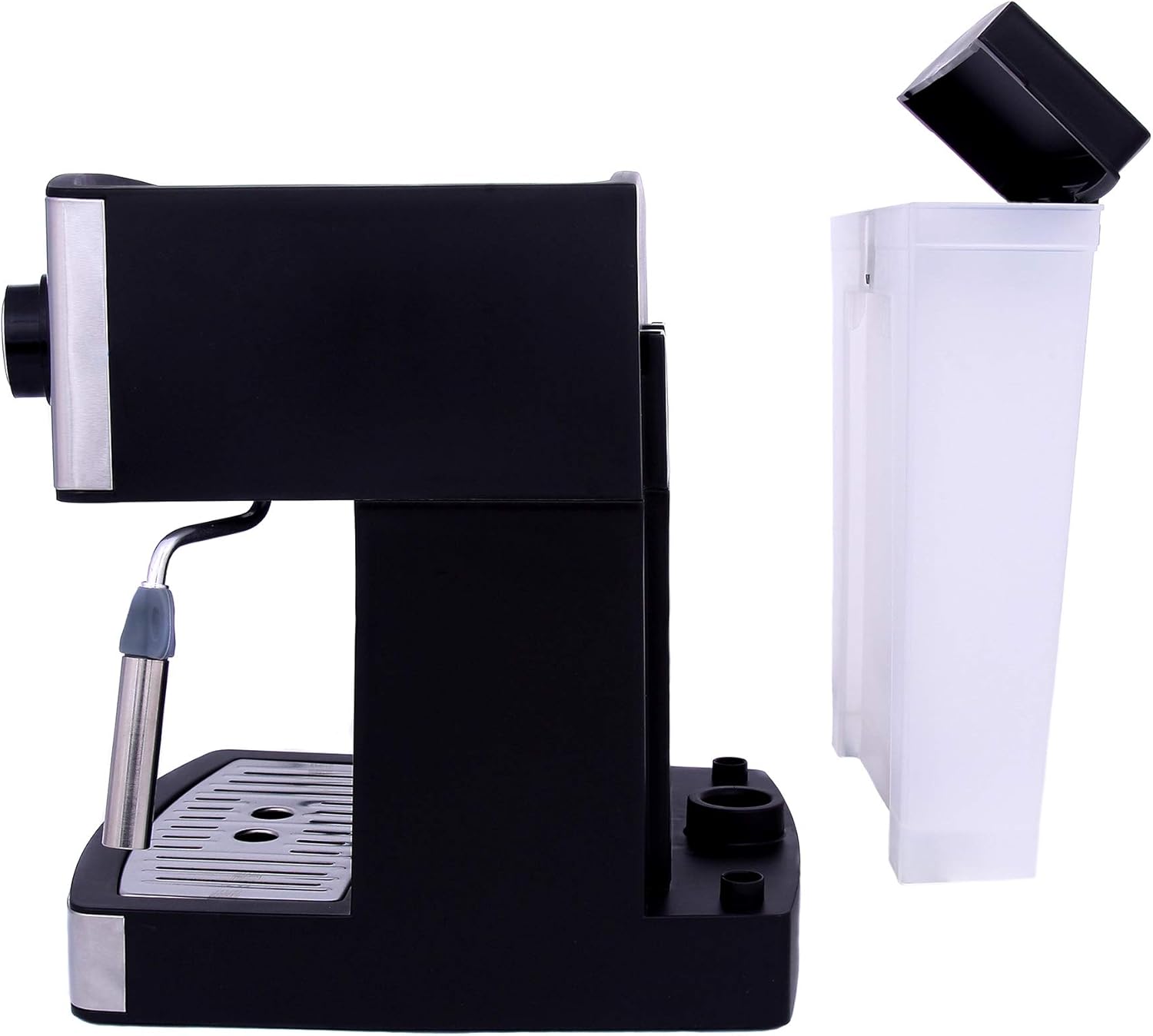
Aworan 3.1: Water tank removed from the machine. This image shows the side of the espresso machine with the water tank detached, illustrating how the tank can be easily removed for filling or cleaning.
3.3 Priming the Pump (First Use)
- Rii daju pe ojò omi ti kun.
- Pulọọgi ẹrọ naa sinu iṣan agbara kan.
- Gbe ago kan si abẹ ọpa nya si.
- Turn the control dial to the hot water position (faucet icon) and press the power button. Allow water to flow through the steam wand for about 30 seconds to prime the pump.
- Turn the control dial back to 'OFF' and press the power button to stop. The machine is now ready for use.
4. Awọn ilana Iṣiṣẹ
4.1 Ṣiṣe Espresso
- Gbona: Turn on the machine and allow it to preheat for approximately 2-3 minutes until the indicator light signals readiness.
- Mura Portafilter: Place the desired filter basket (single or double shot) into the portafilter.
- Ṣafikun Kofi: Grind fresh coffee beans to a fine consistency suitable for espresso. Use the provided scoop to add ground coffee to the filter basket. For a single shot, use one scoop (approx. 7g); for a double shot, use two scoops (approx. 14g).

Aworan 4.1: Portafilter and coffee scoop. This image shows the detached portafilter, which holds the ground coffee, alongside a black plastic coffee measuring scoop, essential tools for preparing espresso.
- Tamp Kọfi: Lo tamper (often found on the back of the scoop) to press the ground coffee firmly and evenly into the filter basket. Ensure the surface is level.
- So Portafilter: Align the portafilter with the group head on the machine. Insert it and twist firmly to the right until it is securely locked in place.
- Pọnti Espresso: Place your espresso cup(s) on the drip tray under the portafilter spouts. Press the single or double espresso button. The machine will brew the coffee and stop automatically.
- Yọ Portafilter kuro: Once brewing is complete, carefully twist the portafilter to the left to remove it. Dispose of the used coffee grounds.
4.2 Frothing Wara
- Mura Wara: Fi wàrà tútù (tàbí wàrà tí kìí ṣe wàrà) kún ìkòkò ìfọ́ omi irin alagbara kan sí ìsàlẹ̀ ìkòkò náà.
- Mu Steam ṣiṣẹ: Press the steam button on the control panel. Wait for the indicator light to signal that the machine has reached steaming temperature.
- Pa Ọpa Steam kuro: Briefly turn the control dial to the steam position to release any condensed water from the wand into an empty cup. Turn it back to 'OFF'.
- Wara Froth: Immerse the tip of the steam wand just below the surface of the milk. Turn the control dial to the steam position. Angle the pitcher slightly to create a swirling motion.
- Bojuto iwọn otutu: Continue frothing until the milk reaches the desired temperature and texture (typically around 60-70°C or when the pitcher is too hot to touch comfortably).
- Duro gbigbona: Turn the control dial back to 'OFF' and remove the pitcher.
- Ọpa Steam mimọ: Lẹsẹkẹsẹ nu ọpa ti nya si pẹlu ipolowoamp cloth to remove any milk residue. Briefly purge the wand again to clear any internal milk.
5. Itọju ati Cleaning
Wíwẹ̀ déédéé máa ń mú kí ẹ̀rọ espresso rẹ ṣiṣẹ́ dáadáa, ó sì máa ń pẹ́ títí.
5.1 Daily Cleaning
- Drip Atẹ: Empty and rinse the drip tray after each use or when the indicator floats up.
- Portafilter ati Agbọn Ajọ: Remove used coffee grounds and rinse the portafilter and filter basket under running water.
- Ohun elo Steam: Wipe the steam wand immediately after each use with a damp cloth and purge briefly.
5.2 osẹ Cleaning
- Omi omi: Remove and wash the water tank with warm, soapy water. Rinse thoroughly.
- Olori ẹgbẹ: Fi ìpolówó nu orí ẹgbẹ́ (ibi tí portafilter ti so mọ́)amp asọ lati yọ eyikeyi aloku kofi.
5.3 Nipasẹ
Descaling is essential to remove mineral buildup and should be performed every 2-3 months, or more frequently in areas with hard water.
- Mura a descaling ojutu ni ibamu si awọn descaler olupese ká ilana.
- Kun omi ojò pẹlu awọn descaling ojutu.
- Fi ohun èlò ńlá kan sí abẹ́ orí ẹgbẹ́ àti ọ̀pá ìrọ̀gbọ̀kú.
- Run half of the solution through the group head by pressing the espresso button.
- Run the remaining half of the solution through the steam wand by activating the steam function.
- Fi omi ṣan omi daradara ki o si fi omi tutu kun.
- Repeat the process with fresh water to rinse the internal components, ensuring no descaling solution remains.
6. Laasigbotitusita
Tọkasi tabili ni isalẹ fun awọn ọran ti o wọpọ ati awọn ojutu wọn.
| Isoro | Owun to le Fa | Ojutu |
|---|---|---|
| Ko si kofi dispenses | Water tank empty or not properly seated. Pump not primed. Coffee too finely ground or tamped ju lile. | Fill water tank and ensure it's seated. Prime the pump. Use coarser grind or lighter tamp. |
| Coffee brews too slowly or drips | Kofi ju finely ilẹ tabi tamped too hard. Filter basket clogged. | Lo isokuso pọn tabi fẹẹrẹfẹ tamp. Clean filter basket. |
| Coffee brews too quickly or is weak | Kofi ju coarsely ilẹ tabi ko to kofi. | Lo finer pọn tabi diẹ ẹ sii kofi. |
| Ko si nya lati wand | Steam function not activated or not at temperature. Steam wand clogged. | Ensure steam button is pressed and indicator light is on. Clean steam wand. |
| Ẹrọ n jo omi | Water tank not properly seated. Drip tray full. Seal issues. | Ensure water tank is correctly placed. Empty drip tray. Contact support if seals are damaged. |
7. Awọn pato
| Ẹya ara ẹrọ | Sipesifikesonu |
|---|---|
| Brand | Mesko |
| Nọmba awoṣe | MS 4403 |
| Àwọ̀ | Dudu |
| Awọn iwọn (L x W x H) | 21 x 26 x 30.5 cm |
| Iwọn | 800 giramu |
| Agbara | 1.6 liters (ojò omi) |
| Agbara | 850 Wattis |
| Voltage | 240 Volts |
| Ohun elo | Irin ti ko njepata |
| Awọn ẹya ara ẹrọ | Wara frother |
8. atilẹyin ọja Information
The Mesko MS 4403 Espresso Machine comes with a standard manufacturer's warranty. Please refer to the warranty card included with your purchase for specific terms, conditions, and duration. Keep your proof of purchase for any warranty claims.
9. Onibara Support
If you encounter any issues not covered in this manual or require further assistance, please contact Mesko customer support. Contact details can typically be found on the product packaging, the official Mesko webojú-òpó wẹ́ẹ̀bù, tàbí ojú-ìwé ìrànlọ́wọ́ olùtajà rẹ.
When contacting support, please have your product model number (MS 4403) and proof of purchase readily available.


