1. Ifihan
O ṣeun fun riraasing the Panasonic NC-BG3000 Electric Pump Thermo Pot. This appliance is designed to boil water and keep it warm efficiently, featuring a 3.0L capacity and a 220V 700W power rating. It incorporates VIP (Vacuum Insulation Panel) technology for energy saving and a Binchotan-carbon fluoride coating for far-infrared emission. This manual provides essential information for safe and effective use, including setup, operation, maintenance, and troubleshooting.
Please read this manual thoroughly before using the appliance and keep it for future reference.
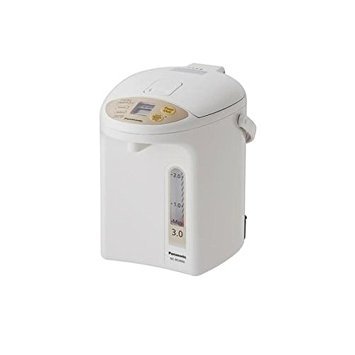
Aworan 1.1: Iwaju view of the Panasonic NC-BG3000 Electric Pump Thermo Pot. This image displays the main body of the thermo pot, typically showing the control panel, dispensing spout, and handle. The white finish of the appliance is visible.
2. Awọn iṣọra Aabo pataki
To prevent personal injury, electric shock, fire, or damage to the appliance, always observe the following safety precautions:
- This appliance operates on 220-240 Volts. Do not use it in regions with different voltage standards (e.g., USA or Canada).
- Maṣe fi ohun elo, okun agbara, tabi pulọọgi sinu omi tabi awọn olomi miiran.
- Always place the thermo pot on a stable, flat, heat-resistant surface, away from edges.
- Keep out of reach of children. Hot water and steam can cause severe burns.
- Do not open the lid while water is boiling or dispensing.
- Rii daju pe ideri ti wa ni pipade ni aabo ṣaaju ṣiṣe.
- Má ṣe kún inú ojò omi ju bí ó ti yẹ lọ.
- Yọọ ohun elo kuro ni iṣan agbara nigbati ko si ni lilo ati ṣaaju ṣiṣe mimọ.
- Ma ṣe ṣiṣẹ ohun elo ti okun tabi plug ba bajẹ, tabi ti ohun elo naa ba ṣiṣẹ tabi ti bajẹ ni eyikeyi ọna.
- Use only genuine Panasonic replacement parts and accessories.
3. Awọn ẹya ara Idanimọ
Familiarize yourself with the components of your thermo pot:
- Ideri: Covers the water tank, includes steam vent.
- Mu: For carrying the appliance.
- Ibi iwaju alabujuto: Contains buttons for various functions (e.g., Boil, Keep Warm, Dispense, Slow Drip).
- Atọka Ipele Omi: Shows the current water volume inside.
- Spout Pipin: Where hot water is dispensed.
- Inner Pot (Water Tank): Fluoride-coated with Binchotan-carbon for heating water.
- Power Cord Inlet: Fún síso okùn agbára tí a lè yọ kúrò.
- Ipilẹ: Provides stability and houses heating elements.
4. Eto ati First Lo
Before using your thermo pot for the first time, follow these steps:
- Yọọ kuro: Carefully remove the thermo pot and all accessories from the packaging. Retain packaging for future transport if needed.
- Mọ: Wash the inner pot and lid with warm water and a mild detergent. Rinse thoroughly and wipe dry. Do not use abrasive cleaners or scourers.
- Ibi: Place the thermo pot on a stable, level, heat-resistant surface, ensuring adequate ventilation around the unit.
- Kun Omi: Open the lid and fill the inner pot with fresh water up to the 'MAX' fill line. Do not overfill.
- Ideri pipade: Securely close the lid until it clicks into place.
- So agbara: Insert the power cord into the appliance's power inlet, then plug the other end into a grounded 220-240V AC power outlet.
- Ṣíṣàn àkọ́kọ́: Press the 'Boil' button. Allow the water to boil completely, then dispense and discard this first batch of hot water. This cleans the internal components and removes any manufacturing residues.
5. Awọn ilana Iṣiṣẹ
5.1 Omi Sisun
- Ensure the thermo pot is filled with water and the lid is closed.
- Pulọọgi ẹrọ naa sinu iṣan agbara ti o yẹ.
- Press the 'Boil' button. The indicator light will illuminate, and the boiling process will begin.
- Once boiling is complete, the appliance will automatically switch to the 'Keep Warm' mode.
5.2 Jeki Gbona Išė
The thermo pot automatically maintains the water at a warm temperature after boiling. The VIP (Vacuum Insulation Panel) technology helps save energy during this process.
- To select a specific keep warm temperature (if available on your model), refer to the control panel buttons and follow the instructions.
- The Binchotan-carbon coating helps maintain water quality during the keep warm period.
5.3 Pipin Omi
Lati fun omi gbona:
- Place a cup or container under the dispensing spout.
- Press and hold the 'Dispense' button. Water will flow from the spout.
- Tu bọtini naa silẹ lati da pinpin duro.
5.4 Slow Drip Feature (for Drip-Brewed Coffee)
This feature allows for a slower, controlled dispense, ideal for drip-brewed coffee:
- Prepare your coffee dripper and cup.
- Press the 'Slow Drip' button. The indicator light will confirm activation.
- Press and hold the 'Dispense' button. Water will be dispensed at a reduced flow rate.
- Tu bọtini naa silẹ lati da pinpin duro.
- Press the 'Slow Drip' button again to deactivate the feature.
6. Itọju ati Cleaning
Regular cleaning ensures optimal performance and longevity of your thermo pot.
6.1 Daily Cleaning
- Yọọ: Yọọ ohun elo nigbagbogbo ki o jẹ ki o tutu patapata ṣaaju ṣiṣe mimọ.
- Òde: Pa ode nu pẹlu asọ, damp asọ. Ma ṣe lo abrasive ose tabi epo.
- Ikoko inu: Empty any remaining water. Wipe the inside of the inner pot with a soft sponge or cloth. For stubborn stains, use a mild detergent and rinse thoroughly.
- Ideri: The lid may be detachable for easier cleaning. Wash with warm, soapy water, rinse, and dry completely before reattaching.
6.2 Descaling (Monthly or as needed)
Mineral deposits (limescale) can build up over time, affecting performance. Descale your thermo pot regularly:
- Fill the inner pot with water and add a descaling agent suitable for electric kettles/thermo pots (e.g., citric acid solution) according to the descaler's instructions.
- Press the 'Boil' button and allow the solution to boil.
- Let the solution sit for the recommended time (usually 30-60 minutes).
- Dispense and discard the descaling solution.
- Rinse the inner pot thoroughly several times with fresh water to remove any residue. Boil fresh water once or twice and discard before normal use.
7. Laasigbotitusita
If you encounter issues with your thermo pot, refer to the following table:
| Isoro | Owun to le Fa | Ojutu |
|---|---|---|
| Ohun elo ko tan. | Ko edidi ni; agbara otage; aṣiṣe iṣan. | Ṣayẹwo asopọ okun agbara; ṣayẹwo ẹrọ fifọ; gbiyanju kan ti o yatọ iṣan. |
| Omi ko farabale. | Insufficient water; lid not closed properly; 'Boil' button not pressed. | Ensure water level is above MIN; close lid securely; press 'Boil' button. |
| Water dispensing slowly or not at all. | Limescale buildup; 'Dispense' button not pressed firmly; low water level. | Descale the appliance; press 'Dispense' button completely; refill water. |
| Òórùn tàbí ìtọ́wò tí kò wọ́pọ̀ nínú omi. | First use residue; limescale buildup; stale water. | Perform initial boil and discard; descale; use fresh water. |
Ti iṣoro naa ba wa lẹhin igbiyanju awọn ojutu wọnyi, jọwọ kan si atilẹyin alabara Panasonic.
8. Awọn pato
| Ẹya ara ẹrọ | Ẹ̀kúnrẹ́rẹ́ |
|---|---|
| Nọmba awoṣe | NC-BG3000 |
| Agbara | 3.0 liters |
| Voltage | 220-240 Awọn folti |
| Power Consumption (Boiling) | 700 Wattis |
| Awọn iwọn (H x W x D) | 27.5 x 21.7 x 28.7 cm (isunmọ.) |
| Weight (including power cord) | 2.2 kg (isunmọ.) |
| Ohun elo ikoko inu | Fluoride containing Binchotan-carbon |
| Agbara Nfi Ẹya | VIP (Vacuum Insulation Panel) |
9. Atilẹyin ọja ati Support
This Panasonic appliance comes with a standard manufacturer's warranty. Please refer to the warranty card included with your product for specific terms, conditions, and duration. Keep your purchase receipt as proof of purchase.
For technical assistance, spare parts, or warranty claims, please contact Panasonic customer support in your region. You can find contact information on the official Panasonic webaaye tabi ninu iwe ti a pese pẹlu ọja rẹ.
Atilẹyin Onibara Panasonic: www.panasonic.com


