1. Ifihan ati Loriview
The Nexxt Solutions Acrux 750-AC is a dual-band media gigabit wireless AC router designed for homes and small businesses requiring high-speed network connectivity. It supports transmission speeds up to 750Mbps, utilizing both the 5.0GHz band (433Mbps) and the 2.4GHz band (300Mbps) simultaneously. This router is equipped with a USB port for file sharing, making it suitable for media-connected environments. Key features include Wi-Fi Multimedia (WMM) technology for prioritizing bandwidth-intensive applications like HD streaming, and two detachable 5dBi omnidirectional antennas for extended coverage and reduced dead spots. The device also supports Wi-Fi Protected Setup (WPS) for easy and secure wireless connections.
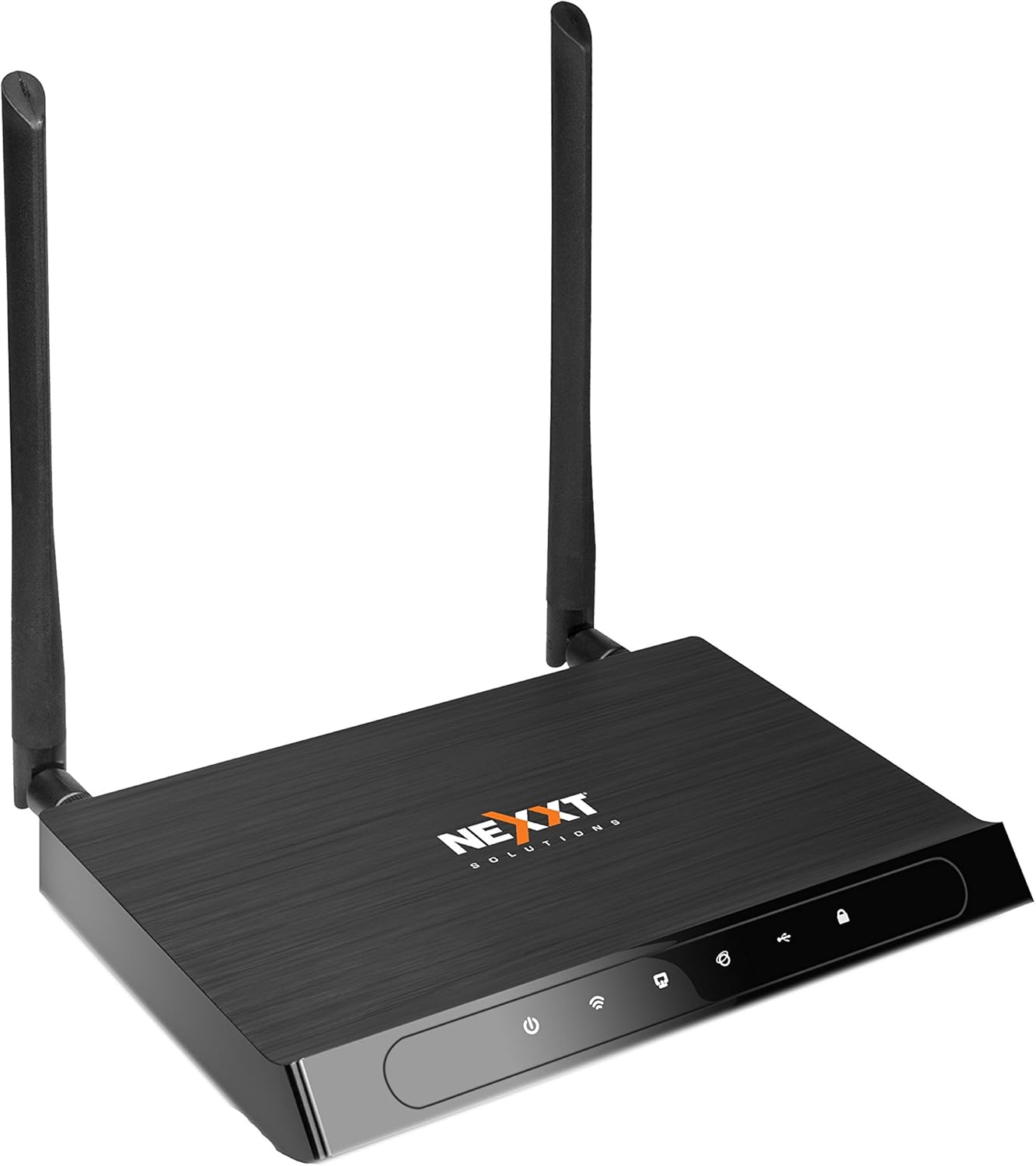
olusin 1: Iwaju view of the Acrux 750-AC router, showcasing its sleek design and two external antennas.
2. Awọn ẹya Ọja
- Wireless AC Router: Supports the latest 802.11ac standard for faster wireless speeds.
- Simultaneous Dual-Band: Operates on both 2.4GHz (300Mbps) and 5.0GHz (433Mbps) bands concurrently for a combined throughput of 750Mbps.
- Awọn ibudo Gigabit Ethernet: Features four 10/100/1000Mbps LAN ports for high-speed wired connections.
- Ibudo USB: Includes a USB 2.0 port for file and print sharing across the network.
- Ibora ti o gbooro: Equipped with two detachable 5dBi omnidirectional antennas for improved signal reach and coverage.
- Imọ-ẹrọ Iyipada: Creates a direct link for data transmission, enhancing wireless efficiency and range.
- WMM Technology: Wi-Fi Multimedia prioritizes traffic for bandwidth-intensive applications such as HD video streaming and online gaming.
- WPS (Eto Aabo Wi-Fi): Allows for easy and secure connection of WPS-supported wireless adapters with the push of a button.
- Advanced Wireless Security: Supports 64/128-bit WEP and WPA/WPA2-PSK encryption protocols.
- WDS Capability: Wireless Distribution System allows for network expansion by linking multiple devices.

Figure 2: Illustration of the router's dual-band wireless coverage, showing both 2.4GHz (max range) and 5.0GHz (performance) signals within a typical home setup.
3. Hardware Loriview
Familiarize yourself with the ports and buttons on your Acrux 750-AC router.

Figure 3: Rear panel of the Acrux 750-AC router, detailing the various ports and controls.
- 1. WPS/Reset Button: Press briefly to activate WPS for easy wireless connection. Press and hold for 10 seconds to reset the router to factory default settings.
- 2. Wi-Fi On/Off Button: Toggles the wireless signal on or off.
- 3. WAN Port (Blue): Connects to your DSL/Cable modem or Ethernet line for internet access.
- 4. LAN Ports (Yellow, LAN1-LAN4): Àwọn èbúté Gigabit Ethernet mẹ́rin fún sísopọ̀ àwọn ẹ̀rọ onífóònù bíi kọ̀ǹpútà, àwọn kọ́ǹpútà eré, tàbí àwọn tẹlifíṣọ̀n onífóònù.
- 5. Ibudo USB 2.0: For connecting USB storage devices for file sharing or USB printers for network printing.
- 6. Bọtini Tan/Pa: Agbara olulana naa lati tan tabi pa.
- 7. Iṣagbewọle Agbara A/C: Sopọ si ohun ti nmu badọgba agbara to wa.
4. Eto Itọsọna
4.1 Ni ibẹrẹ Hardware Asopọ
- Ipo: Place the router in a central location to maximize wireless coverage, away from obstructions and interference sources.
- Asopọmọra Antenna: Screw the two detachable antennas firmly onto the connectors at the rear of the router.
- Sopọ si Modẹmu: Connect one end of an Ethernet cable to the WAN port (blue) on the router and the other end to the Ethernet port on your DSL/Cable modem.
- So agbara: Plug the power adapter into the A/C Power Input port on the router and then into a power outlet. Press the On/Off button to power on the router.
- Jẹrisi Awọn Atọka: Wait for the power, WAN, and Wi-Fi indicators on the router's front panel to stabilize, indicating a successful connection.
4.2 Iwọle si Web Atọka Iṣakoso
- So ẹrọ kan pọ: Connect a computer to one of the LAN ports (yellow) on the router using an Ethernet cable, or connect wirelessly using the default Wi-Fi name (SSID) and password found on the router's label.
- Ṣii Web Aṣàwákiri: Lọlẹ a web ẹrọ aṣawakiri (fun apẹẹrẹ, Chrome, Firefox, Edge).
- Tẹ adirẹsi IP sii: Ninu ọpa adirẹsi, tẹ adiresi IP aiyipada ti olulana naa (ni igbagbogbo
192.168.0.1or192.168.1.1, refer to the label on your router for the exact address) and press Enter. - Wo ile: Tẹ orukọ olumulo ati ọrọ igbaniwọle aiyipada sii (nigbagbogbo
adminfún àwọn méjèèjì, tàbí gẹ́gẹ́ bí a ṣe sọ ọ́ lórí àmì olùdarí). - Ṣiṣe Oluṣeto Iṣeto: Follow the on-screen setup wizard to configure your internet connection, wireless network names (SSIDs) for both 2.4GHz and 5GHz bands, and set strong passwords.
5. Awọn ilana Iṣiṣẹ
5.1 Awọn ẹrọ Nsopọ
- Awọn ẹrọ ti a firanṣẹ: Connect devices like desktop computers, smart TVs, or gaming consoles to the yellow Gigabit LAN ports using Ethernet cables.
- Awọn ẹrọ Alailowaya: On your wireless device (smartphone, tablet, laptop), search for available Wi-Fi networks. Select your router's 2.4GHz or 5GHz SSID and enter the Wi-Fi password you configured during setup.
- Lilo WPS: For WPS-compatible devices, press the WPS button on the router, then activate WPS on your device within two minutes to establish a secure connection without entering a password.
5.2 USB File Pínpín
The USB 2.0 port allows you to share files from a connected USB storage device (e.g., USB flash drive, external hard drive) across your network.
- So ẹrọ USB pọ mọ: Insert your USB storage device into the USB 2.0 port on the router.
- Configure Sharing: Wọle si awọn olulana web management interface. Navigate to the USB Sharing or Storage section to enable and configure file sharing settings, including user access permissions.
- Wiwọle Files: On network-connected devices, you can typically access the shared USB drive through network locations (e.g., "Network" in Windows File Explorer, "Connect to Server" in macOS Finder).
5.3 To ti ni ilọsiwaju Awọn ẹya ara ẹrọ
- WMM (Módíòmítà Wi-Fi): This feature is enabled by default and automatically prioritizes network traffic for applications requiring high bandwidth, such as video streaming and online gaming, to ensure a smoother experience.
- Ìtàntàn: This technology focuses the Wi-Fi signal directly towards connected devices, improving signal strength and range for those devices. It operates automatically with compatible devices.
- WDS (Eto Pinpin Alailowaya): Allows the router to connect wirelessly to other access points or routers to extend the wireless network coverage. Configuration for WDS is available in the router's web interface under wireless settings.
6. Itọju
- Awọn imudojuiwọn famuwia: Periodically check the Nexxt Solutions official website for firmware updates. Updating the firmware can improve performance, add new features, and fix security vulnerabilities. Follow the instructions provided with the firmware update carefully.
- Atunbere deede: Rebooting your router every few weeks can help clear its memory and resolve minor performance issues. Simply unplug the power adapter for 10-15 seconds, then plug it back in.
- Ninu ara: Keep the router clean and free from dust. Use a soft, dry cloth to wipe the exterior. Ensure ventilation holes are not blocked to prevent overheating.
- Awọn ọrọ igbaniwọle to ni aabo: Regularly change your Wi-Fi and router login passwords to strong, unique combinations to maintain network security.
7. Laasigbotitusita
Awọn oran ti o wọpọ ati Awọn ojutu:
- Ko si Wiwọle Ayelujara:
- Check if the WAN indicator on the router is lit. If not, ensure the Ethernet cable from your modem is securely connected to the router's blue WAN port.
- Reboot your modem first, then the router. Wait for both devices to fully power on and establish connections.
- Ṣe idaniloju awọn eto asopọ intanẹẹti rẹ ninu olulana naa web interface. Ensure they match the settings provided by your Internet Service Provider (ISP).
- Slow Wireless Speed or Frequent Disconnections:
- Ensure the router is placed centrally and away from potential interference sources (e.g., cordless phones, microwaves, thick walls).
- Try changing the wireless channel in the router's settings to a less congested one. Use a Wi-Fi analyzer app to find optimal channels.
- Confirm your devices are connecting to the appropriate band (5GHz for closer, faster connections; 2.4GHz for longer range).
- Update the wireless drivers on your connected devices.
- Ko le wọle si awọn olulana Web Ni wiwo:
- Ensure your device is connected to the router (either via Ethernet or Wi-Fi).
- Verify you are typing the correct IP address (e.g.,
192.168.0.1) sinu ọpa adirẹsi ti ẹrọ lilọ kiri ayelujara naa. - Ko kaṣe ẹrọ aṣawakiri rẹ kuro ati awọn kuki, tabi gbiyanju aṣawakiri miiran.
- Mu eyikeyi ogiriina tabi sọfitiwia antivirus ṣiṣẹ fun igba diẹ lori kọnputa rẹ.
- Gbagbe Ọrọigbaniwọle Iwọle Router:
- If you cannot recall your router's login password, you will need to perform a factory reset. Locate the WPS/Reset button on the back of the router. With the router powered on, press and hold this button for approximately 10 seconds until the lights flash. The router will then revert to its factory default settings, including the default login credentials (usually
admin/admin). Akiyesi: A factory reset will erase all your custom settings, requiring you to reconfigure the router.
- If you cannot recall your router's login password, you will need to perform a factory reset. Locate the WPS/Reset button on the back of the router. With the router powered on, press and hold this button for approximately 10 seconds until the lights flash. The router will then revert to its factory default settings, including the default login credentials (usually
8. Awọn pato
| Ẹya ara ẹrọ | Ẹ̀kúnrẹ́rẹ́ |
|---|---|
| Nọmba awoṣe | ARL02754U1 |
| Boṣewa alailowaya | IEEE 802.11ac/n/b/g |
| Awọn Igbohunsafẹfẹ Alailowaya | 2.4 GHz and 5 GHz (Simultaneous Dual-Band) |
| Iyara Alailowaya ti o pọju | Titi di 750 Mbps (300 Mbps ni 2.4GHz, 433 Mbps ni 5.0GHz) |
| Àjọlò Ports | 4 x 10/100/1000 Mbps Gigabit LAN Ports, 1 x 10/100/1000 Mbps WAN Port |
| Ibudo USB | 1 x USB 2.0 Port |
| Eriali | 2 x Detachable 5dBi Omni-directional Antennas |
| Aabo | 64/128-bit WEP, WPA/WPA2-PSK encryption |
| Awọn iwọn | 27.94 x 22.86 x 6.35 cm (iwọn ti o sunmọ apo) |
| Iwọn Nkan | 726 g (1.6 iwon) |
| Olupese | Next Solutions |
9. Atilẹyin ọja ati Support
The Nexxt Solutions Acrux 750-AC router comes with a 5-odun atilẹyin ọja, demonstrating the manufacturer's commitment to quality and reliability. For technical assistance, troubleshooting, or warranty claims, please contact Nexxt Solutions customer support. US-based technical support is available to assist you with installation and operational queries.
For the most up-to-date support information, FAQs, and contact details, please visit the official Nexxt Solutions website. You may also find additional resources by searching for "Nexxt Solutions" online or referring to the contact information provided with your product packaging.


